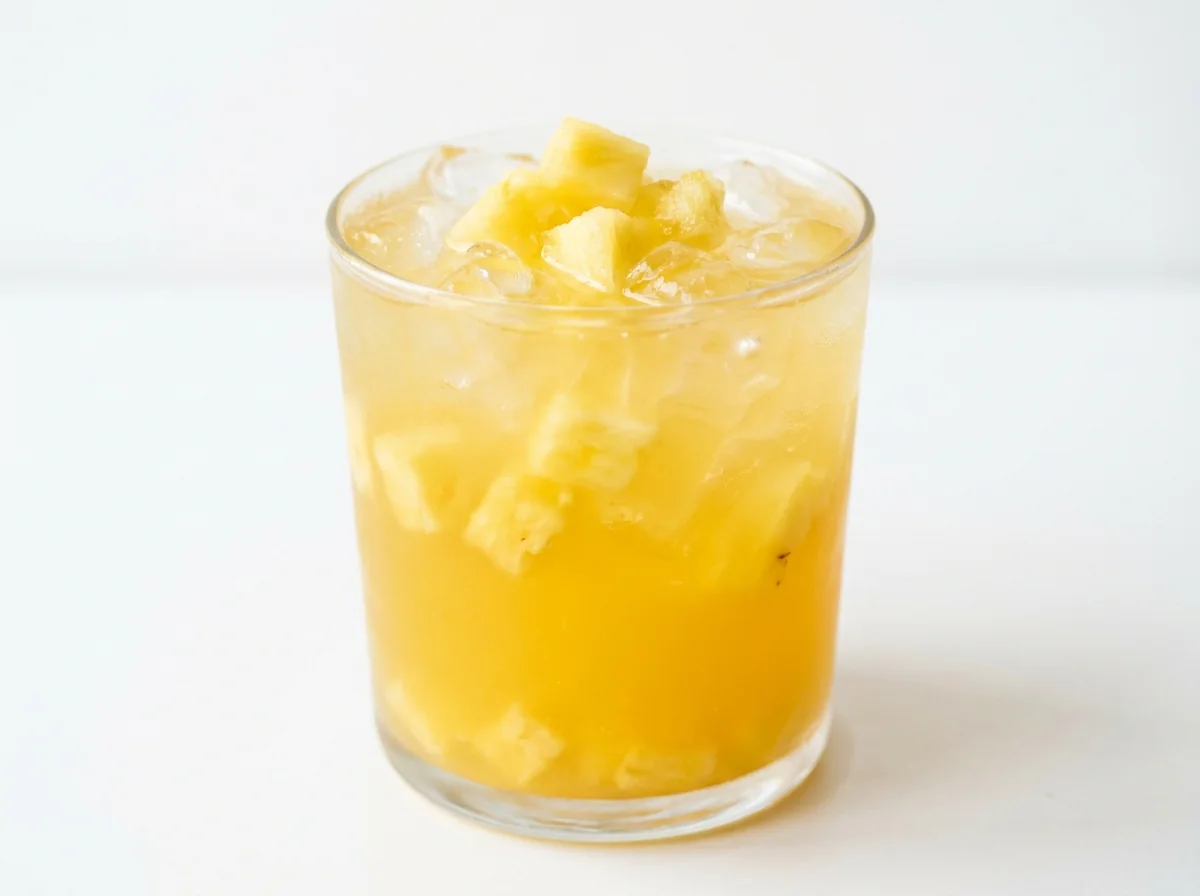
A refreshing juice common on Ramadan tables in the Gulf and the Levant, combining the sweetness of tropical pineapple with the tang of lemon.
We rely on the fresh fruit rather than canned, because its flavor is purer and its sweetness natural, which we adjust ourselves.
Preparation Steps
Prepare the pineapple
Peel the pineapple, remove its fibrous core, and cut the flesh into small cubes, because fine cutting makes it easier to blend and gives a smoother texture after straining.
Blend
Put the pineapple cubes with the cold water and sugar in the blender, and blend on high speed for about a minute until the mixture is smooth and uniform.
Strain
Strain the mixture through a fine sieve or a piece of cheesecloth and press gently to extract as much juice as possible, as straining separates the coarse fibers and leaves the juice clear.
Adjust the taste
Add the lemon juice, stir, and taste, as the acidity of the lemon balances the sweetness of the pineapple and opens up the flavor. Add a pinch of sugar or a few drops of lemon depending on the sweetness of the fruit.
Serve
Distribute the ice in two glasses, pour the juice over it, and serve it cold right away, because fresh pineapple loses its brightness if left too long.
Blood Sugar Impact
The glycemic index (GI) measures how quickly a food raises blood sugar, while the glycemic load (GL) measures how much a full serving raises it. Together they give the complete picture.
Glycemic Index
GI
60Medium
Low0–55Medium56–69High70+
A low value (≤55) means a gradual rise in blood sugar — the most suitable range for diabetes and insulin resistance.
Glycemic Load
GL
22High
Low0–10Medium11–19High20+
Glycemic load reflects the impact of the full serving. To lower it: take half a serving, or pair the recipe with a source of protein and fiber.
Nutritional Information
Per ServingMakes 2 servings · one serving is about 410 g of raw ingredients
Calories151 kcal8%of Daily Value*
Protein2 g4%of Daily Value*
Carbohydrates39 g14%of Daily Value*
Fat0 g0%of Daily Value*
Fiber2 g7%of Daily Value*
Sodium2 mg0%of Daily Value*
Potassium255 mg5%of Daily Value*
Phosphorus13 mg1%of Daily Value*
* Percent Daily Values are based on a 2,000-calorie diet per FDA food-label reference values — your daily needs may be higher or lower. Values are derived from the recipe's ingredients via the USDA database.
Troubleshooting
The most common problems when preparing Pineapple Lemon Juice, and how to fix them:
The juice is bitter or sharp
The pineapple is not ripe; add a little more sugar and discard the fibrous core that carries bitterness.
The texture is heavy or foamy
Strain it again through cheesecloth, and let it rest for a few minutes until the foam settles before serving.
Storage and Make-Ahead
Refrigeration
Keep it in an airtight container in the refrigerator for up to two days, and stir it before serving because the pulp settles.
Freezing
Freeze it in ice cube trays and later blend it with cold water for a quick juice within a month.
Tested Ingredient Substitutions
Original Ingredient
Tested Substitute
Ratio
Flavor Difference
fresh pineapple
frozen pineapple
400 g
A practical alternative out of season; thaw it slightly before blending.
sugar
honey
20 g
A natural sweetener; dissolve it in the water first to distribute it evenly.
cold water
coconut water
250 ml
Adds a tropical flavor and a light sweetness that reduces the need for sugar.
lemon juice
lime juice
20 ml
A sharper tang and a different aroma that suits pineapple.
How Much Does It Make? Scaling Guide
Ingredient
One glass
Two glasses (base)
Four glasses
fresh pineapple
200 g
400 g
800 g
cold water
125 ml
250 ml
500 ml
sugar
12 g
25 g
50 g
lemon juice
10 ml
20 ml
40 ml
ice cubes
60 g
120 g
240 g
EEINA Nutrition Tip
Choose a ripe pineapple with a fragrant aroma at the base, because the riper it is the less sugar the juice needs.
Add This Recipe to Your Plan
The EEINA app saves your favorite recipes, calculates them from their real ingredients, and shows your daily numbers toward your goal. Try it free now.