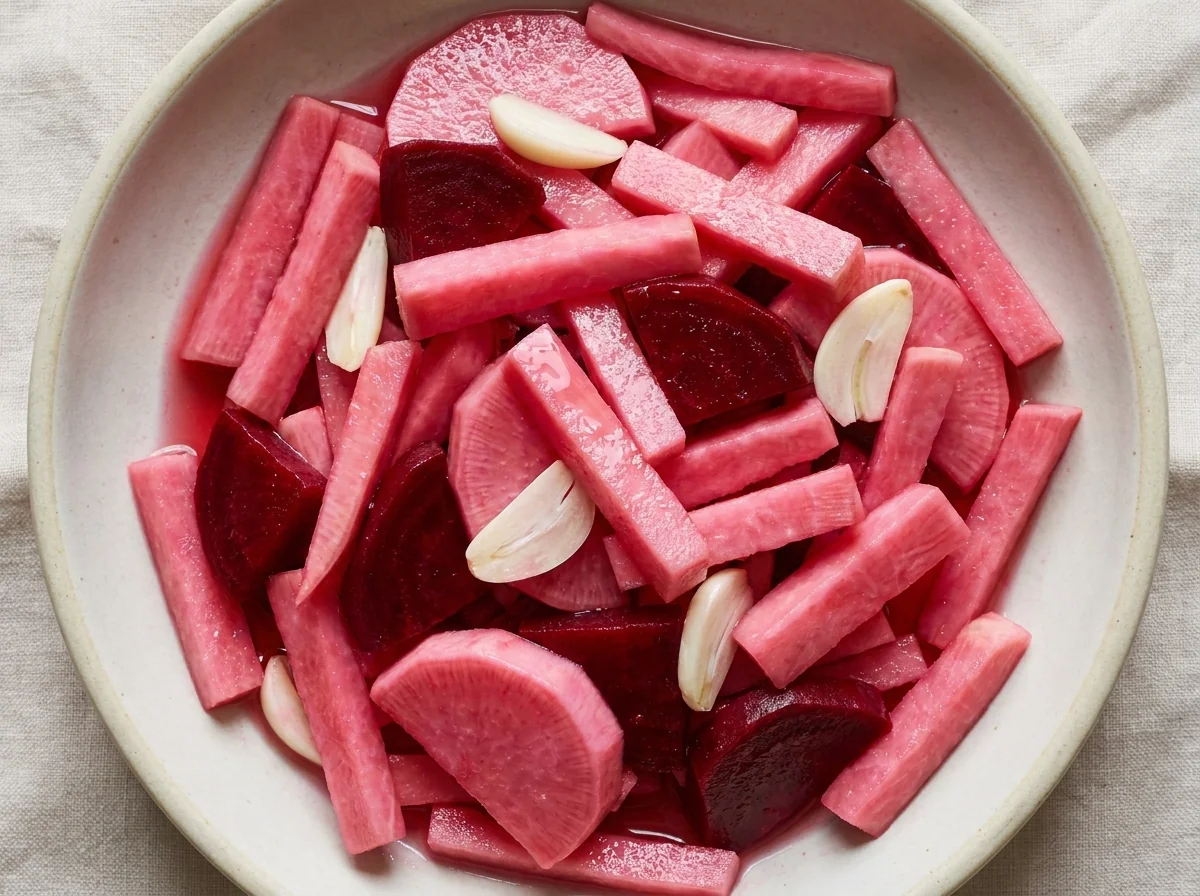
Pickled turnips with beet is one of the most famous pickles on the Levantine table in Syria and Lebanon, distinguished by its bright pink color that it gains from the beet slices during fermentation.
It is served alongside falafel, shawarma, and grills, and it combines the crunch of the turnips with the refreshing sourness of fermentation.
Preparation Steps
Prepare the vegetables
Wash the turnips well, peel them, and cut them into medium cubes, and slice the beet, as even cutting ensures uniform fermentation for all the cubes.
Pack the jar
Arrange the turnip cubes in a sterilized glass jar with the beet slices and garlic cloves, and distribute the beet between the layers so its pink color spreads throughout the whole pickle.
Prepare the brine
Dissolve the coarse salt in the water, add the vinegar, and stir until it dissolves completely, as sufficient saltiness is what protects the pickle and steers the fermentation in its proper course.
Submerge and seal
Pour the brine over the vegetables until it fully covers them, keeping a little headspace at the top of the jar, and press the vegetables down so they stay below the surface because exposure to air causes mold.
Ferment
Seal the jar and leave it in a warm place for about two weeks until the turnips ferment and take on the pink color and sour taste, and taste it after a week; once it is ready, move it to the refrigerator to stop the fermentation.
Blood Sugar Impact
The glycemic index (GI) measures how quickly a food raises blood sugar, while the glycemic load (GL) measures how much a full serving raises it. Together they give the complete picture.
Glycemic Index
GI
35Low
Low0–55Medium56–69High70+
A low value (≤55) means a gradual rise in blood sugar — the most suitable range for diabetes and insulin resistance.
Glycemic Load
GL
1Low
Low0–10Medium11–19High20+
Glycemic load reflects the impact of the full serving. To lower it: take half a serving, or pair the recipe with a source of protein and fiber.
Nutritional Information
Per ServingMakes 8 servings · one serving is about 210 g of raw ingredients
Calories30 kcal2%of Daily Value*
Protein1 g2%of Daily Value*
Carbohydrates6 g2%of Daily Value*
Fat0 g0%of Daily Value*
Fiber2 g7%of Daily Value*
Sodium669 mg29%of Daily Value*
* Percent Daily Values are based on a 2,000-calorie diet per FDA food-label reference values — your daily needs may be higher or lower. Values are derived from the recipe's ingredients via the USDA database.
Troubleshooting
The most common problems when preparing Pink Pickled Turnips with Beet (Lift Makbous), and how to fix them:
Mold appears on the surface
Make sure the vegetables are fully submerged and use a weight to keep them under the brine, as mold comes from contact with air, not from the fermentation itself.
The turnips are soft, not crunchy
Shorten the fermentation time a little and store it cold, as long fermentation in warmth softens the texture of the turnips.
The color is pale, not pink
Add more beet slices and distribute them between the layers, as the color comes from the contact of the beet with the turnips during soaking.
The taste is too salty
Reduce it by rinsing the cubes with cold water before serving, and in the next batch reduce the salt a little while keeping it sufficient for preservation.
Storage and Make-Ahead
Refrigeration
Once ready, keep it in the refrigerator in its brine for up to a month, as the cold stops the fermentation and preserves its crunch.
Warm place (during fermentation)
Leave it in a warm place away from direct sun for about two weeks until it is ready, then move it to the refrigerator.
Tested Ingredient Substitutions
Original Ingredient
Tested Substitute
Ratio
Flavor Difference
white vinegar
apple cider vinegar
same volume (45 ml)
Apple cider vinegar gives a slightly milder flavor while keeping the preserving acidity.
turnips
cauliflower
same weight (600 g)
Cauliflower is a common alternative in Levantine pickles that takes on the same pink color from the beet.
coarse salt
fine non-iodized sea salt
same weight (45 g)
Non-iodized salt is better for fermentation because iodine can hinder the beneficial bacteria.
garlic
without garlic
omitted
The garlic can be omitted for those who do not prefer its flavor without affecting preservation.
How Much Does It Make? Scaling Guide
Ingredient
Half
Base
Double
Turnips
300 g
600 g
1200 g
Beet
60 g
120 g
240 g
Coarse salt
22.5 g
45 g
90 g
White vinegar
22.5 ml
45 ml
90 ml
Garlic
5 g
10 g
20 g
Water
450 ml
900 ml
1800 ml
EEINA Nutrition Tip
The secret to the pink color and a clean pickle is keeping the vegetables fully submerged under the brine, as any piece that floats and touches the air will spoil.
Add This Recipe to Your Plan
The EEINA app saves your favorite recipes, calculates them from their real ingredients, and shows your daily numbers toward your goal. Try it free now.