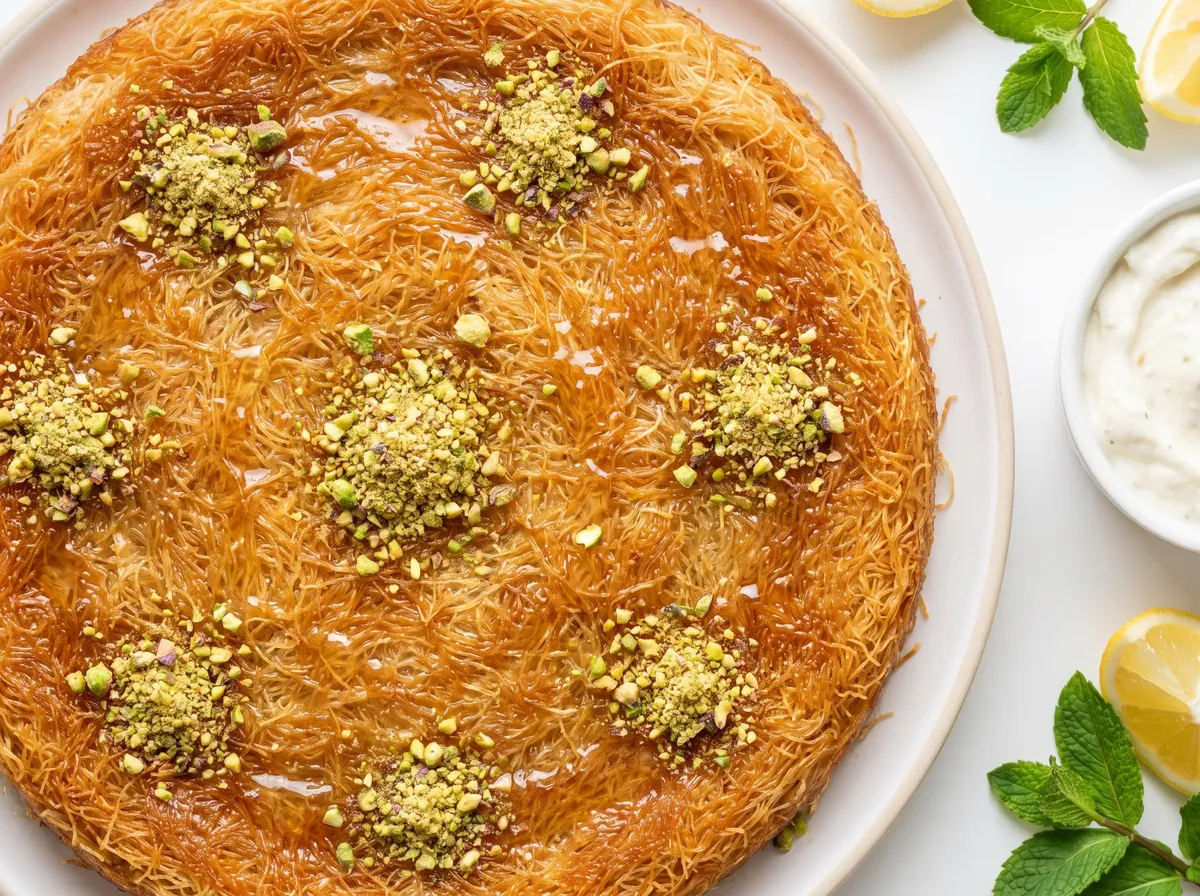
A luxurious Levantine sweet — two crisp golden layers of toasted shredded kadaifi pastry sandwich a thick cream filling, drenched in syrup and crowned with pistachios. A festive confection to be eaten in moderation; contains gluten, dairy, and tree nuts.
Osmalieh is a beloved, luxurious Levantine sweet (famous in Damascus and Beirut) — its name is thought to date to the Ottoman era. It is distinguished by two layers of shredded kadaifi (kataifi) toasted to a golden crisp, sandwiching a thick creamy layer, drenched in syrup and crowned with pistachios.
Osmalieh differs from Nabulsi knafeh in being crisp and toasted (not soft and cheesy) and is usually served cold. The contrast between golden crisp kadaifi and cold creamy filling, with the sweetness of syrup and the aroma of pistachios, is the secret of its luxurious appeal. Osmalieh is a star of Levantine hospitality and occasion sweets — a symbol of the mastery of Levantine confectioners and the generosity of their tables.
Preparation Steps
Prepare the syrup and cream
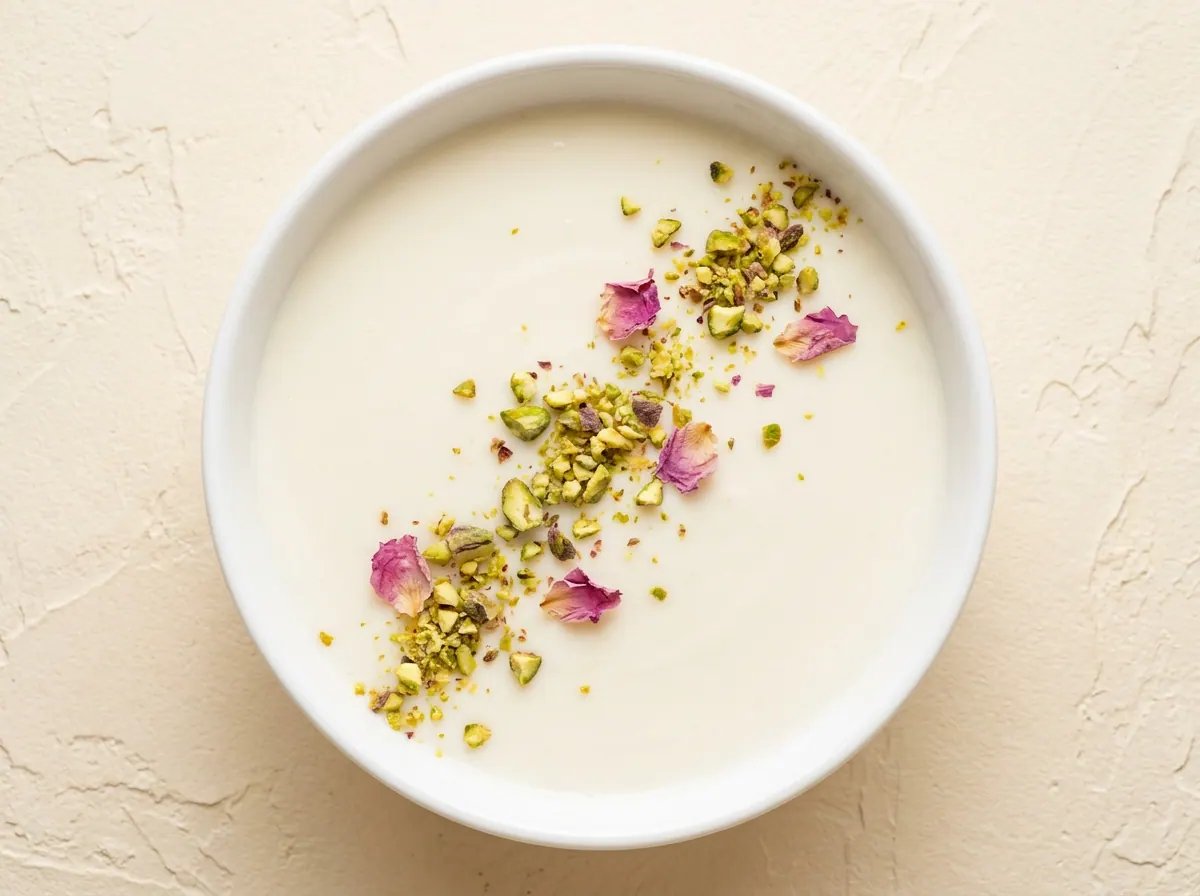
Make the syrup (sugar, water, lemon, and orange-blossom water) and leave it to cool. Prepare the thick cream (ready-made or homemade by cooking milk with starch and orange-blossom water until thickened). Thick cream is the heart of Osmalieh (the creamy layer between the two pastry discs) — make it firm, not runny.
Crumble the kadaifi
Crumble the shredded kadaifi (kataifi) finely and toss thoroughly with the melted ghee until well coated. Osmalieh is made from shredded (thread) kadaifi — not the fine semolina kind — which gives a golden crunch (different from the soft cheese-filled Nabulsi knafeh).
Toast the first disc
Spread half the kadaifi in a pan (or skillet) and toast it (in the oven or on the stove) until golden and crisp, then flip it or keep it as a disc. Toast the second half the same way. Toasting to golden crispness is the secret of Osmalieh's distinctive crunch.
Soak the kadaifi with syrup
Drizzle both toasted kadaifi discs with syrup (moderately, so they sweeten while remaining relatively crisp). Syrup balance matters: enough to sweeten and hold without drowning out the crunch. The golden toasted kadaifi absorbs a moderate amount of syrup.
Layer the Osmalieh
Place the first kadaifi disc, spread a generous thick layer of cream over it, then top with the second disc (like a sandwich). The crisp kadaifi embraces the creamy filling — the contrast of crunch and cream is the joy of Osmalieh.
Garnish and serve
Garnish the top generously with crushed pistachios, cut, and serve (eat fresh to keep the kadaifi crisp). A luxurious Levantine sweet (famous in Damascus and Beirut) — two golden crisp kadaifi layers cradling cold cream, with syrup and fragrant pistachios. The contrast of crunch, cream, sweetness, and pistachio aroma is a luxurious experience, a hallmark of Levantine confectionery craftsmanship and generous hospitality.
Blood Sugar Impact
The glycemic index (GI) measures how quickly a food raises blood sugar, while the glycemic load (GL) measures how much a full serving raises it. Together they give the complete picture.
Glycemic Index
GI
61Medium
Low0–55Medium56–69High70+
A low value (≤55) means a gradual rise in blood sugar — the most suitable range for diabetes and insulin resistance.
Glycemic Load
GL
42High
Low0–10Medium11–19High20+
Glycemic load reflects the impact of the full serving. To lower it: take half a serving, or pair the recipe with a source of protein and fiber.
Nutritional Information
Per ServingMakes 8 servings · one serving is about 220 g of raw ingredients
Calories741 kcal37%of Daily Value*
Protein15 g30%of Daily Value*
Carbohydrates70 g25%of Daily Value*
Fat45 g58%of Daily Value*
Fiber1 g4%of Daily Value*
Sodium337 mg15%of Daily Value*
* Percent Daily Values are based on a 2,000-calorie diet per FDA food-label reference values — your daily needs may be higher or lower. Values are derived from the recipe's ingredients via the USDA database.
Troubleshooting
The most common problems when preparing Osmalieh with Cream, and how to fix them:
Kadaifi is soft and not crisp
Not enough toasting, or too much syrup. Toast the kadaifi until truly golden and crisp, drizzle with moderate syrup (no drowning), and serve fresh. Good toasting, moderate syrup, and fresh serving keep the crunch.
Cream is runny
Not thickened enough. Use thick cream, or cook the homemade cream (milk and starch) until it thickens well and cools (it firms up). Thick cream stays between the kadaifi layers without leaking.
The crunch dissolved quickly
Assembled too far in advance. Assemble the Osmalieh close to serving time (the crisp kadaifi softens when it contacts the cream and syrup over time), and serve it fresh. Prepare the components and assemble at the last moment for maximum crunch.
Too sweet
Too much syrup. Drizzle the syrup moderately on the kadaifi (no drowning), and unsweetened cream creates a natural balance. Controlling the syrup amount regulates sweetness — Osmalieh relies on the contrast of crunch and cream rather than excessive sweetness.
Kadaifi burned
Heat too high when toasting. Toast the kadaifi over medium heat with watchful attention and stirring until it takes on color (the fine threads burn quickly). The goal is golden and crisp, not brown and burnt.
Storage and Make-Ahead
Serve fresh
Osmalieh is best eaten fresh right after assembling (kadaifi is crisp) — it softens over time (cream and syrup make the kadaifi go tender). Assemble close to serving. Assembled pieces should be eaten the same day for best crunch.
Refrigerator (components stored separately)
Keep the toasted kadaifi in an airtight container at room temperature (stays crisp), and the cream refrigerated separately, then assemble at serving. Much better than storing the assembled Osmalieh (which softens). Cream keeps refrigerated for two days.
Advance prep
Toast the kadaifi and prepare the cream and syrup in advance (store separately), then assemble and garnish with pistachios at serving time. This gives a fresh, crisp sweet without the stress of last-minute preparation.
Food safety
Cream is a sensitive dairy product — keep it refrigerated. Assemble the Osmalieh fresh and do not leave it unrefrigerated for more than two hours (it contains cream). Use fresh cream and clean equipment.
Tested Ingredient Substitutions
Original Ingredient
Tested Substitute
Ratio
Flavor Difference
Full-fat cream
Lower-fat or homemade cream
Same amount
Reduces saturated fat; homemade cream (milk and starch) is lighter and cheaper; ready-made is richer and faster
Generous ghee
Less ghee or butter
Less
Reduces saturated fat; some ghee is needed to toast the kadaifi and make it crisp, but the amount can be reduced
Shredded kadaifi
Fine-grain kadaifi, toasted
Same amount
Shredded (thread) kadaifi gives the distinctive threaded crunch of Osmalieh; fine-grain is an alternative with a different texture — shredded is the authentic choice
How Much Does It Make? Scaling Guide
Number of servings
Kunafa
Cream
Syrup
4 (small)
250 g
1.5 cups
0.5 cup
8 (base)
500 g
3 cups
1 cup
16 (celebration)
1 kg
6 cups
2 cups
EEINA Nutrition Tip
Osmalieh is a luxurious festive sweet combining kadaifi (pastry), ghee, cream, and syrup — high in sugar, calories, and fat. The cream adds some protein and calcium (and pistachios add healthy fats and protein), but it remains a rich, sweet confection. Best enjoyed in moderation at occasions (one piece) as part of a varied spread. To lighten slightly: use lower-fat cream, reduce the syrup (moderate drizzle) and ghee, and use more pistachios. People with diabetes and those on a diet should be cautious. A luxurious sweet to be appreciated in moderation — the cream and pistachios do add some value.
Add This Recipe to Your Plan
The EEINA app saves your favorite recipes, calculates them from their real ingredients, and shows your daily numbers toward your goal. Try it free now.
A luxurious Levantine sweet made from two layers of toasted crisp shredded kadaifi sandwiching a thick creamy layer, drenched in syrup and crowned with pistachios. Usually served cold — believed to have Ottoman origins. The contrast of golden crisp kadaifi, cold cream, syrup, and pistachios is its luxurious appeal.
What is the difference between Osmalieh and Nabulsi knafeh?
Both use kadaifi, but Osmalieh is toasted to crispness, filled with cream, and served cold (crisp and creamy), while Nabulsi knafeh is baked soft, filled with cheese, and served hot (soft and stretchy with cheese). Osmalieh is crisp with cold cream; Nabulsi is soft with hot cheese.
Served cold or hot?
Osmalieh is usually served cold or at room temperature (cream is cold and creamy), unlike the hot Nabulsi knafeh. This contrast between crisp kadaifi and cold cream is part of its appeal. Assemble fresh and serve to keep the kadaifi crisp before it softens.
Is Osmalieh healthy?
A luxurious festive sweet — high in sugar (syrup), calories, and fat (ghee and cream). Cream adds protein and calcium; pistachios add healthy fats — but it remains a rich confection. Enjoy it in moderation (one piece), use lower-fat cream, less syrup and ghee, and more pistachios. People with diabetes should be cautious. Appreciate it in moderation.
Sources: University of Sydney · Gulf GSO · Our methodology · Updated on