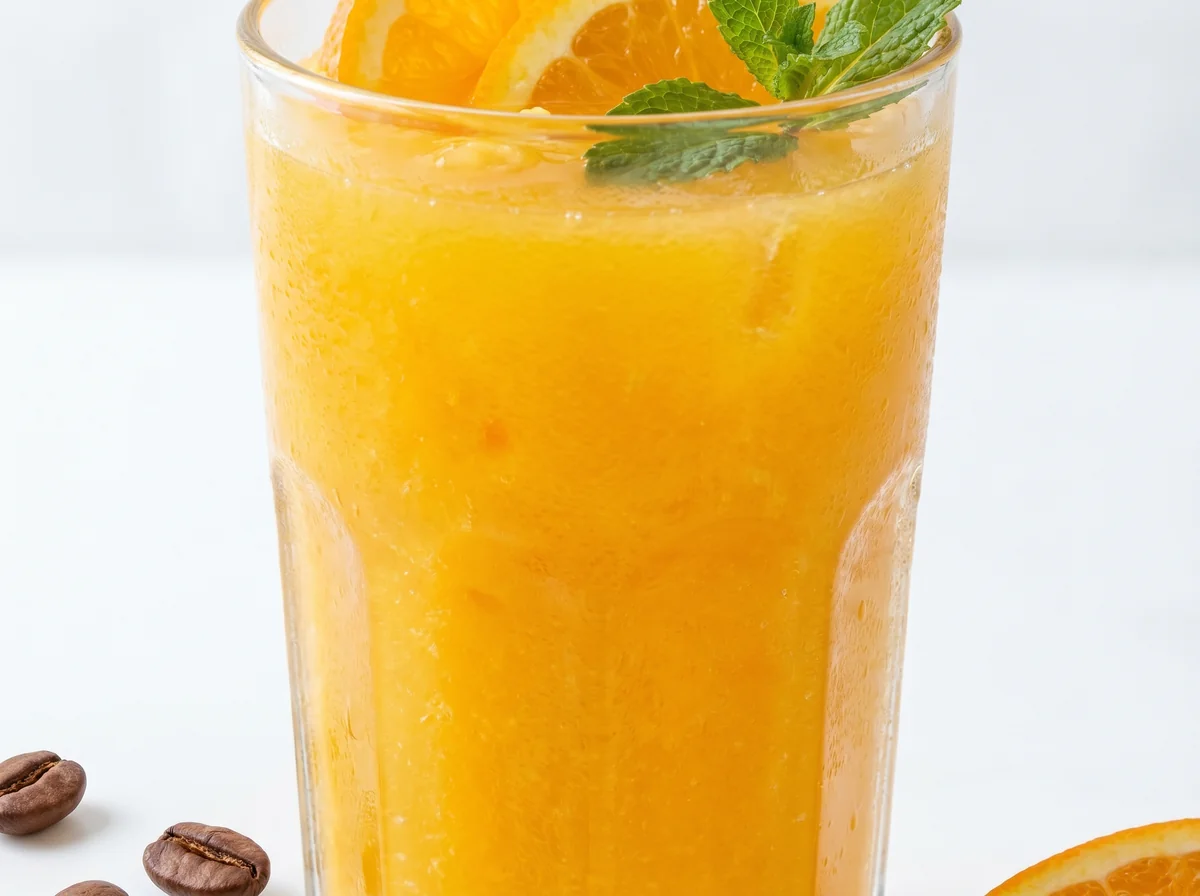
A classic fresh juice — oranges squeezed into a refreshing drink rich in vitamin C. A morning boost and immunity drink with a low glycemic load, free of all common allergens.
Orange juice is a classic, universally loved drink across the world and the Arab world — the everyday morning drink and symbol of refreshment and immunity.
The orange is a winter fruit abundant in the Arab world (Egyptian and Levantine oranges are famous), and its winter season brings fresh juice rich in vitamin C precisely when colds strike. Squeezed fresh at home and in juice shops and served cold and refreshing, its simplicity, freshness, and nutritional value (vitamin C for immunity) have made it one of the most popular and beloved juices, and fresh-squeezed is far richer and more delicious than any bottled version.
Preparation Steps
Choose the oranges
Choose ripe, heavy oranges (weight means plenty of juice) that are fragrant, from a sweet juicing variety (such as navel or Valencia). A ripe, heavy orange is sweeter and gives more juice; a light, dried-out orange yields little juice and is more acidic.
Prep the oranges
Wash the oranges and cut them in half (for a manual or electric citrus juicer) or peel and section them (for a blender). An orange at room temperature, or one rolled under your palm with light pressure, gives more juice.
Juice them
Juice the oranges with a citrus squeezer (manual or electric) for a clean juice, or blend the peeled segments and strain. A citrus juicer is best (it extracts without the bitter white pith and seeds); a blender needs straining.
Strain (optional)
Strain out seeds and coarse pulp to taste, or leave some pulp in for higher fiber and nutritional value. Keeping some pulp is healthier (fiber slows sugar absorption); fully strained is smoother but has less fiber.
Serve immediately
Pour into glasses straight away with ice if desired. Orange juice is best drunk fresh — it loses vitamin C and flavor to oxidation over time (which is why fresh juice is richer than bottled).
Serve
Garnish with an orange slice or mint, and serve the juice cold immediately. A classic juice loved worldwide and across the Arab world, the usual morning drink, rich in vitamin C that boosts immunity (popular during cold season and winter, the season of oranges). Freshly squeezed is a refreshing, nutritious pleasure that packaged juice cannot match.
Blood Sugar Impact
The glycemic index (GI) measures how quickly a food raises blood sugar, while the glycemic load (GL) measures how much a full serving raises it. Together they give the complete picture.
Glycemic Index
GI
43Low
Low0–55Medium56–69High70+
A low value (≤55) means a gradual rise in blood sugar — the most suitable range for diabetes and insulin resistance.
Glycemic Load
GL
16Medium
Low0–10Medium11–19High20+
Glycemic load reflects the impact of the full serving. To lower it: take half a serving, or pair the recipe with a source of protein and fiber.
Nutritional Information
Per ServingMakes 2 servings · one serving is about 390 g of raw ingredients
Calories183 kcal9%of Daily Value*
Protein4 g8%of Daily Value*
Carbohydrates46 g17%of Daily Value*
Fat0 g0%of Daily Value*
Fiber9 g32%of Daily Value*
Sodium0 mg0%of Daily Value*
Potassium659 mg14%of Daily Value*
Phosphorus47 mg4%of Daily Value*
* Percent Daily Values are based on a 2,000-calorie diet per FDA food-label reference values — your daily needs may be higher or lower. Values are derived from the recipe's ingredients via the USDA database.
Troubleshooting
The most common problems when preparing Fresh Orange Juice, and how to fix them:
The juice is too sour
Unripe oranges or a sour variety. Use ripe, sweet juicing oranges (heavy and fragrant) — unripe ones and sour varieties give acidic juice. Try blending with a little sweet orange or mandarin.
The juice is bitter
Squeezed with white pith or seeds. Use a citrus juicer (which avoids the bitter white pith), or peel the orange well and remove seeds before blending. The white pith and seeds both cause bitterness.
Not much juice
Oranges are dry or cold. Use heavy, juicy oranges at room temperature, and roll them under your palm with pressure on the counter before juicing (breaks cell walls for more juice). Cold, dry oranges yield less.
It tasted fine then went bitter after a short while
Oxidation (natural in orange juice). Drink it fresh immediately after squeezing — orange juice loses its flavor and vitamin C and becomes slightly bitter with oxidation over time. Fresh is always best.
I want it sweeter without adding sugar
Use riper, sweeter oranges, or blend with sweet fruit (carrot, apple, or mandarin). A well-ripened orange is sweet enough without added sugar — good selection eliminates the need to sweeten.
Storage and Make-Ahead
Drink it fresh
Orange juice is best drunk immediately after squeezing (richest in vitamin C and best flavor). It keeps chilled in a covered cup for one day, but progressively loses vitamin C and flavor and becomes slightly bitter. Fresh is always best.
Freezer
Fresh orange juice can be frozen (especially in season) in ice-cube trays or containers — it retains most of its value. Thaw and drink. This allows natural juice out of season, better than bottled sugary juice.
Advance prep
Best squeezed fresh just before drinking (takes minutes). If needed, squeeze a few hours ahead and keep chilled and sealed with a squeeze of lemon juice (slows oxidation), and drink it the same day. Freshly squeezed at the moment is the ideal.
Food safety
Wash the oranges before juicing, use a clean juicer and tools, and drink the juice fresh. Fresh orange juice is safe, and can be refrigerated for a few hours if needed.
Tested Ingredient Substitutions
Original Ingredient
Tested Substitute
Ratio
Flavor Difference
Pure orange
Blend with carrot, mandarin, or pomegranate
As desired
Carrot adds vitamin A and sweetness; mandarin is sweeter; pomegranate adds antioxidants — delicious, nutrient-rich citrus blends
Fully strained juice
Leave some pulp (for fiber)
—
Leaving some orange pulp raises fiber and slows sugar absorption (healthier); fully strained is smoother but has less fiber and raises blood sugar faster
Juicing the orange
Eat the whole orange
—
Eating the whole fruit is healthier (more fiber, more satisfying, slower sugar absorption) than juice — an alternative for those monitoring blood sugar
How Much Does It Make? Scaling Guide
Cups
Oranges
1 (cup)
3 oranges
2 (base)
6 oranges
4 (family)
12 oranges
EEINA Nutrition Tip
Fresh orange juice is rich in vitamin C (boosts immunity — one glass covers roughly your daily need), folate, potassium, and antioxidants, and its glycemic index is low. But it is still concentrated natural sugar without the fiber of the whole fruit, so it raises blood sugar faster than a whole orange. My advice: keep some pulp (fiber), drink a moderate glass (not multiple glasses), and sometimes eating the whole orange is better (more fiber and more satisfying). Fresh is richer in vitamin C than bottled.
Add This Recipe to Your Plan
The EEINA app saves your favorite recipes, calculates them from their real ingredients, and shows your daily numbers toward your goal. Try it free now.
Rich in vitamin C (boosts immunity — one glass covers roughly your daily need), folate, potassium, and antioxidants. But it is concentrated natural sugar without the fiber of the whole fruit. Drink a moderate glass, keep some pulp, or eat the whole orange (healthier). Fresh is richer than bottled.
Why is fresh better than bottled?
Freshly squeezed orange juice is richer in vitamin C (which oxidizes and diminishes with time, storage, and processing) and has better flavor with no added sugar or additives. Bottled juice loses some vitamin C and may have added sugar.
How do I get more juice from an orange?
Choose a heavy orange (lots of juice) at room temperature (not cold), and roll it under your palm with pressure on the counter before juicing (breaks the pulp cells, giving more juice). Juicing oranges ripened for juice give more than eating oranges.
Should I strain out the pulp?
Leaving some pulp is healthier (fiber slows sugar absorption and is more satisfying) — just strain out seeds and the bitter white pith. Fully strained is smoother but has less fiber. The choice is personal, and leaving some pulp is healthier.
Sources: University of Sydney · Gulf GSO · Our methodology · Updated on