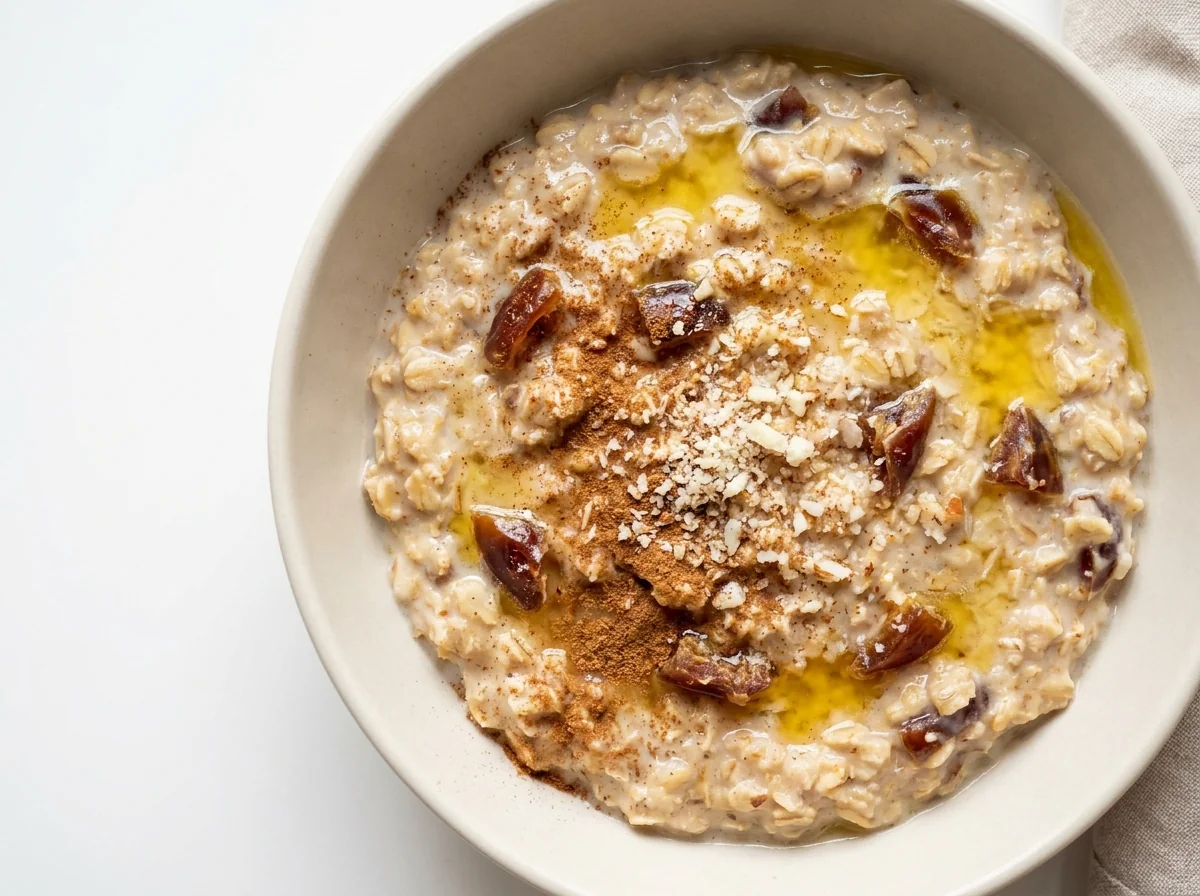
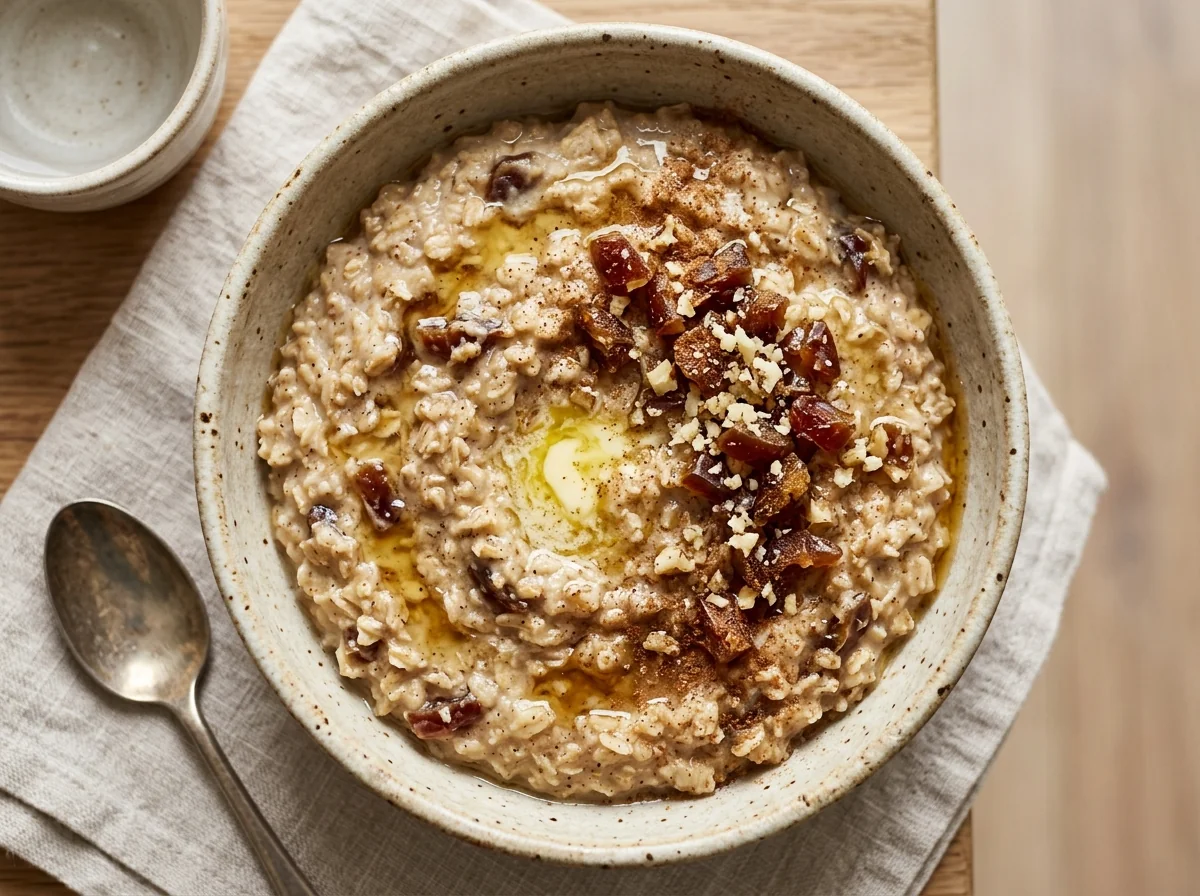
A simple warm porridge that many families have traditionally served to the mother in the first postpartum days, when she needs a soft food that fills and warms.
Preparation Steps
Milk and oats
Put the oats with the milk in a pot over medium heat and stir until it starts to boil, since stirring early keeps the oats from sticking to the bottom.
Cooking over low heat
Lower the heat and let the porridge cook for ten minutes, stirring now and then until it thickens; the sign is that it coats the spoon.
The mashed dates
Mash the dates with a fork or chop them finely, then add them and stir until they dissolve into the porridge and give it their natural sweetness without added sugar.
Ghee and cinnamon
Add the local ghee, cinnamon, and a pinch of salt, and stir for one minute until the ghee blends in, giving the porridge warmth and a traditional flavor.
Serving
Pour the porridge warm into bowls and garnish with the grated almonds, and serve it immediately, as it is most delicious while hot.
Blood Sugar Impact
The glycemic index (GI) measures how quickly a food raises blood sugar, while the glycemic load (GL) measures how much a full serving raises it. Together they give the complete picture.
Glycemic Index
GI
53Low
Low0–55Medium56–69High70+
A low value (≤55) means a gradual rise in blood sugar — the most suitable range for diabetes and insulin resistance.
Glycemic Load
GL
17Medium
Low0–10Medium11–19High20+
Glycemic load reflects the impact of the full serving. To lower it: take half a serving, or pair the recipe with a source of protein and fiber.
Nutritional Information
Per ServingMakes 4 servings · one serving is about 235 g of raw ingredients
Calories324 kcal16%of Daily Value*
Protein9 g18%of Daily Value*
Carbohydrates35 g13%of Daily Value*
Fat17 g22%of Daily Value*
Fiber3 g11%of Daily Value*
Sodium499 mg22%of Daily Value*
* Percent Daily Values are based on a 2,000-calorie diet per FDA food-label reference values — your daily needs may be higher or lower. Values are derived from the recipe's ingredients via the USDA database.
Troubleshooting
The most common problems when preparing Oat Porridge with Dates and Ghee for Postpartum, and how to fix them:
The porridge is too heavy
Add a little warm milk and stir until you reach the texture you like, as oats thicken further as they cool.
The porridge is watery
Leave it over low heat for a few extra minutes while stirring until the excess evaporates and it thickens.
The dates did not dissolve well
Mash them more before adding them or soak them in a spoon of warm milk, as sticky dates need to be broken down first.
Storage and Make-Ahead
Refrigerator
Store it in an airtight container for up to two days, and reheat it with a spoon of milk to restore the texture.
Reheating
Reheat it over low heat or in the microwave while stirring, and avoid hard boiling so it does not clump.
Serving
Serve it hot in a deep bowl with a sprinkle of cinnamon.
Tested Ingredient Substitutions
Original Ingredient
Tested Substitute
Ratio
Flavor Difference
Whole milk
Water or plant-based milk
1 to 1
Reduces the fat; plant-based milk removes the dairy ingredient
Local ghee
Butter
1 to 1
A slightly lighter, similar flavor
Grated almonds
Chopped walnuts or pistachios
1 to 1
Keeps the tree nut ingredient in place
Dates
A little honey
One tablespoon per two servings
Simpler sweetness without the fiber from dates
How Much Does It Make? Scaling Guide
Ingredient
Two servings
Four servings (base)
Eight servings
Whole oats
45 g
90 g
180 g
Whole milk
360 ml
720 ml
1440 ml
Pitted dates
30 g
60 g
120 g
Local ghee
14 g
28 g
56 g
EEINA Nutrition Tip
Whole oats are a source of fiber and energy, and dates are a natural source of energy and iron, and both suit a filling breakfast for the breastfeeding mother.
Add This Recipe to Your Plan
The EEINA app saves your favorite recipes, calculates them from their real ingredients, and shows your daily numbers toward your goal. Try it free now.
We do not promise that. Oats and dates are traditionally served to the mother after childbirth as a warm, nutritious food, but milk supply depends mainly on frequent breastfeeding. It is a good energy meal for you, nothing more.
When should I eat it during my day?
It suits breakfast or a warm meal in the evening, especially in the first postpartum days when a soft, filling food brings comfort.
Can I serve it to the baby?
No. This is a meal for the mother. A baby under six months needs only milk, and introducing food should be done on the advice of the pediatrician.