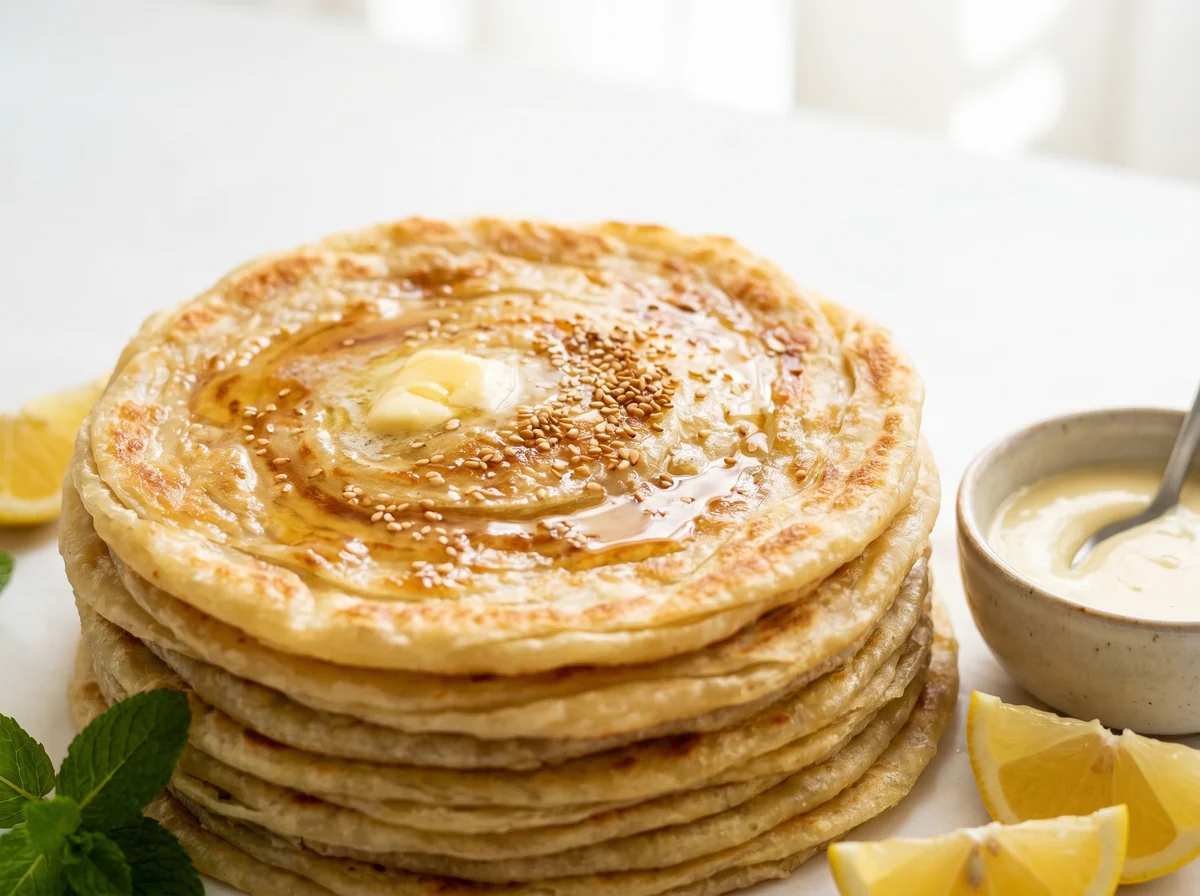
Moroccan flaky flatbread -- dough stretched paper-thin, folded in layers with oil and semolina, then pan-cooked until golden; a flaky breakfast bread, medium glycemic load, contains gluten.
Msemen (also known as rghaif) is a beloved traditional Moroccan bread; its name comes from smen (clarified butter) for the fat used in its folding. It is prepared by stretching the dough paper-thin, then folding it with oil and semolina in layers and pan-cooking it until crisp outside and soft inside.
It is a cornerstone of Moroccan breakfast and afternoon tea (the meal between lunch and dinner, known as asrouniya) alongside mint tea, and is eaten with honey, butter, and cheese. It is also used as the base for dishes like rfissa. Making it is an art requiring skill in thin stretching, and it is a symbol of the warmth and elegance of Moroccan breakfast.
Preparation Steps
Knead the dough
Mix the flour, semolina, yeast, salt, and sugar. Add warm water gradually and knead well for ten minutes until a very soft, smooth, elastic, slightly sticky dough forms. A very soft dough is the secret of flaky msemen; it stretches thin without tearing.
Divide and oil the balls
Divide the dough into small balls, coat them generously with oil, arrange on an oiled tray, and leave to rest for fifteen minutes. Resting and oiling makes the balls pliable and easy to stretch, and the oil prevents sticking.
Stretch very thin
On a well-oiled surface, take a ball and stretch it with your hands into a very, very thin sheet, almost transparent (the thinner, the flakier the msemen). Extreme thinness is the key to the layered, flaky texture. Sprinkle a little semolina over it.
Fold into a square
Brush the sheet with oil (or butter) and sprinkle semolina, then fold the edges towards the centre to form a multi-layered square (fold right and left, then top and bottom). Folding with oil and semolina between the layers creates the flakiness. Leave the squares to rest briefly.
Second stretch and pan-cook
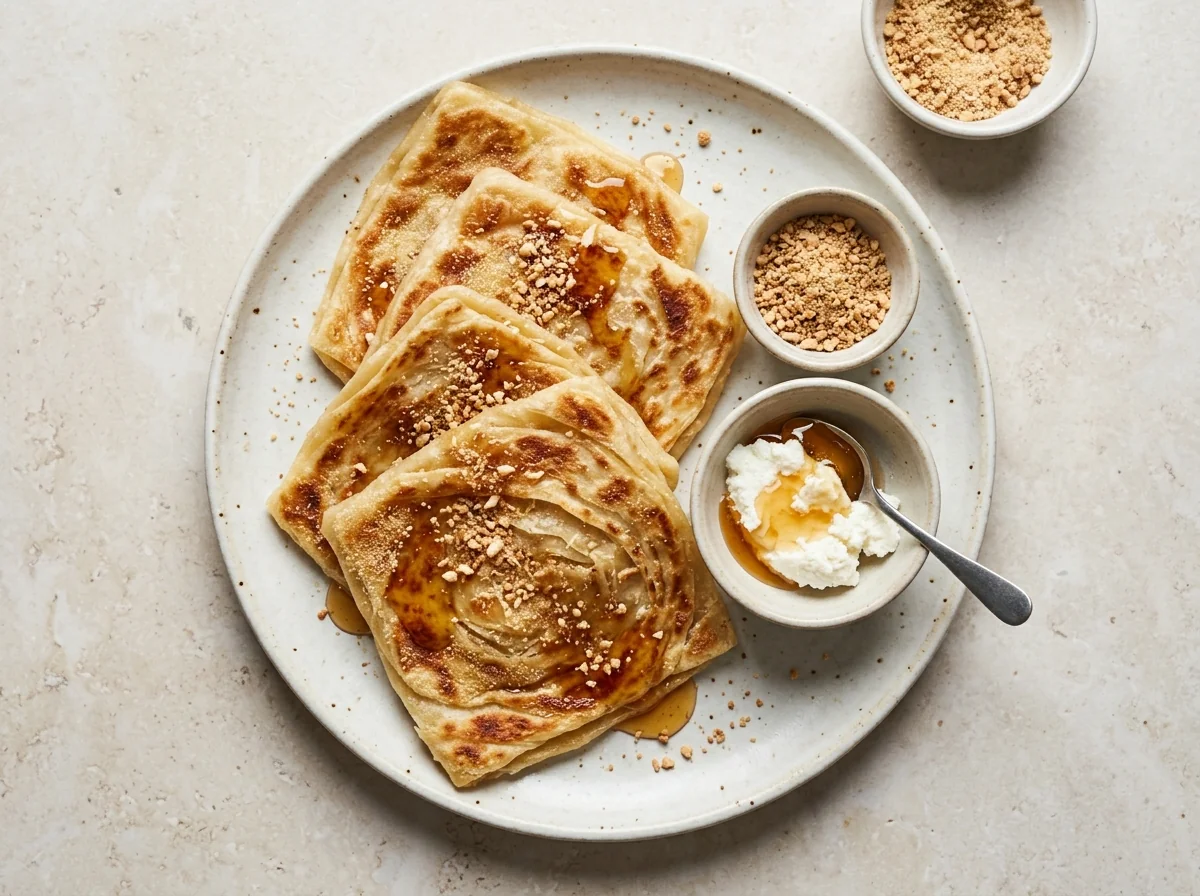
Gently stretch each square slightly larger (without tearing the layers), then pan-cook on a hot griddle or pan with a little oil, turning until golden and crisp on both sides with the layers showing. Press gently to cook the inside.
Serve
Serve the msemen hot with honey, butter and honey, or Moroccan mint tea as a delicious, flaky Moroccan breakfast. It is a beloved traditional Moroccan bread (also known as rghaif), prepared for breakfast and afternoon tea; its flaky layers, crisp outside and soft inside, make it distinctive, a symbol of the warmth and elegance of Moroccan breakfast.
Blood Sugar Impact
The glycemic index (GI) measures how quickly a food raises blood sugar, while the glycemic load (GL) measures how much a full serving raises it. Together they give the complete picture.
Glycemic Index
GI
73High
Low0–55Medium56–69High70+
A low value (≤55) means a gradual rise in blood sugar — the most suitable range for diabetes and insulin resistance.
Glycemic Load
GL
29High
Low0–10Medium11–19High20+
Glycemic load reflects the impact of the full serving. To lower it: take half a serving, or pair the recipe with a source of protein and fiber.
Nutritional Information
Per ServingMakes 8 servings · one serving is about 55 g of raw ingredients
Calories204 kcal10%of Daily Value*
Protein6 g12%of Daily Value*
Carbohydrates42 g15%of Daily Value*
Fat1 g1%of Daily Value*
Fiber2 g7%of Daily Value*
Sodium1 mg0%of Daily Value*
Potassium74 mg2%of Daily Value*
Phosphorus67 mg5%of Daily Value*
* Percent Daily Values are based on a 2,000-calorie diet per FDA food-label reference values — your daily needs may be higher or lower. Values are derived from the recipe's ingredients via the USDA database.
Troubleshooting
The most common problems when preparing Moroccan Msemen, and how to fix them:
Dough tears when stretching
Dough is too firm or has not rested. Knead a very soft, smooth dough, oil it and let it rest, and stretch it on a well-oiled surface. A soft, rested, oiled dough stretches thin without tearing.
Msemen is not flaky
Not stretched thin enough, or not enough oil and semolina between the layers. Stretch the dough very thin -- almost transparent -- and brush with oil and sprinkle semolina before folding. Thinness, fat, and semolina between the layers create the flakiness.
Hard and dry
Cooked too long or heat too high. Cook over medium heat until golden and just crisp; do not overdo it. Overcooking dries it out; good msemen is crisp outside and soft inside.
Raw inside
Heat too high so the outside burned fast. Cook over medium heat and press the msemen lightly so the inside cooks through; turn several times. Moderate heat cooks the inner layers before the outside burns.
Sticks to the pan
Pan not oiled or not hot enough. Brush the pan with a little oil and heat it well before placing the msemen; a cold or dry pan makes the dough stick.
Storage and Make-Ahead
Room temperature
Msemen keeps in an airtight bag at room temperature for one to two days. Reheat on a griddle or pan briefly to restore its crispness and warmth. Best fresh and hot; ideally prepare and eat it immediately.
Freezer
Freeze cooked msemen in a bag with layers of baking paper between them for up to two months. Thaw and reheat on a griddle. Raw shaped squares can also be frozen and cooked from frozen -- practical for a quick breakfast.
Advance preparation
Shape the squares and refrigerate or freeze them, then pan-cook them fresh at breakfast time. This cuts the morning work (stretching and folding) on a busy day.
Food safety
Msemen is a cooked bread; store it sealed, away from moisture, and reheat well before serving. Dough containing yeast is safe after full cooking on the griddle.
Tested Ingredient Substitutions
Original Ingredient
Tested Substitute
Ratio
Flavor Difference
White plain flour
Blend in wholegrain flour
Up to one third
Raises fibre and lowers the glycemic load slightly, while keeping the ability to stretch thin (too much wholegrain makes stretching difficult)
Oil in the folding
Reduce it or use butter
As desired
Reducing the oil lowers the fat (with less flakiness); butter gives a richer flavour (adds dairy)
Honey for serving
Low-fat cheese or egg
As desired
Adds protein and balances the meal, lowering the sugar compared to honey -- a more filling and balanced breakfast
How Much Does It Make? Scaling Guide
Pieces
Flour
Semolina
Yeast
4 (half recipe)
1.5 cups
1/4 cup
1/2 spoon
8 (base)
3 cups
1/2 cup
1 tsp
16 (gathering)
6 cups
1 cup
2 spoons
EEINA Nutrition Tip
Msemen is a delicious breakfast bread, but it is richer in fat than ordinary bread (from the oil in the folding). Its challenges are fat, white flour, and medium glycemic load, especially with honey. To lighten: use moderate oil in the folding (not drenched), mix in some wholegrain flour, and limit yourself to one piece with protein (egg or low-fat cheese) to balance the meal, and moderate the honey. It is a Moroccan breakfast pleasure in moderation as part of a balanced meal.
Add This Recipe to Your Plan
The EEINA app saves your favorite recipes, calculates them from their real ingredients, and shows your daily numbers toward your goal. Try it free now.
A Moroccan flaky bread (also known as rghaif), prepared by stretching the dough paper-thin, folding it with oil and semolina in layers, and pan-cooking it. Crisp outside and soft inside, a cornerstone of Moroccan breakfast and afternoon tea alongside mint tea.
What is the secret of the flakiness?
Three factors: a very soft dough stretched very thin -- almost transparent; fat (oil or butter) and semolina between the layers when folding; and a square fold that stacks the layers. Thinness, fat, and semolina between the layers create the distinct, separated flaky layers when cooked.
Is msemen healthy?
It is a delicious breakfast bread, but richer in fat than ordinary bread (oil in the folding) with a medium glycemic load. Reduce the oil, blend in wholegrain flour, limit yourself to one piece with protein (egg/cheese), and moderate the honey. A Moroccan breakfast pleasure in moderation as part of a balanced meal.
What is the difference between msemen and baghrir?
Msemen is a flaky folded bread with oil and semolina (crisp, layered), while baghrir (the thousand-hole crepe) is a spongy, porous pancake cooked on one side only. Both are Moroccan and served with honey, but their texture and method are completely different.