Moroccan skillet flatbread — rounds of leavened dough cooked on a griddle until they puff and hollow inside, a pocket bread to stuff or eat alongside meals, moderate in carbohydrates and contains gluten.
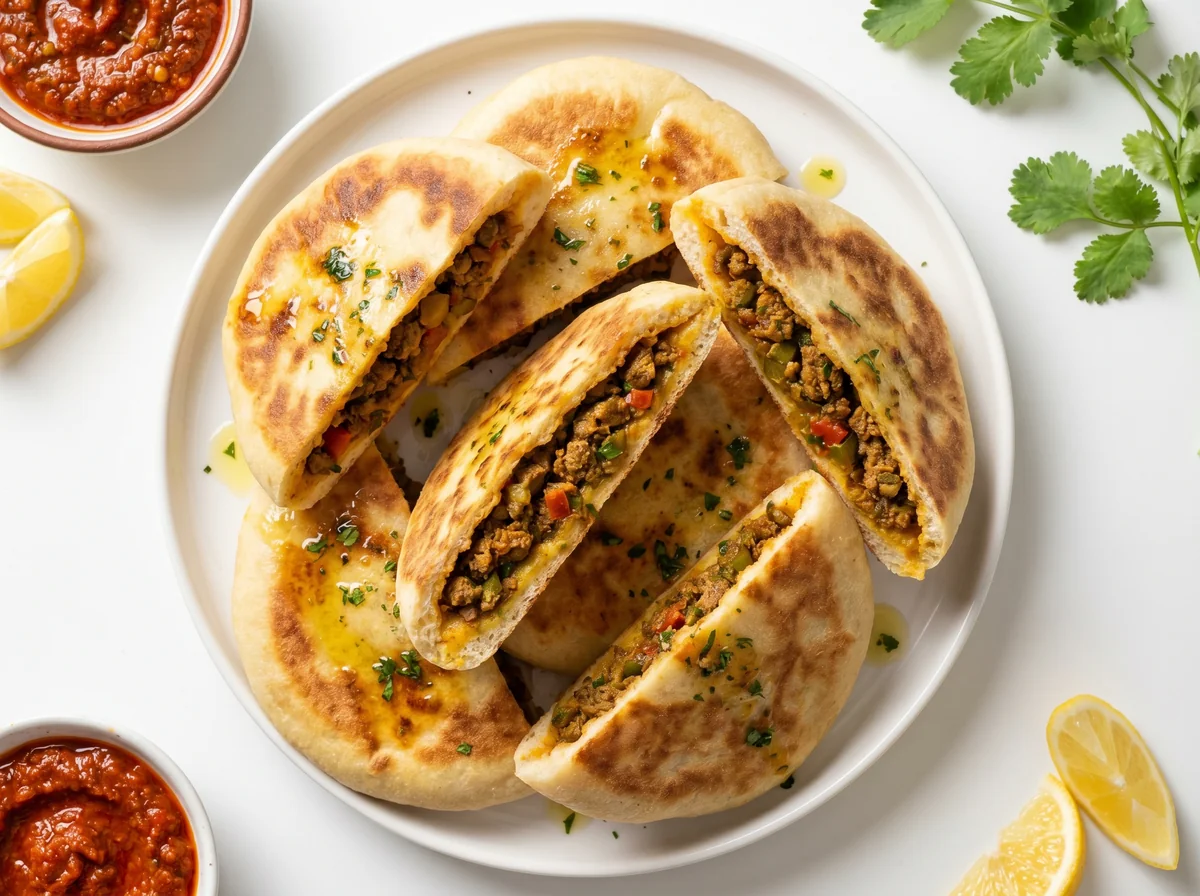
Batbout is a beloved everyday Moroccan bread cooked on a griddle or skillet (no oven needed) from a leavened dough of flour and semolina that puffs and hollows inside, becoming a pocket bread much like Arabic flatbread. Its name comes from its puffed shape.
It is a practical home bread — for those without an oven or when speed matters — eaten alongside food or split and stuffed like a sandwich (meat, chicken, vegetables, tuna, cheese) using its hollow pocket. Batbout is part of the daily Moroccan table for breakfast, lunch, dinner and sandwiches — light and easy. Its soft texture, hollow pocket and ease of griddle cooking have made it a beloved home bread and a symbol of the practical everyday Moroccan kitchen.
Preparation Steps
Make the dough
Mix the flour, semolina, yeast, sugar and salt together, then add warm water gradually and knead until you have a soft, smooth, elastic dough. Batbout dough is soft (the semolina gives it a distinctive texture), and thorough kneading develops the elasticity needed for puffing.
First rise
Cover the dough and let it ferment in a warm place until doubled in size (about an hour). Fermentation generates the gases that make batbout puff and hollow during cooking. A well-risen dough is essential for the pocket.
Shape
Divide the dough into balls and roll them into rounds of medium thickness (not too thin), then arrange them on a cloth dusted with semolina. Moderate thickness helps puffing and hollowing; rounds that are too thin may not puff well.
Second rise
Cover the rounds and let them rest and rise again for about half an hour (they will puff slightly and become light). The second rise is important: rested, well-risen dough puffs better and hollows when it hits the heat.
Cook on the griddle
Cook the batbout rounds on a griddle or non-stick pan over medium heat without oil, turning them, until they puff, are golden on both sides, and hollow inside (becoming a pocket). Medium heat lets the internal steam inflate them without burning the surface before puffing.
Serve
Serve batbout warm: eat it alongside food like bread, or split and stuff it like a sandwich (meat, chicken, vegetables, tuna, cheese), making use of its handy hollow pocket. It is a beloved everyday Moroccan bread (for breakfast, meals and sandwiches), a practical no-oven alternative. Its lightness, hollow pocket and soft texture have made it a favourite home bread and a symbol of the everyday Moroccan table.
Blood Sugar Impact
The glycemic index (GI) measures how quickly a food raises blood sugar, while the glycemic load (GL) measures how much a full serving raises it. Together they give the complete picture.
Glycemic Index
GI
71High
Low0–55Medium56–69High70+
A low value (≤55) means a gradual rise in blood sugar — the most suitable range for diabetes and insulin resistance.
Glycemic Load
GL
26High
Low0–10Medium11–19High20+
Glycemic load reflects the impact of the full serving. To lower it: take half a serving, or pair the recipe with a source of protein and fiber.
Nutritional Information
Per ServingMakes 8 servings · one serving is about 50 g of raw ingredients
Calories190 kcal10%of Daily Value*
Protein6 g12%of Daily Value*
Carbohydrates39 g14%of Daily Value*
Fat1 g1%of Daily Value*
Fiber2 g7%of Daily Value*
Sodium1 mg0%of Daily Value*
Potassium78 mg2%of Daily Value*
Phosphorus65 mg5%of Daily Value*
* Percent Daily Values are based on a 2,000-calorie diet per FDA food-label reference values — your daily needs may be higher or lower. Values are derived from the recipe's ingredients via the USDA database.
Troubleshooting
The most common problems when preparing Moroccan Batbout (Pocket Flatbread), and how to fix them:
Batbout did not puff (did not hollow)
Insufficient rising or unsuitable heat. Let the dough rise well twice, and cook over medium heat (which generates steam to inflate it). Active yeast, adequate rising and the right temperature are the secret to the hollow pocket.
Hard or dry
Dry dough or overcooked. Knead a soft (not dry) dough, and do not overcook (it dries out). Soft batbout needs moist dough and just enough cooking to puff and set.
Surface burns before puffing
Heat is too high. Cook over medium heat (not high) — high heat burns the surface before the internal steam forms and inflates it. Medium heat allows puffing and browning together.
Dense and heavy
Insufficient rising or poor kneading. Knead well (develops gluten) and let it rise until doubled. Well-risen dough is light and puffy; under-risen dough is dense and heavy.
Sticks to the pan
Unsuitable pan. Use a good non-stick griddle or skillet (batbout is cooked with almost no oil) and make sure it is well preheated before placing the dough. A hot, good surface prevents sticking.
Storage and Make-Ahead
Room temperature
Batbout keeps in a sealed bag for one to two days at room temperature. It dries slightly, so reheat it on the griddle or sprinkle with water and warm to soften. Best fresh and warm.
Freezer
Cooked batbout freezes beautifully for one to two months in a sealed bag. Reheat from frozen on a griddle or in a toaster. Practical for making a batch and warming individual rounds as needed for meals or sandwiches.
Dough
You can prepare the dough and leave it in the fridge (slow cold rise) overnight, then shape and cook it fresh in the morning. Cold slow rising gives a deeper flavour and saves time.
Food safety
Plain bread keeps at room temperature briefly or frozen. If batbout is stuffed (meat, chicken, tuna, cheese) refrigerate the stuffed version and do not leave it out of the fridge for more than two hours.
Tested Ingredient Substitutions
Original Ingredient
Tested Substitute
Ratio
Flavor Difference
White flour
Whole-wheat flour (all or part)
Same quantity
Adds fibre and lowers the glycemic index with a slightly denser texture and richer flavour; start with half whole-wheat and half white
Semolina
Flour only
Same quantity
Semolina gives the distinctive texture and some protein to batbout; without it you get a regular pocket bread that is a little softer
Heavy filling (processed meats)
Chicken, vegetables and tuna
As desired
A healthier pocket filling (lean protein and vegetables) instead of fatty, high-sodium processed meats
How Much Does It Make? Scaling Guide
Discs
Flour
Semolina
Yeast
4 (small)
1 cup
1/2 cup
1/2 tsp
8 (base)
2 cups
1 cup
1 tsp
16 (batch)
4 cups
2 cups
2 tsp
EEINA Nutrition Tip
Batbout is a low-fat bread (cooked with almost no oil), and mixing in semolina adds some protein. The challenge is the carbohydrates (white flour) and its moderate glycemic load, as with any bread. For a better version: use whole-wheat flour (all or part) with the semolina (adds fibre and lowers the index), stuff it with a healthy filling (chicken and vegetables or tuna rather than fatty processed meats), and control portion size. A practical low-fat bread, best with whole grains and a balanced filling.
Add This Recipe to Your Plan
The EEINA app saves your favorite recipes, calculates them from their real ingredients, and shows your daily numbers toward your goal. Try it free now.
A beloved everyday Moroccan bread cooked on a griddle or skillet (no oven) from a leavened dough of flour and semolina that puffs and hollows inside (a pocket bread). Eaten alongside food or split and stuffed like a sandwich. A practical everyday bread, prized for its lightness, hollow pocket and ease of griddle cooking.
Why does batbout hollow?
Like Arabic flatbread, fermentation generates gases, and when cooking over medium heat the water in the dough turns to steam that quickly expands, inflating the round and separating its two layers (creating the pocket). Good rising, the right heat and moderate thickness are the secret to a successful hollow.
What is the difference between batbout and Arabic flatbread?
Both are puffed pocket breads, but batbout is Moroccan, cooked on a griddle (no oven) and contains semolina (for a distinctive texture), while Arabic flatbread is usually baked in a very hot oven. Batbout is more practical for home (no oven needed), and is slightly softer thanks to the semolina.
Is batbout healthy?
It is a low-fat bread (cooked with almost no oil), and mixing in semolina adds protein. The challenge is the carbohydrates (white flour) and its moderate glycemic load, as with any bread. Use whole-wheat flour with semolina (fibre), stuff it with chicken, vegetables or tuna, and control your portion. A practical low-fat bread, best with whole grains.
Sources: University of Sydney · Gulf GSO · Our methodology · Updated on