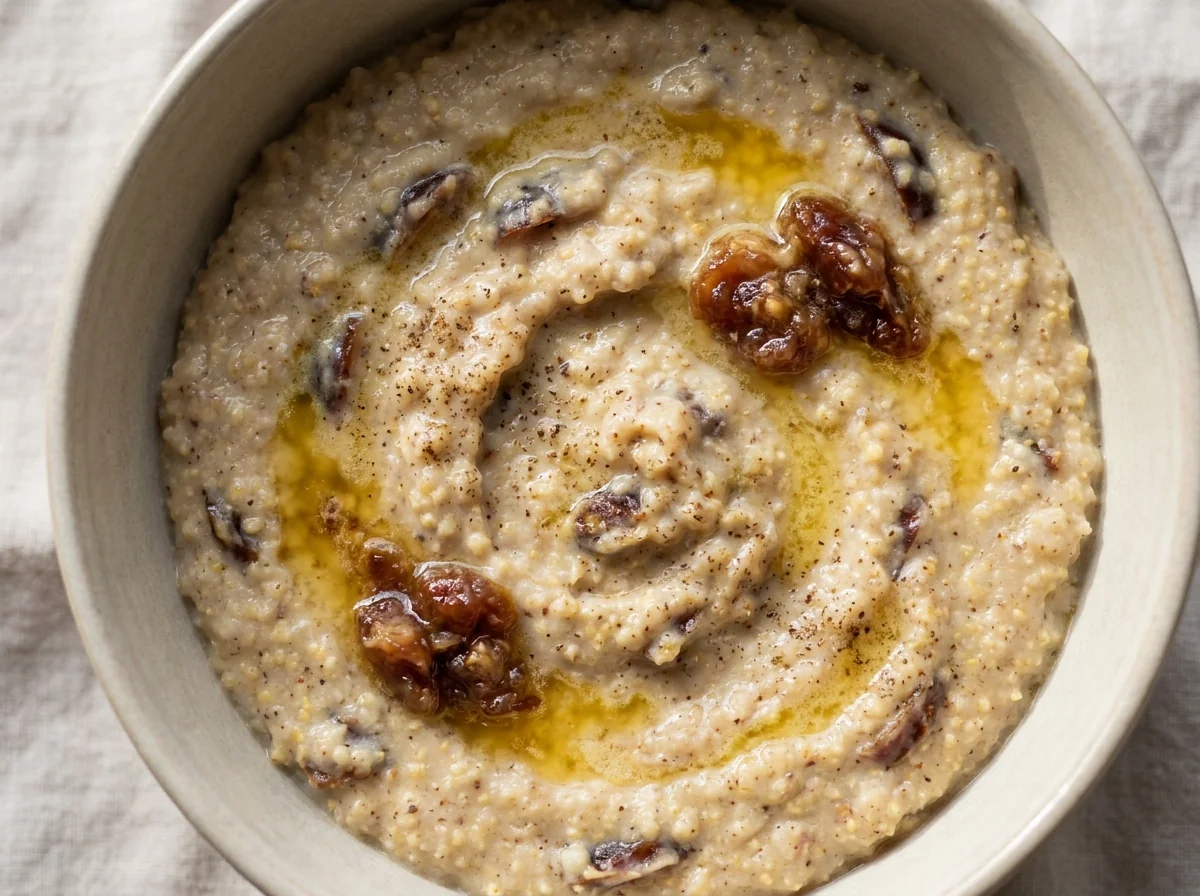
A warm traditional porridge of millet flour that we serve to the postpartum mother, sweetened with dates instead of sugar and scented with cardamom, making a comforting breakfast that gives her energy in the morning.
Preparation Steps
Prepare the millet slurry
Mix the millet flour with the cold water well until the lumps dissolve, because mixing it cold before heating prevents lumps from forming in the porridge.
Warm the milk
Heat the milk in a thick-bottomed pot over low heat until steam begins to rise without it boiling hard, since gentle heat protects the milk from sticking.
Add the millet slurry
Pour the millet mixture into the warm milk gradually while stirring constantly with a hand whisk, because adding it slowly while stirring gives a smooth porridge with no lumps.
Cook and thicken
Keep stirring over low heat for about 15 minutes until the porridge thickens and begins to pull away from the sides of the pot, which is the sign the millet is done.
Add the dates and cardamom
Add the mashed dates, the ground cardamom, and a little salt, and stir until the dates blend in and give their natural sweetness and the aroma of cardamom spreads.
Add the ghee and serve
Add the ghee and stir until it melts and gives a glossy texture and a warm flavor, then pour it into bowls and serve it hot since it firms up as it cools.
Blood Sugar Impact
The glycemic index (GI) measures how quickly a food raises blood sugar, while the glycemic load (GL) measures how much a full serving raises it. Together they give the complete picture.
Glycemic Index
GI
59Medium
Low0–55Medium56–69High70+
A low value (≤55) means a gradual rise in blood sugar — the most suitable range for diabetes and insulin resistance.
Glycemic Load
GL
33High
Low0–10Medium11–19High20+
Glycemic load reflects the impact of the full serving. To lower it: take half a serving, or pair the recipe with a source of protein and fiber.
Nutritional Information
Per ServingMakes 4 servings · one serving is about 300 g of raw ingredients
Calories372 kcal19%of Daily Value*
Protein9 g18%of Daily Value*
Carbohydrates60 g22%of Daily Value*
Fat11 g14%of Daily Value*
Fiber4 g14%of Daily Value*
Sodium163 mg7%of Daily Value*
Potassium497 mg11%of Daily Value*
Phosphorus259 mg21%of Daily Value*
* Percent Daily Values are based on a 2,000-calorie diet per FDA food-label reference values — your daily needs may be higher or lower. Values are derived from the recipe's ingredients via the USDA database.
Troubleshooting
The most common problems when preparing Millet and Date Postpartum Porridge, and how to fix them:
Lumps formed in the porridge
The flour was not mixed well with the cold water before heating; strain the porridge through a sieve or whisk it until smooth.
The porridge became dry after a while
The millet keeps thickening; add hot milk and stir until the desired creamy texture returns.
It tastes heavy and starchy
It may not have cooked enough; extend the cooking a little over low heat while stirring until the millet is fully done and the starchiness eases.
Storage and Make-Ahead
Refrigerator
Keep in an airtight container for up to two days, and reheat with added milk or water to adjust the texture.
Reheating
Reheat over low heat while stirring with a little liquid, because it firms up considerably after chilling.
Serving
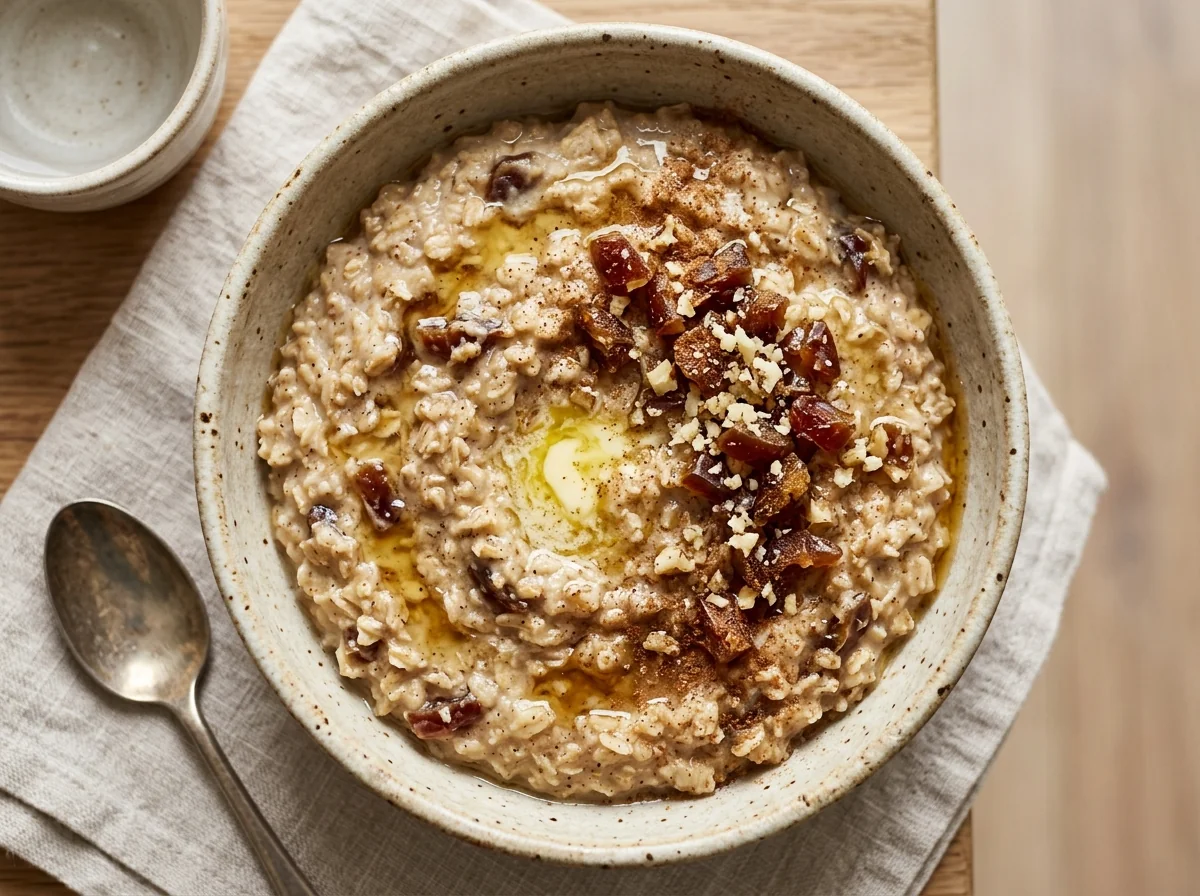
Serve hot in a deep bowl with a sprinkle of cinnamon.
Tested Ingredient Substitutions
Original Ingredient
Tested Substitute
Ratio
Flavor Difference
Millet flour
Fine cornmeal
Same weight
A similar texture and a lighter color; it stays gluten-free.
Milk
Almond milk or oat milk
Same amount
A plant-based alternative for those who cannot tolerate lactose; a milder flavor and lower fat.
Ghee
Olive oil or butter
Same weight
Changes the flavor slightly; olive oil is lighter and butter is closer to ghee.
Mashed dates
Date molasses
Half the weight
A concentrated sweetness and a smoother texture; add it gradually to taste.
How Much Does It Make? Scaling Guide
Ingredient
2 servings
4 servings (base)
8 servings
Millet flour
80 g
160 g
320 g
Milk
300 ml
600 ml
1200 ml
Water
150 ml
300 ml
600 ml
Mashed dates
60 g
120 g
240 g
EEINA Nutrition Tip
Millet (sorghum) is a gluten-free grain rich in iron and magnesium. Stir the porridge continuously while cooking to avoid lumping and sticking.
Add This Recipe to Your Plan
The EEINA app saves your favorite recipes, calculates them from their real ingredients, and shows your daily numbers toward your goal. Try it free now.
No single ingredient increases milk supply on its own; supply depends on frequent breastfeeding. Millet and dates are a source of energy and iron, and milk is a source of calcium, so it is a warm breakfast that gives the mother what she needs in the morning.
Is it suitable for those who cannot tolerate gluten?
Yes, millet (sorghum) is a naturally gluten-free grain, but make sure the flour is not blended with other grains that contain gluten.
How do I make it lighter to digest?
Use the milk diluted with water and reduce the ghee, and cook the millet well until fully soft, since sufficient cooking makes it easier to digest.