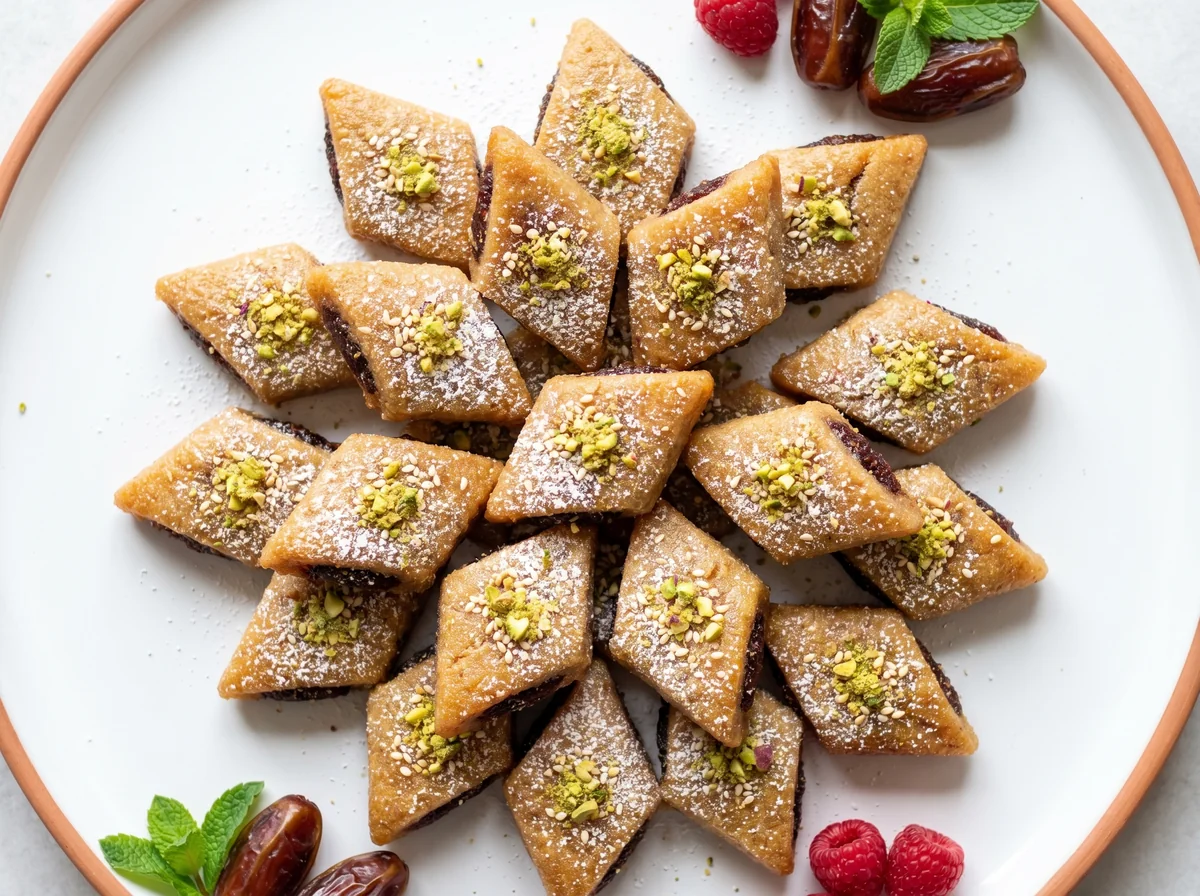
A North African sweet — diamond-shaped semolina pastries with olive oil, stuffed with date paste, fried or baked, then dipped in honey. A celebration and special-occasion sweet with a medium glycemic load, containing gluten.
Makroud is the most famous sweet of North Africa (Tunisia, Algeria, Libya, and Morocco), with ancient Tunisian origins attributed to the city of Kairouan. Diamond shapes of semolina dough with olive oil, stuffed with date paste, fried or baked, then dipped in honey.
It is associated with Eid al-Fitr, Eid al-Adha, celebrations, and weddings, served with mint tea. The diamond shape patterned with a wooden mold is its hallmark. It is a symbol of Eid hospitality in the Maghrebi kitchen, and every household has its inherited mold.
Preparation Steps
Knead the semolina
Rub the semolina with olive oil by hand until the oil is absorbed and it resembles damp sand, then leave it to rest for half an hour (allowing the semolina to absorb the oil). Then add the orange blossom water gradually and knead gently until the dough holds together (without over-kneading). Resting the semolina is the secret to the right texture.
Prepare the date filling
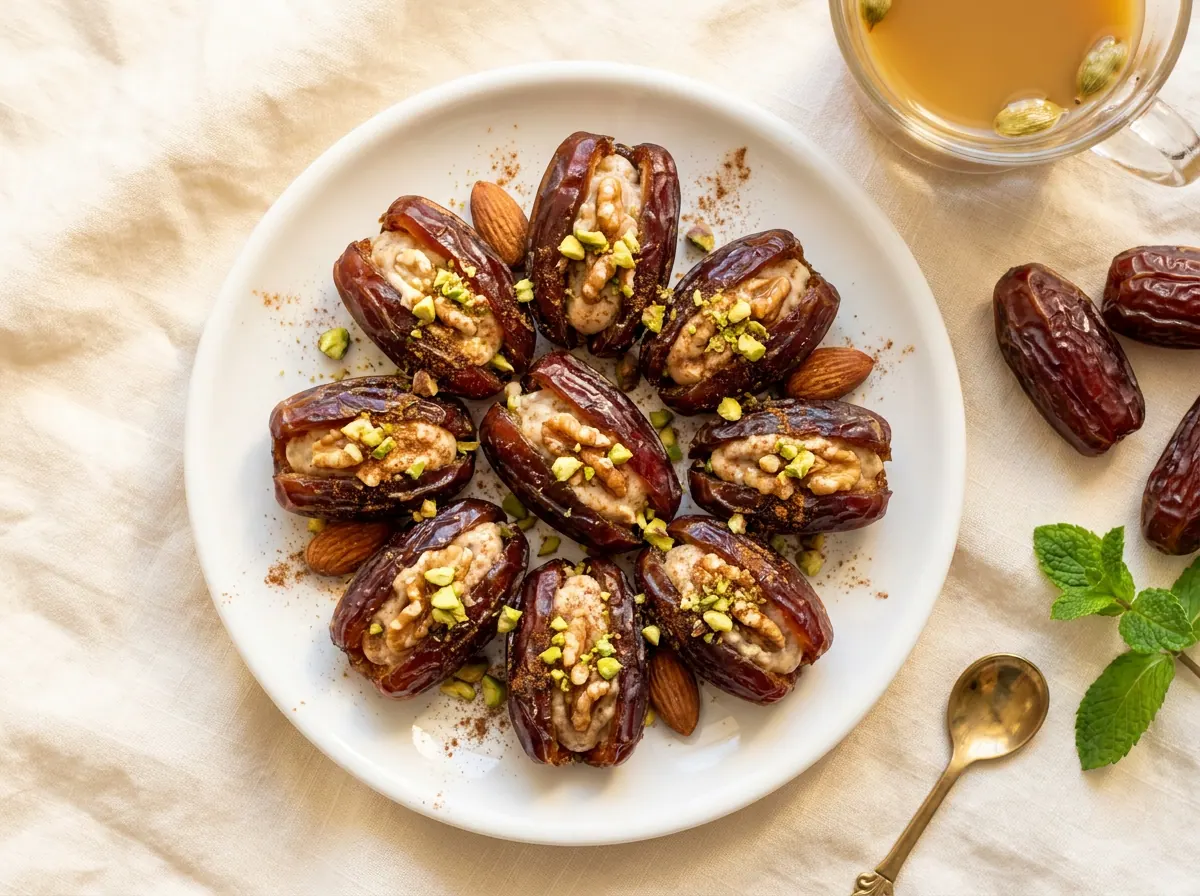
Knead the date paste with the cinnamon, orange zest, and drops of oil until it softens and becomes shapeable. Roll it into long thin cylinders. The date spiced with cinnamon and orange is the distinctive flavor of makroud.
Shape the makroud
Traditional method: Roll the semolina dough into a flat rectangular strip, place a date cylinder along the center lengthwise, fold the dough around the date, then press the surface with a makroud mold (or a fork), and cut into diagonal diamond shapes. The pattern and diamond shape are the makroud hallmark.
Fry or bake
For frying (traditional): fry the diamonds in medium-heat oil until golden, then drain. For baking (lighter): bake in a 180°C oven for about fifteen minutes until golden. Frying is richer; baking is the lighter EEINA option.
Dip in honey
Dip the hot makroud in warm honey (or sugar syrup) for a minute until it absorbs it, then lift to drain. Dipping while hot allows the makroud to absorb the honey best. The honey gives makroud its shine and final sweetness.
Garnish and serve
Sprinkle sesame seeds over the dipped makroud if desired, and leave to cool so the honey sets. Serve with Moroccan mint tea or coffee. Makroud is a celebration sweet of Tunisia, Algeria, Libya, and Morocco, combining golden semolina with sweet date filling.
Blood Sugar Impact
The glycemic index (GI) measures how quickly a food raises blood sugar, while the glycemic load (GL) measures how much a full serving raises it. Together they give the complete picture.
Glycemic Index
GI
57Medium
Low0–55Medium56–69High70+
A low value (≤55) means a gradual rise in blood sugar — the most suitable range for diabetes and insulin resistance.
Glycemic Load
GL
15Medium
Low0–10Medium11–19High20+
Glycemic load reflects the impact of the full serving. To lower it: take half a serving, or pair the recipe with a source of protein and fiber.
Nutritional Information
Per ServingMakes 24 servings · one serving is about 60 g of raw ingredients
Calories213 kcal11%of Daily Value*
Protein3 g6%of Daily Value*
Carbohydrates29 g11%of Daily Value*
Fat10 g13%of Daily Value*
Fiber2 g7%of Daily Value*
Sodium1 mg0%of Daily Value*
* Percent Daily Values are based on a 2,000-calorie diet per FDA food-label reference values — your daily needs may be higher or lower. Values are derived from the recipe's ingredients via the USDA database.
Troubleshooting
The most common problems when preparing Makroud with Dates, and how to fix them:
The makroud is hard
Over-kneaded or the semolina did not rest enough. Rub the semolina with the oil and rest it half an hour, then knead gently just until the dough holds together. Excessive kneading activates gluten and makes the makroud tough.
The makroud fell apart in the oil
The dough was too dry, too much filling, or the sealing was weak. Adjust the dough moisture, use a moderate amount of date filling, and seal the dough around it firmly before cutting and frying.
The filling is dry and hard
The date paste is too dry. Knead it with drops of oil and cinnamon until it softens and becomes shapeable. Dry dates are hard to roll and stay hard after cooking.
The makroud is greasy and absorbed too much oil
The oil was cold when frying. Make sure it is hot (the makroud floats and sizzles around it), or bake in the oven instead of frying for a much lighter result.
The pattern is not clear
The dough is too soft or the mold was not dusted. Press the dough firmly into the patterned mold and dust it with a little semolina, or use a fork to make a simple pattern.
Storage and Make-Ahead
Room temperature
Makroud keeps in an airtight container at room temperature for two to three weeks (honey is a natural preservative). Separate layers with baking paper. It is a sweet made days before Eid.
Freezer (-18°C)
Baked makroud (before dipping) freezes for two months. Warm and dip in honey after thawing. Shaped but unbaked diamonds can also be frozen and fried or baked directly from frozen.
Advance preparation
Rub the semolina and rest it; prepare the date filling in advance. Shape and fry or bake the next day. Keeps well, so suits early preparation for Eid hospitality.
Note
Allow the makroud to cool and the honey to set before storing. Keep in an airtight container away from humidity to stay firm.
Tested Ingredient Substitutions
Original Ingredient
Tested Substitute
Ratio
Flavor Difference
Frying in oil
Baking in the oven
—
Greatly reduces fat while preserving most of the flavor — the lighter EEINA option.
Dipping in honey
Sugar syrup or date molasses
To taste
Honey is the traditional choice with the richest flavor. Sugar syrup is more affordable. date molasses complements the filling's flavor.
Olive oil in the dough
ghee or butter
Same quantity
Olive oil is traditional Tunisian and keeps it dairy-free. ghee gives a richer flavor (adds dairy).
How Much Does It Make? Scaling Guide
Number of pieces
Semolina
Date paste
Olive oil
12 (half recipe)
1.5 cups
200 g
0.25 cup
24 (base)
3 cups
400 g
0.5 cup
48 (Eid hospitality)
6 cups
800 g
1 cup
EEINA Nutrition Tip
Makroud is a celebration sweet, but it is smarter than many sweets: stuffed with dates that sweeten it naturally with their fiber, and kneaded with olive oil rather than ghee, so the glycemic load per piece is medium. Moderation is the key: one or two pieces with tea. To lighten it: bake instead of frying and dip in less honey or just dust. For diabetics: a small piece on an occasion with attention.
Add This Recipe to Your Plan
The EEINA app saves your favorite recipes, calculates them from their real ingredients, and shows your daily numbers toward your goal. Try it free now.
Makroud is a Maghrebi sweet of semolina diamonds stuffed with dates and dipped in honey, originating in Tunisia and attributed to the city of Kairouan, then spreading to Algeria, Libya, and Morocco. It is an essential celebration and Eid sweet in North Africa.
Why should the semolina dough rest?
Resting (half an hour after rubbing the semolina with oil) allows the semolina to absorb the oil and swell, resulting in a dough that is easy to shape and holds together. Skipping it gives a crumbly dough.
Fry or bake?
Frying is traditional and richer. Baking is the lighter EEINA option (in a 180°C oven until golden). Both are dipped in honey afterward. Baking greatly reduces fat with a similar flavor.
Is makroud suitable for diabetics?
It is a celebration sweet with a medium glycemic load (semolina, dates, and honey). The dates sweeten it naturally with their fiber, but in strict moderation: a small piece on an occasion with attention. Bake it and dip in less honey to lighten it.