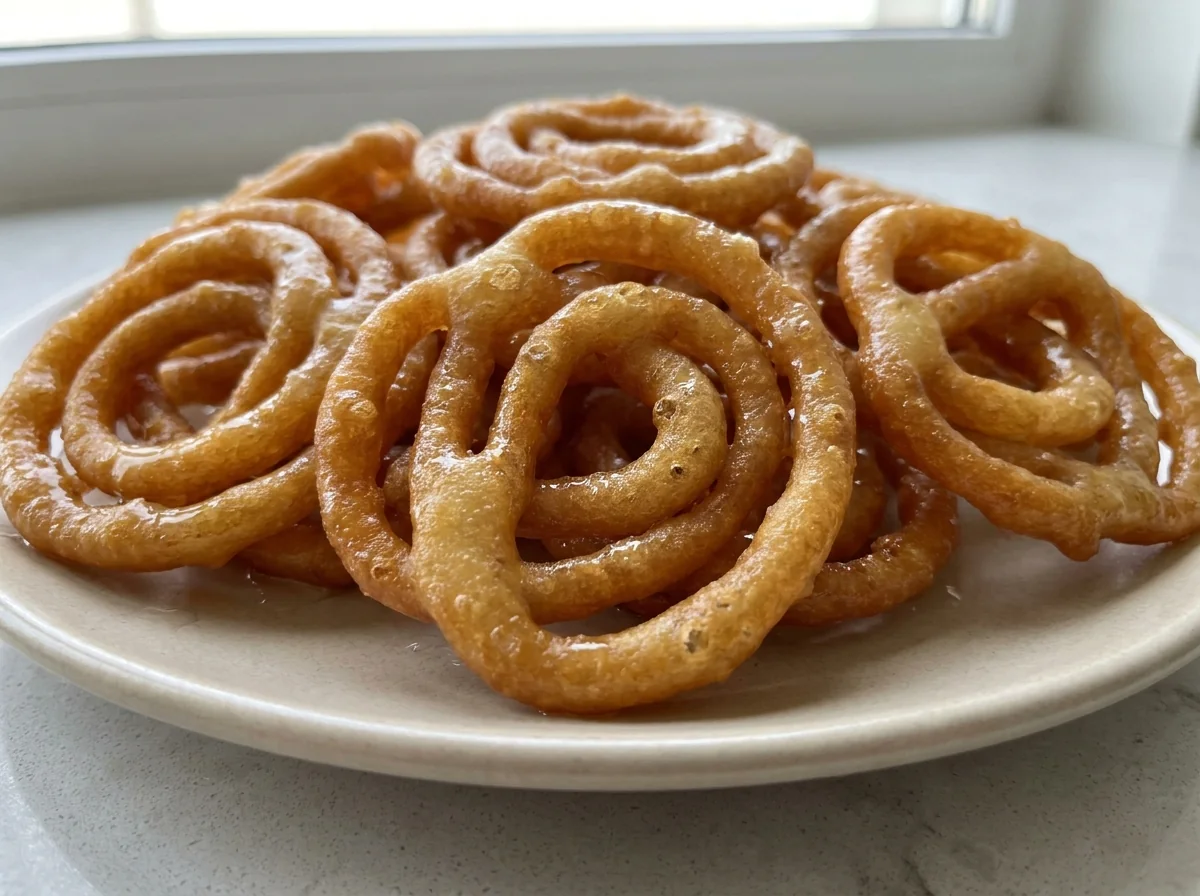
Levantine Moushabak · a thin batter piped into hot oil in interlaced shapes until crisp, then dipped in syrup. A popular bright-orange sweet, with values from the Lebanese University lab analysis.
Moushabak is a popular Levantine sweet known in markets and seasons, recognized by its interlaced shape and bright orange color from the syrup. Its pourable batter is fried into interlaced shapes and dipped in syrup.
Its secret is a fermented pourable batter, hot oil, and a quick dip in cold syrup. EEINA's version keeps the method, and its values are from the Lebanese University lab analysis; it is fried and high in sugar, eaten in small portions.
Preparation Steps
Prepare the batter
Mix the flour, starch, and yeast and add the warm water gradually until you have a smooth, pourable batter like thin cream.
Ferment
Cover the batter and let it rest and ferment for about an hour until bubbles appear on the surface.
Pipe into the oil
Heat plenty of oil and pipe the batter from a funnel or a bag with a small opening in interlaced circular motions over the oil to form the lattice shape.
Fry until golden
Fry until the Moushabak is golden and crisp on both sides, then lift and drain it from the oil.
Dip in syrup
Dip the hot Moushabak in cold syrup for a few seconds, then lift it to drain. A fried, high-sugar sweet eaten in small portions.
Blood Sugar Impact
The glycemic index (GI) measures how quickly a food raises blood sugar, while the glycemic load (GL) measures how much a full serving raises it. Together they give the complete picture.
Glycemic Index
GI
76High
Low0–55Medium56–69High70+
A low value (≤55) means a gradual rise in blood sugar — the most suitable range for diabetes and insulin resistance.
Glycemic Load
GL
17Medium
Low0–10Medium11–19High20+
Glycemic load reflects the impact of the full serving. To lower it: take half a serving, or pair the recipe with a source of protein and fiber.
Nutritional Information
Per ServingMakes 8 servings · one serving is about 30 g of raw ingredients
Calories134 kcal7%of Daily Value*
Protein3 g6%of Daily Value*
Carbohydrates23 g8%of Daily Value*
Fat3 g4%of Daily Value*
Fiber1 g4%of Daily Value*
Sodium1 mg0%of Daily Value*
* Percent Daily Values are based on a 2,000-calorie diet per FDA food-label reference values — your daily needs may be higher or lower. Values are derived from the recipe's ingredients via the USDA database.
Troubleshooting
The most common problems when preparing Levantine Moushabak, and how to fix them:
The Moushabak is not crisp
The oil is not hot enough or the batter is thick. Heat the oil well and keep the batter thin and fermented.
It absorbs too much oil
The oil is cold. Very hot oil reduces fat absorption and gives crispness.
The shape does not hold
The batter is too thin or piped too fast. Adjust the consistency and pipe in connected circular motions.
It dissolves in the syrup
The syrup is hot or the dip is long. Dip it in cold syrup for seconds only, then lift it.
Storage and Make-Ahead
Room temperature
Two days in an airtight container, gradually losing crispness.
Refrigerator (4°)
Not preferred, as moisture softens it; eaten fresh.
Make ahead
Prepare the batter and syrup ahead, and fry and dip at serving time for best crispness.
Tested Ingredient Substitutions
Original Ingredient
Tested Substitute
Ratio
Flavor Difference
Deep frying
Frying in less oil in a narrow pan
as needed
Slightly reduces absorbed oil
Syrup
A lighter dip or less concentrated syrup
as desired
Lowers added sugar
White flour
Add a little semolina
one-fifth
A firmer crunch
Blossom water in syrup
Rose water
a pinch
An aroma alternative
How Much Does It Make? Scaling Guide
Number of servings
Flour
Starch
Syrup
4 (half recipe)
100 g
15 g
for dipping
8 (base)
200 g
30 g
for dipping
16 (gathering)
400 g
60 g
for dipping
EEINA Nutrition Tip
Moushabak is fried and sweetened with syrup, so it is high in calories and sugar and has a high glycemic index. Eat it in small portions and in seasons; frying in well-heated oil reduces oil absorption.
Add This Recipe to Your Plan
The EEINA app saves your favorite recipes, calculates them from their real ingredients, and shows your daily numbers toward your goal. Try it free now.