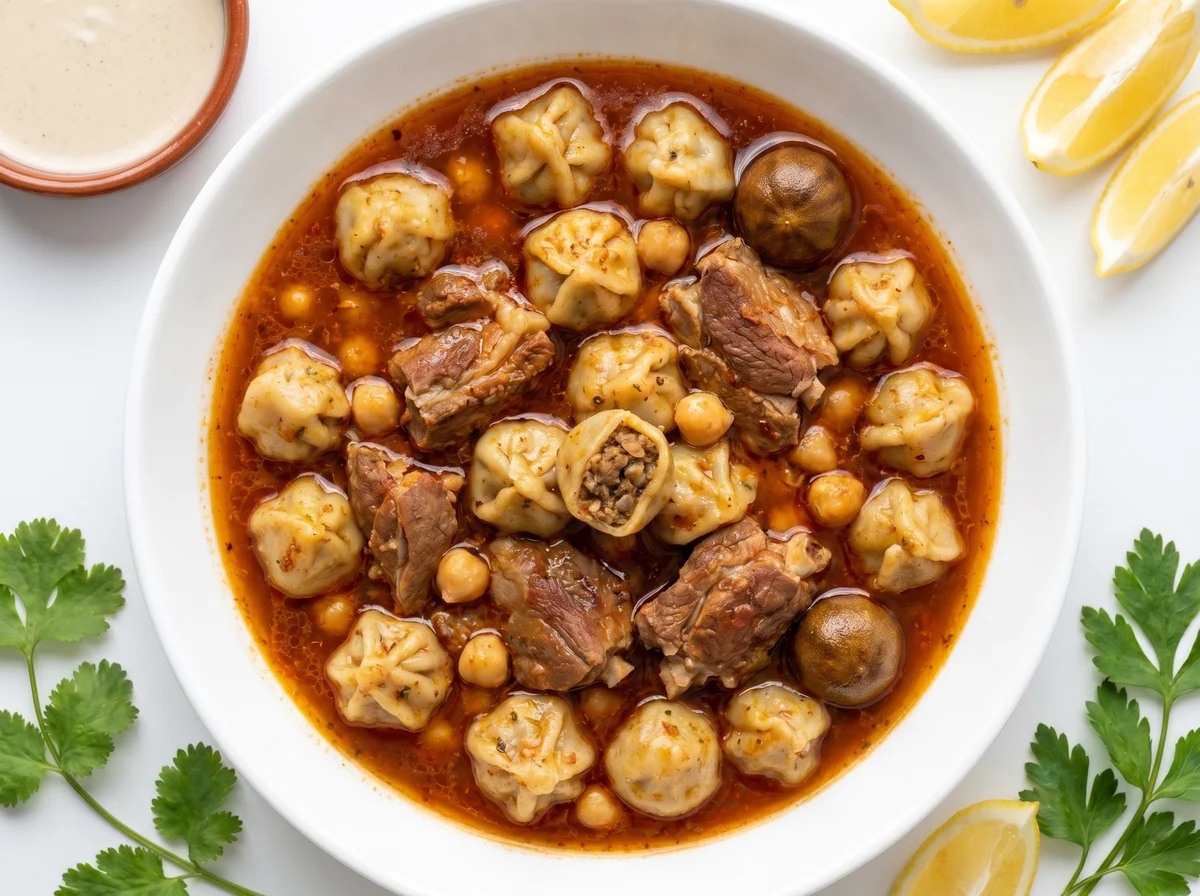
A Gulf stuffed-dough dish — rounds of dough filled with seasoned harees or ground meat, simmered in a meat, tomato, and loomi (dried black lime) broth. A hearty Kuwaiti heritage dish, moderate in carbohydrates, contains gluten.
Gabout is a beloved Kuwaiti (Gulf) heritage winter dish made of stuffed dough rounds (filled with seasoned ground meat or harees) simmered in meat broth spiced with tomatoes, loomi (dried black lime), and Gulf spices until the dough is cooked through.
Gabout shares a concept with Levantine poached kibbeh and Najdi mutazbiz (dough cooked in broth), and it is one of Kuwait's warming, satisfying winter dishes. The soft stuffed dough rounds cooked in the rich loomi-and-meat broth are a warm, comforting pleasure, a symbol of the Kuwaiti traditional kitchen and the generosity of its winter family table.
Preparation Steps
Make the meat broth
Fry the onion in ghee, add the meat and brown it, then add the tomato paste, Gulf spices, turmeric, loomi (dried black lime), salt, and water. Leave to cook until the meat is tender and a rich broth has formed. The spiced loomi broth is the cooking medium for the gabout (the dough rounds are cooked in it), so make it rich and flavorful.
Make the dough and filling
Knead the flour with water, turmeric, and salt into a firm, cohesive dough. Prepare the filling (ground meat seasoned with onion and spices, or a harees filling). Gabout is stuffed dough rounds cooked in broth — a Gulf stuffed dough — so both the dough and filling are its foundation.
Shape the gabout rounds
Take portions of dough, flatten them into rounds, place the filling in the center, and seal them into stuffed balls or discs. A firm seal keeps the filling in during simmering in the broth. Shape them to a medium size so they cook through evenly.
Simmer the gabout in the broth
Drop the stuffed dough rounds into the boiling broth and let them cook until the dough and filling are done (about half an hour), monitoring as they cook. The dough cooks in the broth — absorbing its flavor and cooking through — becoming a soft dumpling with the taste of the spiced broth (similar to poached kibbeh).
Adjust the broth
The gabout rounds should be fully cooked and there should still be an ample amount of spiced broth around them (not dry). Add hot water if the broth reduces before the dough is done. A generous spiced broth cooks the gabout and is served with it (a wet dish in its broth). Taste and adjust the salt.
Serve
Serve the gabout hot in a bowl with the pieces of meat and the spiced broth. This is a beloved Kuwaiti (Gulf) heritage winter dish — the soft stuffed dough rounds cooked in the rich loomi-and-meat broth are a warm, comforting pleasure, a symbol of the Kuwaiti traditional kitchen and the generosity of its winter family table (similar in concept to Najdi mutazbiz and poached kibbeh).
Blood Sugar Impact
The glycemic index (GI) measures how quickly a food raises blood sugar, while the glycemic load (GL) measures how much a full serving raises it. Together they give the complete picture.
Glycemic Index
GI
73High
Low0–55Medium56–69High70+
A low value (≤55) means a gradual rise in blood sugar — the most suitable range for diabetes and insulin resistance.
Glycemic Load
GL
26High
Low0–10Medium11–19High20+
Glycemic load reflects the impact of the full serving. To lower it: take half a serving, or pair the recipe with a source of protein and fiber.
Nutritional Information
Per ServingMakes 5 servings · one serving is about 220 g of raw ingredients
Calories495 kcal25%of Daily Value*
Protein28 g56%of Daily Value*
Carbohydrates38 g14%of Daily Value*
Fat24 g31%of Daily Value*
Fiber2 g7%of Daily Value*
Sodium83 mg4%of Daily Value*
Potassium638 mg14%of Daily Value*
Phosphorus351 mg28%of Daily Value*
* Percent Daily Values are based on a 2,000-calorie diet per FDA food-label reference values — your daily needs may be higher or lower. Values are derived from the recipe's ingredients via the USDA database.
Troubleshooting
The most common problems when preparing Kuwaiti Gabout (Stuffed Dough in Spiced Broth), and how to fix them:
Dough is still raw
The rounds are too large or the cooking time was too short. Shape medium-sized rounds that cook through in the broth, and simmer for long enough (about half an hour) in boiling broth. Medium-sized rounds and sufficient cooking time cook the dough and filling through.
Dough fell apart in the broth
The dough is too soft or the seal was poor. Knead a firm dough (not too soft) and seal the stuffed rounds firmly. A firm dough with a good seal holds together in the broth without falling apart.
Bland broth
Not enough loomi or spices. Loomi (dried black lime), Gulf spices, and tomatoes are the flavor of gabout broth — make it rich and well-seasoned (the dough absorbs it). Taste the broth and adjust it before and during cooking.
Broth too low (dry)
It evaporated or you started with too little. Keep a generous amount of broth (the dough absorbs some), and add seasoned hot water if it reduces before the dough is done. Gabout is served wet in its broth.
Filling is dry
Not enough onion or fat. Add chopped onion to the filling (it provides moisture) and a little fat — onion keeps the filling tender. The surrounding broth also helps keep it moist.
Storage and Make-Ahead
Refrigerator (4°C)
Gabout keeps in a sealed container with its broth in the fridge for 3 days, and the flavor improves. Reheat with its broth over low heat (the dough absorbs broth, so add water). Practical for meals on subsequent days.
Freezer
Gabout freezes with its broth for two months in a sealed container. Thaw and reheat adding hot water (the dough absorbs the liquid). Alternatively freeze the raw dough rounds and cook them fresh in the broth.
Advance preparation
Prepare the broth and stuffed dough rounds ahead (refrigerate or freeze both), then cook the gabout in the broth at serving time (better fresh). The work is in the stuffing — preparing ahead saves time.
Food safety
Cook the meat and filling until fully done, cool the gabout quickly, do not leave it out of refrigeration for more than two hours, and reheat thoroughly before serving.
Tested Ingredient Substitutions
Original Ingredient
Tested Substitute
Ratio
Flavor Difference
White wheat dough
Whole-wheat dough
Same amount
Adds fiber and lowers the index; white is traditional, whole-wheat is healthier
Ground meat filling
Harees filling or vegetarian filling
—
Gabout has multiple fillings (ground meat, harees); a lighter vegetarian option with legumes is possible. Harees is a traditional filling.
Lamb
Chicken or lean beef
Same amount
Chicken is lighter; lean beef is healthier; lamb is the traditional choice with the richest broth flavor in Gulf cooking
How Much Does It Make? Scaling Guide
Number of servings
Flour
Meat
Loomi
3 (small)
1.5 cups
400 g
1
5 (base)
3 cups
600 g
2
10 (banquet)
6 cups
1200 g
4
EEINA Nutrition Tip
Gabout is a relatively complete dish (dough, meat, and broth in one bowl), and the loomi provides antioxidants, the tomatoes provide lycopene, and the meat provides protein. Its challenges are carbohydrates and its moderate load (white wheat dough), fat (ghee and meat), and sodium. For a better version: use whole-wheat dough, lean meat, add more vegetables to the broth (lowers the index), reduce the ghee, adjust the salt, and balance it with a salad. A hearty winter dish — in a moderate portion, and whole-wheat dough improves it.
Add This Recipe to Your Plan
The EEINA app saves your favorite recipes, calculates them from their real ingredients, and shows your daily numbers toward your goal. Try it free now.
A Kuwaiti (Gulf) heritage winter dish of stuffed dough rounds (filled with seasoned ground meat or harees), simmered in meat broth spiced with tomatoes, loomi (dried black lime), and Gulf spices until the dough is cooked. A hearty, warming dish — similar in concept to Levantine poached kibbeh and Najdi mutazbiz (dough cooked in broth) — one of Kuwait's winter dishes.
What is the difference between gabout, mutazbiz, and poached kibbeh?
All three are dough cooked in spiced broth, but: Kuwaiti gabout is stuffed dough rounds (usually filled) in a loomi broth; Najdi mutazbiz is torn or cut dough (usually plain) in a meat and vegetable broth; and Levantine poached kibbeh is stuffed bulgur wheat kibbeh in broth. The concept is similar (dough in broth), but the details — filling type, dough type, and broth — differ regionally.
What is loomi and what does it do?
Loomi (dried black lime) is a lime that is boiled and dried until it blackens, acquiring a deep, smoky, tart flavor that is distinctive to Gulf cuisine. It is added to the gabout broth to give it tartness, warmth, and depth — a foundational Gulf flavor. It is a core flavor in gabout, kabsa, and Gulf broth generally.
Is gabout healthy?
Relatively complete (dough, meat, broth, and vegetables), and loomi and tomatoes provide antioxidants, and the meat provides protein. Its challenges are carbohydrates (white dough, medium load), fat, and sodium. Use whole-wheat dough, lean meat, add more vegetables to the broth, reduce the ghee and salt, and balance with a salad. A hearty winter dish in a moderate portion.
Sources: University of Sydney · Gulf GSO · Our methodology · Updated on