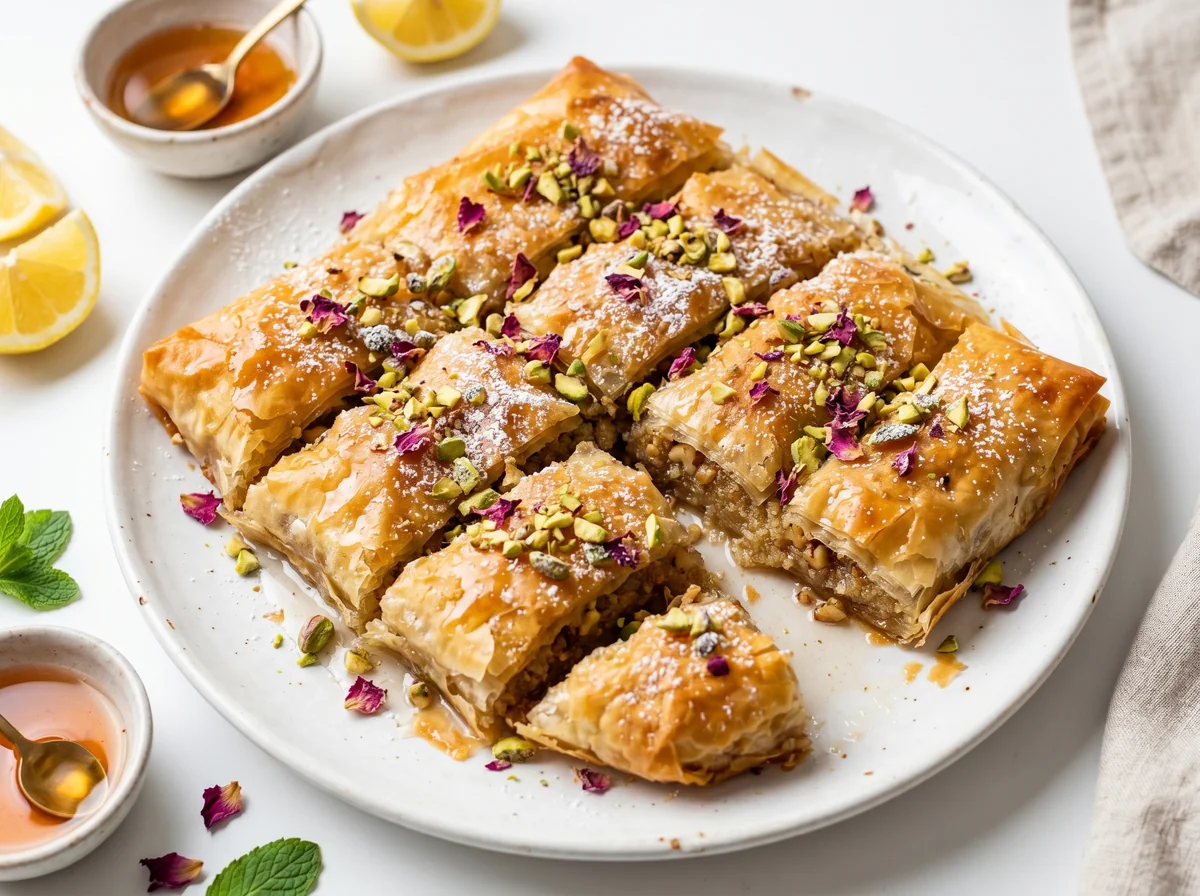
A Levantine Ramadan sweet — thin dough rounds filled with thick cream or sweet cheese, fried or baked until golden, then soaked in syrup. A beloved Ramadan dessert table staple; eat in moderation; contains gluten and dairy.
Kalaj (or kallaj) is a beloved Levantine Ramadan sweet — a star of the Ramadan dessert table in Syria, Lebanon, Jordan and Palestine (alongside qatayef, warbat and shu'aybiyyat). It is special thin circular dough rounds (Kalaj dough, sold ready-made or made paper-thin like phyllo) filled with creamy cream or sweet cheese, folded and fried (or baked) until crispy and golden, then dipped in fragrant syrup and garnished with pistachios.
Kalaj is a seasonal Ramadan sweet par excellence (abundant in markets and homes during Ramadan) — crispy on the outside, creamy on the inside. Its crispy cream-filled rounds soaked in syrup are a gentle delight, a symbol of Levantine Ramadan sweets and the generosity and festive atmosphere of Iftar tables.
Preparation Steps
Prepare the syrup and cream
Prepare the syrup (sugar, water, lemon and orange blossom water) and let it cool. Prepare the thick, firm cream (ready-made or homemade with milk and starch). Kalaj is a Levantine Ramadan sweet (thin filled dough rounds), and cream is its classic filling (or sweet cheese).
Ready the Kalaj discs
Use ready-made Kalaj discs (special thin circular dough for Kalaj), or cut phyllo sheets into circles. Kalaj dough is thin (it fries up crispy and puffs), so keep it covered to prevent it from drying out. Each thin disc is filled and folded.
Fill
Place a spoonful of thick cream (or sweet cheese) in the center of a Kalaj disc. Do not overfill (the cream can leak during frying) — a moderate amount in the center is enough. Leave enough edge to fold and seal.
Fold and seal
Fold the disc into a half-moon (or roll) around the cream, pressing the edges to seal them firmly (you can dampen the edge with a little water to make it stick). A tight seal keeps the cream inside and prevents it from leaking into the hot oil during frying.
Fry or bake
Fry the Kalaj in oil at medium heat until golden, crispy and puffed (or brush with ghee and bake in the oven for a lighter version). Fry until golden and crispy (or bake), then drain from the oil. The baked version is lower in fat and also popular.
Soak in syrup and serve
Dip the hot Kalaj in the cold syrup for a moment (it absorbs the syrup and stays crispy), then remove and garnish with pistachios. Serve warm. Kalaj is a beloved Levantine Ramadan sweet (a star of the Levantine Ramadan dessert table) — its crispy filled rounds soaked in fragrant syrup are a delight, a symbol of Levantine Ramadan sweets and the generosity of its Iftar tables.
Blood Sugar Impact
The glycemic index (GI) measures how quickly a food raises blood sugar, while the glycemic load (GL) measures how much a full serving raises it. Together they give the complete picture.
Glycemic Index
GI
61Medium
Low0–55Medium56–69High70+
A low value (≤55) means a gradual rise in blood sugar — the most suitable range for diabetes and insulin resistance.
Glycemic Load
GL
33High
Low0–10Medium11–19High20+
Glycemic load reflects the impact of the full serving. To lower it: take half a serving, or pair the recipe with a source of protein and fiber.
Nutritional Information
Per ServingMakes 10 servings · one serving is about 160 g of raw ingredients
Calories464 kcal23%of Daily Value*
Protein10 g20%of Daily Value*
Carbohydrates55 g20%of Daily Value*
Fat23 g29%of Daily Value*
Fiber1 g4%of Daily Value*
Sodium174 mg8%of Daily Value*
* Percent Daily Values are based on a 2,000-calorie diet per FDA food-label reference values — your daily needs may be higher or lower. Values are derived from the recipe's ingredients via the USDA database.
Troubleshooting
The most common problems when preparing Kalaj Ramadan (Levantine Ramadan Cream-Filled Pastry), and how to fix them:
The cream leaks during frying
Too much filling or a weak seal. Use a moderate amount of thick (not liquid) cream in the center and seal the edges firmly (dampen with water to stick). Moderate filling and a tight seal prevent leaking in the oil.
The Kalaj is soft and not crispy
Oil not hot enough or too much syrup. Fry in oil at medium heat (hot enough to crisp without soaking up oil), and dip in syrup for just a moment (no long soaking). Hot oil and a quick dip keep the crunch.
It absorbed a lot of oil
Oil not hot enough. Heat the oil well before frying (medium-hot) — cold oil makes the dough absorb oil and turn greasy. Or bake it (lower fat). Drain on paper after frying.
Soggy from syrup
Soaked too long. Dip the Kalaj in syrup for just a moment then lift it (enough to sweeten while staying crispy) — long soaking makes it soggy. The secret is a quick dip of the hot piece in the cold syrup.
The dough dried out and cracked
Left uncovered. Cover the Kalaj discs with a damp cloth while working (they dry out quickly), and work quickly. Moist dough is pliable and folds and seals without cracking.
Storage and Make-Ahead
Serve fresh
Kalaj is best fresh (crispy) — it softens over time (the cream and syrup make it soft). Prepare, fry and soak just before serving (before Iftar) and serve warm. Fresh and crispy is the most delightful.
Refrigerator (4°C)
Filled Kalaj keeps refrigerated for one to two days (it contains cream) but loses its crunch (reheat briefly in the oven). Best eaten within a day for quality (cream is sensitive).
Freezer (before frying)
Prepare filled but unfried Kalaj and freeze it, then fry or bake from frozen and soak fresh. This is better than freezing it fried and soaked. Practical for preparing Ramadan batches in advance.
Food safety
Cream is a sensitive dairy product — keep the Kalaj refrigerated and do not leave it out of refrigeration for more than two hours (especially during hot Ramadan). Fry or bake thoroughly. Use fresh cream.
Tested Ingredient Substitutions
Original Ingredient
Tested Substitute
Ratio
Flavor Difference
Frying
Baking in the oven
—
Baking (with a ghee brush) is much lower in fat than frying and is widely done for Kalaj; frying is crispier but baking is healthier
Cream filling
Strained sweet cheese (akkawi)
Same amount
Both cream and sweet cheese are classic Kalaj fillings; cheese gives a chewy, salty-sweet texture with the syrup
Full-fat cream
Low-fat cream or homemade cream
Same amount
Reduces fat; homemade cream (milk and starch) is lighter and cheaper, while ready-made is richer and quicker
How Much Does It Make? Scaling Guide
Number of pieces
Kalaj discs
Cream
Syrup
5 (small)
5
1.5 cups
0.75 cup
10 (base)
10
3 cups
1.5 cups
20 (table)
20
6 cups
3 cups
EEINA Nutrition Tip
Kalaj is a Ramadan sweet combining dough, frying (or ghee), cream and syrup — meaning it is high in sugar, calories and fat (especially fried). The cream adds some protein and calcium, but it remains a sweet. Best enjoyed in moderation (one or two pieces) as part of a balanced Iftar table, not immediately after fasting in large amounts (it raises blood sugar quickly). To lighten it: bake instead of fry (much less fat), use low-fat cream and reduce the syrup (a quick dip). People with diabetes should be cautious. A lovely Ramadan sweet in moderation within a balanced Iftar.
Add This Recipe to Your Plan
The EEINA app saves your favorite recipes, calculates them from their real ingredients, and shows your daily numbers toward your goal. Try it free now.
A Levantine Ramadan sweet made from special thin dough rounds (Kalaj dough) filled with creamy cream or sweet cheese, folded and fried (or baked) until crispy, then dipped in fragrant syrup and garnished with pistachios. A popular seasonal Ramadan sweet — crispy on the outside, creamy on the inside — a star of the Levantine Ramadan dessert table.
What is the difference between Kalaj and warbat?
Both are Levantine Ramadan sweets made from thin dough filled with cream and soaked in syrup, but Kalaj uses a special dough (round discs folded into half-moons, usually fried), while warbat uses square phyllo (usually baked). They are very similar (often confused) — the difference is in the dough type, shape and cooking method.
Should I fry it or bake it?
Traditionally Kalaj is fried (crispier and richer), but baking in the oven (with a ghee brush) is much lower in fat and common today, giving good crispiness. For a healthier version bake it; for the crunch and traditional flavor fry it. Both are dipped in syrup afterward. Baking suits those watching their fat intake.
Is Kalaj healthy?
A high-sugar (syrup), high-calorie Ramadan sweet with high fat (especially fried). Cream adds protein and calcium, but it remains a sweet. Enjoy in moderation (one or two pieces) as part of a balanced Iftar (not immediately after fasting in large amounts). Bake it, use low-fat cream and less syrup. People with diabetes should be cautious. A lovely Ramadan sweet in moderation.
Sources: University of Sydney · Gulf GSO · Our methodology · Updated on