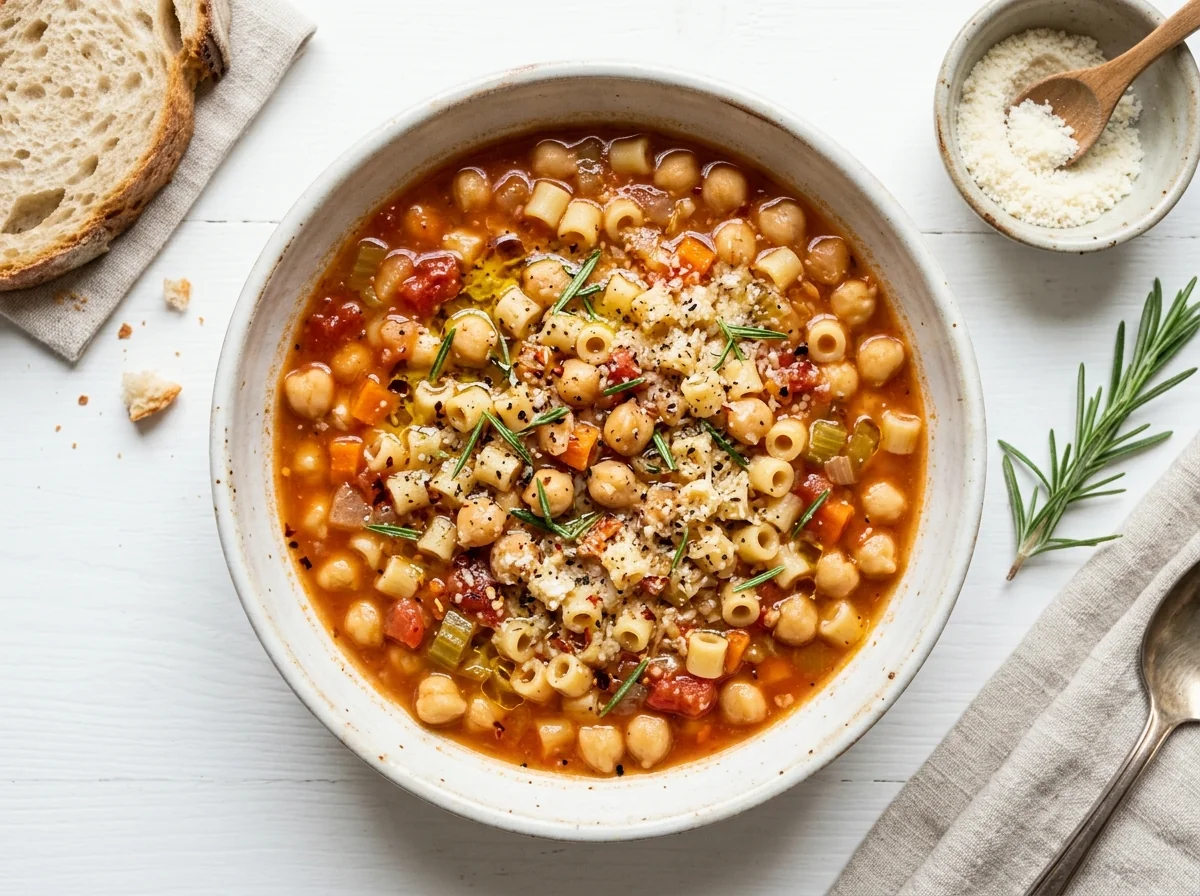
Italian pasta and chickpea soup (Pasta e Ceci) — a classic Roman cucina povera dish with short pasta, chickpeas, rosemary, and tomato paste. High in plant protein and fiber, low glycemic load, and deeply satisfying.
Pasta e Ceci (pasta and chickpea soup) is one of the oldest recipes in Roman cucina povera (poor man's kitchen).
For centuries it was the breakfast of Roman workers: chickpeas and pasta together form a complete plant protein. A magical meal from ordinary ingredients.
Preparation Steps
Heat the oil
Heat 30 ml of oil in a large pot over medium heat (reserve 15 ml for the end).
Sauté the onion and celery
Add the onion and celery and stir for 5 minutes until the onion softens.
Add the garlic, rosemary, and chili
Add the garlic, rosemary, and red chili flakes (if you like heat), and stir for 30 seconds.
Add the tomato paste
Add the tomato paste and stir for 2 minutes until the color turns deep red (this develops deep flavor).
Mash half the chickpeas
In a bowl, mash half the chickpeas (200 g) with a fork until roughly puréed. Leave the other half whole.
Add the chickpeas and broth
Add both the mashed and whole chickpeas and the broth to the pot. Bring to a boil.
Cook the pasta
Add the pasta and stir. Cook according to the package time (~8–10 minutes) until al dente. Stir every two minutes to prevent sticking.
Season
Add the salt, pepper, and parsley. Taste and adjust.
Serve
Ladle into bowls immediately (the pasta absorbs the liquid quickly). Drizzle 15 ml of extra-virgin olive oil, scatter Parmesan, and serve hot with bread.
Blood Sugar Impact
The glycemic index (GI) measures how quickly a food raises blood sugar, while the glycemic load (GL) measures how much a full serving raises it. Together they give the complete picture.
Glycemic Index
GI
37Low
Low0–55Medium56–69High70+
A low value (≤55) means a gradual rise in blood sugar — the most suitable range for diabetes and insulin resistance.
Glycemic Load
GL
19Medium
Low0–10Medium11–19High20+
Glycemic load reflects the impact of the full serving. To lower it: take half a serving, or pair the recipe with a source of protein and fiber.
Nutritional Information
Per ServingMakes 4 servings · one serving is about 455 g of raw ingredients
Calories439 kcal22%of Daily Value*
Protein15 g30%of Daily Value*
Carbohydrates61 g22%of Daily Value*
Fat16 g21%of Daily Value*
Fiber10 g36%of Daily Value*
Sodium1082 mg47%of Daily Value*
Potassium503 mg11%of Daily Value*
Phosphorus222 mg18%of Daily Value*
* Percent Daily Values are based on a 2,000-calorie diet per FDA food-label reference values — your daily needs may be higher or lower. Values are derived from the recipe's ingredients via the USDA database.
Troubleshooting
The most common problems when preparing Italian Pasta e Ceci (Pasta and Chickpea Soup), and how to fix them:
The pasta is too soft
Cooked too long. Follow the package time exactly, or cook it one minute less — it continues cooking in the hot soup.
The soup is too thick
The chickpeas and pasta absorb liquid quickly. Add 150–200 ml of hot broth before serving.
The soup is too salty
The canned chickpeas added excess sodium. Rinse them under cold water before using to reduce sodium by up to 40%.
The flavor is flat
The tomato paste was not cooked long enough. The 2 minutes in the oil transforms it from acidic to deep and rich.
Storage and Make-Ahead
Refrigerator
2 days — the pasta continues to absorb the liquid and its texture deteriorates beyond that.
Not suitable for freezing
The pasta turns mushy when thawed.
Smart preparation
Prepare the soup base without the pasta (keeps 2 days in the refrigerator), then add the pasta at serving time.
Tested Ingredient Substitutions
Original Ingredient
Tested Substitute
Ratio
Flavor Difference
Ditalini pasta
Orzo or other short pasta
1:1
Italian alternatives
Canned chickpeas
Dried chickpeas, soaked and pre-cooked
150 g dry = 400 g cooked
Much cheaper
Rosemary
Fresh thyme
1:1
A Mediterranean alternative
Red chili flakes
Sweet paprika
1:1
If you do not like heat
How Much Does It Make? Scaling Guide
Ingredient
4 servings
2 servings
8 servings
Chickpeas
400 g
200 g
800 g
Pasta
150 g
75 g
300 g
Broth
900 ml
450 ml
1.8 L
EEINA Nutrition Tip
Mashing half the chickpeas is the secret to the texture: the mashed chickpeas dissolve into the broth to give a creamy thickness, while the whole ones remain for mouthfeel. Do not mash them all — you lose the traditional Italian texture.
Add This Recipe to Your Plan
The EEINA app saves your favorite recipes, calculates them from their real ingredients, and shows your daily numbers toward your goal. Try it free now.