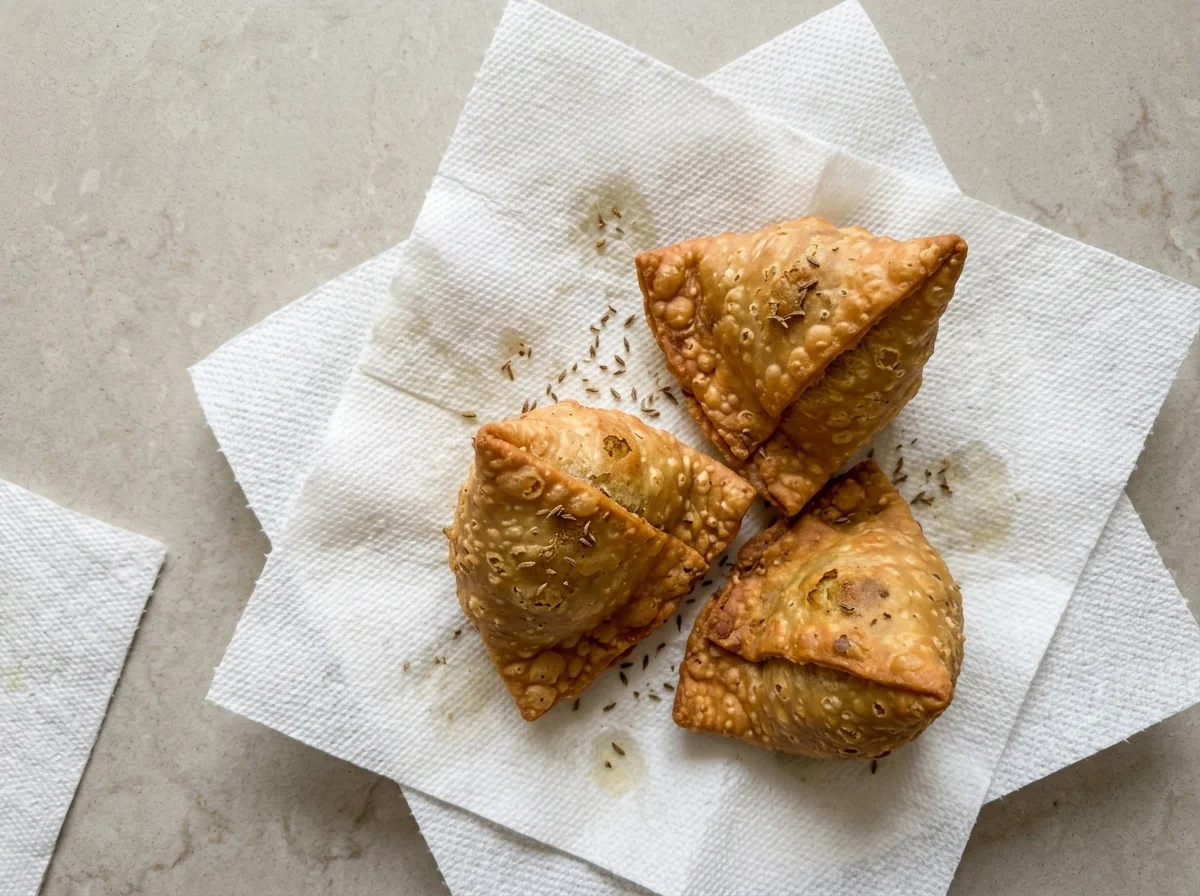
Indian samosa fried with a curry and cumin potato filling inside a firm short pastry. Crispy outside and tender inside, suited as appetizers, suhoor, and Ramadan gatherings.
Samosas are among the most famous fried pastries in the Indian subcontinent, and were historically prepared for occasions and holidays and sold at street stalls.
They made their way to the Arabian Gulf through trade and Indian labor, and became a hallmark of Ramadan tables and hot appetizers on daily spreads.
Preparation Steps
Prepare the dry flour mixture
Prepare a wide kneading bowl and sift the flour with the salt and cumin into it, then stir the dry ingredients until they blend well before adding any moisture.
Rub the butter and knead
Add the butter at room temperature and rub it into the flour with our fingertips until a crumbly dough resembling breadcrumbs forms, then pour in the cold water gradually while kneading continuously for 7-10 minutes until we get a soft, cohesive dough that does not stick to the hand. If the dough is dry, add an additional tablespoon of cold water.
Let the dough rest
Shape the dough into a single ball, wrap it in plastic wrap, and leave it in a warm place for 1/2 hour. This rest softens the flour gluten and makes rolling easier and less prone to tearing during shaping.
Prepare the potato filling
In a pan over medium heat, heat the vegetable oil and toss the boiled potato cubes for 3 minutes until they pick up a light golden color on the surface, then sprinkle the salt, curry, and cumin all at once and toss for two more minutes until the potatoes absorb the flavors. Remove the pan from the heat and let the filling cool completely before shaping.
Shape the samosas and seal them
Divide the dough into small walnut-sized balls, and roll each ball on a flour-dusted surface until it becomes a thin disc 3 mm thick. Place a tablespoon of potato filling in the middle of the disc, fold the disc into a half-moon, then press along the edge with the tines of a fork in a continuous pattern until it is fully sealed and the filling is prevented from leaking during frying.
Fry and serve
In a deep pan, heat ample oil over medium heat (about 180°C) and test the temperature by tossing in a small piece of dough: if it sizzles immediately and its bubbles rise to the surface, the oil is ready. Fry the samosas in batches, 3-4 pieces per batch, for 2-3 minutes on each side until they take on a crispy golden color. Remove them onto paper towels to absorb the excess oil, and serve them immediately while hot.
Blood Sugar Impact
The glycemic index (GI) measures how quickly a food raises blood sugar, while the glycemic load (GL) measures how much a full serving raises it. Together they give the complete picture.
Glycemic Index
GI
71High
Low0–55Medium56–69High70+
A low value (≤55) means a gradual rise in blood sugar — the most suitable range for diabetes and insulin resistance.
Glycemic Load
GL
73High
Low0–10Medium11–19High20+
Glycemic load reflects the impact of the full serving. To lower it: take half a serving, or pair the recipe with a source of protein and fiber.
Nutritional Information
Per ServingMakes 3 servings · one serving is about 360 g of raw ingredients
Calories868 kcal43%of Daily Value*
Protein14 g28%of Daily Value*
Carbohydrates109 g40%of Daily Value*
Fat41 g53%of Daily Value*
Fiber6 g21%of Daily Value*
Sodium1180 mg51%of Daily Value*
* Percent Daily Values are based on a 2,000-calorie diet per FDA food-label reference values — your daily needs may be higher or lower. Values are derived from the recipe's ingredients via the USDA database.
Troubleshooting
The most common problems when preparing Indian Potato Samosa, and how to fix them:
The samosas open in the oil and the filling leaks out
The edge was not sealed well with the fork or the dough is damp. Dry the edge of the disc with a wet brush before folding, and press with the fork in a continuous pattern without gaps.
The dough cracks during rolling
It did not rest long enough. Leave it 45 minutes instead of 30, and cover it with plastic wrap throughout the rest so it does not dry out.
Storage and Make-Ahead
Refrigerator (4°C)
The unfried samosas are stored covered in the refrigerator for two days, or portioned into bags and frozen for a full month and fried straight from the freezer without thawing.
Tested Ingredient Substitutions
Original Ingredient
Tested Substitute
Ratio
Flavor Difference
curry
turmeric with 1/4 teaspoon black pepper and 1/4 teaspoon cinnamon
Same quantity
An alternative blend that gives a color and flavor close to those who do not have ready-made curry powder on hand.
EEINA Nutrition Tip
Cold dough before frying is the secret to its crispness. After shaping, put the samosas in the refrigerator 15 minutes before frying, and you will get a firm shell that does not soak up oil.
Add This Recipe to Your Plan
The EEINA app saves your favorite recipes, calculates them from their real ingredients, and shows your daily numbers toward your goal. Try it free now.
Can the samosas be baked in the oven instead of fried?
Yes. Brush the surface of the samosas with a little oil, and bake them at 200°C for 20-25 minutes until they brown. They will be healthier but less crispy than the fried version.
What is the substitute if butter is not available?
Vegetable ghee or solidified vegetable oil gives an acceptable result, but butter is what gives the crust its distinctive short, crumbly texture.
Why is the dough brushed with cold water specifically?
Cold water prevents the butter fat from melting before frying, so the samosa crust stays crumbly and crispy instead of becoming soft.
Sources: USDA · University of Sydney · Our methodology · Updated on