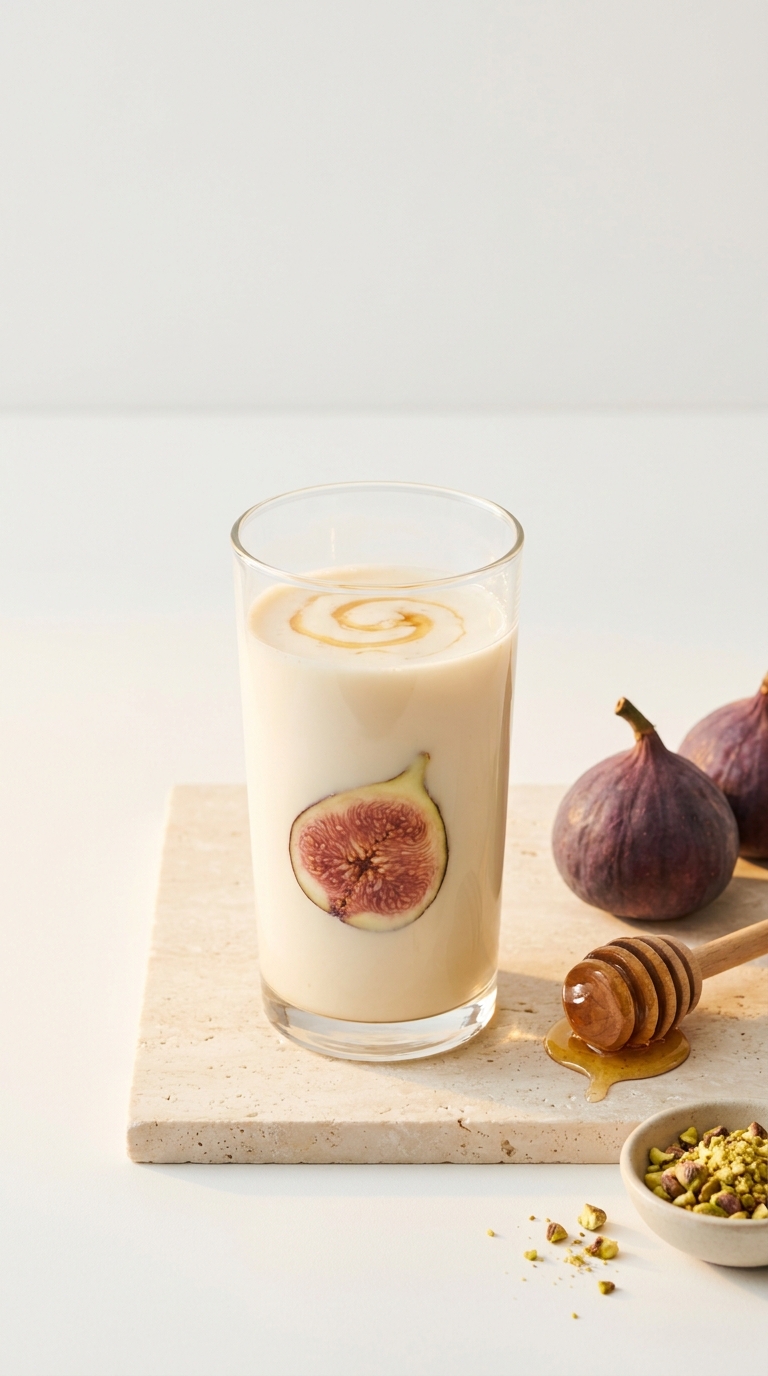
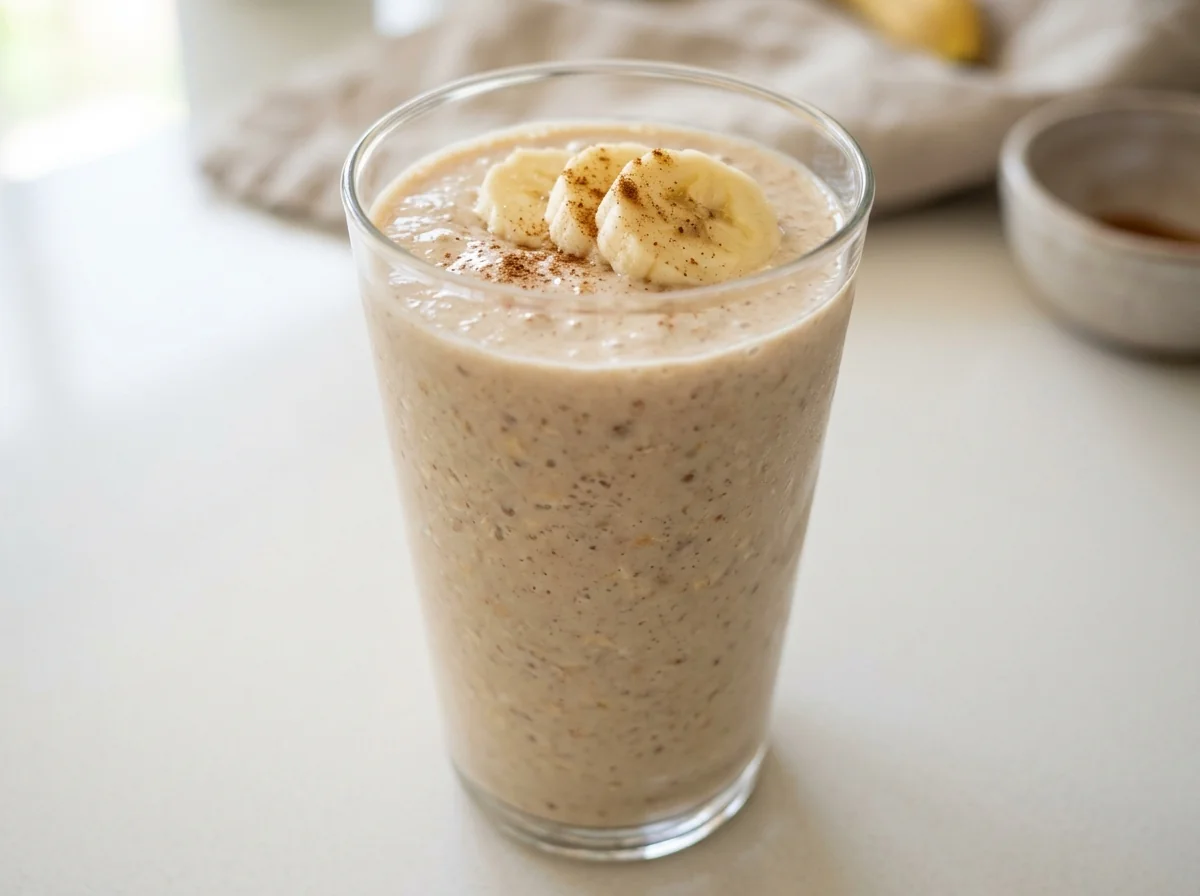
Warm milk simmered with fresh figs, ajwa dates, and cardamom, then topped with toasted almonds. A Levantine suhoor drink rich in fiber, iron, and calcium.
Figs are one of the oldest fruits in the Levant and the Arabian Peninsula.
Fig milk is an authentic Levantine drink, combining the benefits of figs (fiber, potassium, iron) with the protein of milk. For suhoor it gives steady energy and warmth, especially during cold Ramadan nights.
Preparation Steps
Prepare the figs
Wash the fresh figs and cut them into quarters. Canned figs (in syrup) also work, but drain them from the excess syrup. Fresh figs have a deeper flavor.
Mash the dates
Mash the ajwa dates with the back of a fork in a small bowl until they turn into a paste. The dates give natural sweetness and body to the milk.
Heat the milk
Pour the milk into a small pot and add the figs, the mashed dates, and the cardamom. Heat on low heat for 7 minutes, stirring gently. High heat burns the milk.
Mash the figs
Mash half the fig pieces with the back of the spoon inside the pot until they dissolve and give the milk a concentrated flavor and a richer body. Leave the other half whole for garnish.
Serve
Pour the milk into two cups and garnish with the whole fig pieces and toasted almonds. Serve immediately with an extra spoonful of honey for those who like sweetness.
Blood Sugar Impact
The glycemic index (GI) measures how quickly a food raises blood sugar, while the glycemic load (GL) measures how much a full serving raises it. Together they give the complete picture.
Glycemic Index
GI
47Low
Low0–55Medium56–69High70+
A low value (≤55) means a gradual rise in blood sugar — the most suitable range for diabetes and insulin resistance.
Glycemic Load
GL
19Medium
Low0–10Medium11–19High20+
Glycemic load reflects the impact of the full serving. To lower it: take half a serving, or pair the recipe with a source of protein and fiber.
Nutritional Information
Per ServingMakes 2 servings · one serving is about 350 g of raw ingredients
Calories296 kcal15%of Daily Value*
Protein9 g18%of Daily Value*
Carbohydrates45 g16%of Daily Value*
Fat10 g13%of Daily Value*
Fiber4 g14%of Daily Value*
Sodium109 mg5%of Daily Value*
Potassium642 mg14%of Daily Value*
Phosphorus249 mg20%of Daily Value*
* Percent Daily Values are based on a 2,000-calorie diet per FDA food-label reference values — your daily needs may be higher or lower. Values are derived from the recipe's ingredients via the USDA database.
Troubleshooting
The most common problems when preparing Hot Fresh Fig Milk, and how to fix them:
The milk is thin
Double the figs and mash them more. Mashed figs add body to the milk thanks to the natural pectin.
The taste is sour
Choose riper figs and add a spoonful of honey. The sourness comes from unripe figs.
The figs fell apart
Reduce the cooking time to 5 minutes. Soft figs dissolve quickly in hot milk.
The milk burned
Use a thick-bottomed pot and stir every 30 seconds. Milk with figs sticks to the bottom quickly.
Storage and Make-Ahead
In the refrigerator
Two days in a bottle. Reheat with a spoonful of water on low heat.
Not suitable for freezing
Fresh figs lose their texture after freezing.
Tested Ingredient Substitutions
Original Ingredient
Tested Substitute
Ratio
Flavor Difference
fresh figs
soaked dried figs
60 g fresh = 40 g dried
Soak for 4 hours before using.
ajwa dates
saqai dates
1:1
Less sweet, increase the amount by 20%.
full-fat milk
coconut milk
1:1
A plant-based version with a tropical flavor.
How Much Does It Make? Scaling Guide
Ingredient
2 people
4 people
6 people
Milk
500 ml
1000 ml
1500 ml
Figs
150 g
300 g
450 g
Dates
30 g
60 g
90 g
Cardamom
2 g
4 g
6 g
EEINA Nutrition Tip
Choose fresh, soft, ripe figs. Unripe figs are sour and low in sweetness. Add the figs in the last 5 minutes, because overcooking them takes away their flavor and texture.
Add This Recipe to Your Plan
The EEINA app saves your favorite recipes, calculates them from their real ingredients, and shows your daily numbers toward your goal. Try it free now.