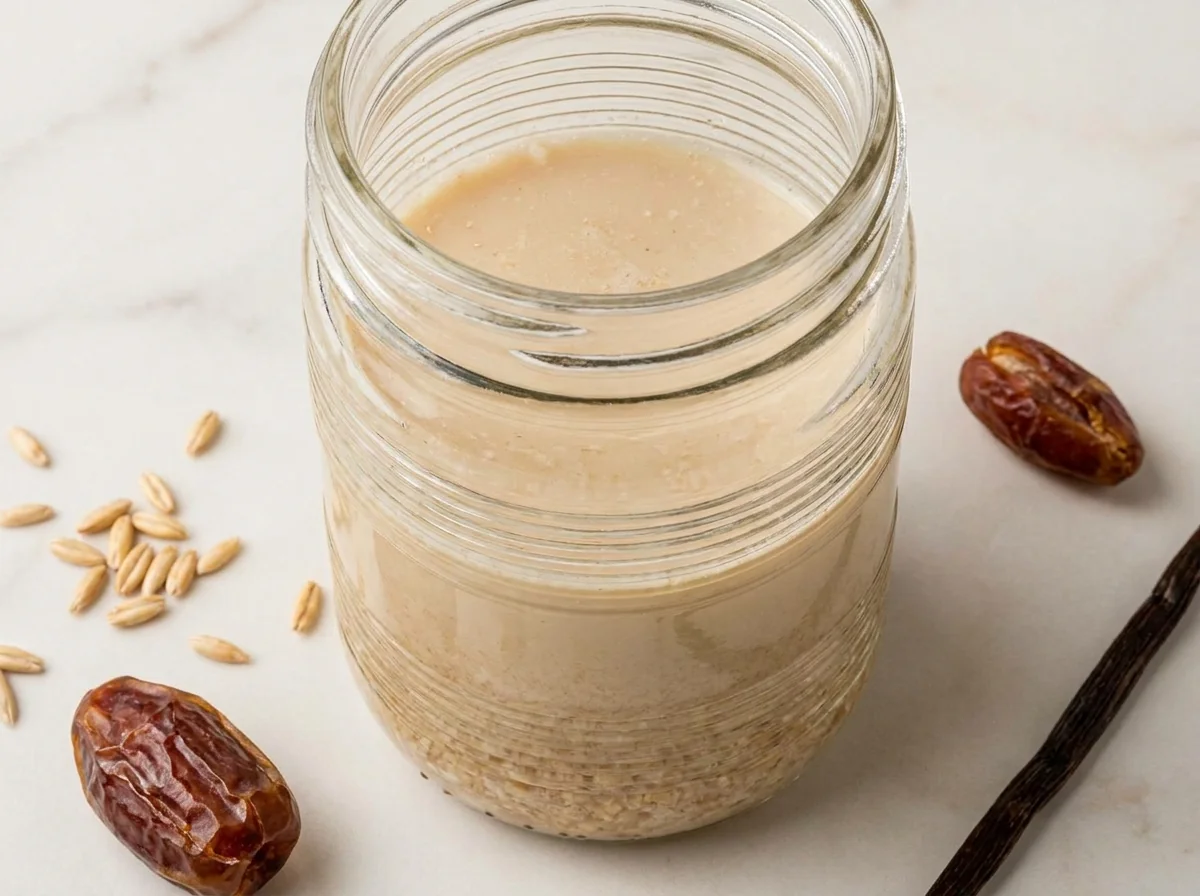
Oat milk is the rising star of plant-based milks worldwide, and of specialty cafes in particular, and making it at home is the easiest member of its family by far: oats, water, and a blender in a minute, at a tenth the price of the paper cartons that have invaded the shelves.
Preparation Steps
Blend with ice-cold water for a short burst
In the blender, blend the oats with the ice-cold water, the date, vanilla, and salt for just thirty to forty seconds. Here the kitchen instinct is reversed: long blending and warm water release the oat starch as a gelatinous viscosity, while a short cold blend extracts the milk and leaves the viscosity in its grain.
Strain without squeezing. The second rule
Pour through cheesecloth or a fine strainer over a jug and let gravity work alone, with a gentle stir to help. Enthusiastic squeezing pushes the gelatinous starch into the milk so it comes out slimy: patience here is consistency.
Bottle and chill
In an airtight bottle in the fridge. Oat milk with a milky consistency and gentle sweetness at about a tenth the price of store cartons, serving coffee, oatmeal, smoothies, and the plant-based porridges of our library.
Shake before every use
Settling is its honest nature, without stabilizers. A shake reunites it, and into hot coffee it is poured rather than poured onto, so it avoids curdling.
Blood Sugar Impact
The glycemic index (GI) measures how quickly a food raises blood sugar, while the glycemic load (GL) measures how much a full serving raises it. Together they give the complete picture.
Glycemic Index
GI
54Low
Low0–55Medium56–69High70+
A low value (≤55) means a gradual rise in blood sugar — the most suitable range for diabetes and insulin resistance.
Glycemic Load
GL
9Low
Low0–10Medium11–19High20+
Glycemic load reflects the impact of the full serving. To lower it: take half a serving, or pair the recipe with a source of protein and fiber.
Nutritional Information
Per ServingMakes 4 servings · one serving is about 280 g of raw ingredients
Calories108 kcal5%of Daily Value*
Protein4 g8%of Daily Value*
Carbohydrates19 g7%of Daily Value*
Fat2 g3%of Daily Value*
Fiber3 g11%of Daily Value*
Sodium1 mg0%of Daily Value*
Potassium133 mg3%of Daily Value*
Phosphorus133 mg11%of Daily Value*
* Percent Daily Values are based on a 2,000-calorie diet per FDA food-label reference values — your daily needs may be higher or lower. Values are derived from the recipe's ingredients via the USDA database.
Troubleshooting
The most common problems when preparing Homemade Oat Milk, and how to fix them:
It came out slimy and gooey
Blending too long, warm water, or squeezing the cheesecloth. The golden triangle above, and the slime is partly rescued by diluting it with ice-cold water.
It separated and settled in the bottle
The nature of every honest plant-based milk. A shake before pouring is its standing tradition.
It curdled in hot coffee
The shock of heat and acidity. Warm it gently or pour the coffee onto it gradually, and an extra spoon of oats in the blend strengthens its resilience.
What about the cheesecloth pulp?
Wet ground oats are a prize. They go into breakfast cookies and pancake batter: zero waste as is the pantry's way.
Storage and Make-Ahead
In the fridge
Four days in an airtight bottle. Short-lived, like the nature of the honest fresh.
Do not leave it out
Hours of heat ferment it. From the fridge to the cup and back.
Not suitable for freezing
It separates a separation no shake can fix.
Tested Ingredient Substitutions
Original Ingredient
Tested Substitute
Ratio
Flavor Difference
Whole rolled oats
Instant oats
1:1
It works with care for higher viscosity, while whole is safer
The date
Omitting it or a drop of honey
to taste
A plain milk for coffee and savory cooking
For foam in coffee
A spoon of light vegetable oil in the blend
to taste
The secret of copying the commercial barista
Its faster sibling
Almond milk by soaking almonds overnight and blending
to taste
The whole plant-based family by the same logic
How Much Does It Make? Scaling Guide
Ingredient
~1 liter
0.5 liter
2 liters
Oats
100 g
50 g
200 g
Water
1 liter
500 ml
2 liters
EEINA Nutrition Tip
Ice-cold water, a short blend, and straining without squeezing. The consistency triangle that separates oat milk from oat slime: starch is your only enemy here, and heat and enthusiasm are its two friends.
Add This Recipe to Your Plan
The EEINA app saves your favorite recipes, calculates them from their real ingredients, and shows your daily numbers toward your goal. Try it free now.
Market cartons are water, a little oat, oils, and stabilizers at the price of premium milk, while your bottle is real oat at a tenth the price and zero additives.
Is it a complete nutritional substitute for milk?
No. Its protein is modest against cow's milk and it is not fortified with its calcium: it is a choice of taste and lifestyle, not a nutritional replacement, and that is counted in the daily balance.
Who is it the most suitable choice for?
For anyone avoiding lactose or tree nuts (which rules out almond milk), and for lovers of specialty coffee who have crowned it.
Where does it fit in our library?
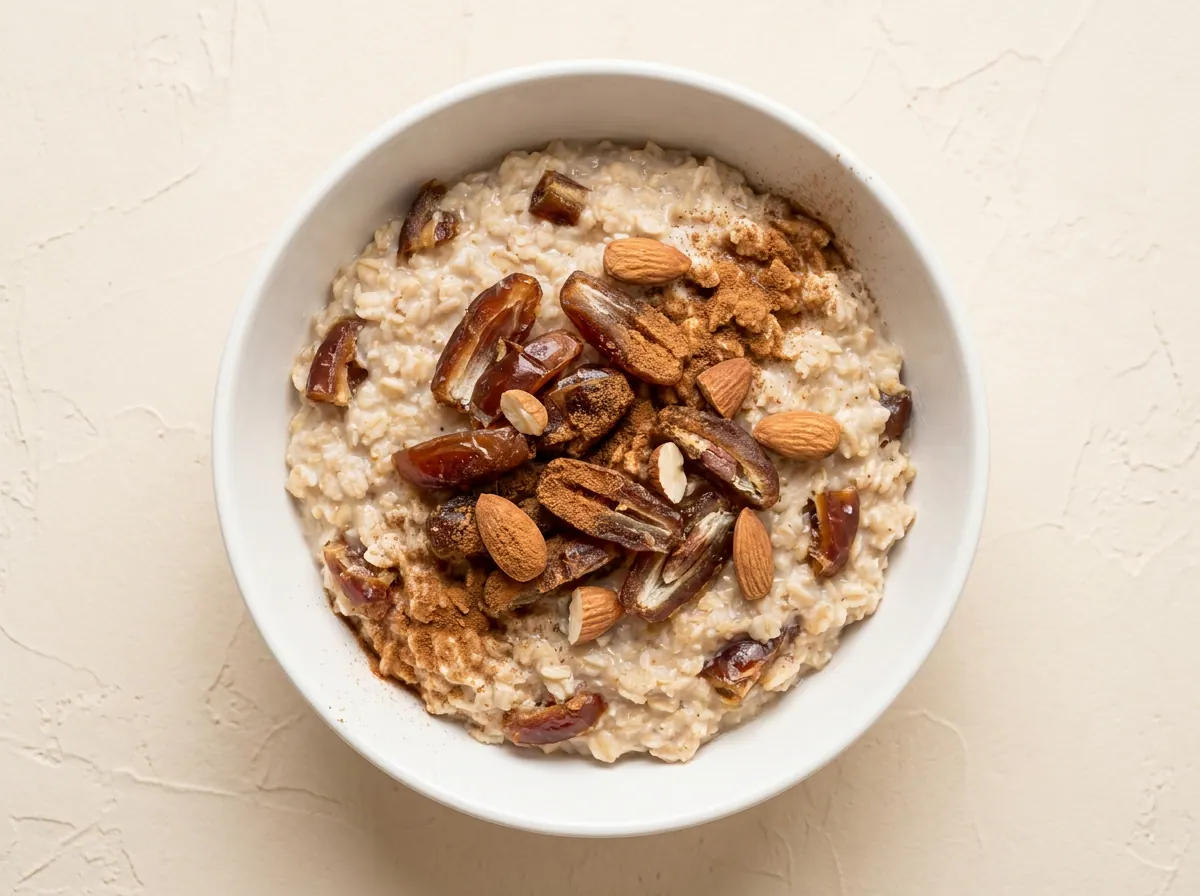
Milk substitutes in hot oatmeal, quinoa, macaroni with milk, and our porridges. The plant-based option present in the notes of all our recipes.