Homemade butter is the grandmothers' churn in their skin, transferred to the kitchen beater.
Cream is whipped until it separates into butter and buttermilk within minutes. A foundational experiment that reveals the whole secret of butter and gives a fresh block with buttermilk as a side spoil.
Preparation Steps
Whip the cream and pass the peaks
In a deep bowl, whip the cold cream with an electric beater. It passes through the usual dessert cream and then goes beyond it: it grains, yellows, and suddenly separates into yellow clumps tumbling in a white liquid. This is the moment of butter that grandmothers churned in skins for ages, made by your beater in minutes.
Strain the white buttermilk
Strain the white liquid, the buttermilk, into a cup and do not pour it out: it is the liquid of pancakes and quick breads that stores sell under its name.
Wash the butter with iced water. The secret to its keeping
Gather the butter clumps and knead them with your hands in a bowl of iced water, changing it two or three times until it runs clear. Every drop of buttermilk left in it hastens its rancidity, and the iced wash is its whole life.
Knead, salt, and shape
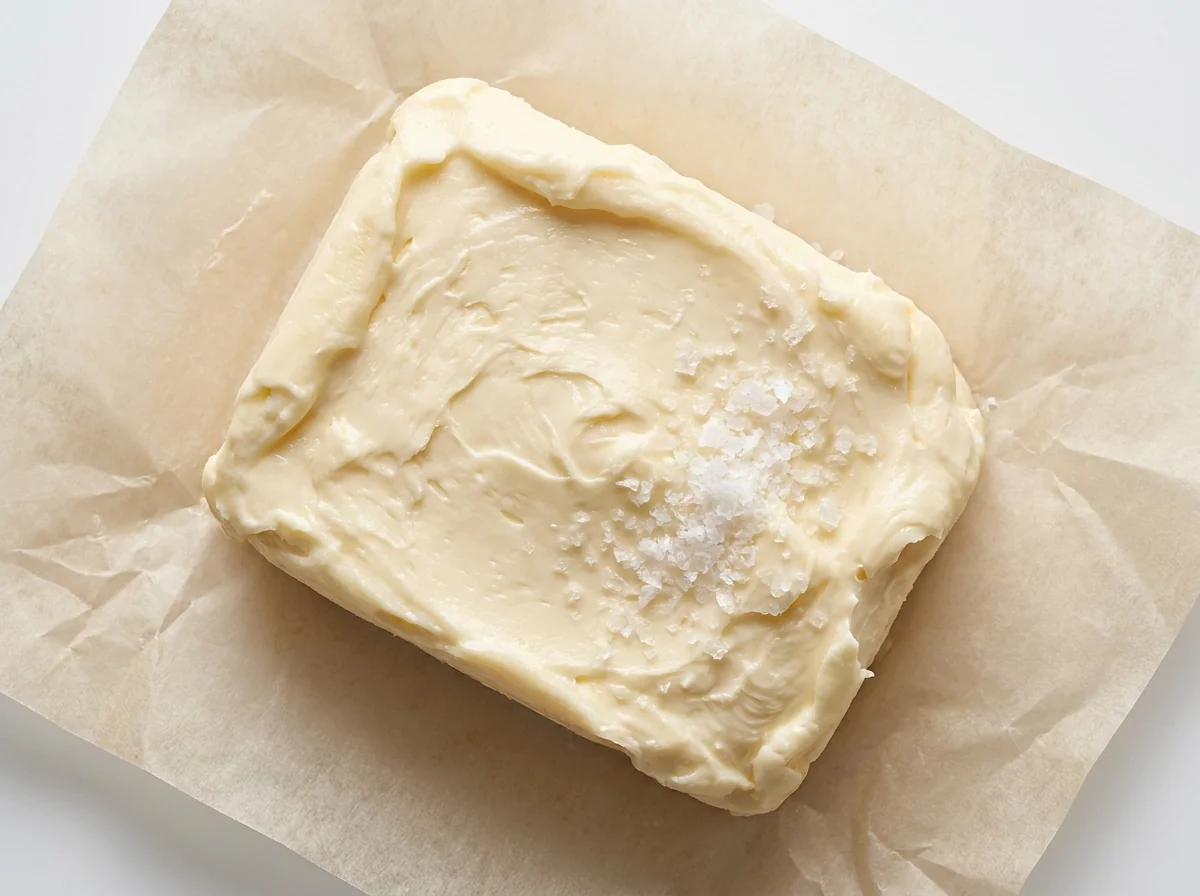
Press all the water out of the butter completely, knead in the salt for those who want it, and shape it into a block in butter paper or a small mold. A fresh golden-white butter with a cream aroma that store blocks do not know.
Blood Sugar Impact
The glycemic index (GI) measures how quickly a food raises blood sugar, while the glycemic load (GL) measures how much a full serving raises it. Together they give the complete picture.
Glycemic Index
GI
0Low
Low0–55Medium56–69High70+
A low value (≤55) means a gradual rise in blood sugar — the most suitable range for diabetes and insulin resistance.
Glycemic Load
GL
0Low
Low0–10Medium11–19High20+
Glycemic load reflects the impact of the full serving. To lower it: take half a serving, or pair the recipe with a source of protein and fiber.
Nutritional Information
Per ServingMakes 16 servings · one serving is about 65 g of raw ingredients
Calories106 kcal5%of Daily Value*
Protein1 g2%of Daily Value*
Carbohydrates1 g0%of Daily Value*
Fat11 g14%of Daily Value*
Fiber0 g0%of Daily Value*
Sodium57 mg2%of Daily Value*
Potassium30 mg1%of Daily Value*
Phosphorus18 mg1%of Daily Value*
* Percent Daily Values are based on a 2,000-calorie diet per FDA food-label reference values — your daily needs may be higher or lower. Values are derived from the recipe's ingredients via the USDA database.
Troubleshooting
The most common problems when preparing Homemade Butter from Whipping Cream, and how to fix them:
The cream refused to separate
Low-fat or plant cream. Full-fat animal cream only, and anything below 35% fat does not yield butter.
It separated, then the liquid splattered around the kitchen
The moment of separation is splashy by nature. A deep bowl and a towel covering it with the beater in the decisive minute.
It went rancid within days
Insufficient washing. Changed iced water until clear, and salt is an extra guard that prolongs the life.
It came out little from half a liter
Its natural share: about 200 grams of butter and 250 ml of buttermilk, and the buttermilk is half the spoil, not a loss.
Storage and Make-Ahead
In the fridge
Two weeks wrapped tightly, and the well-washed salted kind, three.
In the freezer
Three months as small blocks. Thaw block after block.
The side buttermilk
Three days refrigerated. For soda bread, pancakes, and chicken marinades.
Tested Ingredient Substitutions
Original Ingredient
Tested Substitute
Ratio
Flavor Difference
Whipping cream
the gathered top of fresh cow's milk
~
The original village route for those who find it
Salt
omit it
~
Sweet butter for desserts and ghee
Its next destination
our homemade country ghee
~
The full chain: cream to butter to country ghee
Premium flavors
knead garlic and herbs or honey into it
~
Café compound butters from your block
How Much Does It Make? Scaling Guide
Ingredient
~200 g butter
100 g
400 g
Cream
500 ml
250 ml
1 L
Salt
2 g
1 g
4 g
EEINA Nutrition Tip
Wash it with iced water until it runs clear and do not cut it short. The buttermilk trapped inside the butter is the timed clock of its rancidity: two or three washes with patient kneading buy your block two extra weeks of freshness.
Add This Recipe to Your Plan
The EEINA app saves your favorite recipes, calculates them from their real ingredients, and shows your daily numbers toward your goal. Try it free now.
Often it is, and this is the recipe of understanding, freshness, and the side buttermilk: whoever made their butter once reads market labels with a different eye.
What is buttermilk and what is it used for?
The white, gently sour churning liquid. The base of our soda bread, the marinade for chicken fingers, and a pancake that calls for delicacy.
How far is it from country ghee?
Half an hour of quiet on the heat. This block of yours is the direct gateway to the next ghee recipe.
Is it worth trying with children?
One of the loveliest scientific kitchen experiments for them: white cream turning before their eyes into yellow butter. A chemistry lesson eaten on tomorrow's toast.