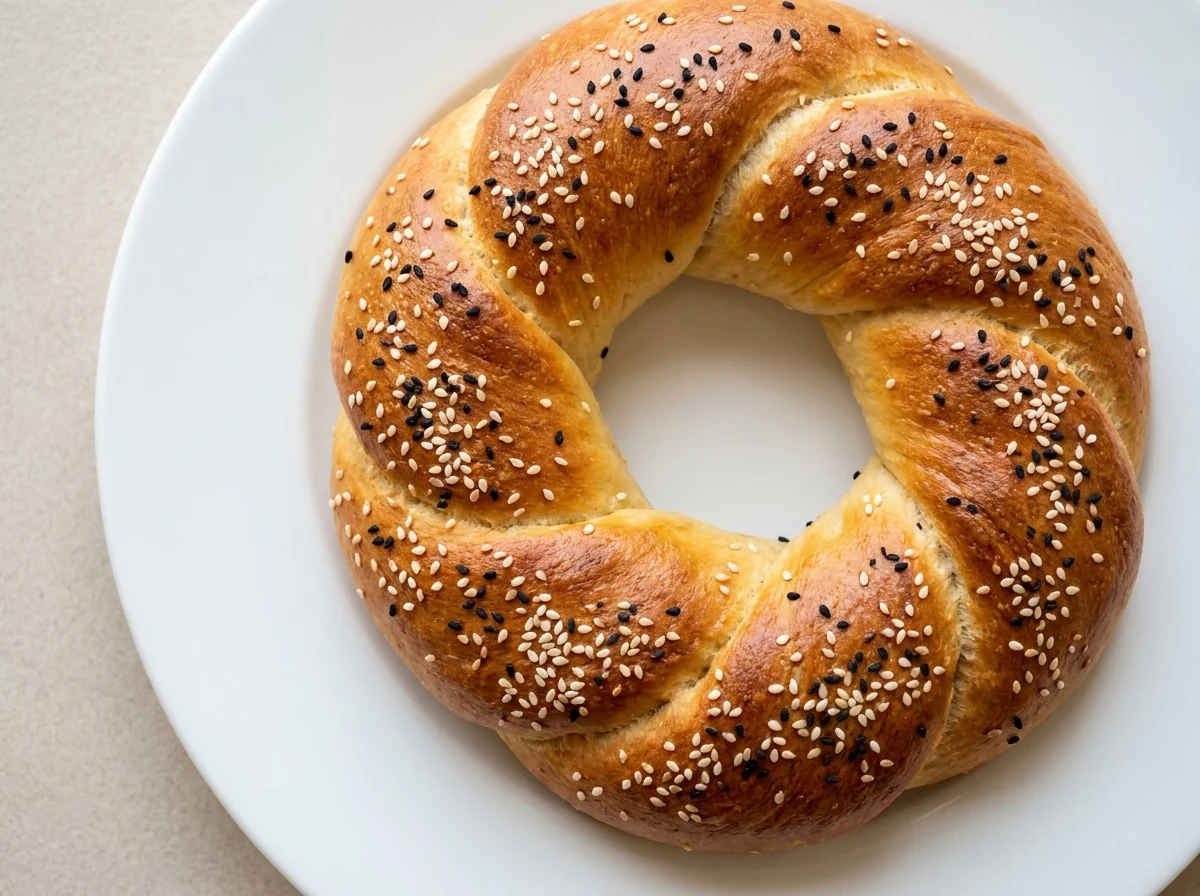
Shureik is among the most famous breakfast breads in the Hijaz, and in Medina it is known as Shureik Madini until it became one of the landmarks of its bakeries.
It is rings of dough rich in milk and butter covered with sesame, usually served with tea on Hijazi breakfast tables.
Preparation Steps
Prepare the Shureik dough
In a kneading bowl, mix the flour, yeast, sugar, and salt, then add the warm milk, butter, and egg. Knead for ten minutes until the dough is smooth and soft and does not stick to the hand. Its richness from milk, butter, and egg is the reason for Shureik's well-known tenderness. Cover and let it rise for an hour until doubled.
Shape the rings
Divide the dough into six balls, and shape each ball into a rope closed into a ring, or a thick disk. The ring is the most famous shape in the bakeries of Medina.
Let the rings rest
Arrange the rings on a parchment-lined tray and let them rest for twenty minutes until puffed. This second rest is essential so the Shureik comes out soft and puffy.
Glaze with egg and scatter the sesame
Glaze the rings with the egg-and-milk mixture for a first coat, then a second coat after two minutes, then scatter the sesame and nigella seeds until the whole surface is covered. Glazing twice fixes the sesame so it does not fall off when slicing.
Bake until the surface browns
In an oven preheated to 190 degrees, bake for fifteen to eighteen minutes until the surface is glossy golden and the sesame toasts and its aroma rises.
Serving the Hijazi way
Serve it warm with milky tea, or with cheese, honey, and jam. It is among the most famous breakfasts of the people of Medina and Mecca.
Blood Sugar Impact
The glycemic index (GI) measures how quickly a food raises blood sugar, while the glycemic load (GL) measures how much a full serving raises it. Together they give the complete picture.
Glycemic Index
GI
72High
Low0–55Medium56–69High70+
A low value (≤55) means a gradual rise in blood sugar — the most suitable range for diabetes and insulin resistance.
Glycemic Load
GL
39High
Low0–10Medium11–19High20+
Glycemic load reflects the impact of the full serving. To lower it: take half a serving, or pair the recipe with a source of protein and fiber.
Nutritional Information
Per ServingMakes 6 servings · one serving is about 135 g of raw ingredients
Calories386 kcal19%of Daily Value*
Protein11 g22%of Daily Value*
Carbohydrates57 g21%of Daily Value*
Fat12 g15%of Daily Value*
Fiber3 g11%of Daily Value*
Sodium365 mg16%of Daily Value*
* Percent Daily Values are based on a 2,000-calorie diet per FDA food-label reference values — your daily needs may be higher or lower. Values are derived from the recipe's ingredients via the USDA database.
Troubleshooting
The most common problems when preparing Hijazi Shureik Sesame Bread, and how to fix them:
The Shureik came out hard
Kneading was insufficient or the bake ran long. Knead a full ten minutes and take it out of the oven the moment the surface browns.
The sesame fell off
The glaze was too little or on a dry surface. Glaze generously with the egg mixture twice before scattering the sesame.
The dough did not puff
The milk was hot and weakened the yeast, or the place is cold. Use milk warm as the hand and put the dough in a warm, closed place such as a turned-off oven.
The bottom is pale and the surface too red
The tray was on a high rack. Always bake on the middle rack, and parchment protects the bottom.
Storage and Make-Ahead
Warm
Best with morning tea on the same day.
At room temperature
Two days in a sealed bag, and reheat a minute in a hot oven before serving.
In the freezer
Keeps baked two months in bags, and thaws and reheats to come back soft.
Tested Ingredient Substitutions
Original Ingredient
Tested Substitute
Ratio
Flavor Difference
Milk
warm water with two spoons of milk powder
1:1
A pantry solution with the same richness
Butter
vegetable oil
1:1
Lighter in fat and less in flavor
Half the white flour
whole-wheat flour
1:1 for the half
A brown Shureik with higher fiber, as in some old households
Sesame alone
sesame with nigella seeds
~
The full Hijazi surface
How Much Does It Make? Scaling Guide
Ingredient
6 rings
3 rings
12 rings
Flour
400 g
200 g
800 g
Milk
200 ml
100 ml
400 ml
Sesame
25 g
15 g
50 g
EEINA Nutrition Tip
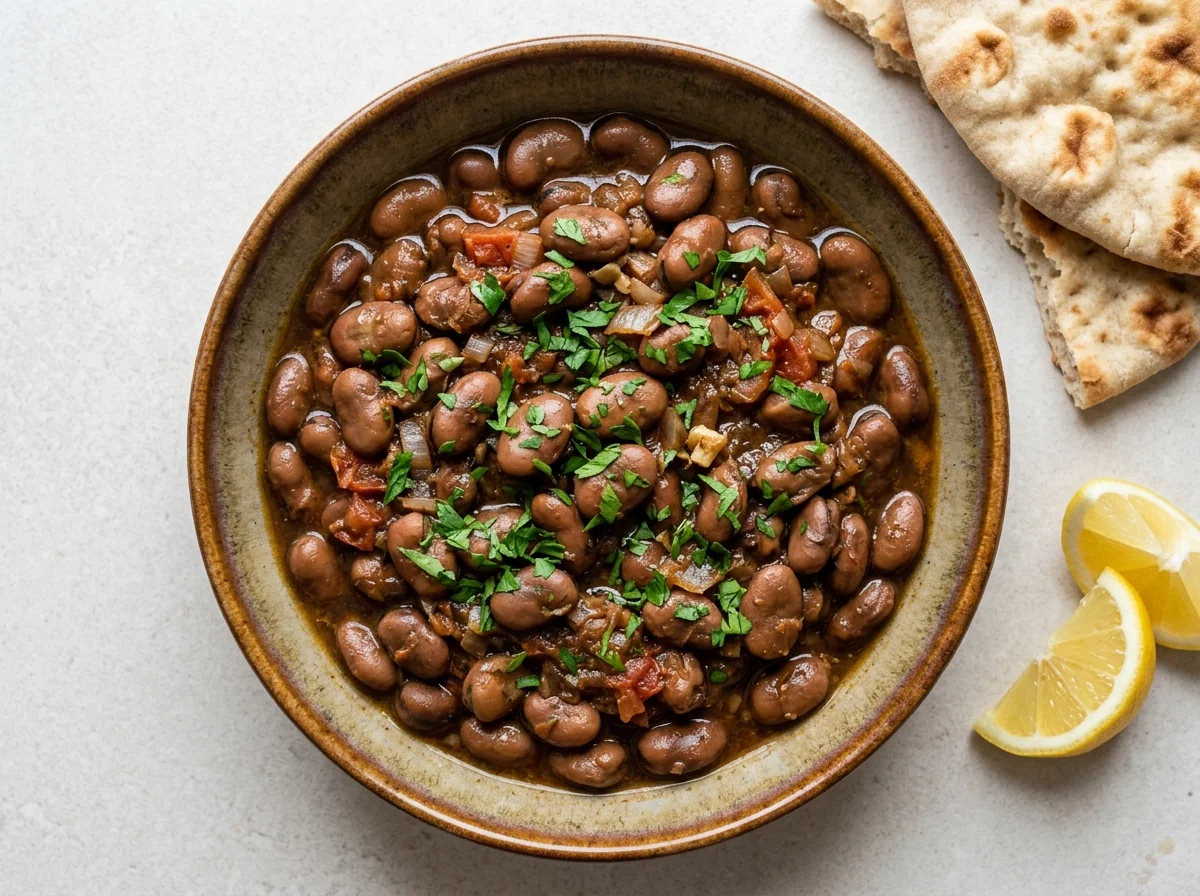
A Shureik ring on its own is a source of fast-absorbing carbohydrates (its glycemic index is high). Add a protein source such as cheese, egg, or Ful (stewed fava beans) so the sugar absorbs more slowly and fullness lasts longer, and this is an established rule in building a balanced breakfast.
Add This Recipe to Your Plan
The EEINA app saves your favorite recipes, calculates them from their real ingredients, and shows your daily numbers toward your goal. Try it free now.
What is the difference between it and Levantine sesame ka'ak?
Shureik is a soft milk-and-butter dough eaten fresh with tea, while Levantine ka'ak is drier and harder and made for long keeping. The shape is similar and the texture is different.
What is it eaten with at a Hijazi breakfast?
With milky tea first, then white cheese, honey, and tahini halva, and some people of Medina eat it with Ful (stewed fava beans).
Can it be kneaded overnight?
Yes. Leave it to ferment slowly in the fridge covered and shape it in the morning, and the slow fermentation increases its flavor and tenderness.
Why is it a reasonable breakfast choice despite being a rich bread?
One ring with cheese and vegetables makes a breakfast balanced in carbohydrates and protein. Moderation lies in the number, not in total deprivation.