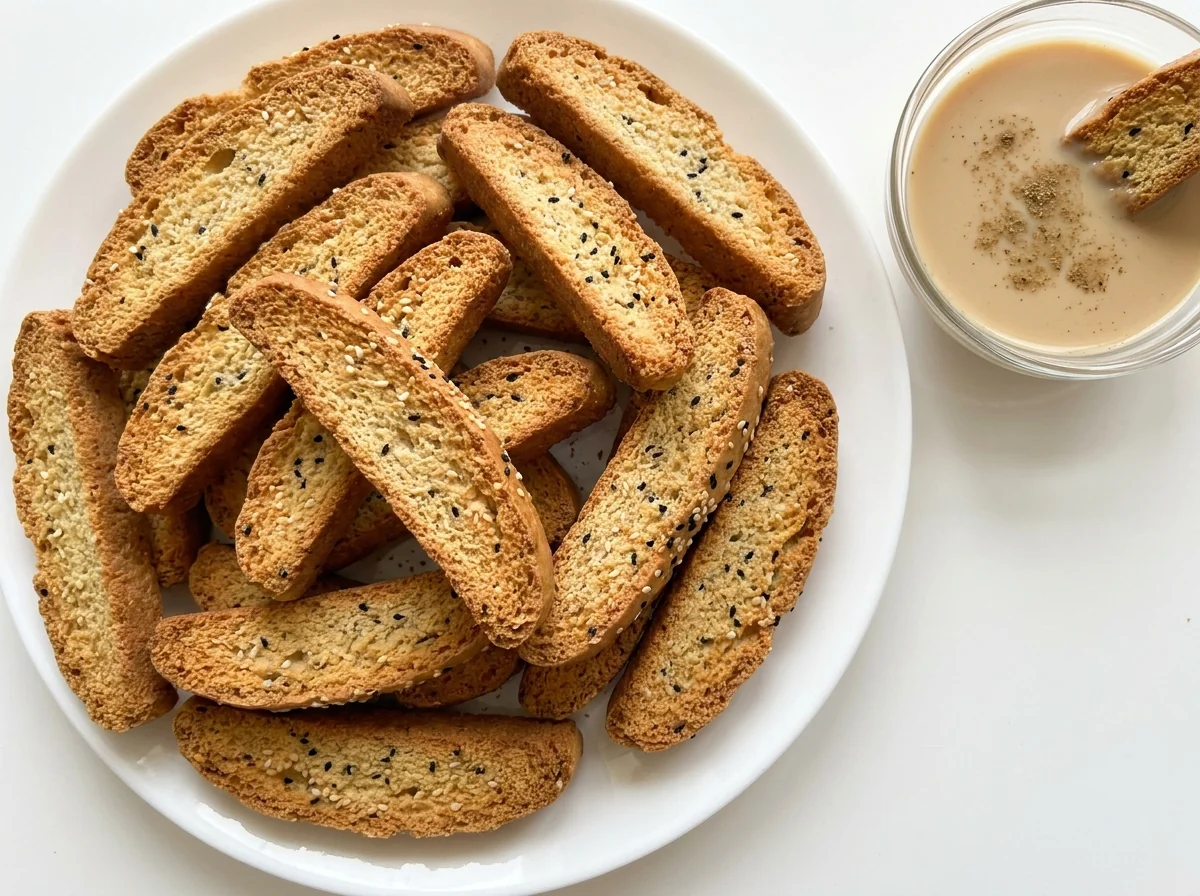
A sweet cardamom-scented bread that is baked, then sliced and toasted to a crisp, so it accompanies milky tea on Hijazi breakfast tables for weeks without spoiling. Its name comes from the family of Ottoman rusks (beskemat) that settled in the Hijaz.
Preparation Steps
Knead a sweet cardamom-scented dough
Mix the flour, yeast, sugar, salt, and cardamom, then add the warm milk, melted butter, and egg. Knead for ten minutes until you have a medium-soft dough fragrant with cardamom. Cover and let it rise for an hour until doubled.
Bake them as first loaves
Shape the dough into two rectangular loaves the size of a toast loaf, rest them on a tray for twenty minutes, then bake at 180 degrees for twenty-five minutes until cooked through and golden. This is the first of two bakes, for Shabura is bread baked twice.
Cool and slice
Let the loaves cool completely, since slicing them hot tears them apart, then cut them into finger-thick slices with a serrated knife.
The second bake: toasting to a crisp
Arrange the slices on two trays and place them in a gentle oven at 140 degrees for twenty minutes, turning them halfway, until they dry out and toast golden on both sides and snap with a crisp sound when broken. This is how soft bread turns into a Shabura rusk that lasts for weeks.
Serve in the Hijazi tradition
Keep it in an airtight tin and serve it with milky tea in the morning. Dip it briefly so its edges soften while its center stays crisp, and this is the pleasure that the people of Mecca and Jeddah know well.
Blood Sugar Impact
The glycemic index (GI) measures how quickly a food raises blood sugar, while the glycemic load (GL) measures how much a full serving raises it. Together they give the complete picture.
Glycemic Index
GI
72High
Low0–55Medium56–69High70+
A low value (≤55) means a gradual rise in blood sugar — the most suitable range for diabetes and insulin resistance.
Glycemic Load
GL
40High
Low0–10Medium11–19High20+
Glycemic load reflects the impact of the full serving. To lower it: take half a serving, or pair the recipe with a source of protein and fiber.
Nutritional Information
Per ServingMakes 8 servings · one serving is about 120 g of raw ingredients
Calories358 kcal18%of Daily Value*
Protein9 g18%of Daily Value*
Carbohydrates57 g21%of Daily Value*
Fat10 g13%of Daily Value*
Fiber2 g7%of Daily Value*
Sodium219 mg10%of Daily Value*
Potassium134 mg3%of Daily Value*
Phosphorus122 mg10%of Daily Value*
* Percent Daily Values are based on a 2,000-calorie diet per FDA food-label reference values — your daily needs may be higher or lower. Values are derived from the recipe's ingredients via the USDA database.
Troubleshooting
The most common problems when preparing Hijazi Shabura Rusk, and how to fix them:
The Shabura softened in its tin
Under-toasting, or a tin that was opened to humidity. Return it to the gentle oven for ten minutes and its full crispness comes back.
It crumbled while slicing
You cut it hot. Cool it completely, then use a serrated knife with a sawing motion, not pressure.
It came out so hard it cracks the tooth
Slices too thin or too little sugar. Finger thickness is the measure, and dipping in tea is part of how it is eaten in the first place.
The cardamom flavor is missing
Old cardamom that has lost its aroma. Grind it fresh from the pods at the moment of kneading; the difference from old ground cardamom is night and day.
Storage and Make-Ahead
In an airtight tin
Three weeks fully crisp at room temperature. This is its whole philosophy.
In the freezer
The first loaf before toasting keeps two months. Thaw, slice, and toast fresh.
Do not refrigerate
Fridge humidity is the number-one enemy of crispness.
Tested Ingredient Substitutions
Original Ingredient
Tested Substitute
Ratio
Flavor Difference
The full sugar
half the amount
30 g
A less sweet Shabura that suits cheese and savory toppings
Butter
vegetable oil
1:1
Acceptable, though butter has a richer flavor
Cardamom alone
cardamom with a pinch of ground mahlab
~
The full old Hijazi aroma
Half the white flour
whole-wheat flour
1:1 for the half
A brown Shabura with higher fiber
How Much Does It Make? Scaling Guide
Ingredient
~40 slices
~20 slices
~80 slices
Flour
500 g
250 g
1 kg
Milk
250 ml
125 ml
500 ml
Sugar
60 g
30 g
120 g
EEINA Nutrition Tip
The second bake calls for a gentle flame and long patience. 140 degrees, no more. High heat colors the edges and leaves the center soft, so the Shabura softens again in its tin after two days; gentle heat dries it all the way through so it lasts a month crisp.
Add This Recipe to Your Plan
The EEINA app saves your favorite recipes, calculates them from their real ingredients, and shows your daily numbers toward your goal. Try it free now.
How does it differ from beskemat and toasted toast?
It is a daughter of the twice-baked rusk family, but its dough is milk, butter, and cardamom, Hijazi in spirit. Toasted toast is ordinary bread that dried out, while Shabura is a dough designed to be toasted.
How many slices is a reasonable breakfast?
Two to three with milky tea and cheese. Its moderate sweetness is enough and does not call for jam on top.
Why is it baked twice?
The first bake cooks the dough and the second draws out all its moisture, and with no moisture it neither molds nor softens, which is why it was the provision of travelers and pilgrims in the old days.
Is it suitable for small children?
Dipped in milk it softens and becomes one of the gentlest teething sticks for little ones, and this is genuinely an old Hijazi habit.