A chilled Levantine dessert — cornstarch and milk pudding perfumed with rose water, cut into cubes and soaked in light sugar syrup. A light, refreshing sweet with a medium glycemic load, contains dairy.
Heytaliyeh is an ancient Levantine chilled dessert from Damascus and Aleppo, made from cornstarch and milk perfumed with rose water and orange blossom water. It is cooked until thick, then chilled, cut into cubes, and soaked in light syrup.
With a texture between muhallabia and mahalabia, it is a beloved summer and Ramadan sweet served cold after iftar or at summer evening gatherings. Its simplicity — just starch and milk — along with its delicate floral flavor and cool, light texture make it a dessert that does not weigh you down, especially after a rich meal.
Preparation Steps
Dissolve the cornstarch
Dissolve the cornstarch in one cup of cold milk, stirring well until completely smooth with no lumps. Dissolving in cold milk first is essential — adding it directly to hot milk creates lumps that are impossible to remove.
Cook the mixture
In a saucepan, warm the remaining milk with the sugar over medium heat, then add the dissolved cornstarch mixture, stirring constantly. Keep stirring until the mixture thickens into a shiny, dense cream, about five minutes. Constant stirring prevents lumps and sticking.
Add the floral waters
Turn off the heat once the mixture is thick, then stir in the rose water and orange blossom water. These aromatics are the soul of heytaliyeh — add them at the end so they do not evaporate from the heat.
Pour and chill
Pour the mixture into a flat dish or tray in an even layer, let it cool at room temperature, then refrigerate until fully set, about two hours. Heytaliyeh sets by chilling into a sliceable texture, slightly firmer than muhallabia.
Cut
Once set, turn the heytaliyeh out or cut it directly into cubes or diamond shapes. The firm texture allows it to hold its shape after cutting — this is what distinguishes it from the softer muhallabia served in cups.
Serve
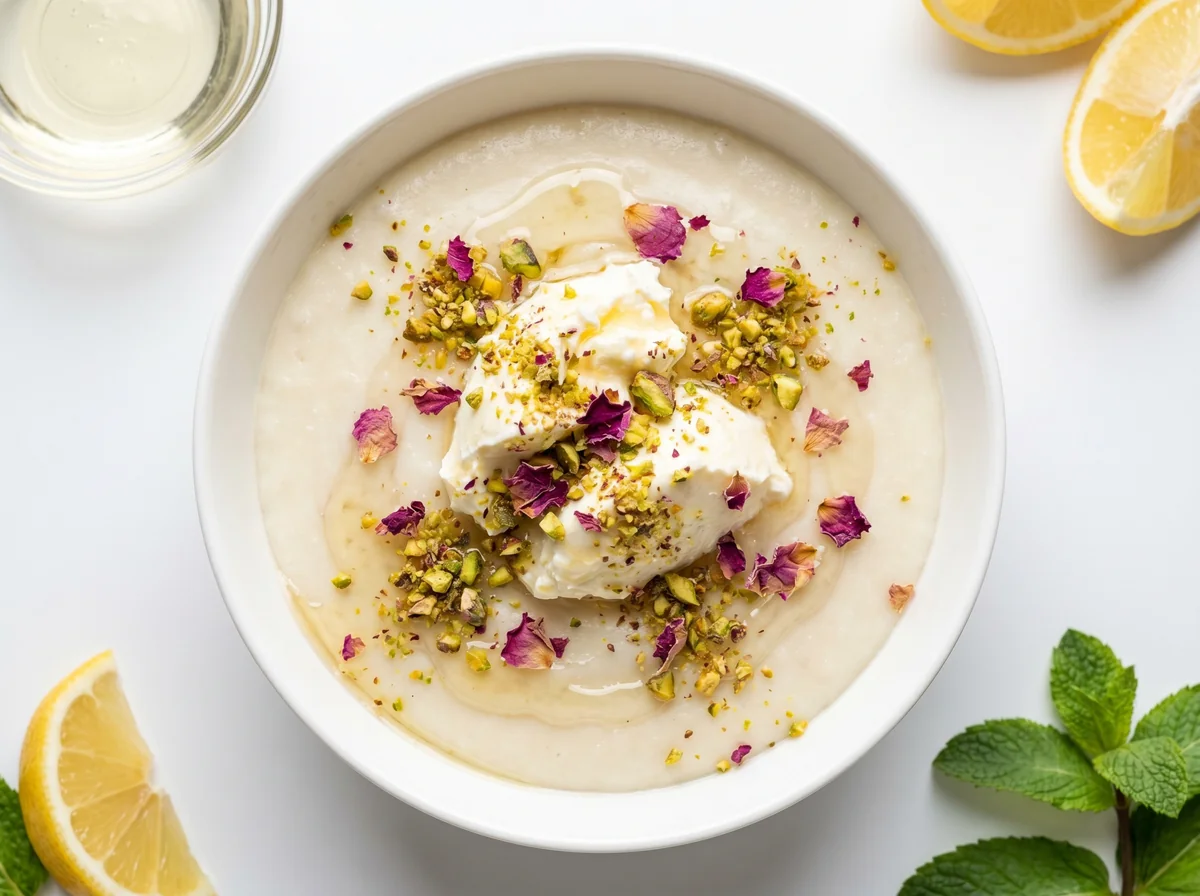
Arrange the heytaliyeh cubes in a bowl or cups, pour the cold light syrup over them, and garnish with crushed pistachios. Serve chilled. Heytaliyeh is a cool, refreshing Levantine sweet loved in summer and Ramadan — its texture falls between muhallabia and mahalabia, and its delicate floral flavor makes it a light finish to any meal.
Blood Sugar Impact
The glycemic index (GI) measures how quickly a food raises blood sugar, while the glycemic load (GL) measures how much a full serving raises it. Together they give the complete picture.
Glycemic Index
GI
65Medium
Low0–55Medium56–69High70+
A low value (≤55) means a gradual rise in blood sugar — the most suitable range for diabetes and insulin resistance.
Glycemic Load
GL
28High
Low0–10Medium11–19High20+
Glycemic load reflects the impact of the full serving. To lower it: take half a serving, or pair the recipe with a source of protein and fiber.
Nutritional Information
Per ServingMakes 6 servings · one serving is about 205 g of raw ingredients
Calories237 kcal12%of Daily Value*
Protein5 g10%of Daily Value*
Carbohydrates43 g16%of Daily Value*
Fat5 g6%of Daily Value*
Fiber0 g0%of Daily Value*
Sodium71 mg3%of Daily Value*
* Percent Daily Values are based on a 2,000-calorie diet per FDA food-label reference values — your daily needs may be higher or lower. Values are derived from the recipe's ingredients via the USDA database.
Troubleshooting
The most common problems when preparing Heytaliyeh (Levantine Milk Pudding Cubes), and how to fix them:
Cornstarch lumped in the mixture
The starch was added directly to hot milk. Dissolve the cornstarch in cold milk first until completely smooth, then add it to the hot milk while stirring constantly. Starch clumps instantly in hot liquid without prior dissolving.
Heytaliyeh did not set
Too little starch or not cooked enough. Cook the mixture with constant stirring until it thickens well and becomes dense before pouring, then chill for at least two hours. It sets by chilling — the final texture only appears cold.
Texture is rubbery and hard
Too much starch. Use the balanced amount — excess makes it stiff and rubbery. The desired texture is firm enough to cut but soft and smooth in the mouth.
Floral flavors are faint or bitter
Added during cooking so they evaporated, or too much was used. Add rose water and orange blossom water after turning off the heat (heat vaporizes their aroma), and calibrate the amount — excess gives a soapy, bitter taste.
A skin formed on the surface
It cooled uncovered. Press cling film directly onto the surface of the heytaliyeh while it chills to prevent a skin from forming, or stir it before it fully cools. The syrup at serving time hides any light layer.
Storage and Make-Ahead
Refrigerator (4°C)
Store in an airtight container in the refrigerator for three days (contains milk). Add the syrup and pistachios at serving time — not before (so they do not dissolve or make it soggy). Serve cold; it is ideal for making ahead.
Meal prep
An ideal make-ahead dessert: cook, pour, and chill, ready to cut and serve. Perfect for Ramadan iftar and summer gatherings — prepare in the morning, serve in the evening.
Freezer
Not recommended for freezing (starch and milk change texture on thawing, becoming watery). Make it fresh and keep refrigerated for a few days.
Food safety
Heytaliyeh is a cooked dairy dessert — keep it refrigerated at all times and do not leave it out for long (contains milk). Use fresh milk and clean utensils.
Tested Ingredient Substitutions
Original Ingredient
Tested Substitute
Ratio
Flavor Difference
Sugar and syrup
Reduce both or use a drizzle of honey
To taste
Lowers glycemic load; heytaliyeh remains delicious with moderate sweetness and floral flavor
Whole milk
Low-fat milk or plant-based milk
Same amount
Low-fat is lighter; plant-based milk (almond or coconut) makes it dairy-free (confirm it thickens adequately)
Rose water and orange blossom water
Vanilla or mastic
To taste
Rose water and orange blossom water are the traditional Levantine aromatics; mastic also gives a distinctive fragrant flavor
How Much Does It Make? Scaling Guide
Number of servings
Milk
Cornstarch
Sugar
3 (half recipe)
2 cups
1/4 cup
2 tbsp
6 (base)
4 cups
1/2 cup
1/4 cup
12 (banquet)
8 cups
1 cup
1/2 cup
EEINA Nutrition Tip
Heytaliyeh is one of the lightest Levantine desserts: no frying, few added fats, and the milk contributes protein and calcium. Its challenge is that the base is starch (low-nutrient carbohydrates) plus sugar and syrup. To lighten it: reduce the sugar in the mixture, use a small amount of light syrup (or a drizzle of honey), choose low-fat milk, and add more pistachios for nutritional value. A moderate portion makes a pleasant, light finish to a meal.
Add This Recipe to Your Plan
The EEINA app saves your favorite recipes, calculates them from their real ingredients, and shows your daily numbers toward your goal. Try it free now.
What is the difference between heytaliyeh and muhallabia?
Both are fragrant starch-and-milk puddings, but heytaliyeh is firmer (cut into cubes and soaked in syrup), while muhallabia is softer (served in cups with a spoon). Heytaliyeh is a traditional Levantine dessert defined by its distinct firm, sliceable texture.
How do I prevent the starch from lumping?
Dissolve the cornstarch in cold milk first until completely smooth with no lumps, then add it to the hot milk with constant stirring. Starch clumps instantly in hot liquid without prior dissolving — this step is essential.
Is heytaliyeh healthy?
It is one of the lightest Levantine desserts (no frying; milk adds protein and calcium; cool texture does not weigh you down). The challenge is its starch, sugar, and syrup base. Reduce the sugar and syrup, use low-fat milk, add more pistachios, and keep portions moderate.
When should the floral waters be added?
Immediately after turning off the heat — not during cooking — because heat vaporizes their aroma and the flavor is lost. Also watch the quantity: too much rose water gives a soapy, bitter taste, while the right amount gives a lovely, delicate floral note.