A simple Maghrebi home sweet — fine vermicelli toasted in ghee, cooked with water, sugar, and orange-blossom water until tender and dry, then garnished with nuts and cinnamon. A warm homemade dessert with a moderate glycemic load; contains gluten, dairy, and tree nuts.
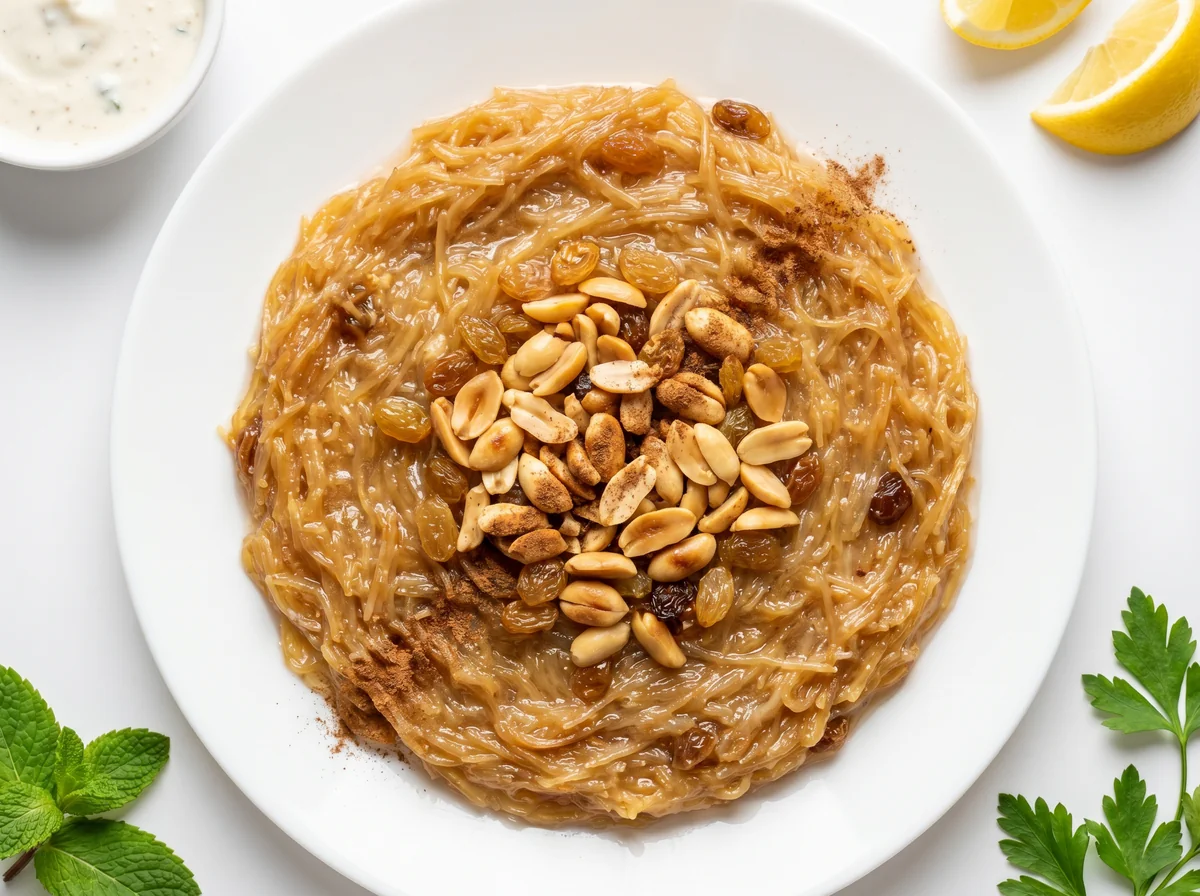
Halawet Shaariyya is a simple, beloved home sweet from the Maghreb (with similar versions in the Levant), made by toasting fine vermicelli in ghee until golden, then cooking it with water, sugar, orange-blossom water, and cinnamon until tender and dry, and garnishing with nuts and raisins. It differs from vermicelli in milk (a creamy pudding) in being dry and fluffy from toasting (similar to sweet couscous).
It is an economical, simple, quick sweet — served as dessert, a sweet breakfast, during Ramadan, or for children. The toasting gives it its distinctive warm, nutty flavour — the fragrant toasted strands with cinnamon, orange-blossom water, nuts, and raisins are a simple warm pleasure, a symbol of the gentle home sweets and generous Maghrebi table.
Preparation Steps
Toast the vermicelli
Heat the ghee and add the vermicelli, stirring over medium heat until toasted and golden and the aroma blooms (without burning). Toasting the vermicelli in ghee is the secret of this sweet's flavour — it develops a golden colour and warm nutty taste — so do not go beyond golden.
Add the hot water
Carefully add the hot water (it will spatter) and stir. The hot water cooks the toasted vermicelli. Add enough water for the vermicelli to cook through and absorb it (about double the volume) — it swells as it soaks up the liquid.
Sweeten and perfume
Add the sugar, cinnamon, and orange-blossom water, stirring until the sugar dissolves. The sugar, orange-blossom water, and cinnamon perfume and sweeten the dish (a warm Maghrebi flavour). Adjust the sugar to taste — pleasantly sweet, not excessive.
Cook until done
Cover the pot and let the vermicelli cook over very low heat until tender and the liquid is fully absorbed (about ten minutes), stirring gently. The vermicelli cooks and dries out (absorbing the liquid), becoming a dry, separate texture — not wet (similar to cooking couscous).
Fluff the vermicelli
Once cooked and the liquid is absorbed, turn off the heat and leave it covered for a few minutes, then fluff with a fork (to separate the strands). The final texture is dry and fluffy (separate strands, not clumped), with a toasted, sweet, fragrant flavour. Stir in a knob of ghee for extra shine (optional).
Garnish and serve
Transfer the vermicelli to a plate and top with crushed nuts (almonds and walnuts), raisins, and a dusting of cinnamon. Serve warm. This is a simple, beloved Maghrebi (and Levantine) home sweet — served as dessert, a sweet breakfast, or during Ramadan — and the toasted, fragrant vermicelli with cinnamon, orange-blossom water, and nuts is a simple, warm delight.
Blood Sugar Impact
The glycemic index (GI) measures how quickly a food raises blood sugar, while the glycemic load (GL) measures how much a full serving raises it. Together they give the complete picture.
Glycemic Index
GI
27Low
Low0–55Medium56–69High70+
A low value (≤55) means a gradual rise in blood sugar — the most suitable range for diabetes and insulin resistance.
Glycemic Load
GL
13Medium
Low0–10Medium11–19High20+
Glycemic load reflects the impact of the full serving. To lower it: take half a serving, or pair the recipe with a source of protein and fiber.
Nutritional Information
Per ServingMakes 5 servings · one serving is about 165 g of raw ingredients
Calories307 kcal15%of Daily Value*
Protein5 g10%of Daily Value*
Carbohydrates50 g18%of Daily Value*
Fat10 g13%of Daily Value*
Fiber1 g4%of Daily Value*
Sodium3 mg0%of Daily Value*
Potassium90 mg2%of Daily Value*
Phosphorus76 mg6%of Daily Value*
* Percent Daily Values are based on a 2,000-calorie diet per FDA food-label reference values — your daily needs may be higher or lower. Values are derived from the recipe's ingredients via the USDA database.
Troubleshooting
The most common problems when preparing Halawet Shaariyya (Toasted Vermicelli Pudding), and how to fix them:
The vermicelli is clumped and sticky
Too much water or it was not fluffed. Add a moderate amount of water (so it cooks and dries, not swims) and fluff with a fork after cooking and resting. Moderate water and fluffing give a dry, separate texture (not a paste).
The vermicelli is raw and hard
Too little water or too short a cooking time. Add enough hot water and cook covered until fully tender and the liquid is absorbed. Vermicelli needs water and time to cook — add hot water if it dries out before it is done.
Bland flavour
Weak toasting or insufficient orange-blossom water and cinnamon. Toast the vermicelli well (until golden — the foundation of the flavour) and add enough orange-blossom water and cinnamon. Good toasting and proper perfuming give the distinctive warm flavour.
The vermicelli burned
Toasted over high heat. Toast over medium heat with constant stirring until just golden (not dark brown) — fine vermicelli burns quickly and turns bitter. Golden is the goal.
Too sweet
Too much sugar. Reduce the sugar and taste as you go (nuts, raisins, and cinnamon sweeten and perfume the dish) — the sweet should be pleasantly sweet, not excessive. Adjust sugar to taste and health needs.
Storage and Make-Ahead
Refrigerator (4°C)
Store in a sealed container in the refrigerator for 3 days. Reheat with a splash of water or ghee (it dries out on chilling) and fluff. Add fresh nuts at serving to keep them crunchy. Best warm and freshly made.
Advance preparation
Can be prepared in advance and reheated (with a splash of liquid) at serving, or toast the vermicelli in advance (keep it dry) and cook it fresh quickly. A quick sweet requiring no lengthy preparation.
Freezer
Cooked halawet shaariyya can be frozen for a month and reheated with a splash of liquid. But it is so quick to make that fresh is usually better. Add nuts after reheating.
Food safety
Use fresh ingredients, store the sweet refrigerated after it has cooled, do not leave it unrefrigerated for long (contains ghee), and reheat thoroughly before serving. Keep nuts stored dry.
Tested Ingredient Substitutions
Original Ingredient
Tested Substitute
Ratio
Flavor Difference
Sugar
Honey or reduced sugar
To taste
Honey is an alternative (add after cooking); reducing sugar and relying on raisins and cinnamon lowers sweetness and calories
Regular vermicelli
Whole-wheat vermicelli
Same quantity
Adds fibre and slightly lowers the glycemic index with a richer flavour; regular is more common
Ghee
Butter or less oil
Less
Reduces saturated fat; some fat is needed for toasting and flavour, but it can be reduced
How Much Does It Make? Scaling Guide
Servings
Vermicelli
Sugar
Water
3 (small)
1 1/2 cups
1/3 cup
1 1/2 cups
5 (base)
2 cups
1/2 cup
2 cups
10 (feast)
4 cups
1 cup
4 cups
EEINA Nutrition Tip
Halawet Shaariyya is a simple home sweet built on vermicelli (refined carbohydrates), sugar, and ghee, giving it a moderate glycemic load and moderate-to-high calories. Nuts and raisins add value (healthy fats, protein, fibre, and minerals). For a better version: reduce the sugar (nuts, raisins, and cinnamon sweeten and perfume the dish), use whole-wheat vermicelli if available, increase the nuts, and use less ghee. A nice, moderate sweet enjoyed in moderate portions. Diabetics should use caution (carbohydrates and sugar). A simple home sweet — the nuts add real value.
Add This Recipe to Your Plan
The EEINA app saves your favorite recipes, calculates them from their real ingredients, and shows your daily numbers toward your goal. Try it free now.
A simple Maghrebi (and Levantine) home sweet: fine vermicelli is toasted in ghee until golden, then cooked with water, sugar, orange-blossom water, and cinnamon until tender and dry, and garnished with nuts and raisins. An economical, quick, warm sweet — served as dessert, a sweet breakfast, or during Ramadan — the toasted, fragrant strands are a simple pleasure.
What is the difference between this and vermicelli in milk?
Halawet shaariyya (this recipe) is dry and fluffy from toasting, cooked with water and sugar (similar to sweet couscous), while vermicelli in milk is a creamy pudding (cooked in milk until creamy and liquid). This one is toasted and dry; that one is milky and creamy. Both are vermicelli sweets but the texture is completely different.
Why toast the vermicelli?
Toasting the vermicelli in ghee before cooking gives it a golden colour and a distinctive warm, nutty flavour (like toasting rice for pilaf), and keeps it fluffy and separate rather than clumped. This step is the secret to Maghrebi halawet shaariyya's flavour (vermicelli in savoury cooking is also toasted). Without it, the dish is bland.
Is halawet shaariyya healthy?
A simple home sweet built on vermicelli (refined carbohydrates), sugar, and ghee, so its glycemic load is moderate. Nuts and raisins add value (healthy fats, fibre, and minerals). Reduce the sugar (raisins and cinnamon sweeten the dish), increase the nuts, use whole-wheat vermicelli, and use less ghee. Enjoy in moderate portions. Diabetics should be cautious. A gentle home sweet.
Sources: University of Sydney · Gulf GSO · Our methodology · Updated on