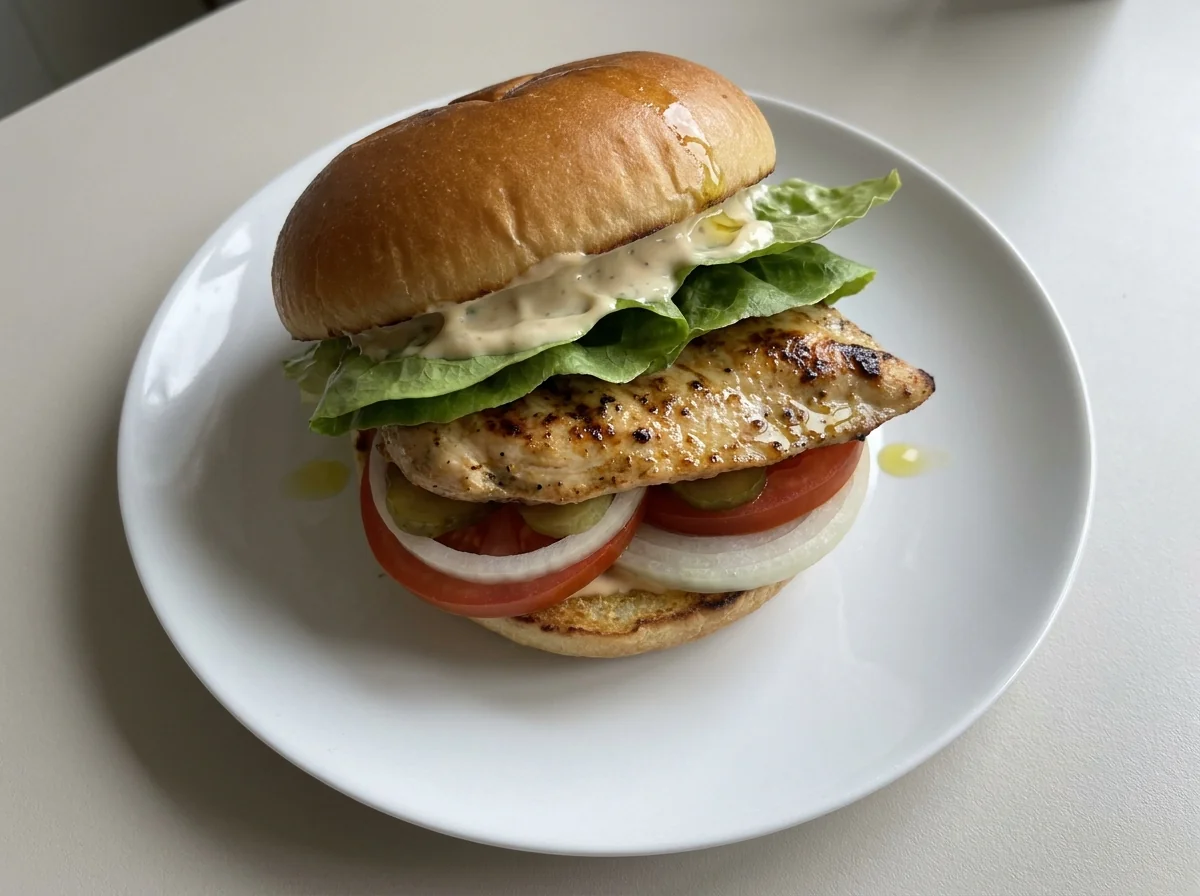
The grilled chicken burger is the "healthy" option that leads modern burger menus.
A whole grilled breast in place of the ground patty. And the equation is genuinely honest: higher pure protein and lower fat, and the home version rounds it out with a yogurt sauce in place of restaurants' generous mayonnaise.
Preparation Steps
A whole breast, not ground. This burger's identity
The breast, pounded to an even thickness of one and a half centimeters, is the patty. The grilled chicken burger is a whole piece of meat: the lightest of the burger family and the highest in pure protein.
The quick yogurt marinade
Yogurt with garlic, lemon and paprika coats the breast for ten minutes. The acid of the yogurt tenderizes the breast's fibers: the ideal chicken marinade, even when you are in a hurry.
A hot grill pan and four minutes per face
With a smear of oil: four minutes untouched, then a flip, then four more. Golden grill lines and 74 degrees internal: the pounded breast cooks quickly and evenly.
A three-minute rest while the bun toasts
The breast rests while the bun toasts in the same pan. The smart parallelism of cooking for one.
Build with the honey-mustard sauce
Sauce, then lettuce, then the grilled breast, then tomato, onion and pickle. The famous "healthy" restaurant burger at twenty-five riyals: from your kitchen for seven.
Blood Sugar Impact
The glycemic index (GI) measures how quickly a food raises blood sugar, while the glycemic load (GL) measures how much a full serving raises it. Together they give the complete picture.
Glycemic Index
GI
54Low
Low0–55Medium56–69High70+
A low value (≤55) means a gradual rise in blood sugar — the most suitable range for diabetes and insulin resistance.
Glycemic Load
GL
17Medium
Low0–10Medium11–19High20+
Glycemic load reflects the impact of the full serving. To lower it: take half a serving, or pair the recipe with a source of protein and fiber.
Nutritional Information
Per ServingMakes 1 servings · one serving is about 885 g of raw ingredients
Calories446 kcal22%of Daily Value*
Protein48 g96%of Daily Value*
Carbohydrates46 g17%of Daily Value*
Fat9 g12%of Daily Value*
Fiber14 g50%of Daily Value*
Sodium422 mg18%of Daily Value*
* Percent Daily Values are based on a 2,000-calorie diet per FDA food-label reference values — your daily needs may be higher or lower. Values are derived from the recipe's ingredients via the USDA database.
Troubleshooting
The most common problems when preparing Grilled Chicken Burger with a Whole Breast, for One, and how to fix them:
The breast dried out despite everything
It overcooked. The four and four and 74 degrees. The breast needs less than you always think.
It stuck to the pan's grill lines
It was flipped too early, or the pan was lukewarm. The hot pan and the full four minutes. The caramelized side releases on its own.
The yogurt marinade burned in patches
The excess stayed on it. Wipe it off lightly before grilling. The marinade works on the inside, not as a coat.
The burger dried out overall
The sauce was skimped. The yogurt sauce is generous on both faces. Half the grilled burger's moisture is from its sauce.
Storage and Make-Ahead
Right away
The burger's steadfast custom.
Marinated breasts in reserve
In yogurt in the fridge for the day, or frozen for two months. The marinade-bag lesson is present.
Not stored assembled
It is built and eaten.
Tested Ingredient Substitutions
Original Ingredient
Tested Substitute
Ratio
Flavor Difference
The breast
A deboned, pounded thigh. Juicier and more forgiving
~
For those who fear dryness
The burger bun
Brown bread or no bread over a salad
~
The healthy bowl burger
The honey-mustard sauce
Daqqus with yogurt. A local pairing
~
Both sauces suit it
Its companion
Our wedges or coleslaw
~
The plate is complete
How Much Does It Make? Scaling Guide
Ingredient
1 burger
·
2 burgers
Breast
150 g
·
300 g
Patty
1
·
2
Time
22 min
·
25 min
EEINA Nutrition Tip
Pound the breast and marinate it in yogurt for at least ten minutes. The grilled chicken breast has dryness as its enemy from two directions: uneven thickness cooks one end and dries another, and its lean fibers parch quickly; pounding evens it out and the acidic yogurt breaks down the fibers, trapping the juices. Ten minutes of marinating does what an hour with an oil-based marinade cannot: the milk acid is the fastest and gentlest of chicken tenderizers.
Add This Recipe to Your Plan
The EEINA app saves your favorite recipes, calculates them from their real ingredients, and shows your daily numbers toward your goal. Try it free now.
How does it count against the beef burger in our notebook?
This is ~525 calories with ~40 g of protein, and that one is ~780 with its twenty-percent fat: two declared schools. The grilled one is for your everyday and the beef one for its occasion.
And how much does it save over the "grilled chicken" restaurants?
Their burger is 22-28 riyals and yours is about seven, and your breast is whole and visible, not a "formed piece": read their menus closely.
The secret to the juiciness of restaurants' grilled burger?
Pounding, the acidic marinade and a generous sauce. All three are yours now: there is no fourth secret.
Does it tolerate advance prep?
The marinated breasts, yes (the bags lesson), but grilling and building are last-minute: twenty minutes from fridge to bite.