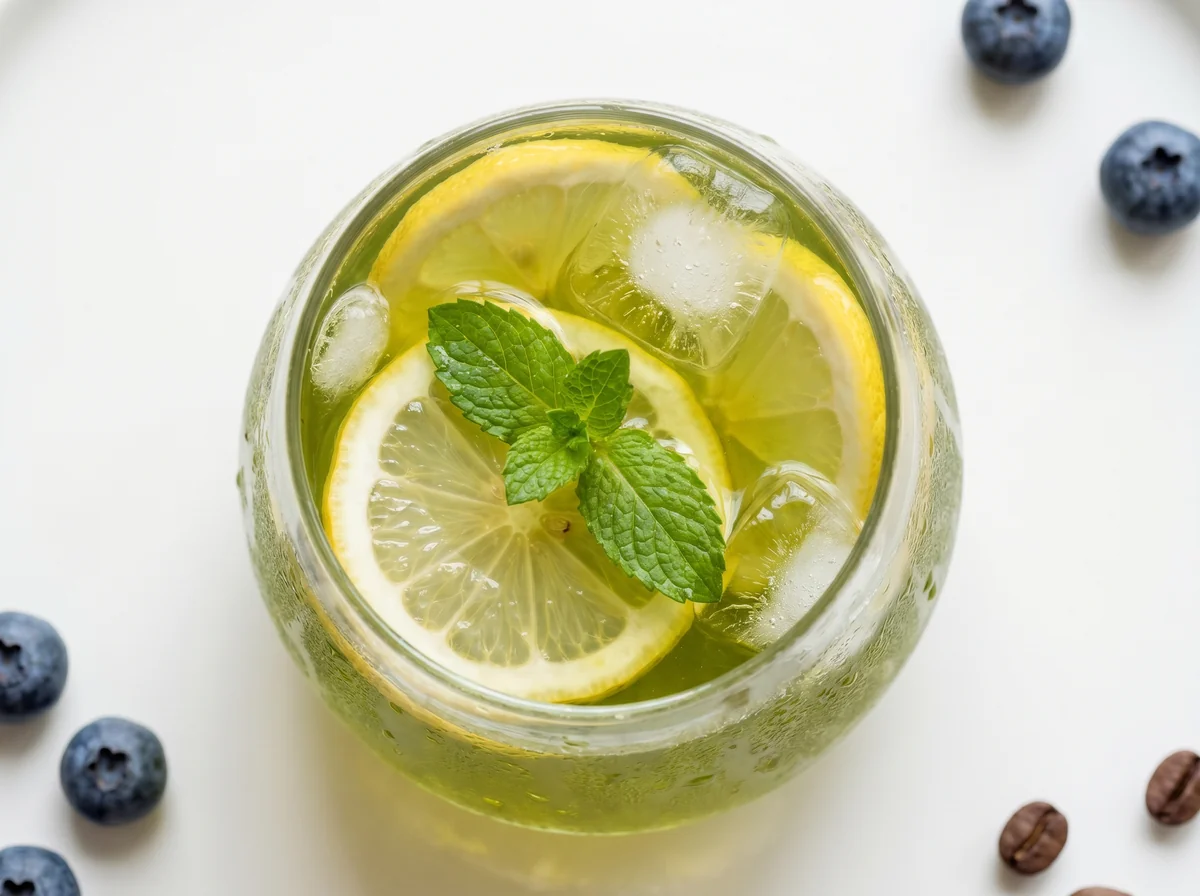
A simple, calorie-free hot drink of green tea steeped at the right temperature, with a squeeze of fresh lemon. GI 20, GL 0, just 7 calories — the ideal daily ritual.
Green tea is the most consumed tea in the world, with a tradition stretching back thousands of years in China and Japan, where it is drunk plain and with reverence for its delicate taste and clarity. The addition of lemon juice is a simple touch that brightens the flavour and, importantly, stabilises the catechins — the main antioxidant compounds in green tea — making them easier for the body to absorb.
Green tea arrived early in the Gulf alongside trade routes, though it sits alongside the stronger tradition of black tea and Arabic coffee. It has found a new audience in the region as a lighter, calorie-free alternative, drunk between meals and in the morning before breakfast.
Preparation Steps
Heat the water to 80°C
Heat the water until it reaches approximately 80°C — just below boiling. If using a kettle without temperature control, boil the water and let it sit for 2 to 3 minutes before pouring. Boiling water (100°C) burns green tea and makes it bitter; the lower temperature extracts the delicate flavour and antioxidants gently.
Steep the tea
Place the green tea bags or loose tea in the teapot or cups. Pour the 80°C water over them and steep for exactly 2 to 3 minutes. No longer — even 30 extra seconds can add unwanted bitterness. Remove the tea bags immediately or strain the loose tea.
Add lemon
Squeeze the lemon juice into the tea and stir gently. The acid from the lemon helps stabilise the catechins (the main antioxidant compounds in green tea) and makes them more absorbable. It also brightens the flavour.
Sweeten and garnish (optional)
Add the teaspoon of honey if desired and stir until dissolved. Add the fresh mint leaves as a garnish. Serve immediately while hot.
Blood Sugar Impact
The glycemic index (GI) measures how quickly a food raises blood sugar, while the glycemic load (GL) measures how much a full serving raises it. Together they give the complete picture.
Glycemic Index
GI
20Low
Low0–55Medium56–69High70+
A low value (≤55) means a gradual rise in blood sugar — the most suitable range for diabetes and insulin resistance.
Glycemic Load
GL
0Low
Low0–10Medium11–19High20+
Glycemic load reflects the impact of the full serving. To lower it: take half a serving, or pair the recipe with a source of protein and fiber.
Nutritional Information
Per ServingMakes 2 servings · one serving is about 280 g of raw ingredients
Calories10 kcal0%of Daily Value*
Protein0 g0%of Daily Value*
Carbohydrates3 g1%of Daily Value*
Fat0 g0%of Daily Value*
Fiber1 g4%of Daily Value*
Sodium1 mg0%of Daily Value*
Potassium48 mg1%of Daily Value*
Phosphorus5 mg0%of Daily Value*
* Percent Daily Values are based on a 2,000-calorie diet per FDA food-label reference values — your daily needs may be higher or lower. Values are derived from the recipe's ingredients via the USDA database.
Troubleshooting
The most common problems when preparing Green Tea with Lemon, and how to fix them:
Bitter, harsh taste
The water was too hot or the steeping time too long. Use 80°C water and steep for exactly 2 to 3 minutes. If already brewed, add a thin slice of fresh lemon to the cup — the acid cuts through bitterness.
Very weak taste with almost no flavour
Too little tea or too much water. Use 1 bag or 1 teaspoon of loose tea per 200 ml of water. Check that the tea is not stale — green tea loses its flavour quickly if stored improperly.
The tea has turned brown rather than golden-green
Oxidation from water that was too hot or tea that is past its best. Use the correct temperature and check the tea's best-before date. Store green tea in an airtight container away from light.
Storage and Make-Ahead
Dry tea
Store green tea bags or loose tea in an airtight container away from light, heat and moisture. Keeps for 12 to 18 months from the date of packaging. Green tea loses its delicate flavour faster than black tea if stored poorly.
Brewed tea
Best consumed immediately after brewing. If making ahead, brew without the lemon, refrigerate in a sealed jar for up to 1 day, and add the lemon just before drinking. Do not leave brewed tea at room temperature for more than 2 hours.
Cold version
For cold brew: place tea bags in cold water and refrigerate for 6 to 8 hours. Cold brewing extracts a sweeter, less bitter flavour. Add lemon and honey as normal before serving over ice.
Tested Ingredient Substitutions
Original Ingredient
Tested Substitute
Ratio
Flavor Difference
Green tea bags
Japanese matcha powder
1/2 teaspoon per cup
Matcha is powdered green tea that is whisked into hot water rather than steeped — the entire leaf is consumed, giving a higher concentration of catechins and caffeine. Use a bamboo whisk or small regular whisk.
Fresh lemon
Fresh lime juice
Same amount
Lime provides the same acid benefit with a slightly different aroma — more fragrant and tropical. Works well with mint.
Honey
Stevia drops or a pitted date steeped in the cup
To taste
Zero-calorie sweetening option for those monitoring blood sugar. A date adds a gentle sweetness and Gulf character.
Hot preparation
Iced green tea with lemon
Same amounts, then pour over ice
Brew the tea as normal, allow to cool, then pour over ice. Refreshing in hot Saudi summers.
How Much Does It Make? Scaling Guide
Number of cups
Tea
Water
Lemon
1 (single)
1 teaspoon
1 cup
1/2 spoon
2 (base)
2 teaspoons
2 cups
1 tablespoon
4 (pitcher)
4 teaspoons
4 cups
2 spoons
6 (guests)
6 teaspoons
6 cups
3 tablespoons
EEINA Nutrition Tip
The most important thing about brewing green tea is the water temperature: 80°C, not boiling. Boiling water destroys the delicate catechins and produces bitterness. Lemon juice adds a practical benefit beyond flavour: the citric acid stabilises the catechins and research suggests it increases their absorption in the small intestine. Avoid adding milk — milk proteins bind to the catechins and reduce their bioavailability. And note: green tea contains caffeine (about 25 to 35 mg per cup, versus 80 to 100 mg in coffee) — suitable for daytime but avoid close to bedtime for those sensitive to caffeine.
Add This Recipe to Your Plan
The EEINA app saves your favorite recipes, calculates them from their real ingredients, and shows your daily numbers toward your goal. Try it free now.
Boiling water (100°C) denatures the delicate catechins and amino acids in green tea and releases excessive tannins, resulting in bitterness. Water at 80°C extracts the pleasant flavour and antioxidants without the bitterness. This is the single most important technique for brewing good green tea.
Does green tea really help with weight loss?
Research suggests green tea catechins and caffeine may have a small effect on fat oxidation and metabolic rate — but the effect is small and inconsistent across studies. Green tea is a good weight management tool primarily because it is calorie-free (without sugar or milk), hydrating, and a pleasant substitute for sugary drinks.
Is green tea with lemon suitable for people with diabetes?
Yes — the drink without honey is essentially calorie- and carbohydrate-free, with GI 20 and GL 0. Some research suggests catechins may support insulin sensitivity, though evidence is moderate. A practical, beneficial daily drink for people managing blood sugar.
Can I drink it every day?
Yes, 2 to 3 cups daily is considered safe and well within the range studied for health benefits. Avoid drinking it on an empty stomach as it can irritate some people's stomachs, and avoid close to bedtime due to the caffeine.