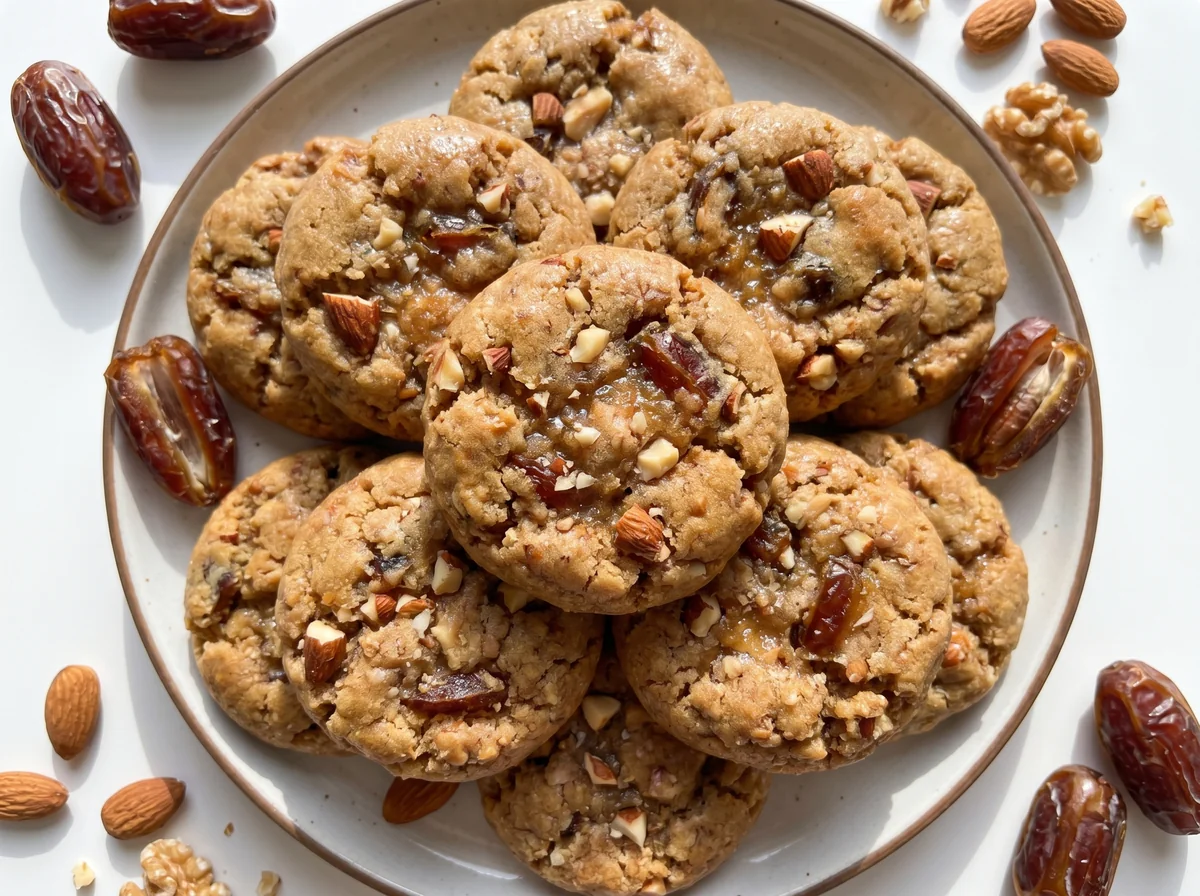
Almond and date cookies are the ideal alternative to traditional butter-and-sugar cookies.
Just 4 ingredients — no white flour, no added sugar. Natural sweetness from dates, a soft and satisfying texture from almond flour.
Preparation Steps
Preheat the oven
Preheat the oven to 170°C (340°F). Line a baking tray with parchment paper to prevent sticking and make cleanup easy.
Mash the dates
Place the pitted dates in a food processor and blitz for 45 seconds until a sticky paste forms. If you don't have a food processor, mash firmly with a fork — make sure the dates are soft.
Add the egg and vanilla
Add the egg and vanilla extract, then process for another 10 seconds until the mixture is uniform.
Add the almond flour
Add the almond flour and pulse in short bursts (5–6 times) until a firm dough forms. Do not over-mix — almond dough turns greasy with excessive mixing.
Shape the balls
Lightly dampen your hands with cold water, scoop out a tablespoon of dough, and roll into a ball. Arrange on the prepared tray with 5 cm between each ball.
Flatten with a fork
Gently press each ball with the back of a fork to flatten slightly (about 1 cm thick). This ensures even baking.
Bake
Bake for 10–12 minutes until the edges are golden. The centers will be slightly soft — they firm up as they cool.
Cool
Leave the cookies on the tray for 5 minutes (they continue cooking), then transfer to a cooling rack. They reach perfect texture once fully cooled.
Blood Sugar Impact
The glycemic index (GI) measures how quickly a food raises blood sugar, while the glycemic load (GL) measures how much a full serving raises it. Together they give the complete picture.
Glycemic Index
GI
64Medium
Low0–55Medium56–69High70+
A low value (≤55) means a gradual rise in blood sugar — the most suitable range for diabetes and insulin resistance.
Glycemic Load
GL
13Medium
Low0–10Medium11–19High20+
Glycemic load reflects the impact of the full serving. To lower it: take half a serving, or pair the recipe with a source of protein and fiber.
Nutritional Information
Per ServingMakes 12 servings · one serving is about 35 g of raw ingredients
Calories102 kcal5%of Daily Value*
Protein2 g4%of Daily Value*
Carbohydrates22 g8%of Daily Value*
Fat1 g1%of Daily Value*
Fiber1 g4%of Daily Value*
Sodium6 mg0%of Daily Value*
Potassium111 mg2%of Daily Value*
Phosphorus34 mg3%of Daily Value*
* Percent Daily Values are based on a 2,000-calorie diet per FDA food-label reference values — your daily needs may be higher or lower. Values are derived from the recipe's ingredients via the USDA database.
Troubleshooting
The most common problems when preparing 4-Ingredient Almond and Date Cookies, and how to fix them:
Cookies spread too flat
The dough was warm. Refrigerate for 15 minutes before shaping.
Cookies crumble after baking
Not enough dates (they bind the dough). Add 20 g more dates next time.
Cookies are dry
Overbaked. Golden edges = done. The center should still be slightly soft.
Color too dark
Oven is too hot. Reduce by 10°C next time and check after 8 minutes.
Storage and Make-Ahead
In an airtight container
Keeps for 5 days at room temperature. They firm up more as the days pass.
Frozen
Up to 2 months once fully cooled. Thaw at room temperature for 10 minutes.
Freeze the dough
Shape the balls and freeze them raw. Bake straight from frozen, adding 2 extra minutes.
Tested Ingredient Substitutions
Original Ingredient
Tested Substitute
Ratio
Flavor Difference
Almond flour
Coconut flour
3/4 the amount
Absorbs more liquid — use 150 g instead of 200 g
Dates
Ground dried apricots
1:1
Different flavor, less sweet
Vanilla extract
Ground cardamom
half teaspoon
Middle Eastern flavor
Without egg
100 ml almond milk
~
Vegan alternative — softer texture
How Much Does It Make? Scaling Guide
Ingredient
12 pieces
24 pieces
36 pieces
Almond flour
200 g
400 g
600 g
Dates
150 g
300 g
450 g
Eggs
1
2
3
EEINA Nutrition Tip
To deepen the almond flavor, toast the almond flour in a dry pan over low heat for 3 minutes before using. The result is cookies with a richer, nuttier aroma.
Add This Recipe to Your Plan
The EEINA app saves your favorite recipes, calculates them from their real ingredients, and shows your daily numbers toward your goal. Try it free now.