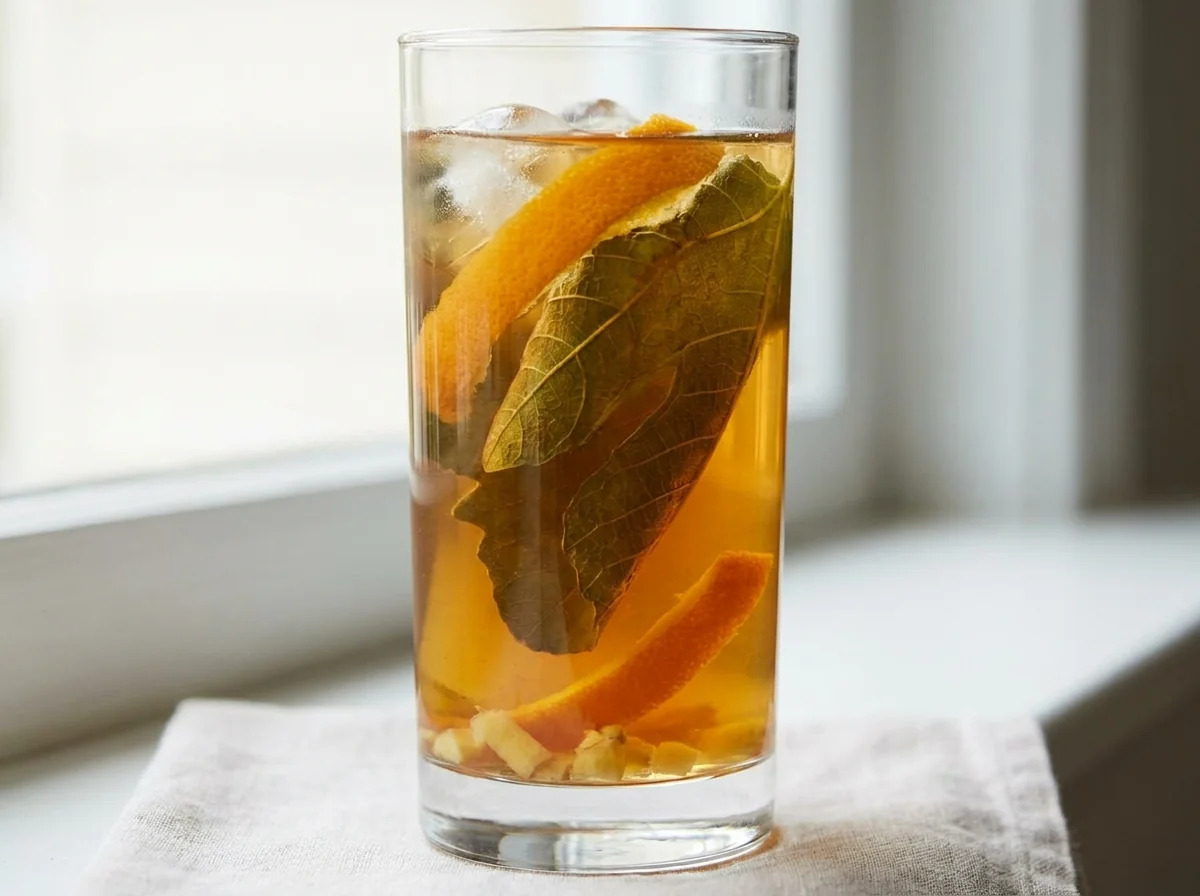
A rare flavor we draw out of a normally unused part of a tree familiar in the Arab world, the fig.
Dried fig leaves release into the water an earthy, sweet flavor recalling coconut and vanilla, turning the infusion into a distinctive iced drink from an ingredient in the home garden.
Preparation Steps
Drying the leaves
Wash the fig leaves, dry them, and remove the stems, arrange them in a single layer on a tray, and place them in an oven at a very low heat of about 95 Celsius until they are completely dry in about an hour. We dry them because drying concentrates their earthy, sweet flavor reminiscent of coconut and vanilla.
Preparing the blend
Crumble the dried leaves by hand and remove the tough veins, chop the orange peel and ginger into small pieces, then mix them together. We remove the veins because they are coarse and release no useful flavor.
Steeping
Put about two tablespoons of the blend in a jug and pour the boiling water over it, leave it to steep for ten minutes, then strain it. We keep to this amount because a strained infusion needs a moderate amount of leaves, as more makes the taste astringent.
Serving iced
Let the infusion cool, then pour it over ice and sweeten it with the syrup if desired. We serve it iced because the coldness brings out its gentle aromatic flavor.
Blood Sugar Impact
The glycemic index (GI) measures how quickly a food raises blood sugar, while the glycemic load (GL) measures how much a full serving raises it. Together they give the complete picture.
Glycemic Index
GI
58Medium
Low0–55Medium56–69High70+
A low value (≤55) means a gradual rise in blood sugar — the most suitable range for diabetes and insulin resistance.
Glycemic Load
GL
12Medium
Low0–10Medium11–19High20+
Glycemic load reflects the impact of the full serving. To lower it: take half a serving, or pair the recipe with a source of protein and fiber.
Nutritional Information
Per ServingMakes 2 servings · one serving is about 300 g of raw ingredients
Calories81 kcal4%of Daily Value*
Protein0 g0%of Daily Value*
Carbohydrates21 g8%of Daily Value*
Fat0 g0%of Daily Value*
Fiber1 g4%of Daily Value*
Sodium1 mg0%of Daily Value*
* Percent Daily Values are based on a 2,000-calorie diet per FDA food-label reference values — your daily needs may be higher or lower. Values are derived from the recipe's ingredients via the USDA database.
Troubleshooting
The most common problems when preparing Fig Leaf Iced Tea, and how to fix them:
The taste is astringent or bitter
Reduce the amount of leaves in the steep and shorten the steeping time, as overdoing the strained ingredient brings out bitterness.
The flavor is pale
Extend the drying of the leaves a little until they are fully crisp, as complete dryness concentrates the flavor.
Storage and Make-Ahead
The dried blend
Keeps in a sealed container away from moisture for up to three months.
The ready infusion
Keeps chilled in the refrigerator for up to two days and is served over ice.
Tested Ingredient Substitutions
Original Ingredient
Tested Substitute
Ratio
Flavor Difference
orange peel
lemon peel
10 g
A lighter citrus touch for those without orange.
fresh ginger
dried ginger
5 g
A practical substitute with a more concentrated flavor.
sugar
honey
same amount for sweetening
A natural substitute for those who prefer it.
fresh fig leaves
ready dried fig leaves
15 g
A quick option that skips the drying step.
How Much Does It Make? Scaling Guide
Ingredient
1 cup
2 cups (base)
4 cups
Fresh fig leaves (g)
20
40
80
Orange peel (g)
5
10
20
Ginger (g)
8
15
30
Water for steeping (ml)
250
500
1000
Sugar (g)
15
30
60
EEINA Nutrition Tip
Use healthy green leaves, make sure of their source, and wash them well before drying.
Add This Recipe to Your Plan
The EEINA app saves your favorite recipes, calculates them from their real ingredients, and shows your daily numbers toward your goal. Try it free now.