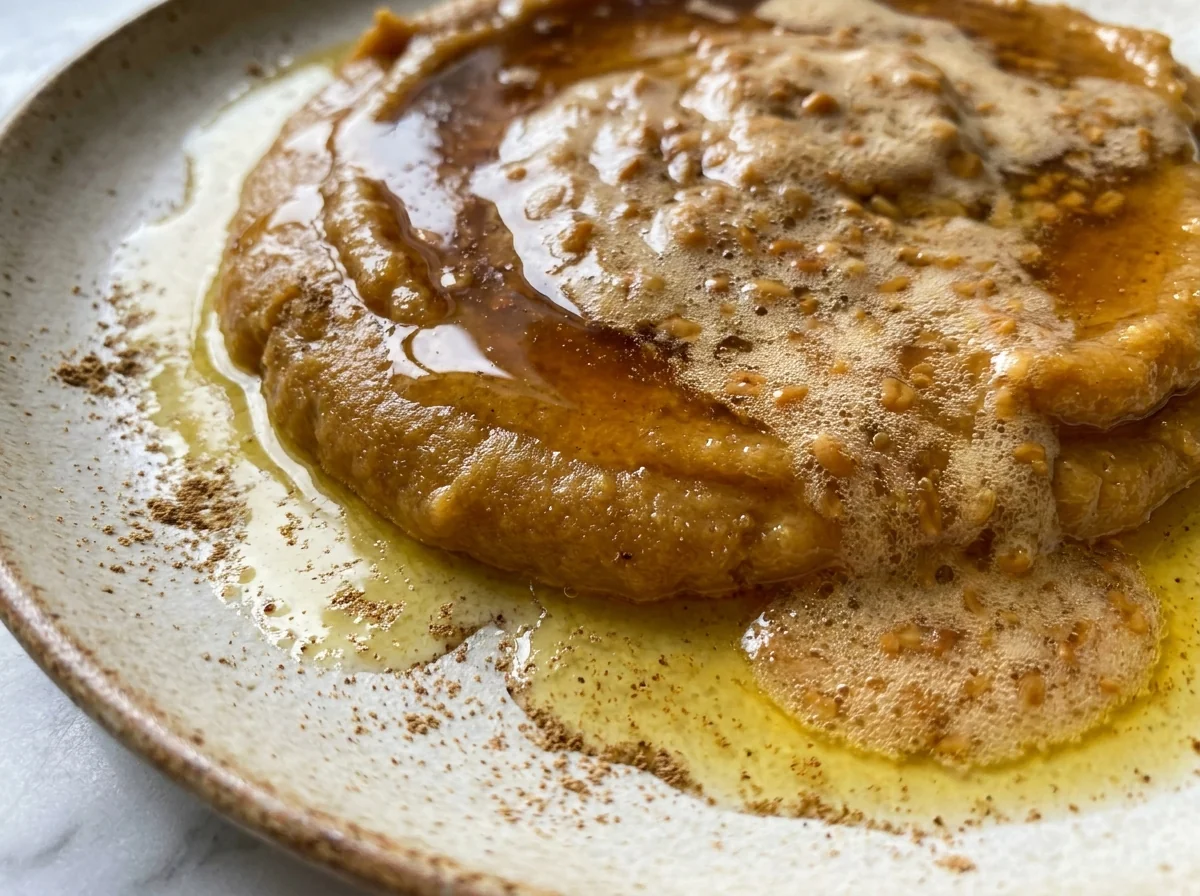
A traditional Yemeni and Gulf sweet known as fenugreek halawa, prepared for the mother after childbirth from toasted flour, ghee, and honey.
A simple, warming sweet that carries the warmth of the old kitchen.
Preparation Steps
Soak the fenugreek
Soak the fenugreek seeds in water from evening until morning, about 8 hours, until they swell and soften and part of their bitterness fades, changing the water once.
Boil the fenugreek
Drain the soaked seeds and boil them in fresh water for about 10 minutes until fully tender, then drain them, as this further reduces their bitterness.
Toast the flour
Toast the flour over low heat with constant stirring until it turns golden and releases its aroma, because toasting gives the sweet its traditional flavor and removes the taste of raw flour.
Add the ghee
Add the ghee to the toasted flour and stir until the mixture comes together and becomes like a firm, sandy dough.
Fold in the fenugreek
Add the boiled fenugreek and the cooking water gradually while stirring, until you get a soft, cohesive dough with no lumps.
Add the sweetener
Lower the heat and add the honey and cardamom, stirring gently for about two minutes, until the honey blends in without boiling hard and changing its flavor.
Serve
Pour the sweet into a dish and smooth its surface, then let it warm slightly before serving so it sets.
Blood Sugar Impact
The glycemic index (GI) measures how quickly a food raises blood sugar, while the glycemic load (GL) measures how much a full serving raises it. Together they give the complete picture.
Glycemic Index
GI
64Medium
Low0–55Medium56–69High70+
A low value (≤55) means a gradual rise in blood sugar — the most suitable range for diabetes and insulin resistance.
Glycemic Load
GL
23High
Low0–10Medium11–19High20+
Glycemic load reflects the impact of the full serving. To lower it: take half a serving, or pair the recipe with a source of protein and fiber.
Nutritional Information
Per ServingMakes 6 servings · one serving is about 145 g of raw ingredients
Calories258 kcal13%of Daily Value*
Protein4 g8%of Daily Value*
Carbohydrates38 g14%of Daily Value*
Fat11 g14%of Daily Value*
Fiber2 g7%of Daily Value*
Sodium5 mg0%of Daily Value*
* Percent Daily Values are based on a 2,000-calorie diet per FDA food-label reference values — your daily needs may be higher or lower. Values are derived from the recipe's ingredients via the USDA database.
Troubleshooting
The most common problems when preparing Fenugreek Sweet with Flour and Honey, and how to fix them:
The sweet is bitter
The fenugreek was not soaked enough or the boiling water was not changed; soak it longer while changing the water and boil it in fresh water, and balance with a slight increase in honey.
The texture is dry and crumbly
There is too little liquid or the flour was over-toasted; add warm water a spoonful at a time while stirring until it softens.
The texture is sticky and will not set
There is too much liquid; keep stirring over low heat until the excess evaporates and the mixture firms up.
The flour tastes raw
It was not toasted enough; next time extend the gentle toasting until the color turns golden and the aroma comes through.
Storage and Make-Ahead
Refrigerator
Keep in an airtight container for up to 4 days; it firms up when chilled, so let it warm slightly before serving.
Outside the refrigerator
Keeps for a few hours in a moderate climate; do not leave it long in the heat since it contains ghee.
Freezer
Freeze for up to a month in an airtight container; thaw in the refrigerator, then warm over low heat with a little water.
Tested Ingredient Substitutions
Original Ingredient
Tested Substitute
Ratio
Flavor Difference
Honey
Mashed date paste
1 to 1
A traditional alternative that gives sweetness and depth; it is also added at the end.
Homemade ghee
Butter
1 to 1
A slightly lighter flavor; ghee remains the closest to the traditional taste.
Wheat flour
Oat flour
1 to 1
A higher-fiber option; it is toasted the same way.
Cardamom
Ground cinnamon
1 to 1
A warm alternative flavor that suits the traditional sweet.
How Much Does It Make? Scaling Guide
Ingredient
2 servings
4 servings
8 servings
Soaked fenugreek seeds
10 g
20 g
40 g
Wheat flour
50 g
100 g
200 g
Homemade ghee
20 g
40 g
80 g
Honey
40 g
80 g
160 g
EEINA Nutrition Tip
Soaking the fenugreek overnight and then boiling it in fresh water clearly tames its bitterness, and the honey is added at the end over low heat so its flavor stays intact and is not altered by high heat.
Add This Recipe to Your Plan
The EEINA app saves your favorite recipes, calculates them from their real ingredients, and shows your daily numbers toward your goal. Try it free now.
Fenugreek is traditionally used in postpartum food, but the scientific evidence that it increases milk supply is limited and mixed. We offer the sweet as a beloved traditional treat rather than a reliable treatment.
Does fenugreek affect blood sugar?
Yes, fenugreek may lower blood sugar, and the sweet itself is concentrated with honey; so it should be avoided in large amounts with diabetes and eaten in moderation after consulting a doctor.
How do I get rid of fenugreek's bitterness?
By soaking overnight while changing the water and then boiling in fresh water, the bitterness clearly fades, and the honey and cardamom balance it.
Is it suitable for the postpartum period?
It is traditionally served to the mother as a warm sweet, just in moderation since it is rich in ghee and honey; a small portion is enough.