A cherished Emirati sweet — rice flour and wheat flour fritters flavored with cardamom and saffron, fried until golden with crispy edges and a soft center. A Ramadan and Eid confection, medium glycemic load, contains gluten and eggs.
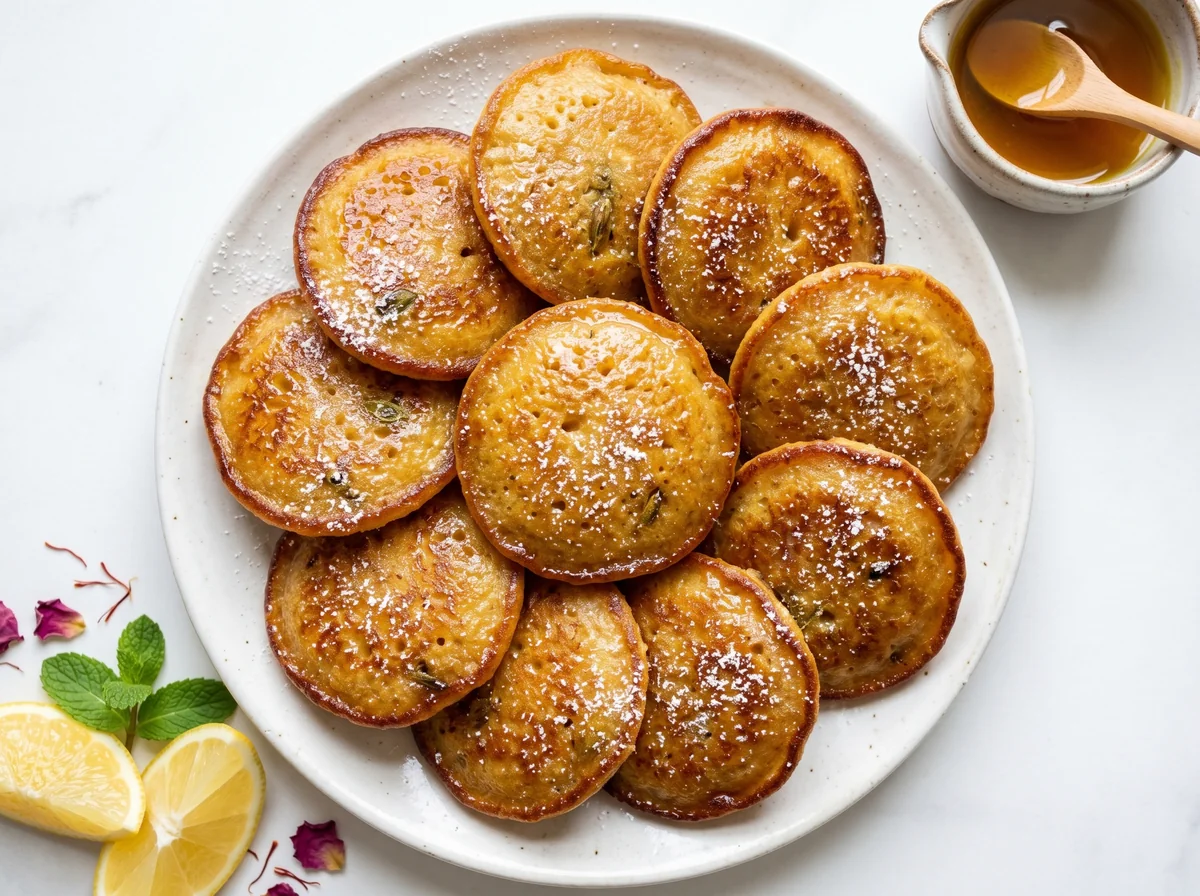
Khanfaroosh is a cherished Emirati (and Gulf) confection, prepared especially for Ramadan, Eid, and occasions. It consists of a batter of rice flour and wheat flour perfumed with saffron, cardamom, and rose water, fried into small golden rounds with crispy, jagged edges and a soft center.
It holds a special place in Emirati heritage as a traditional sweet served with Arabic coffee at hospitality gatherings and majlis sessions. Its saffron-and-cardamom flavor and rose water, the beloved Gulf aromas — its golden color, and distinctive texture — have made it a popular, beloved confection, especially in Ramadan, a symbol of Emirati hospitality and authentic Gulf culinary heritage.
Preparation Steps
Prepare the batter
Mix the rice flour, wheat flour, sugar, yeast, and cardamom, then gradually add the egg, steeped saffron, rose water, and water (or milk), mixing until a slightly thick batter forms (thicker than a cake batter). Saffron and cardamom are khanfaroosh's flavor and its golden color.
Rest
Cover the batter and let it rest and ferment in a warm spot for about an hour (if using yeast). Resting gives khanfaroosh its lightness and a good texture (crispy edges and soft center).
Heat the oil
Heat oil in a deep pan over medium heat until properly hot. The right oil temperature gives golden khanfaroosh with crispy edges without absorbing excess oil.
Shape the rounds
Take a little batter with a spoon or wet fingertips and drop it into the oil in a small, irregular round shape (khanfaroosh has a distinctive shape with crispy, jagged edges). Repeat in batches.
Fry
Fry the rounds until golden, with crispy edges and a soft center, then lift onto absorbent paper. Crispy edges and a soft center are the hallmark of successful khanfaroosh, together with its saffron-golden color.
Serve
Dust the khanfaroosh with powdered sugar if desired (optional — it is already sweet) and serve warm with Arabic coffee or tea. It is a cherished Emirati (and Gulf) confection prepared especially for Ramadan, Eid, and occasions. Its golden saffron rounds with crispy edges and soft centers are a delight — a beloved heritage sweet that reflects the flavors of the Gulf (saffron, cardamom, and rose water).
Blood Sugar Impact
The glycemic index (GI) measures how quickly a food raises blood sugar, while the glycemic load (GL) measures how much a full serving raises it. Together they give the complete picture.
Glycemic Index
GI
70High
Low0–55Medium56–69High70+
A low value (≤55) means a gradual rise in blood sugar — the most suitable range for diabetes and insulin resistance.
Glycemic Load
GL
16Medium
Low0–10Medium11–19High20+
Glycemic load reflects the impact of the full serving. To lower it: take half a serving, or pair the recipe with a source of protein and fiber.
Nutritional Information
Per ServingMakes 10 servings · one serving is about 35 g of raw ingredients
Calories143 kcal7%of Daily Value*
Protein3 g6%of Daily Value*
Carbohydrates24 g9%of Daily Value*
Fat4 g5%of Daily Value*
Fiber1 g4%of Daily Value*
Sodium8 mg0%of Daily Value*
* Percent Daily Values are based on a 2,000-calorie diet per FDA food-label reference values — your daily needs may be higher or lower. Values are derived from the recipe's ingredients via the USDA database.
Troubleshooting
The most common problems when preparing Emirati Khanfaroosh (Saffron Fritters), and how to fix them:
The khanfaroosh is greasy
The oil was not hot enough. Heat the oil properly before frying (it forms a quick crust that reduces absorption), and do not crowd the pan. Cold oil makes khanfaroosh greasy and soft.
Dense and heavy
The batter was too thick or did not rest. Make the batter of moderate consistency and allow it to rest (ferment/proof) — the yeast and resting give lightness (crispy and soft). A thick, heavy batter makes dense khanfaroosh.
Raw in the center but burned on the outside
The heat was too high or the rounds were too large. Fry over medium heat and make small rounds — large ones burn on the outside before the center cooks. Khanfaroosh is small with crispy edges and a soft (but cooked) center.
Pale color
Not enough saffron. The steeped saffron provides the golden color and flavor — use a sufficient amount steeped in warm water. Good saffron gives a richer color and flavor.
No jagged edges
Natural — the shape forms from dropping the batter into the oil. Drop the batter with a spoon or wet fingers (no mold) and the distinctive irregular, crispy jagged edges characteristic of khanfaroosh will form.
Storage and Make-Ahead
Room temperature
Khanfaroosh keeps in a sealed container at room temperature for two to three days and loses some crispiness. Reheat in the oven or air fryer to restore the crunch. Best fresh and warm.
Freezer
Freeze khanfaroosh (fried) in a sealed container for two months. Thaw and reheat in the oven. Practical for preparing a batch for Ramadan and reheating as needed.
Advance prep
Prepare the batter and let it rest, then fry fresh at serving time. The fermented batter fries quickly. Practical for Ramadan (fry fresh for iftar).
Food safety
Fry khanfaroosh until done (the soft center is cooked, not raw, and the egg is cooked); store sealed; reheat. Use fresh eggs and clean frying oil.
Tested Ingredient Substitutions
Original Ingredient
Tested Substitute
Ratio
Flavor Difference
Frying
baking or air fryer
a spray of oil
Reduces fat (with a slightly different texture); try air frying with a little oil — healthier than deep frying
Sugar
reduce it or drizzle honey after frying
to taste
Reduces sugar; saffron, cardamom, and rose water provide flavor; or a light honey dip instead of sugar in the batter
Rice flour and wheat flour
rice flour only (gluten-free)
same quantity
Rice flour alone makes it gluten-free (slightly more delicate texture); mixing with wheat flour gives more structure
How Much Does It Make? Scaling Guide
Number of pieces
Rice flour
Sugar
5 (half recipe)
1/2 cup
1/4 cup
10 (base)
1 cup
1/2 cup
20 (Ramadan)
2 cups
1 cup
EEINA Nutrition Tip
Khanfaroosh is a fried Ramadan sweet; its positives are the rice flour alternative (for those mixing flours), the saffron (an antioxidant), and the egg (protein). Its challenges are frying (oil absorption), sugar, flour, and its medium glycemic load. For a healthier version: fry in properly hot oil (reduces absorption), or try baking or an air fryer; reduce the sugar (saffron and cardamom provide flavor); and have just two pieces. A heritage sweet in moderation, especially with bitter Arabic coffee (which cuts the sweetness).
Add This Recipe to Your Plan
The EEINA app saves your favorite recipes, calculates them from their real ingredients, and shows your daily numbers toward your goal. Try it free now.
A cherished Emirati (Gulf) confection — rounds of rice flour and wheat flour batter perfumed with saffron, cardamom, and rose water, fried until golden with crispy, jagged edges and a soft center. Prepared especially for Ramadan and Eid, served with Arabic coffee. A beloved heritage sweet.
What gives khanfaroosh its flavor?
Saffron (golden color and flavor), cardamom, and rose water — the beloved, distinctive Gulf aromas. These fragrances define khanfaroosh and set it apart, making it a fragrant, luxurious sweet despite the simplicity of its ingredients (flour and sugar). Saffron especially provides the color and richness.
Is khanfaroosh healthy?
A fried Ramadan sweet; its positives are the rice flour and saffron (antioxidant) and egg. Its challenges are frying, sugar, flour, and its medium glycemic load. Fry in properly hot oil or try the air fryer; reduce the sugar; have just two pieces with bitter Arabic coffee. A heritage sweet in moderation.
How do I get the right texture (crispy and soft)?
Let the batter rest (ferment/proof for lightness), fry small rounds in properly hot medium oil until the edges turn golden and crispy while the center stays soft and cooked. Crispy edges and a soft center are the hallmark of successful khanfaroosh — they depend on the right batter consistency and frying technique.