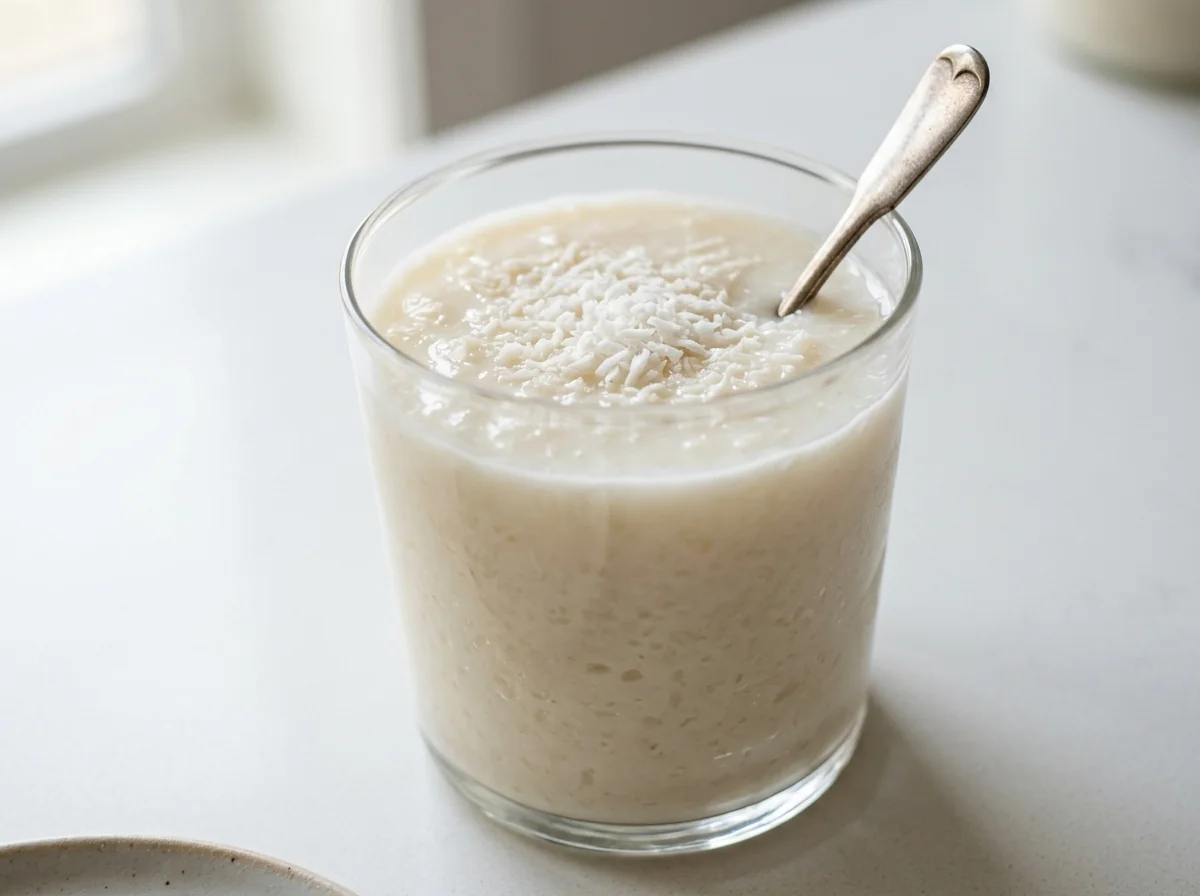
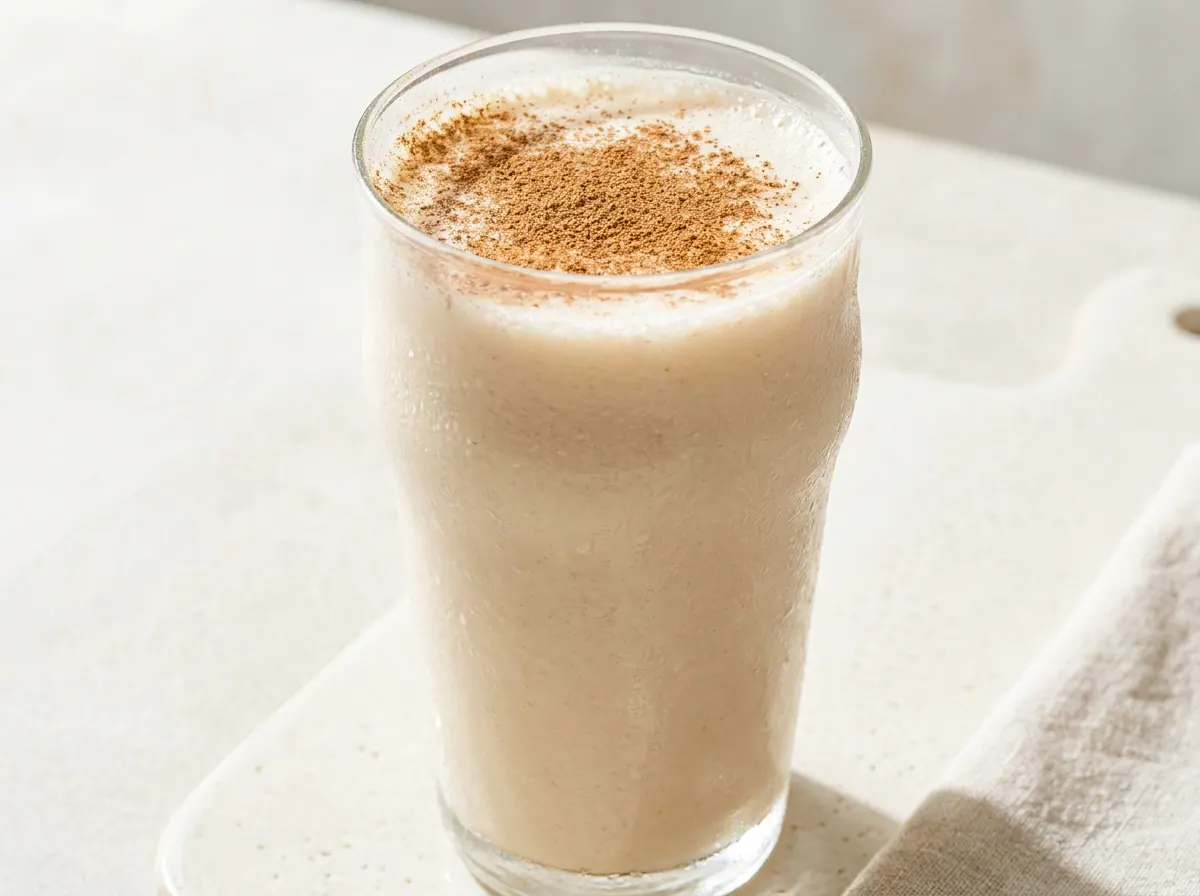
Sobia the Egyptian way: soaked rice blended raw with coconut milk, vanilla, and rose water, then strained and chilled — no cooking at all. We cut the sugar from the usual amount down to just two tablespoons, so the aromatic coconut flavor stays the star of the Ramadan table.
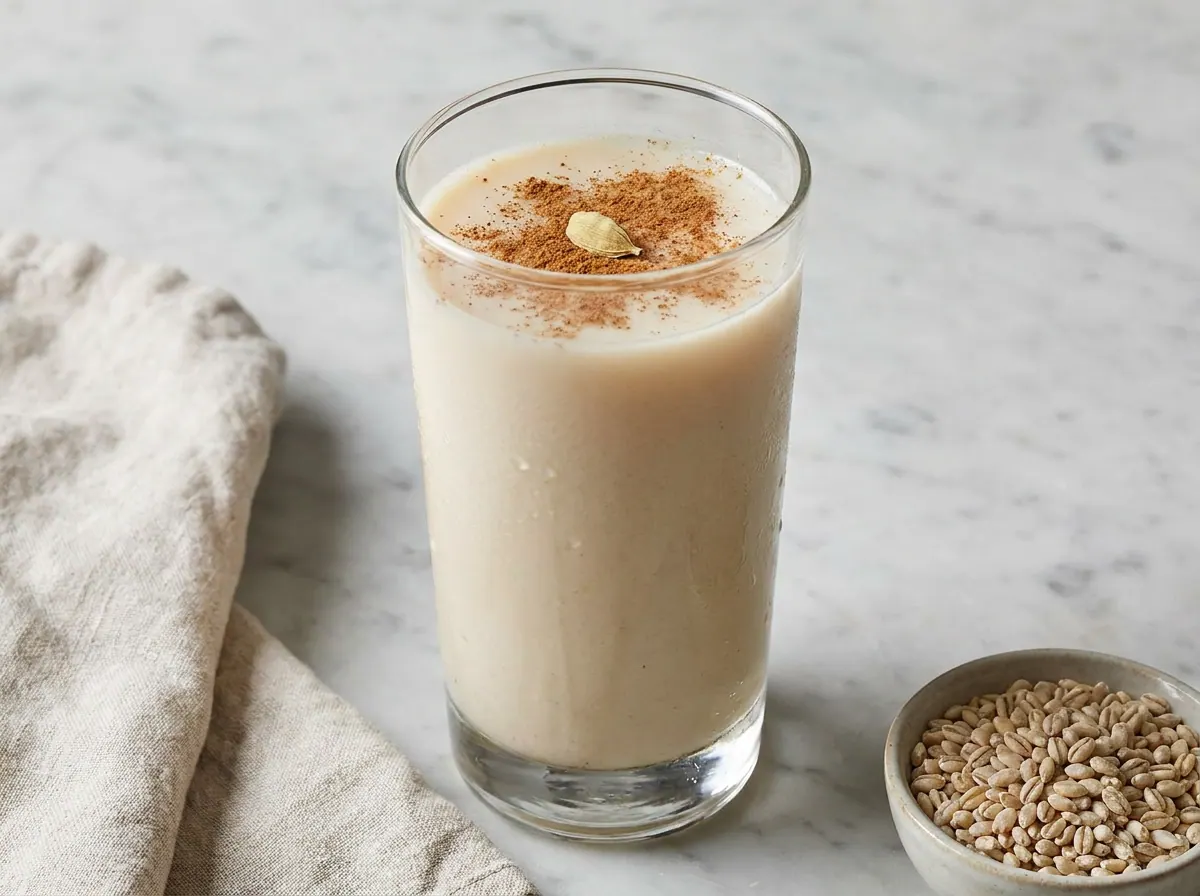
Sobia has two faces: a Hijazi one that cooks the rice with dates, cinnamon, and cardamom, and an Egyptian one that blends soaked rice raw with milk, coconut, vanilla, and rose water — no stove at all. This Egyptian version is whiter in color and silkier in texture, and the coconut aroma is its signature.
The recipes in circulation add a full half cup of sugar; we cut the sugar from the usual amount to just two tablespoons for the whole pitcher, letting the natural sweetness of coconut milk complete the rest. A cold iftar drink worthy of the Ramadan table without the weight of sugar.
Preparation Steps
Soak the rice
Wash the rice well until the water runs clear, then soak it in cold water for at least two hours. Soaking softens the grain so it blends easily raw — this is what distinguishes the Egyptian method, which never cooks the rice.
Blend the rice with the milk
Drain the rice from its soaking water and place it in the blender with one cup of the coconut milk. Blend on the highest speed until the mixture is as smooth as possible.
Strain the mixture
Pass the mixture through a fine strainer or cheesecloth, pressing well with the back of a spoon to extract all the starchy liquid, and discard the coarse grains that remain.
Finish blending with the flavorings
Return the strained liquid to the blender with the rest of the coconut milk, the sugar, and the vanilla, and blend until the sugar dissolves and the drink is even. Then add the rose water and stir.
Chill and serve
Pour the sobia into a covered pitcher and chill it in the refrigerator for at least two hours. Shake before pouring, and serve it cold in glasses garnished with shredded coconut.
Blood Sugar Impact
The glycemic index (GI) measures how quickly a food raises blood sugar, while the glycemic load (GL) measures how much a full serving raises it. Together they give the complete picture.
Glycemic Index
GI
64Medium
Low0–55Medium56–69High70+
A low value (≤55) means a gradual rise in blood sugar — the most suitable range for diabetes and insulin resistance.
Glycemic Load
GL
21High
Low0–10Medium11–19High20+
Glycemic load reflects the impact of the full serving. To lower it: take half a serving, or pair the recipe with a source of protein and fiber.
Nutritional Information
Per ServingMakes 4 servings · one serving is about 275 g of raw ingredients
Calories197 kcal10%of Daily Value*
Protein2 g4%of Daily Value*
Carbohydrates33 g12%of Daily Value*
Fat6 g8%of Daily Value*
Fiber0 g0%of Daily Value*
Sodium47 mg2%of Daily Value*
* Percent Daily Values are based on a 2,000-calorie diet per FDA food-label reference values — your daily needs may be higher or lower. Values are derived from the recipe's ingredients via the USDA database.
Troubleshooting
The most common problems when preparing Egyptian Sobia (Coconut Rice Drink), and how to fix them:
A coarse, grainy texture in the glass
The straining was not fine enough or the soak was too short. Soak the rice at least two full hours, blend long, and strain through cheesecloth or a fine sieve — twice if needed.
The sobia separated into layers in the refrigerator
Normal in starchy drinks; the starch and coconut settle. Keep it in a closed pitcher and shake it well before every pour.
It is less sweet than we are used to
That is intentional — we reduced the sugar below the usual. Give it a chance fully chilled, as the cold brings out the coconut flavor, and anyone who insists on more sweetness can blend in a date or add a pinch of stevia rather than more sugar.
A slightly sour taste after two days
Natural starch fermentation has begun. Sobia is a fresh drink to be consumed within a day or two and always kept cold; a sour taste is the signal to discard it.
The drink is as heavy as porridge
The rice ratio is too high. Keep to half a cup of rice per liter of milk, and thin the finished mixture with coconut milk or cold water, blending until it flows.
Storage and Make-Ahead
Refrigerator (4°C)
Two days maximum in a closed pitcher, shaken before every serving. Best to prepare only a day's quantity; a sour taste signals the start of fermentation, so discard it.
Freezer (-18°C)
Not suitable; a starchy coconut drink separates and turns grainy after thawing. Sobia is a same-day drink.
Make ahead
Soak the rice overnight in the refrigerator, then blend and strain two or three hours before iftar so it is fully chilled at serving time.
Serving
Serve very cold in tall glasses with a sprinkle of shredded coconut, and do not leave it out of the refrigerator for long, especially in hot weather.
Tested Ingredient Substitutions
Original Ingredient
Tested Substitute
Ratio
Flavor Difference
Coconut milk
Full-fat cow's milk
Same amount
The second option in the Egyptian recipes themselves; a milder flavor closer to everyday milk, but it introduces dairy for those with lactose intolerance.
Sugar
Pitted dates blended into the drink
4 dates (about 45 g) instead of the two tablespoons
Whole-fruit sweetening in the Hijazi style; it shifts the color toward light brown and adds depth of flavor.
Sugar
Stevia
To taste
Sweetness without calories for a glass lighter on blood sugar, though the rice starch remains.
Rose water
Orange blossom water
Same amount, 1 tablespoon
A slightly different orange-floral aroma; both are authentic in Egyptian drinks.
How Much Does It Make? Scaling Guide
Number of servings
Rice
Coconut milk
Sugar
Rose water
2 (half recipe)
50 g
2 cups (500 ml)
1 tbsp (12 g)
0.5 tbsp
4 (recipe)
100 g
4 cups (1 liter)
2 tbsp (25 g)
1 tbsp (15 ml)
8 (Ramadan hospitality)
200 g
8 cups (2 liters)
4 tbsp (50 g)
2 tbsp (30 ml)
EEINA Nutrition Tip
We reduced the sugar below the usual and you will not miss it: coconut milk is naturally sweet in flavor, and the vanilla and rose water deepen the impression of sweetness. Sobia is still a starchy drink, so keep to one moderate glass at iftar alongside water, not instead of it — especially for anyone watching their blood sugar.
Add This Recipe to Your Plan
The EEINA app saves your favorite recipes, calculates them from their real ingredients, and shows your daily numbers toward your goal. Try it free now.
The Hijazi version cooks the rice on the stove, sweetens it with dates, and perfumes it with cinnamon and cardamom, while the Egyptian version blends the soaked rice raw with no cooking and relies on coconut milk, vanilla, and rose water — coming out whiter in color and softer in aroma.
Does sobia contain alcohol?
Freshly made and properly refrigerated sobia is safe and within permitted limits, according to the Saudi Food and Drug Authority. It can acquire a very small degree of natural fermentation if left for days, so drink it fresh and always keep it cold.
Why is its sugar lower than the usual recipes?
The common recipes add half a cup of sugar; we cut it to two tablespoons because coconut milk is naturally sweet and the aromatic flavorings make up the rest, lightening the sugar load at iftar without losing the taste.
Is it suitable for people with diabetes?
With caution; it is a starchy drink even with less sugar. A small glass with a balanced iftar meal and blood sugar monitoring is safest, and the recipe does not treat diabetes nor suit it as a recurring drink.