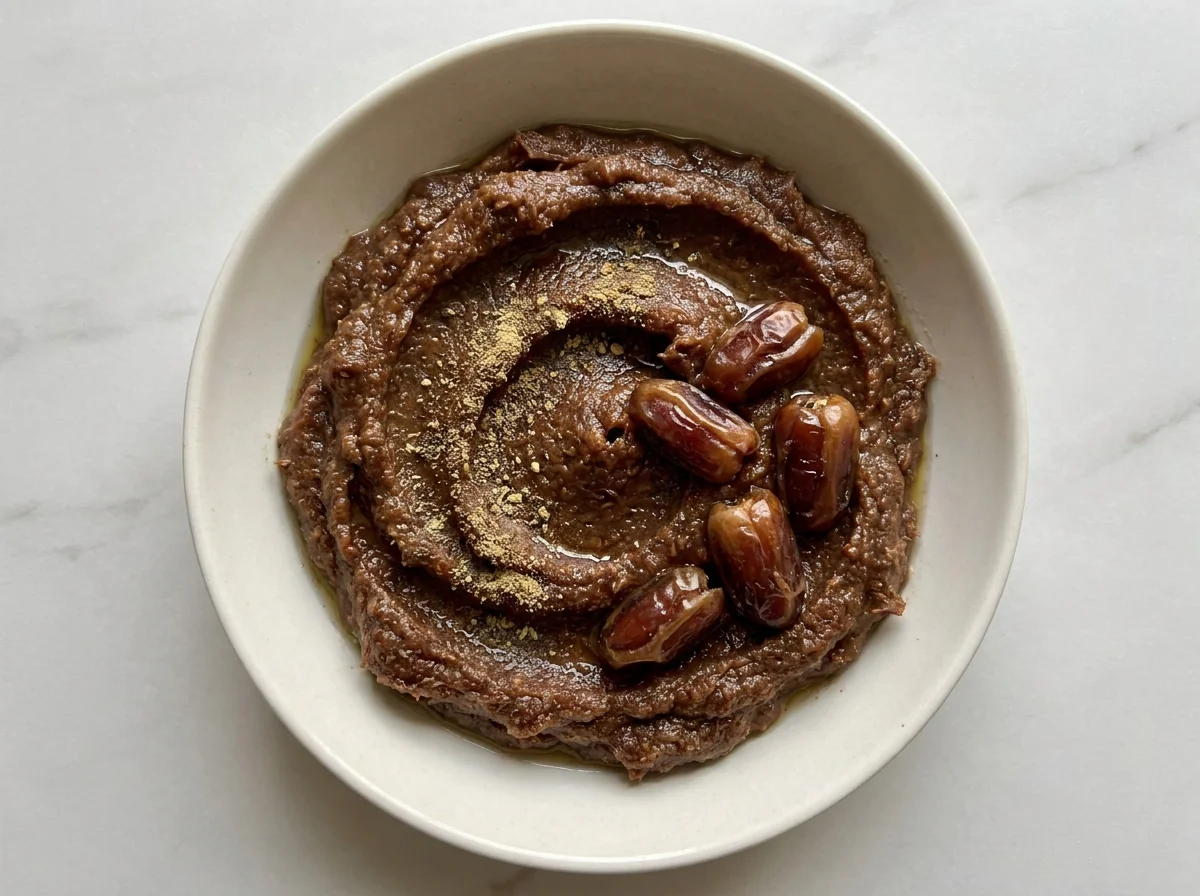
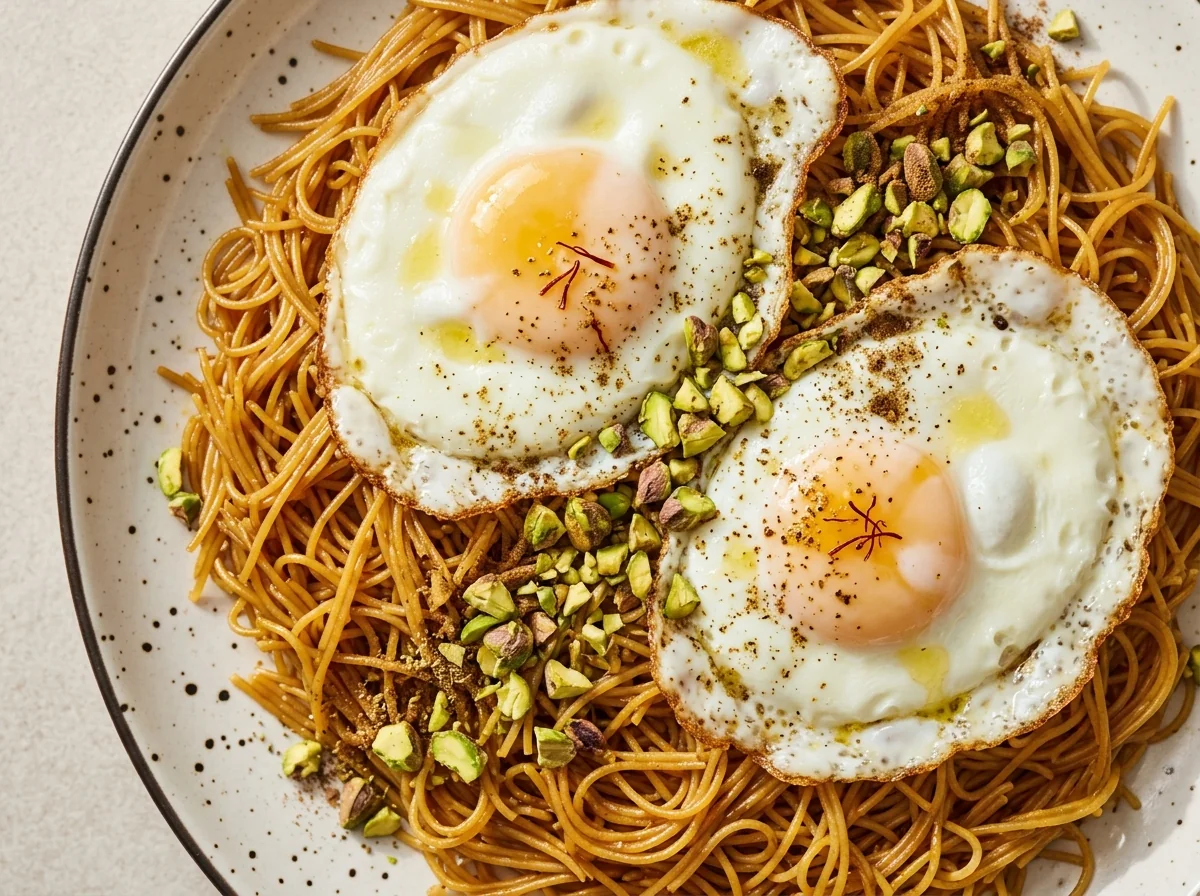
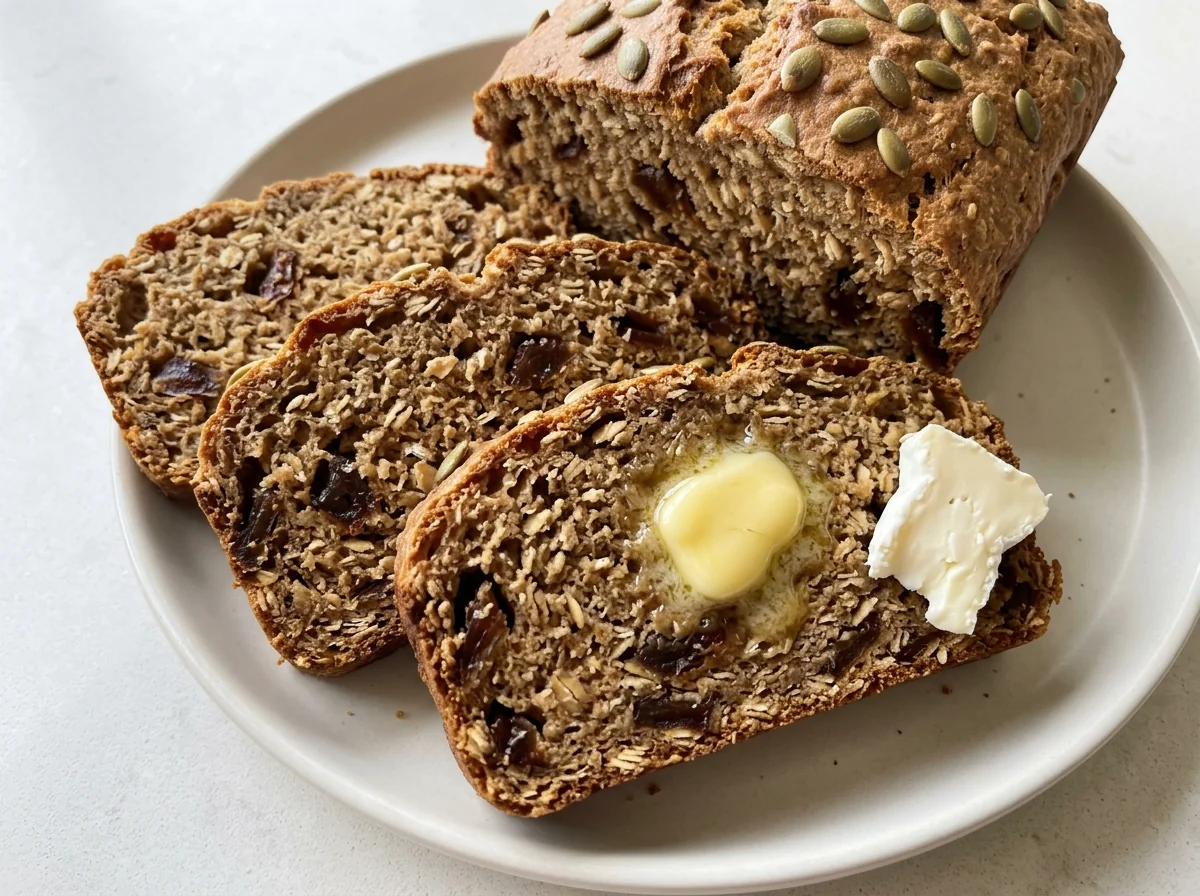
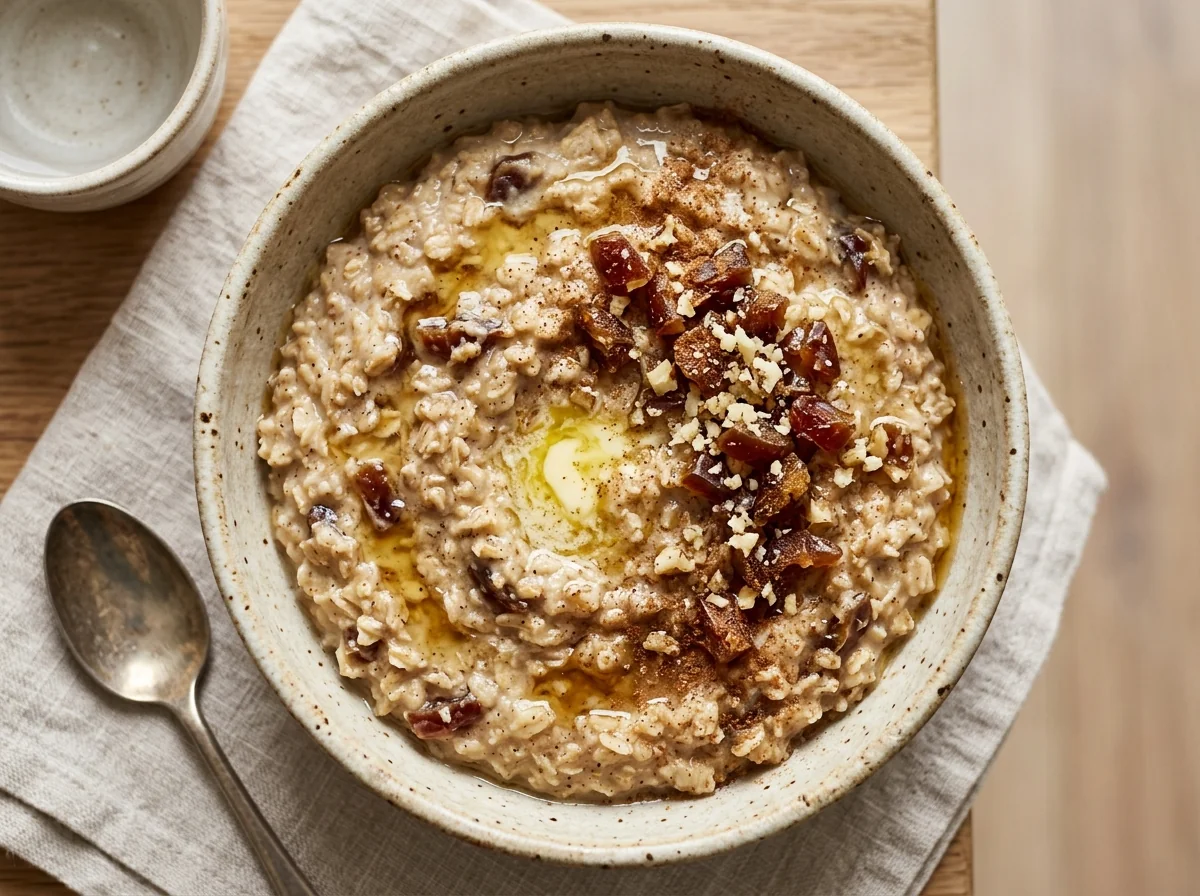
Date paste is the complete sweetener in the modern healthy kitchen and the filling of Ma'amoul and Kleeja in the old traditional kitchen.
Dates mashed with all their fiber spread, fill, and sweeten, and making them takes ten minutes that spare you store jars stretched with glucose.
Preparation Steps
Soak the dates in the hot water
Cover the pitted dates with the hot water for a quarter of an hour until they soften and break down to the core, and dry packaged dates ask for half an hour and deserve to be given it.
Blend in the processor until silky
Move the dates with half their soaking liquid to the processor and blend for two minutes, scraping the walls. They turn into a glossy, smooth, dark-silk brown paste, and we add the soaking liquid spoonful by spoonful until a texture that spreads smoothly and stands with dignity.
Brighten it with lemon, salt, and cardamom
Add the squeeze of lemon, a pinch of salt, and the cardamom, and blend for seconds. The lemon guards its color from darkening, the salt wakes its sweetness, and the cardamom gives it its Gulf nationality.
Fill the mother sweetener jar
In an airtight jar in the refrigerator, a spread for toast, a filling for Ma'amoul and Tamriya and energy balls, and a sweetener for smoothies and oats: the complete high-fiber sweetener that half the healthy kitchen rests upon.
Blood Sugar Impact
The glycemic index (GI) measures how quickly a food raises blood sugar, while the glycemic load (GL) measures how much a full serving raises it. Together they give the complete picture.
Glycemic Index
GI
49Low
Low0–55Medium56–69High70+
A low value (≤55) means a gradual rise in blood sugar — the most suitable range for diabetes and insulin resistance.
Glycemic Load
GL
11Medium
Low0–10Medium11–19High20+
Glycemic load reflects the impact of the full serving. To lower it: take half a serving, or pair the recipe with a source of protein and fiber.
Nutritional Information
Per ServingMakes 12 servings · one serving is about 45 g of raw ingredients
Calories92 kcal5%of Daily Value*
Protein1 g2%of Daily Value*
Carbohydrates25 g9%of Daily Value*
Fat0 g0%of Daily Value*
Fiber2 g7%of Daily Value*
Sodium0 mg0%of Daily Value*
Potassium232 mg5%of Daily Value*
Phosphorus21 mg2%of Daily Value*
* Percent Daily Values are based on a 2,000-calorie diet per FDA food-label reference values — your daily needs may be higher or lower. Values are derived from the recipe's ingredients via the USDA database.
Troubleshooting
The most common problems when preparing Date Paste for Spreading and Filling, and how to fix them:
It came out stringy with stubborn pieces
A short soak or a weak processor. The full soak and two minutes of blending with scraping, and the warm soaking liquid dissolves the stubbornness.
Its surface darkened in the jar
Natural surface oxidation. The squeeze of lemon in the mix, a surface leveled with the back of the spoon, and an airtight lid. The trio of protection.
Its sweetness is shockingly intense
This is the natural concentration of dates. A pinch of salt and cardamom break it elegantly, and it is used by the measured spoonful, not with the generosity of jam.
It fermented with foam and odor
A wet spoon visited it or the soaking water was too much. The dry spoon is the creed of jars, and the thicker texture lasts longer.
Storage and Make-Ahead
In the refrigerator
Three weeks in an airtight jar with a dry spoon.
In the freezer
Three months in small containers or ice-tray cubes. A cube for each smoothie.
Its texture after chilling
It thickens slightly. A spoonful of warm water kneaded into it restores its flow.
Tested Ingredient Substitutions
Original Ingredient
Tested Substitute
Ratio
Flavor Difference
Soft dates
Any dry dates with a longer soak
1:1
Even modest packaged dates become a respectable paste
Cardamom
Cinnamon or vanilla
~
The paste's nationalities change with its scent
Using it as a sweetener
In place of sugar in oats, smoothies, and baked goods
~
Sweetening with whole fiber
Toast spread
Date paste then peanut butter over it
~
The energy duo that replaces chocolate
How Much Does It Make? Scaling Guide
Ingredient
~450 g jar
225 g
2 jars
Dates
400 g
200 g
800 g
Water
120 ml
60 ml
240 ml
EEINA Nutrition Tip
Keep the soaking water and add it spoonful by spoonful, not all at once. The texture of the paste is the decision of its use: a little thicker for fillings holds its shape in Ma'amoul, and a little looser for spreading slides on toast; and excess water cannot be pulled back once it is too late.
Add This Recipe to Your Plan
The EEINA app saves your favorite recipes, calculates them from their real ingredients, and shows your daily numbers toward your goal. Try it free now.
The paste is the whole date with its fiber mashed. It spreads, fills, and marks the spoon; molasses is its pressed extract as a liquid that is drizzled: fiber is the dividing line, and the paste is the luckier with it.
Why is it described as the smarter sweetener?
The date's sugar comes wrapped in its fiber, so its absorption is slower than isolated sugar. With all the palm's minerals in every spoonful.
How many recipes does it serve in our library?
The filling of Ma'amoul and Kleeja, energy balls, and the sweetener for oats, smoothies, and date pancakes. The week's jar that never rests.
Store paste or my own?
Read the store label: much of it is stretched with glucose and starch, and your jar is dates, water, and a squeeze of lemon: the comparison is settled in advance.