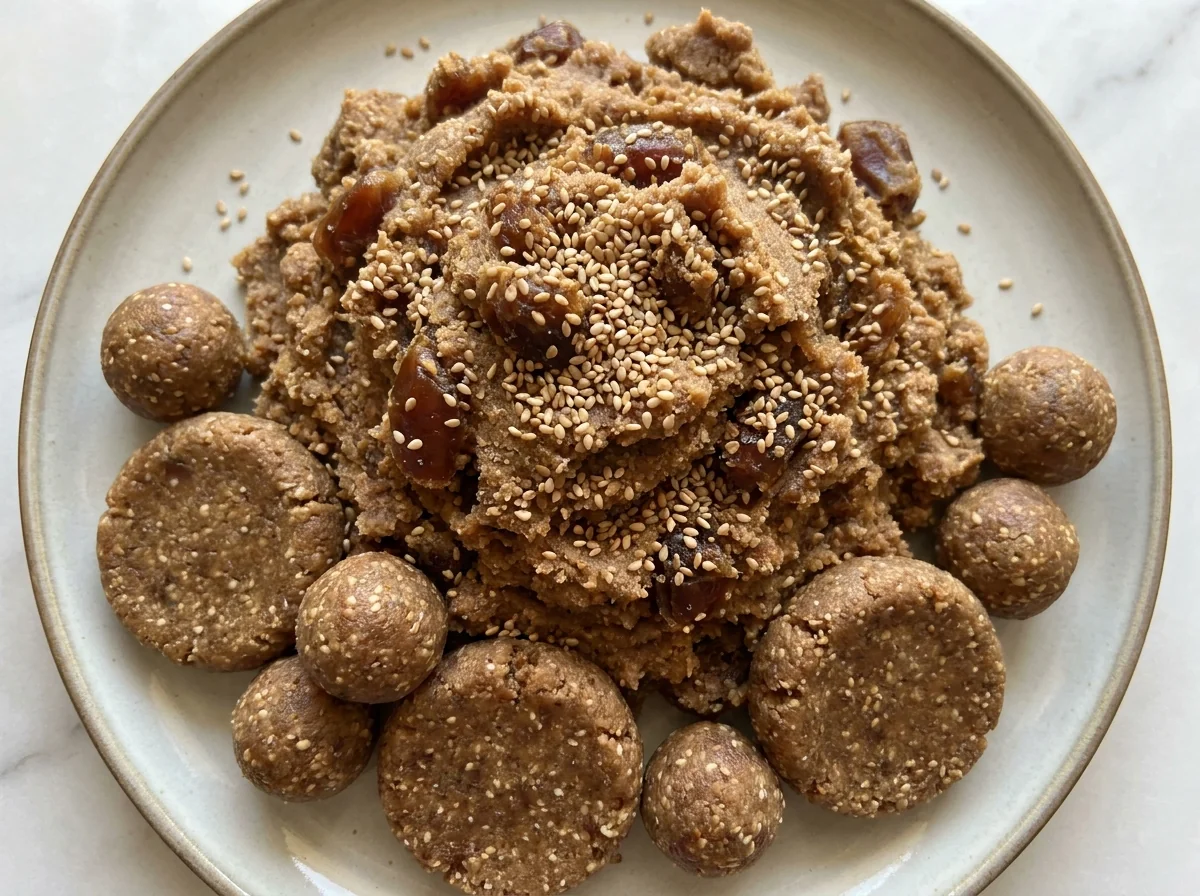
Batheetha is one of the old date sweets of Najd and the Gulf: toasted wheat rubbed with dates and ghee until it becomes a moist crumb eaten by the spoon or pressed into discs.
Its name comes from 'bath', meaning to crumble, and it was a traveler's provision because it keeps for a long time.
Preparation Steps
Toast the wheat until fragrant
In a thick, dry pan, stir the wheat flour over gentle medium heat for ten minutes until it darkens a shade and gives off its toasted aroma. The toasting is what gives Batheetha its flavor, just as toasting coffee beans gives coffee its flavor.
Rub the dates into the hot flour
Turn off the heat and add the soft dates in pieces to the hot flour, and rub them with the back of the spoon then with your fingertips. The heat of the flour softens the dates so the two blend into a uniform sandy crumb the color of dates.
Add the ghee, cardamom, and ginger
Pour in the warm melted ghee and add the cardamom and ginger, and keep rubbing until the mixture is like moist, cohesive sand: it holds together when squeezed and crumbles when rubbed. This is the correct Batheetha texture, between crumb and dough.
Serve it both ways
Mound it in a dish, scatter it with toasted sesame, and eat it with spoons alongside coffee, or press it into balls and discs to carry as provisions. Both forms are known ways of serving the same Batheetha.
Blood Sugar Impact
The glycemic index (GI) measures how quickly a food raises blood sugar, while the glycemic load (GL) measures how much a full serving raises it. Together they give the complete picture.
Glycemic Index
GI
51Low
Low0–55Medium56–69High70+
A low value (≤55) means a gradual rise in blood sugar — the most suitable range for diabetes and insulin resistance.
Glycemic Load
GL
28High
Low0–10Medium11–19High20+
Glycemic load reflects the impact of the full serving. To lower it: take half a serving, or pair the recipe with a source of protein and fiber.
Nutritional Information
Per ServingMakes 6 servings · one serving is about 95 g of raw ingredients
Calories362 kcal18%of Daily Value*
Protein6 g12%of Daily Value*
Carbohydrates62 g23%of Daily Value*
Fat12 g15%of Daily Value*
Fiber7 g25%of Daily Value*
Sodium2 mg0%of Daily Value*
* Percent Daily Values are based on a 2,000-calorie diet per FDA food-label reference values — your daily needs may be higher or lower. Values are derived from the recipe's ingredients via the USDA database.
Troubleshooting
The most common problems when preparing Date Batheetha with Toasted Wheat, and how to fix them:
The Batheetha is dry and does not hold together
The dates are dry or the ghee is too little. Use soft dates with a paste-like texture, and an extra spoonful of warm ghee fixes the texture.
It turned into a sticky dough, not a crumb
There were too many dates for the flour, or the rubbing continued over a lit heat. The balance is 3 dates to 2 flour, and the rubbing is done after turning off the heat.
The flour tastes raw
The toasting time was too short. Stick to the ten minutes until the color darkens and the aroma comes out.
A faint bitterness in the taste
The flour burned in a corner of the pan. Use gentle heat and stirring that reaches the entire bottom.
Storage and Make-Ahead
In an airtight container
Two weeks at room temperature, as it is originally a provision sweet that withstands keeping.
In the fridge
A full month, and left to return to room temperature before serving so its ghee softens.
In the freezer
Pressed balls for three months, taken out an hour before serving.
Tested Ingredient Substitutions
Original Ingredient
Tested Substitute
Ratio
Flavor Difference
Wheat flour
Toasted ground oats
1:1
A modern version with the same method
Ghee
Light olive oil
50 ml
It becomes closer to the oily taste of Bakeela (a date-and-bread mash)
Sesame for the garnish
Crushed walnuts or almonds
1:1
A richer crunch (watch out for tree nuts)
Ginger
Cinnamon
1:1
An alternative warm flavor to the household's taste
How Much Does It Make? Scaling Guide
Ingredient
6 servings
3 servings
12 servings
Dates
300 g
150 g
600 g
Wheat flour
200 g
100 g
400 g
Ghee
60 g
30 g
120 g
EEINA Nutrition Tip
Rely on soft, easy-to-rub dates and never add sugar, as good dates both sweeten and bind together. If your dates are dry, steam them for a minute before rubbing instead of any addition.
Add This Recipe to Your Plan
The EEINA app saves your favorite recipes, calculates them from their real ingredients, and shows your daily numbers toward your goal. Try it free now.
Khawda is dates mixed with almost pure ghee, Tamriyya is Hejazi with white flour browned in ghee for a soft texture, and Batheetha is toasted wheat rubbed dry into a moist crumb that is pressed. Three textures from the family of date sweets.
Why was it a traveler's provision?
There is no water in its composition and the ghee coats it, so it stays good for weeks and gives concentrated date energy in a small size.
Does it work as a quick breakfast today?
Two spoonfuls with milk or coffee make a quick energy breakfast, and a pressed ball in your work bag is a practical alternative to processed energy bars.
How do I make it suitable for children?
Small bite-sized balls coated in sesame: a school treat from three familiar ingredients.