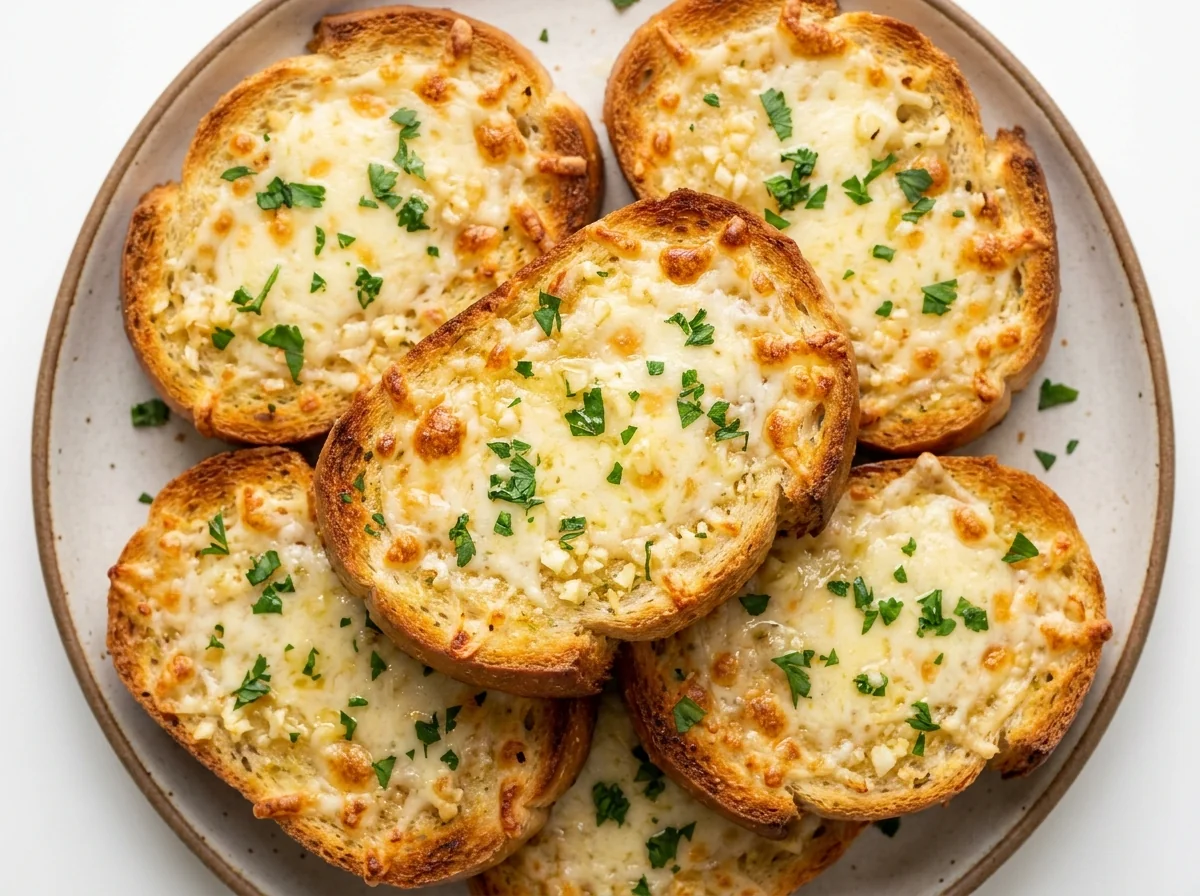
Cheese garlic bread is a beloved side dish that accompanies pasta and soups; crisp bread carrying fragrant garlic butter and stretchy melted cheese.
Preparation Steps
Prepare the garlic butter
Mix the soft butter with the minced garlic, the parsley, and a pinch of salt until homogeneous. Letting the butter soften at room temperature makes spreading easy and even over the bread.
Cut the loaf
Split the loaf lengthwise into two halves without separating them completely, or cut it into thick slices. The exposed surface allows the butter to be absorbed and the cheese to melt well.
Spread the butter
Spread the garlic butter generously over the face of the bread all the way to the edges. Full coverage prevents the edges from drying out during baking.
Add the cheese
Distribute the mozzarella and parmesan over the butter in an even layer. Mixing the two cheeses combines the stretch of mozzarella with the salty flavor of parmesan.
Baking
Bake in a preheated oven at 200 degrees Celsius until the cheese melts, its surface browns, and the edge of the bread turns crisp. The preheated oven ensures quick crisping without drying the bread.
Cut and serve
Cut it into fingers and serve it warm right away. Melted cheese is at its best texture when hot, stretching as you cut.
Blood Sugar Impact
The glycemic index (GI) measures how quickly a food raises blood sugar, while the glycemic load (GL) measures how much a full serving raises it. Together they give the complete picture.
Glycemic Index
GI
67Medium
Low0–55Medium56–69High70+
A low value (≤55) means a gradual rise in blood sugar — the most suitable range for diabetes and insulin resistance.
Glycemic Load
GL
11Medium
Low0–10Medium11–19High20+
Glycemic load reflects the impact of the full serving. To lower it: take half a serving, or pair the recipe with a source of protein and fiber.
Nutritional Information
Per ServingMakes 8 servings · one serving is about 65 g of raw ingredients
Calories228 kcal11%of Daily Value*
Protein8 g16%of Daily Value*
Carbohydrates18 g7%of Daily Value*
Fat14 g18%of Daily Value*
Fiber1 g4%of Daily Value*
Sodium314 mg14%of Daily Value*
Potassium86 mg2%of Daily Value*
Phosphorus125 mg10%of Daily Value*
* Percent Daily Values are based on a 2,000-calorie diet per FDA food-label reference values — your daily needs may be higher or lower. Values are derived from the recipe's ingredients via the USDA database.
Troubleshooting
The most common problems when preparing Cheese Garlic Bread, and how to fix them:
The bread is soft, not crisp
Toast the loaf on its own for a few minutes before adding the cheese, and bake on an upper rack close to the broiler.
The cheese did not brown
Turn on the top broiler (grill) for a minute or two while watching so it does not burn.
The garlic tastes raw and sharp
Stir the garlic in the butter over low heat for a minute before spreading to soften its sharpness.
The butter does not spread
Let it soften at room temperature, and do not use it straight from the fridge.
Storage and Make-Ahead
Refrigerator
Keep the surplus in a sealed container for two days, and reheat it in the oven, not the microwave, to stay crisp.
Make ahead
Prepare the bread spread with butter and cheese and chill it covered until baking time, then bake it fresh at serving.
Tested Ingredient Substitutions
Original Ingredient
Tested Substitute
Ratio
Flavor Difference
Butter
Olive oil
Three-quarters of the amount
A lighter plant-based alternative with a different flavor
Mozzarella
Grated akkawi or halloumi cheese
Same weight
A locally available option with higher saltiness, so reduce the salt
Baguette
Samoon or tannour bread
An equivalent loaf
Changes the texture while keeping the same idea
How Much Does It Make? Scaling Guide
Ingredient
2 servings
4 servings (base)
8 servings
Baguette bread
63 g
125 g
250 g
Butter
20 g
40 g
80 g
Mozzarella
38 g
75 g
150 g
Garlic
4 g
8 g
15 g
EEINA Nutrition Tip
Grating the cheese fresh yourself is better than ready-grated; the latter contains starch that prevents clumping but reduces the smoothness of melting and the cheese's stretch over the bread.
Add This Recipe to Your Plan
The EEINA app saves your favorite recipes, calculates them from their real ingredients, and shows your daily numbers toward your goal. Try it free now.