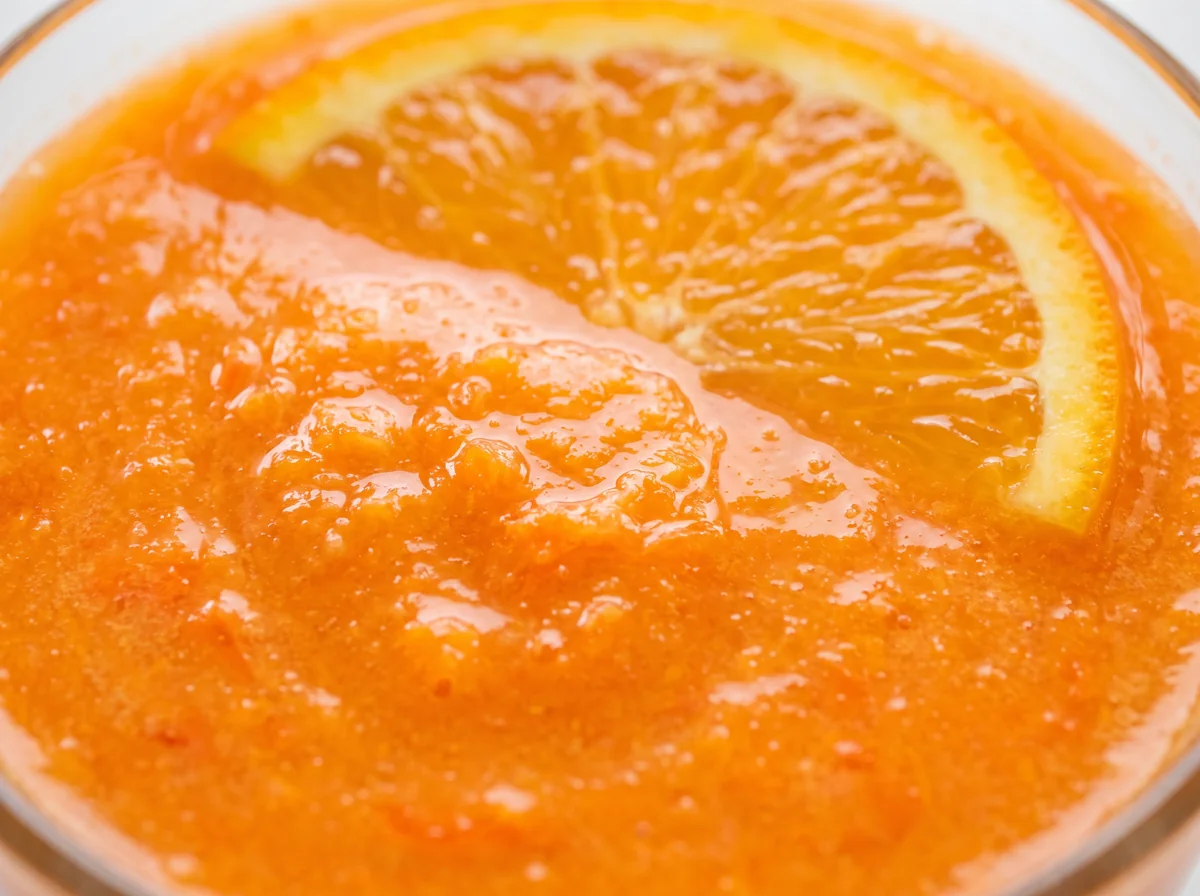
The classic orange duo: carrots and oranges blended together with cold water, then strained into a vivid juice that pairs the carrot's sweetness with the orange's refreshing tang. A family-size batch of six glasses, with no real need for added sugar.
In Arab juice shops, the carrot-orange duo has held a fixed corner for decades: two kindred colors and two complementary flavors, the carrot's earthy sweetness propped up by the orange's bright acidity.
This home version uses the blender instead of a juicer — blending the two with cold water for three minutes, then straining — to produce a full family batch of six servings from ten minutes of work.
Preparation Steps
Prepare the carrots and oranges
Wash, peel, and chop the carrots into small pieces, and peel and segment the oranges, removing every seed — seeds left in the blender give a distinct bitterness.
Blend for 3 minutes
Put the carrots, oranges, and cold water in the blender and blend on high speed for a full 3 minutes, until the carrot is completely smooth and the mixture uniform. Carrots are the toughest vegetable on a blender, and the full time is the secret to smoothness.
Taste before sweetening
Taste the mixture first; the sweetness of ripe carrots and oranges is usually enough. If you truly need it, add the least possible sugar and blend a few seconds to dissolve — skipping it is the healthier choice.
Strain
Pour the mixture through a wide strainer over a pitcher, pressing the pulp with the back of a spoon to extract the last of the juice. If you prefer a richer body and more fiber, strain lightly or skip straining altogether.
Serve cold
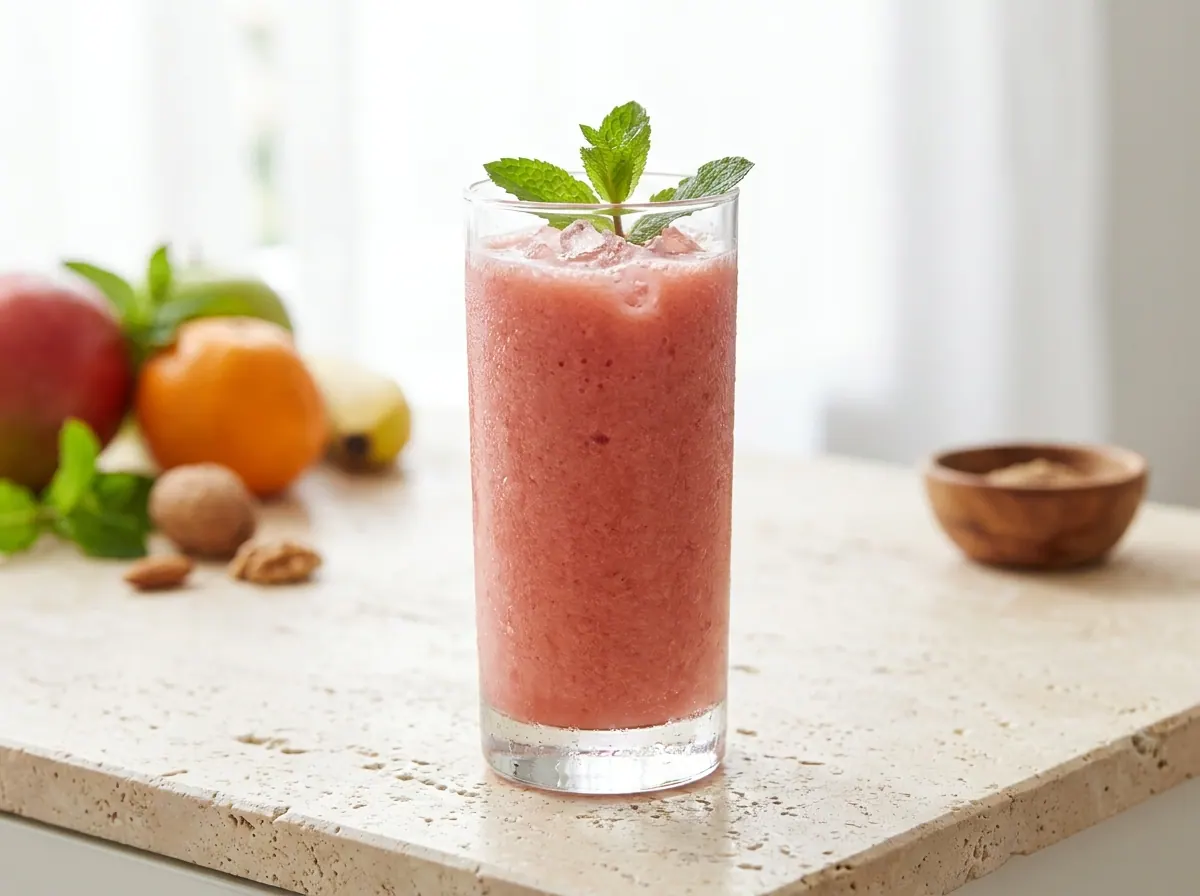
Pour the juice into glasses, garnish each rim with an orange slice, and serve cold right away, while its color, flavor, and vitamins are at their peak.
Blood Sugar Impact
The glycemic index (GI) measures how quickly a food raises blood sugar, while the glycemic load (GL) measures how much a full serving raises it. Together they give the complete picture.
Glycemic Index
GI
46Low
Low0–55Medium56–69High70+
A low value (≤55) means a gradual rise in blood sugar — the most suitable range for diabetes and insulin resistance.
Glycemic Load
GL
10Low
Low0–10Medium11–19High20+
Glycemic load reflects the impact of the full serving. To lower it: take half a serving, or pair the recipe with a source of protein and fiber.
Nutritional Information
Per ServingMakes 6 servings · one serving is about 450 g of raw ingredients
Calories107 kcal5%of Daily Value*
Protein2 g4%of Daily Value*
Carbohydrates27 g10%of Daily Value*
Fat0 g0%of Daily Value*
Fiber5 g18%of Daily Value*
Sodium58 mg3%of Daily Value*
Potassium472 mg10%of Daily Value*
Phosphorus44 mg4%of Daily Value*
* Percent Daily Values are based on a 2,000-calorie diet per FDA food-label reference values — your daily needs may be higher or lower. Values are derived from the recipe's ingredients via the USDA database.
Troubleshooting
The most common problems when preparing Carrot Orange Juice, and how to fix them:
A bitter taste in the juice
Orange seeds were left in the blender, or some of the thick white pith got in. Remove every seed and peel the oranges well before blending.
A gritty texture with small carrot bits
The blending was too short. Stick to a full 3 minutes on the highest speed, chop the carrots smaller before blending, then strain through a finer strainer.
The juice tastes thin and watery
Reduce the water to 4 cups in the next batch, or add an extra carrot and orange; the water ratio is adjustable to taste.
The layers separate after a short while
Normal in a fresh juice with no stabilizers; the fine pulp sinks to the bottom. Stir or shake before pouring.
The color is dull and the flavor flat
Old, soft carrots or underripe oranges. Choose firm, deep-orange carrots and oranges that feel heavy for their size with fragrant peel.
Storage and Make-Ahead
Drink fresh
At its best the moment it is made; the color and vitamins decline with time and exposure to air.
Refrigerator (4°C)
Store in a sealed, well-filled bottle for up to 24 hours, and shake before pouring. The orange's acidity slows oxidation a little.
Freezer
Freeze in ice cube trays to add to smoothies later, or turn into ice pops for the kids.
What to avoid
Do not leave it unrefrigerated for more than two hours; fresh unpasteurized juices spoil quickly.
Tested Ingredient Substitutions
Original Ingredient
Tested Substitute
Ratio
Flavor Difference
Sugar
No sweetener at all
Omit
The healthier default; the two ingredients are sweet enough, and every spoon of sugar adds empty calories.
Cold water
Half water, half ice
3 cups water and 3 cups ice
The juice comes out chilled and ready to serve immediately in summer, with no further dilution.
Oranges
Blood oranges
Same number
A deeper color leaning toward red and a more berry-like flavor, with similar nutritional value.
Carrot and orange alone
Add a small piece of ginger (3 g)
One piece per batch
A refreshing bite that cuts the sweetness — the approved addition in the straight carrot juice version.
Full straining
Keep the pulp (smoothie style)
No straining
Keeps more fiber, satisfies longer, and slows the sugar's effect; the option closest to eating the whole fruit.
How Much Does It Make? Scaling Guide
Number of cups
Carrots
Oranges
Cold water
3 (half recipe)
4 pieces (250 g)
2 pieces (300 g)
3 cups (750 ml)
6 (the recipe)
7 pieces (500 g)
4 pieces (600 g)
6 cups (1.5 L)
12 (feast)
14 pieces (1 kg)
8 pieces (1.2 kg)
12 cups (3 L)
EEINA Nutrition Tip
Try the first glass with no sugar at all; a ripe orange and fresh carrot are usually sweet enough. And remember that juicing concentrates the natural fruit sugar and loses most of the fiber — eating the carrot and orange whole gives more fiber and a slower effect on blood sugar, so a moderate glass should stay a guest, not a replacement for the fruit.
Add This Recipe to Your Plan
The EEINA app saves your favorite recipes, calculates them from their real ingredients, and shows your daily numbers toward your goal. Try it free now.
The straight version is just carrot, water, and lemon — earthy, gently sweet, and enough for two glasses. This version adds four oranges and scales the batch up to six glasses, gaining refreshing acidity, clearer sweetness, and more vitamin C. It is the one closest to children's taste and to what juice shops serve.
Does it really need sugar?
Usually not. Ripe carrots and oranges are naturally sweet, and the original recipe leaves sugar to taste. Taste before adding anything, and if you do add, use the least possible amount.
Does it raise blood sugar?
Any strained juice concentrates the natural fruit sugar and loses most of the fiber, so its effect arrives faster than eating the whole fruit. Moderation — one glass with a meal, or leaving the pulp unstrained — softens the effect. Anyone monitoring their blood sugar should count the glass within their carbohydrate servings.
Which is better, the blender or a juicer?
A juicer gives a clear, concentrated juice with no added water; the blender with water and straining gives a larger batch with a lighter body, and it is what most homes have. Both are fine — freshness matters more than the tool.
When is it served?
Cold in summer and on Ramadan tables, at breakfast or as a light snack. It is one of the juices children accept most readily, thanks to its natural sweetness and bright color.