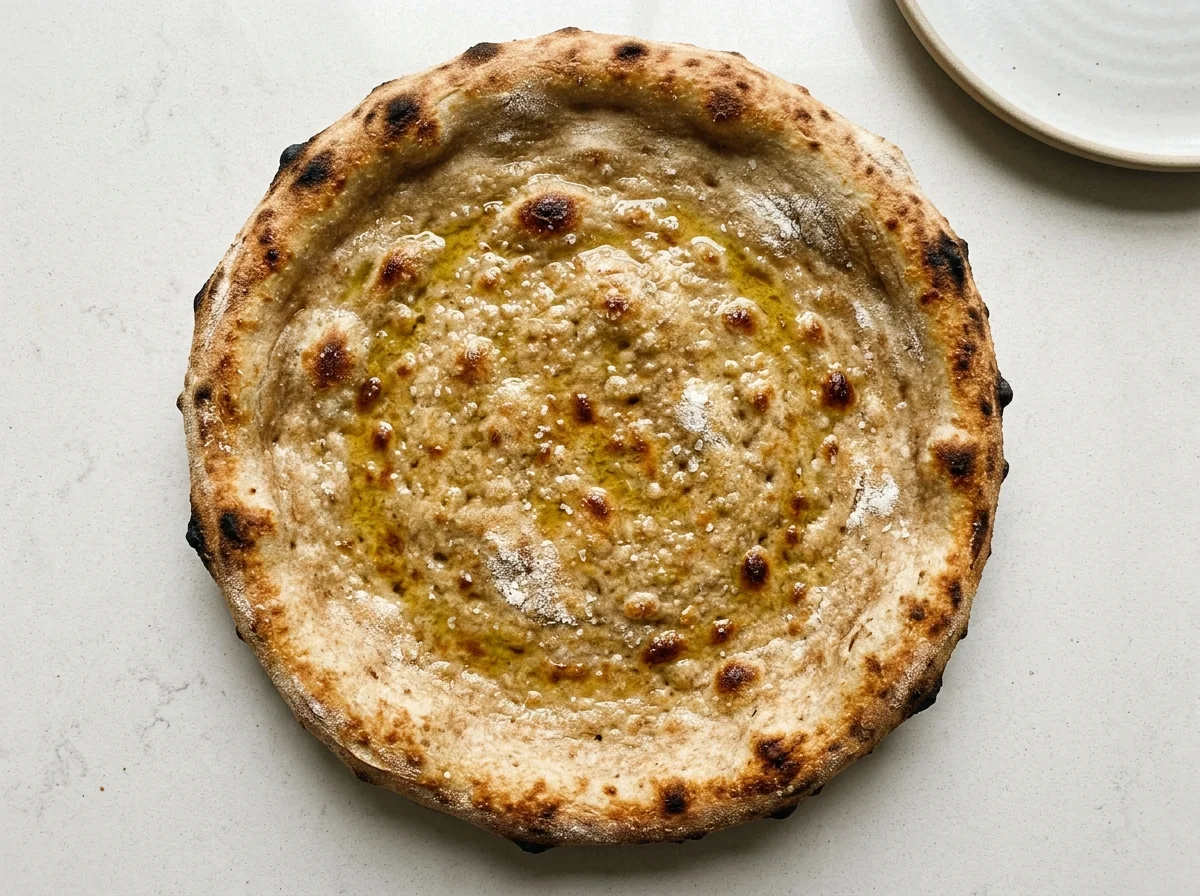
A classic pizza dough made with flour, instant yeast, and olive oil, fermented until it doubles in size, rolled out, pricked with a fork, and baked. A base for all kinds of pizza: Margherita, vegetables, chicken, and meat.
Pizza dough reached us with the wave of Italian migration to America in the early twentieth century, and today it has become a staple in every kitchen.
The olive oil in the dough gives it a rich flavor and keeps it soft. Instant yeast saved us the long fermentation time used in classic Italian dough.
Preparation Steps
Activate the yeast
Dissolve the yeast and sugar in the warm water and leave it 5 minutes until it reacts and bubbles appear on the surface.
Knead
Add the flour, a pinch of salt, and two tablespoons of the olive oil and knead 5-7 minutes until you get a smooth dough that does not stick. Add more flour if needed.
Ferment
Grease a deep bowl with the remaining tablespoon of oil. Shape the dough into a ball and place it in the bowl. Cover it with plastic wrap and a towel. Leave it an hour in a warm place until it doubles in size.
Roll and prick
Take the dough out and divide it into balls (2-3 depending on the pizza size). Roll each ball on a floured surface to a thickness of 5 mm. Prick the dough with a fork in several places to avoid puffing up during baking.
Bake
Place the dough in an oven preheated to 200-210°C for 5-7 minutes before adding the topping (for a quick base) or 10 minutes for a golden base. Add the topping and finish baking.
Blood Sugar Impact
The glycemic index (GI) measures how quickly a food raises blood sugar, while the glycemic load (GL) measures how much a full serving raises it. Together they give the complete picture.
Glycemic Index
GI
70High
Low0–55Medium56–69High70+
A low value (≤55) means a gradual rise in blood sugar — the most suitable range for diabetes and insulin resistance.
Glycemic Load
GL
33High
Low0–10Medium11–19High20+
Glycemic load reflects the impact of the full serving. To lower it: take half a serving, or pair the recipe with a source of protein and fiber.
Nutritional Information
Per ServingMakes 6 servings · one serving is about 110 g of raw ingredients
Calories297 kcal15%of Daily Value*
Protein7 g14%of Daily Value*
Carbohydrates49 g18%of Daily Value*
Fat8 g10%of Daily Value*
Fiber2 g7%of Daily Value*
Sodium196 mg9%of Daily Value*
Potassium97 mg2%of Daily Value*
Phosphorus150 mg12%of Daily Value*
* Percent Daily Values are based on a 2,000-calorie diet per FDA food-label reference values — your daily needs may be higher or lower. Values are derived from the recipe's ingredients via the USDA database.
Troubleshooting
The most common problems when preparing Basic Pizza Dough for All Types, and how to fix them:
The dough is tough
The fermentation time was not enough. Leave it an extra hour in a warm place.
Storage and Make-Ahead
Dough in the refrigerator
Keeps for 3 days in a closed bag. Take it out an hour before using.
Dough in the freezer
Up to a month. Thaw overnight in the refrigerator.
Tested Ingredient Substitutions
Original Ingredient
Tested Substitute
Ratio
Flavor Difference
olive oil
vegetable oil
1:1
A lighter result in flavor.
EEINA Nutrition Tip
Kneading the dough a full 5-7 minutes gives it smoothness and elasticity. The olive oil in the dough prevents it from drying out during baking. Pricking with a fork is necessary to keep the dough from puffing up in the oven.
Add This Recipe to Your Plan
The EEINA app saves your favorite recipes, calculates them from their real ingredients, and shows your daily numbers toward your goal. Try it free now.