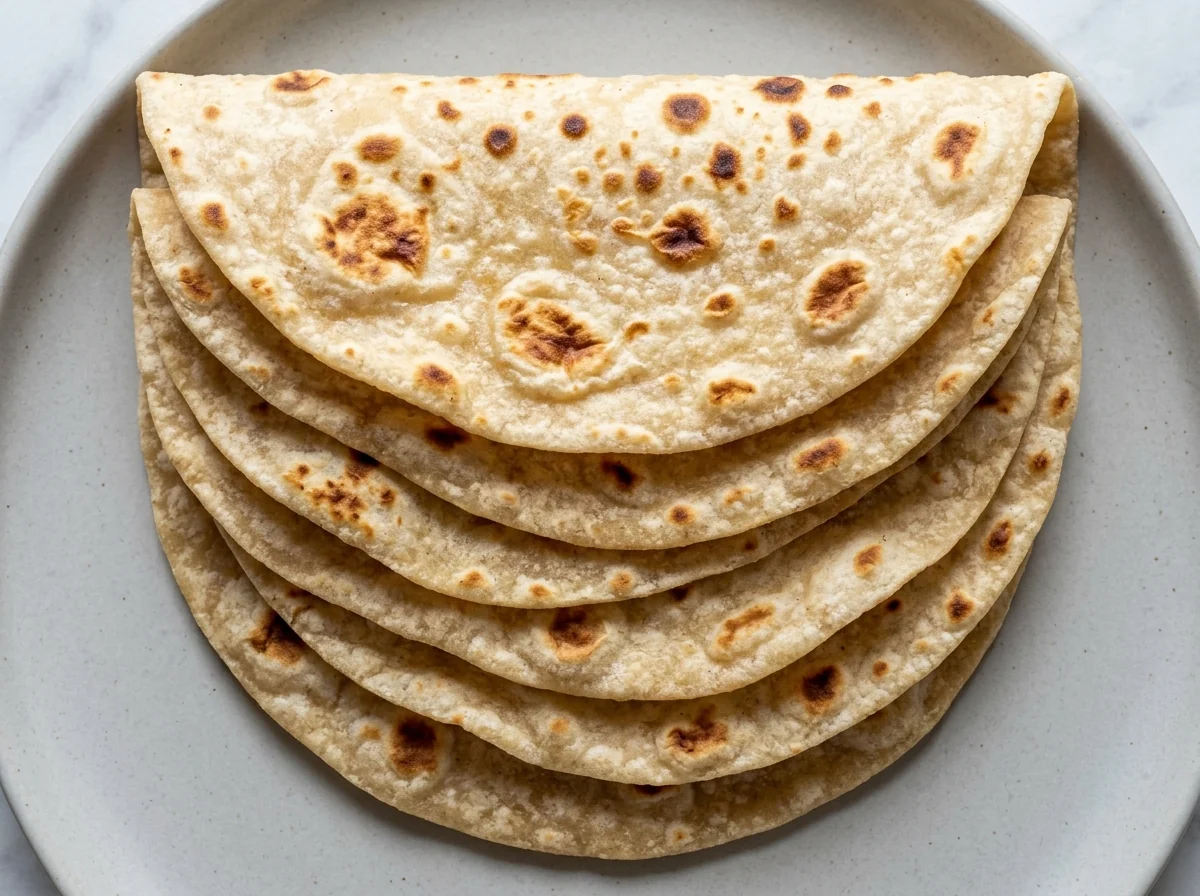
Homemade tortilla bread with very simple ingredients: flour, oil, baking powder, and water. Rolled out and cooked for a few minutes on a non-stick pan until it puffs up and bubbles form on the surface. A base for tacos, fajitas, and burritos.
Tortilla bread originated in Mexico, where it was invented by the Maya and Aztec peoples centuries before Columbus.
It traveled with Latin American migrations to North America, and from there to the world. In Arab homes, it became a base for shawarma, falafel, and sausage sandwiches, and it can be filled with any mix.
Preparation Steps
Mix the dry ingredients
In a deep bowl, mix the flour with the baking powder and salt. Add the corn oil and rub with your fingertips until the oil is distributed and the mixture comes together like a rubbed-in dough.
Knead
Add the warm water gradually while kneading continuously with your hands for 5 minutes until a firm, smooth, non-sticky dough forms. If it is sticky, add a spoonful of flour. If it is dry, add a spoonful of water.
Rest the dough
Shape the dough into a ball and place it in a bowl greased with a little oil. Cover it with a damp kitchen towel and leave it to rest for 30 minutes at room temperature.
Cut and roll
Cut the dough into 10 equal balls. Roll each ball on a flour-dusted surface until it becomes a thin disc about 3 mm thick. You can make the shape round by cutting it with a plate, or leave it free-form.
Cook on the pan
Heat a non-stick pan over medium heat. Place the first disc and leave it for 30-40 seconds until small bubbles appear on its surface. Flip it and cook the other side for 20 seconds. Repeat with the rest of the discs and cover them with a clean towel to keep them warm and soft.
Blood Sugar Impact
The glycemic index (GI) measures how quickly a food raises blood sugar, while the glycemic load (GL) measures how much a full serving raises it. Together they give the complete picture.
Glycemic Index
GI
70High
Low0–55Medium56–69High70+
A low value (≤55) means a gradual rise in blood sugar — the most suitable range for diabetes and insulin resistance.
Glycemic Load
GL
38High
Low0–10Medium11–19High20+
Glycemic load reflects the impact of the full serving. To lower it: take half a serving, or pair the recipe with a source of protein and fiber.
Nutritional Information
Per ServingMakes 5 servings · one serving is about 140 g of raw ingredients
Calories417 kcal21%of Daily Value*
Protein8 g16%of Daily Value*
Carbohydrates57 g21%of Daily Value*
Fat17 g22%of Daily Value*
Fiber2 g7%of Daily Value*
Sodium516 mg22%of Daily Value*
* Percent Daily Values are based on a 2,000-calorie diet per FDA food-label reference values — your daily needs may be higher or lower. Values are derived from the recipe's ingredients via the USDA database.
Troubleshooting
The most common problems when preparing Skillet Tortilla Bread, and how to fix them:
The disc cracks when rolling
The dough is dry. Wet your hand with a little water and knead for 30 more seconds.
The disc is dry and crisp like a cracker
We cooked it too long. Reduce the seconds on each side and leave it slightly soft.
Storage and Make-Ahead
Tortillas in a sealed container
Stay fresh for two days at room temperature. Warm them in the microwave for 10 seconds before using.
Tortillas in the freezer
Up to 3 months. Separate with plastic wrap so they do not stick.
Tested Ingredient Substitutions
Original Ingredient
Tested Substitute
Ratio
Flavor Difference
corn oil
olive oil or vegetable oil
1:1
Olive oil gives a stronger flavor and a denser texture.
white flour
whole wheat flour
1:1
Gives a nutty flavor and a higher nutritional value.
EEINA Nutrition Tip
The pan must actually be hot before you place the disc. Medium heat is the secret — high heat burns the surface before the inside cooks, and low heat dries it out. Covering with a towel after baking keeps it soft for hours.
Add This Recipe to Your Plan
The EEINA app saves your favorite recipes, calculates them from their real ingredients, and shows your daily numbers toward your goal. Try it free now.