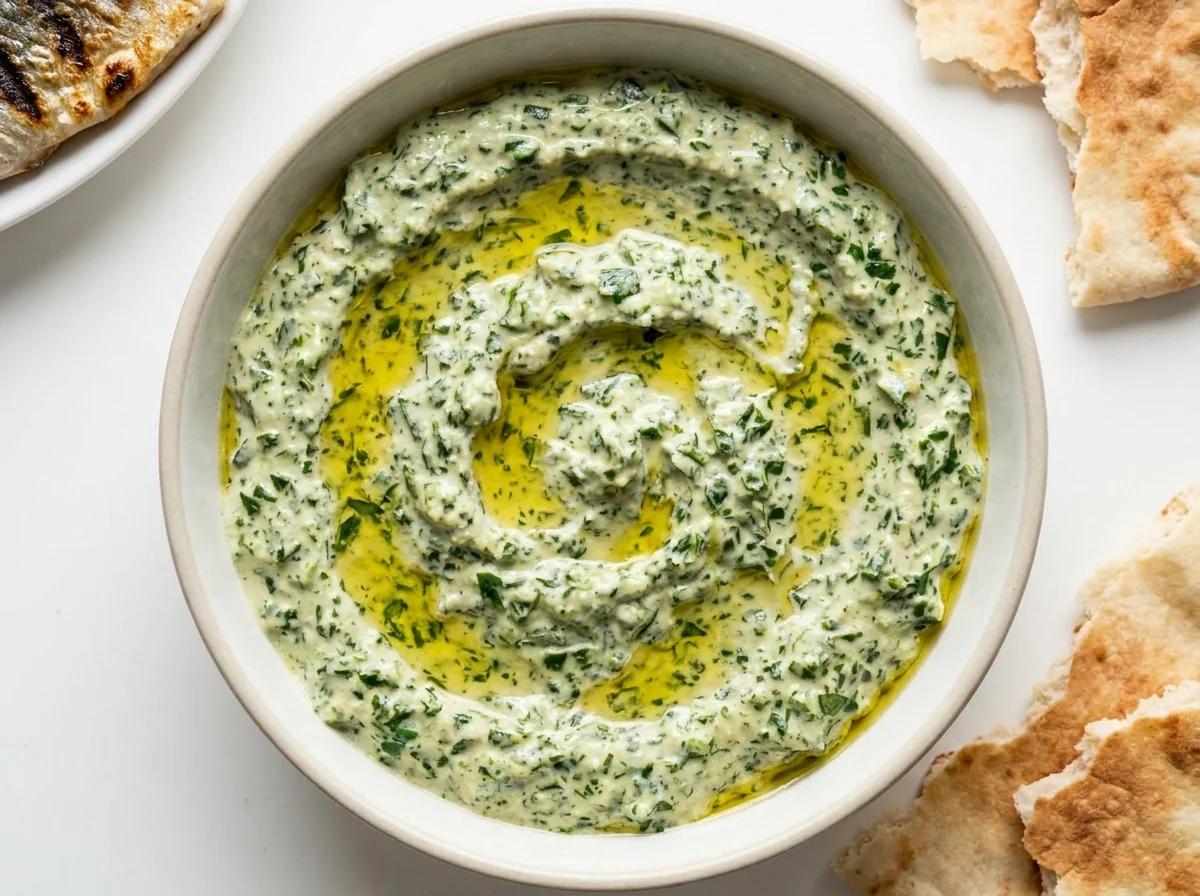
Baqdonsieh - a dip of tahini, chopped parsley, lemon juice, and water blended until creamy and refreshing. A Gulf-Levantine appetizer, with values from the peer-reviewed Qatari exchange list.
Baqdonsieh is an Arab Levantine-Gulf dip from the family of tahini sauces, distinguished by the abundance of green parsley that colors it and gives it freshness. It is served especially with grilled and fried fish in the Gulf, as the acidity of the lemon and tahini complement the fish.
Its secret is chopping the parsley finely and adding the water after the lemon to avoid clumping the tahini. EEINA's version keeps its method, with values from the peer-reviewed Qatari exchange list.
Preparation Steps
Chop the parsley
Wash the parsley, dry it, and chop it very finely, as fine chopping distributes its flavor throughout the dip.
Thin the tahini
Place the tahini in a bowl and add the lemon juice, so it seizes up, then add the water gradually while whisking until it becomes smooth and creamy. Adding the water after the lemon prevents the tahini from clumping.
Mix
Add the chopped parsley and salt and stir until uniform and the color becomes light green.
Serve
Pour the baqdonsieh into a dish and drizzle olive oil over it, and serve it with bread or with grilled and fried fish.
Blood Sugar Impact
The glycemic index (GI) measures how quickly a food raises blood sugar, while the glycemic load (GL) measures how much a full serving raises it. Together they give the complete picture.
Glycemic Index
GI
25Low
Low0–55Medium56–69High70+
A low value (≤55) means a gradual rise in blood sugar — the most suitable range for diabetes and insulin resistance.
Glycemic Load
GL
2Low
Low0–10Medium11–19High20+
Glycemic load reflects the impact of the full serving. To lower it: take half a serving, or pair the recipe with a source of protein and fiber.
Nutritional Information
Per ServingMakes 4 servings · one serving is about 90 g of raw ingredients
Calories230 kcal12%of Daily Value*
Protein8 g16%of Daily Value*
Carbohydrates6 g2%of Daily Value*
Fat20 g26%of Daily Value*
* Percent Daily Values are based on a 2,000-calorie diet per FDA food-label reference values — your daily needs may be higher or lower. Values are derived from the recipe's ingredients via the USDA database.
Troubleshooting
The most common problems when preparing Baqdonsieh (Parsley Tahini Dip), and how to fix them:
The tahini clumped and became thick
The water was added before the lemon. Add the lemon first (it seizes up), then the water gradually while whisking until smooth.
The taste is bitter
Old or poor-quality tahini. Use fresh tahini, and balance with lemon and salt.
The consistency is too runny
Too much water. Add the water little by little and stop at the desired creamy consistency.
Pale color
Too little parsley or too coarse. Increase the parsley and chop it finely so it colors the dip green.
Storage and Make-Ahead
The fridge (4 C)
Three days in an airtight container, and stir it before serving.
Make ahead
Prepare it hours in advance, and add the parsley close to serving so its color stays vivid.
The freezer
Freezing tahini sauces is not recommended, as their consistency separates after thawing.
Tested Ingredient Substitutions
Original Ingredient
Tested Substitute
Ratio
Flavor Difference
Tahini
Low-fat labneh
same amount by weight
A lower-fat version with a different character
Water
Ice-cold water
same amount
Makes the consistency smoother and the color lighter
Lemon juice
Apple cider vinegar
half the amount
An alternative acidity when lemon runs out
Salt
Half the amount
half
Lowers the sodium while increasing the lemon
How Much Does It Make? Scaling Guide
Number of servings
Tahini
Parsley
Lemon
2 (half the recipe)
60 g
45 g
25 g
4 (base)
120 g
90 g
50 g
8 (gathering)
240 g
180 g
100 g
EEINA Nutrition Tip
Tahini is a source of healthy fats and calcium, and parsley is rich in vitamin K and antioxidants. The dip is high in fat, so take it in moderate portions, and it is a good choice for those reducing carbohydrates.
Add This Recipe to Your Plan
The EEINA app saves your favorite recipes, calculates them from their real ingredients, and shows your daily numbers toward your goal. Try it free now.
A dip of tahini, chopped parsley, and lemon, from the family of tahini sauces, served especially with fish.
Why is it served with fish?
The acidity of the lemon and the tahini complement the taste of grilled and fried fish and balance its richness, and it is a common Gulf accompaniment.
Is it suitable for those reducing carbohydrates?
Yes, as it is low in carbohydrates and high in healthy fats, but take it in moderate portions due to its high calories.
How do I prevent the tahini from clumping?
Add the lemon juice first so the tahini seizes up, then the water gradually while whisking until it becomes smooth and lighter.
Sources: University of Sydney · Gulf GSO · Our methodology · Updated on