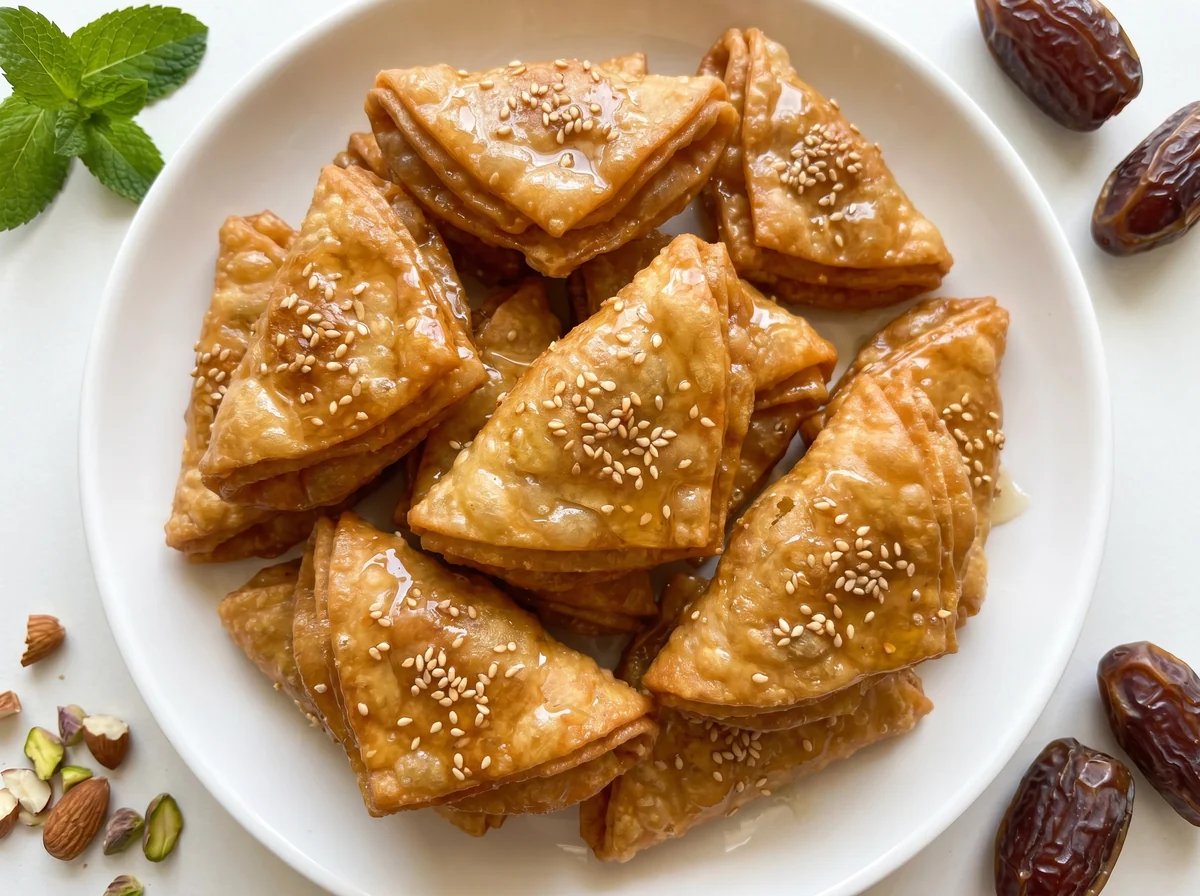
An Algerian wedding sweet — thin dough sheets shaped into roses or ribbons, deep-fried, dipped in honey, and sprinkled with sesame. An ornate wedding and celebration sweet to be enjoyed in moderation, containing gluten, egg, and sesame.
Dabla is a beloved Algerian (and wider Maghrebi) wedding and celebration sweet — one of the beautiful ornate confections of joyful occasions. It is made from a paper-thin dough (with eggs and orange-blossom water) that is rolled thin and shaped into decorative forms (roses by wrapping around a fork or tool, or folded ribbon shapes), deep-fried until crisp, dipped in honey syrup, and scattered with toasted sesame.
The name Dabla may come from its ring-like or ornate shape. This is a wedding sweet par excellence (prepared in beautiful shapes for weddings, holidays, and major celebrations — requiring skill and patience in the shaping). Its crisp golden rose shapes dipped in honey and gleaming with sesame are a beautiful pleasure, a symbol of the artistry, joy, and generosity of Algerian wedding confectionery.
Preparation Steps
Make the dough
Knead the flour with the eggs, vinegar (or orange-blossom water), oil, water, and salt into a soft, pliable dough that can be rolled paper-thin, and let it rest. Dabla is an ornate Algerian wedding sweet (shaped into roses or ribbons) — a supple, thin dough is the foundation (it must be rolled paper-thin and shaped).
Roll paper-thin
Roll the dough paper-thin (with a rolling pin or pasta machine) until it is almost translucent. Rolling paper-thin is essential (Dabla is a thin, crisp sweet) — thick dough stays soft and heavy. Roll in stages for even thinness.
Shape roses or ribbons
Shape the rolled dough: wrap it around a fork or special tool (rose shape), or cut it into strips and fold them (ornate shapes). The ornate shape (rose) is Dabla's signature (a beautiful wedding sweet) — it takes skill and patience.
Fry
Deep-fry the shapes in oil at medium heat until golden and crisp, keeping their decorative shape. Gentle frying crisps the thin dough and turns it golden without burning (thin dough turns golden quickly). Drain on paper towels.
Dip in honey
Dip the fried Dabla in warm honey syrup for a moment (they absorb it and shine) then lift them out. Dipping in honey gives Dabla its sweetness and gloss (honey is the authentic Algerian flavouring for sweets). Do not leave them to soak long (they lose their crunch).
Garnish and serve
Scatter the toasted sesame seeds over the Dabla (they cling to the gleaming honey) and arrange on a serving platter. This is a beloved Algerian (and wider Maghrebi) wedding and celebration sweet made in beautiful shapes (prepared for weddings, holidays, and major occasions) — its crisp rose shapes dipped in honey and gleaming with sesame are a joyful, elegant pleasure.
Blood Sugar Impact
The glycemic index (GI) measures how quickly a food raises blood sugar, while the glycemic load (GL) measures how much a full serving raises it. Together they give the complete picture.
Glycemic Index
GI
75High
Low0–55Medium56–69High70+
A low value (≤55) means a gradual rise in blood sugar — the most suitable range for diabetes and insulin resistance.
Glycemic Load
GL
8Low
Low0–10Medium11–19High20+
Glycemic load reflects the impact of the full serving. To lower it: take half a serving, or pair the recipe with a source of protein and fiber.
Nutritional Information
Per ServingMakes 24 servings · one serving is about 20 g of raw ingredients
Calories78 kcal4%of Daily Value*
Protein2 g4%of Daily Value*
Carbohydrates11 g4%of Daily Value*
Fat3 g4%of Daily Value*
Fiber0 g0%of Daily Value*
Sodium306 mg13%of Daily Value*
* Percent Daily Values are based on a 2,000-calorie diet per FDA food-label reference values — your daily needs may be higher or lower. Values are derived from the recipe's ingredients via the USDA database.
Troubleshooting
The most common problems when preparing Algerian Dabla, and how to fix them:
Dabla is not crispy
Dough too thick or too much honey. Roll the dough paper-thin (thinness is the secret to crunch) and dip briefly in moderate honey. Paper-thin dough well-fried and quickly dipped stays crisp.
Lost its shape in the frying
Dough too soft or shape not secured. Shape the pliable dough and secure the edges (with a little water or pressing) — fry gently without too much movement. A secured shape and gentle frying preserve the decoration.
Burned quickly
Oil too hot. Fry at medium heat (thin dough burns fast at high heat) and watch until golden. Medium heat turns it golden without burning.
Soggy with honey
Soaked too long. Dip the Dabla in honey for just a moment then lift it out (enough to sweeten and gloss) — long soaking makes it soggy and removes the crunch. A quick dip is the secret.
Dough tears when shaping
Dough is dry or not rested. Knead a supple dough (not dry) and let it rest (it relaxes and becomes easy to roll and shape without tearing). The eggs and oil make the dough pliable for decorative shaping.
Storage and Make-Ahead
Room temperature
Dabla keeps in an airtight container at room temperature for one to two weeks (honey is a natural preservative and the fried dry dough lasts well). It stays delicious. Ideal for making ahead for weddings and holidays (make in bulk and store).
Freezer (before honey)
Fry the Dabla without honey and freeze it, then warm and dip in honey when fresh. Or shape it raw and freeze, then fry fresh. This keeps it crispier than freezing post-dipping.
Make-ahead
A perfect make-ahead sweet (keeps for weeks) — prepare days before the wedding or holiday and store airtight. Wedding confectionery is made in large quantities in advance (shaping takes time) and keeps well.
Food safety
Fry the Dabla until cooked through (the dough contains egg), drain on paper towels, and store in an airtight dry container. A fried, honey-dipped sweet that keeps for weeks away from moisture.
Tested Ingredient Substitutions
Original Ingredient
Tested Substitute
Ratio
Flavor Difference
Honey syrup
Sugar syrup (qater)
Same amount
Honey is the authentic Algerian flavouring for Dabla; sugar syrup is a cheaper alternative — both provide the dipping sweetness and gloss
Deep-frying
Baking in the oven
—
Baking the shapes (brushed with oil) is lower in fat than frying, with some loss of the distinctive crunch; frying is the traditional, crispier method that holds the shapes
White flour
Flour with some whole wheat
Mostly white
A little whole wheat adds fibre with a slightly denser texture; white flour gives the thinness and crispness needed for decorative shapes
How Much Does It Make? Scaling Guide
Number of pieces
Flour
Eggs
Honey
12 (small)
1½ cups
1
¾ cup
24 (base)
3 cups
2
1½ cups
48 (wedding)
6 cups
4
3 cups
EEINA Nutrition Tip
Dabla is a fried and honey-dipped wedding sweet — high in sugar (from the honey), calories, and fat (from frying). The sesame adds some value (healthy fats and calcium), but it remains a celebration sweet. The best approach is to enjoy one or two pieces in moderation at celebrations (it is a small hospitality sweet, not something to eat in quantity). To lighten it slightly: fry in hot oil (absorbs less), dip in moderate honey (do not saturate), and be generous with the sesame. People with diabetes should be cautious. A beautiful, delicate wedding sweet — appreciated in moderation on joyful occasions.
Add This Recipe to Your Plan
The EEINA app saves your favorite recipes, calculates them from their real ingredients, and shows your daily numbers toward your goal. Try it free now.
An Algerian (and Maghrebi) wedding and celebration sweet made in ornate shapes: a thin dough rolled paper-thin, shaped into beautiful forms (roses or folded ribbons) and deep-fried until crisp, then dipped in honey syrup and scattered with sesame. A celebration sweet made in beautiful shapes for weddings and holidays — its crisp rose shapes dipped in honey are a joyful, elegant pleasure.
Why is it shaped into roses?
Dabla is a wedding and celebration sweet — the beauty of its shape is part of its joy. The dough is rolled thin and wrapped around a fork or special tool to form a rose, or cut into strips and folded into decorative shapes. This shaping artistry distinguishes Algerian wedding confectionery (requiring skill and patience) and makes each piece a beautiful decoration for celebration tables.
What is the difference between Dabla and Griwech?
Both are Algerian fried sweets dipped in honey and ornately shaped, but Dabla is shaped into roses or ribbons from thin rolled dough, while Griwech (the Algerian shabakiya) is formed into braided/lattice shapes. Both are wedding and holiday sweets with honey and sesame — the difference lies in the shaping technique.
Is Dabla healthy?
It is a fried and honey-dipped wedding sweet — high in sugar, calories, and fat. The sesame adds some value (healthy fats and calcium), but it remains a celebration sweet. Enjoy one or two pieces in moderation at celebrations. Fry in hot oil, dip in moderate honey, and be generous with sesame. People with diabetes should be cautious. A beautiful wedding sweet — in moderation.
Sources: University of Sydney · Gulf GSO · Our methodology · Updated on