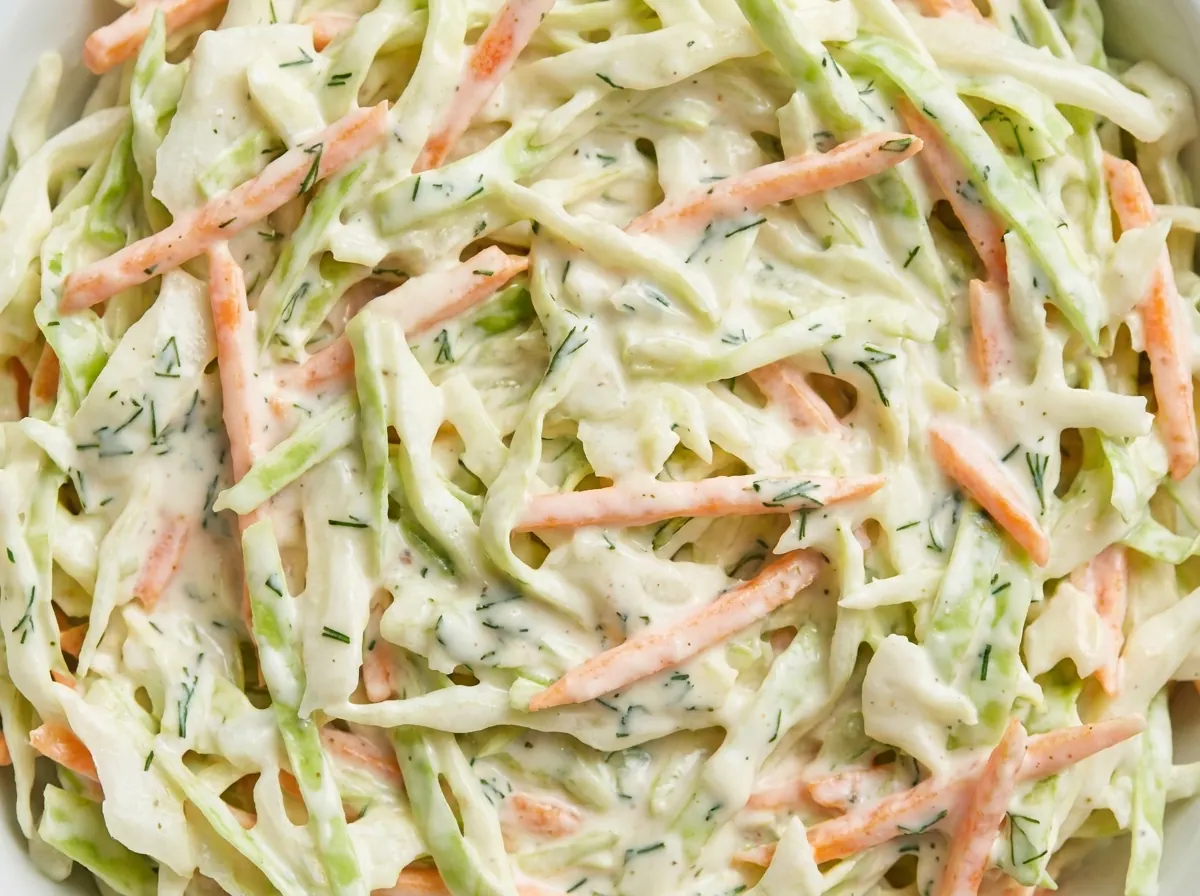
A healthy coleslaw of shredded cabbage and carrot with a light yogurt dressing instead of mayonnaise. Raw vegetables rich in vitamin C and beta-carotene, GI 21 very low, suitable for diabetes and weight loss.
Coleslaw is a classic international dish of shredded cabbage and carrot in a creamy dressing, served as a side for grills and sandwiches. Its only problem is that its traditional dressing relies on mayonnaise, so its calories and fat rise quickly.
This version replaces the mayonnaise with a Greek yogurt dressing, a variation widely known in cooking sources. The result: the same crunch and refreshing acidity, with higher protein and far fewer calories, and raw vegetables that keep their heat-sensitive vitamins.
Preparation Steps
Prepare the vegetables
Shred the cabbage finely and grate the carrot on a coarse grater, and place them in a large bowl.
Whisk the dressing
In a separate bowl, whisk the yogurt with the apple cider vinegar, olive oil, mustard, and honey until the dressing comes together.
Season
Season the dressing with salt and black pepper to taste.
Mix
Add the dressing to the cabbage and carrot and toss until the vegetables are completely coated.
Chill
Cover the bowl and put it in the refrigerator for at least half an hour so the flavours are absorbed and the vegetables soften a little.
Final adjustment
Toss one last time before serving, and adjust the salt and the acidity if needed.
Serve
Serve it cold as a side dish.
Blood Sugar Impact
The glycemic index (GI) measures how quickly a food raises blood sugar, while the glycemic load (GL) measures how much a full serving raises it. Together they give the complete picture.
Glycemic Index
GI
21Low
Low0–55Medium56–69High70+
A low value (≤55) means a gradual rise in blood sugar — the most suitable range for diabetes and insulin resistance.
Glycemic Load
GL
1Low
Low0–10Medium11–19High20+
Glycemic load reflects the impact of the full serving. To lower it: take half a serving, or pair the recipe with a source of protein and fiber.
Nutritional Information
Per ServingMakes 6 servings · one serving is about 100 g of raw ingredients
Calories82 kcal4%of Daily Value*
Protein4 g8%of Daily Value*
Carbohydrates7 g3%of Daily Value*
Fat4 g5%of Daily Value*
Fiber1 g4%of Daily Value*
Sodium236 mg10%of Daily Value*
Potassium168 mg4%of Daily Value*
Phosphorus70 mg6%of Daily Value*
* Percent Daily Values are based on a 2,000-calorie diet per FDA food-label reference values — your daily needs may be higher or lower. Values are derived from the recipe's ingredients via the USDA database.
Troubleshooting
The most common problems when preparing Cabbage and Carrot Coleslaw with Yogurt Dressing, and how to fix them:
The salad is watery after an hour in the refrigerator
The salt draws out the cabbage water, which mixes with the yogurt so the dressing turns runny. For an immediate fix: drain the excess liquid by tilting the bowl, and add a spoon of fresh yogurt. For the next batch: sprinkle the shredded cabbage with a little salt and leave it in a colander ten minutes, then squeeze it by hand before adding the dressing, so most of its water comes out beforehand.
The taste is bland with not enough acidity
The apple cider vinegar is too little, or the mustard that balances the richness is missing. The balance from experience: a spoon of apple cider vinegar and a small spoon of mustard for each cup of yogurt. Add the vinegar a small teaspoon at a time and taste, as the acidity is what sets coleslaw apart from ordinary yogurt salad.
The dressing is too thick and does not coat the vegetables
Greek yogurt is naturally thick. Thin it with a spoon or two of milk or cold water until its consistency is like pourable cream, so it flows over the cabbage and coats it completely without weighing it down.
The cabbage is tough and hard to chew
The shred is thick, or it did not get enough chilling time. Shred the cabbage very thinly with a sharp knife or grater, as thin slices soften faster. Then leave the salad in the refrigerator at least half an hour after adding the dressing, as the acidity and salt soften the fibres a little.
The taste is too sour and overpowers everything
The vinegar is too much, or the honey that balances it is too little. Add half a small spoon of honey and toss and taste, as the light sweetness breaks the sharpness of the vinegar. If the acid is much too high, add a spoon of yogurt to dilute it without losing the dressing texture.
The carrot tints the dressing orange
Grating the carrot too finely releases its pigment into the yogurt. Grate the carrot on a coarse grater, not a fine one, as the wider strands release less pigment and give clearer crunch. Add it just before serving if you want a bright white dressing.
Storage and Make-Ahead
Refrigerator (4°)
The mixed salad: two days maximum in an airtight container. It loses some crunch after the first day but stays safe to eat. The unmixed vegetables: three days in the refrigerator, wrapped in a bag that absorbs moisture.
Freezer (-18°)
Completely unsuitable. The yogurt separates and the raw vegetables turn into a watery paste after thawing. The salad is a fresh dish that is prepared and eaten soon.
Advance preparation
Shredding the cabbage and carrot: a day before serving, kept in an airtight container in the refrigerator. The dressing: two days ahead in a separate container, shaken before adding. The final mixing: only half an hour before serving to keep the crunch.
Serving
A cold dish that is not heated. It is served straight from the refrigerator beside grills and sandwiches. It does not stay out of the refrigerator more than two hours, as the yogurt is heat-sensitive.
Tested Ingredient Substitutions
Original Ingredient
Tested Substitute
Ratio
Flavor Difference
Greek yogurt
Drained plant yogurt (soy or almond)
Same amount
Dairy-free, a slightly lighter texture, a neutral flavour
White cabbage
White cabbage and red cabbage
Same total weight
A brighter colour for hosting, a close flavour
Apple cider vinegar
Fresh lemon juice
Same amount
A smoother, more refreshing acidity, without the apple flavour
Honey
Maple syrup or stevia drops
As much sweetness as wanted
Stevia has no calories, suitable for people with diabetes
Dijon mustard
Ordinary mild mustard
Half the amount
Less sharp, needs an extra sprinkle of vinegar for balance
How Much Does It Make? Scaling Guide
Number of servings
Grated cabbage
Carrots
Yogurt
Apple cider vinegar
3 (small side)
1.5 cups
0.5 carrot
0.5 cup
0.5 tbsp
6 (base)
3 cups
1 large carrot
1 cup
1 tbsp
12 (large family)
6 cups
2 carrots
2 cups
2 tbsp
18 (entertaining)
9 cups
3 carrots
3 cups
3 tbsp
EEINA Nutrition Tip
Yogurt instead of mayonnaise is a clever move: replacing the mayonnaise with Greek yogurt lowers the fat and calories and raises the protein, so the salad turns from a heavy dish into a light side that supports satiety. The raw vegetables keep their heat-sensitive vitamin C, an advantage not found in cooked coleslaw.
Add This Recipe to Your Plan
The EEINA app saves your favorite recipes, calculates them from their real ingredients, and shows your daily numbers toward your goal. Try it free now.
Ideal · GI 21 and a glycemic load of just 2, non-starchy vegetables and yogurt. A large serving is safe at any time.
How do I make it dairy-free?
Replace the Greek yogurt with drained plant yogurt from soy or almond, in the same amount. The texture and taste are close.
How long does it keep in the refrigerator?
Two days maximum. It loses some crunch after the first day. For hosting we keep the vegetables and the dressing separate and mix them at serving.
Why yogurt instead of mayonnaise?
Greek yogurt lowers the calories and fat and raises the protein, with the same refreshing creamy acidity. A lighter version without giving up the taste.
Sources: USDA · University of Sydney · Gulf GSO · Our methodology · Updated on