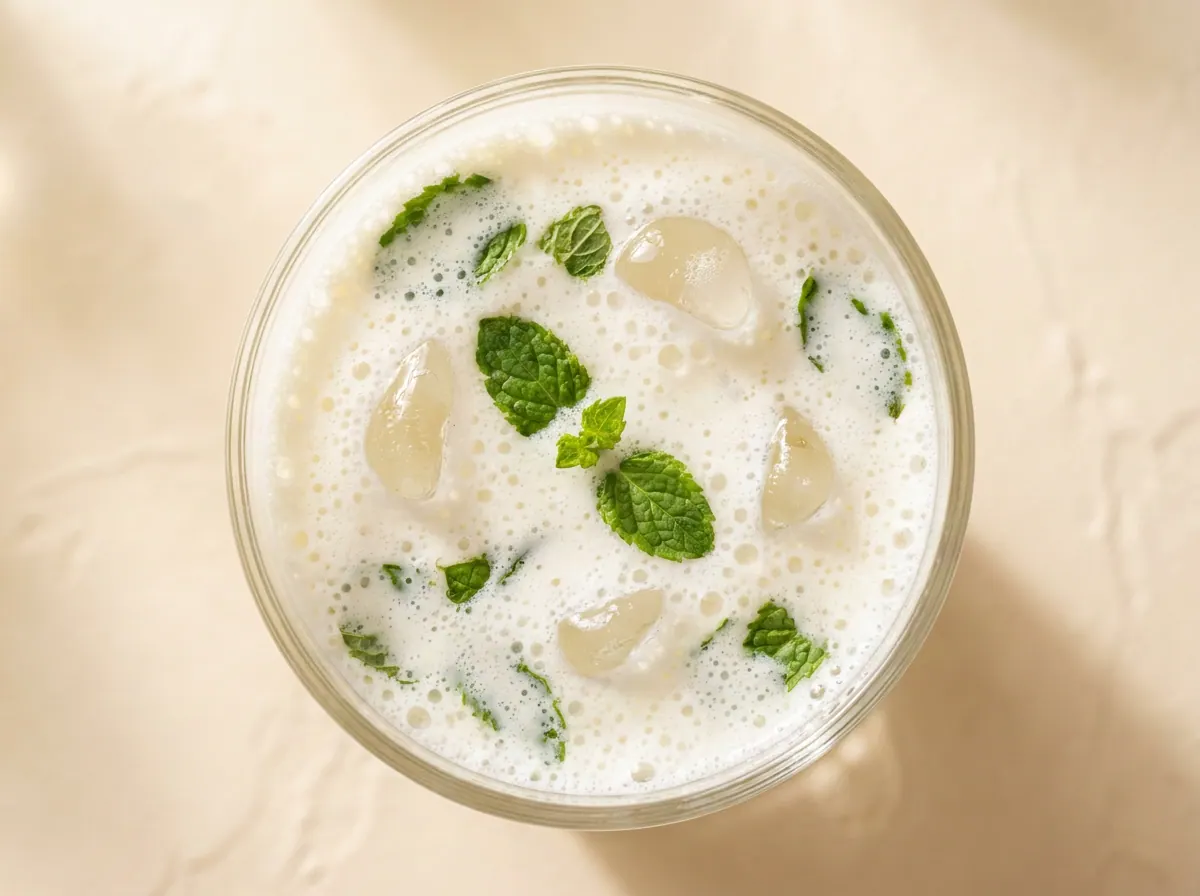
The quintessential refreshing Gulf drink — natural yogurt blended with mint and a pinch of salt, with no added sugar. Low GI of 27, and a gentle source of protein and calcium.
Sources: USDA · SFDA · Sydney University · our methodology · Updated on
The Story Behind This Drink
Yogurt with mint is the quintessential Gulf summer drink that needs no lengthy recipe. A homemaker in Taif or Al-Ahsa might whip it up in a minute, breaking thirst at lunch or after breakfast with its cool, refreshing texture.
Our philosophy for this drink is simple: natural yogurt, water, fresh mint, and a pinch of salt. No added sugar, no artificial flavors. The protein in the yogurt and its high protein-to-carbohydrate ratio are the secrets to its low glycemic index, as documented in the University of Sydney's database.
Preparation Steps
Wash the Mint
Wash the mint leaves thoroughly and remove any thick stems. Reserve two leaves for garnish.
1 min
Blend
In a blender: yogurt + cold water + eight mint leaves + pinch of salt. Blend for thirty seconds until smooth, homogenous, and refreshing.
1 min
Taste and Serve
Taste and adjust salt if needed. Pour over ice cubes and garnish with the reserved mint leaves. Serve immediately while cold, before the yogurt separates.
2 min
Impact on Blood Sugar
Glycemic Index (GI) measures how quickly blood sugar rises after consumption, and Glycemic Load (GL) measures the magnitude of the rise per serving. Both readings together provide a complete picture.
Glycemic Index
GI
27Low
Low0–55Medium56–69High70+
The average GI for plain, unsweetened yogurt is 27 according to a published review in the Journal of Nutrition, based on the University of Sydney database. This is a low value, suitable for individuals with diabetes and insulin resistance.
Glycemic Load
GL
3Low
Low0–10Medium11–19High20+
The glycemic load is very low because the serving contains only about 11 grams of carbohydrates, most of which is lactose, whose absorption is slowed by the yogurt's protein.
Nutritional Information
Per ServingCalculated USDA + University of Sydney
Calories95 kcal
Protein8 g
Carbohydrates11 g
Fat2 g
Calcium[To be populated from USDA]
Sodium140 mg
Troubleshooting
Four common issues can arise when preparing yogurt with mint, each with a simple solution. The solutions below are based on common Gulf kitchen experiences.
The yogurt came out thick like labneh, not a drink.
The water ratio is too low, or the yogurt used is already very thick. The drink needs a drinkable consistency, not one to be eaten with a spoon. Gradually add cold water while blending, about a quarter cup at a time, until you reach the desired thin, refreshing consistency that pours easily.
The taste is bland and lacks freshness.
Insufficient salt or mint. The pinch of salt in yogurt isn't for saltiness but to enhance flavor and balance acidity, so don't omit it. Add more fresh mint leaves; fresh blended mint provides an aroma that dried leaves cannot match.
The yogurt separated and water floated on top.
It was left standing after blending, causing natural separation. This doesn't spoil it; just shake or blend for a few seconds before drinking. It's best served immediately after preparation, as blended yogurt is best enjoyed fresh.
The mint left dark specks in the drink.
It was blended for too long, causing the leaves to break down. Blend for only thirty seconds, which is enough to break down the mint and release its aroma without turning it into dark particles. If you desire a completely smooth drink, strain it through a fine sieve after blending.
Storage and Make-Ahead
Refrigerator (4°C / 40°F)
Maximum 2 days in an airtight pitcher, shaking before each pour as it will naturally separate. Storage duration is based on general USDA recommendations for opened dairy products.
Freezer (-18°C / 0°F)
Not suitable. Freezing yogurt can cause the protein to separate from the water, resulting in a grainy texture after thawing. This drink is best enjoyed fresh.
Make-Ahead
Mix the yogurt, water, and salt in a pitcher and keep it chilled. Add fresh mint only when serving to preserve its aroma. Add ice cubes just before pouring to avoid diluting the drink.
Serving
Serve very cold in a tall glass over ice cubes. It's ideal with spicy or rich foods at lunch, as its mild acidity refreshes the palate and soothes the stomach.
Tested Ingredient Substitutions
Note: Yogurt with mint is naturally a simple drink, so avoid adding extraneous ingredients. The substitutions below are tested methods that preserve its spirit and nutritional value, suitable for ingredient availability variations.
Original Ingredient
Tested Substitution
Ratio
Taste Difference
Low-fat yogurt
Lactose-free yogurt
Same amount
Very similar, better for lactose intolerant individuals
Low-fat yogurt
Full-fat yogurt
Same amount
Richer and smoother, slightly higher in calories
Fresh mint
Dried mint
1 teaspoon instead of 10 leaves
Milder aroma, loses fresh green vibrancy
Pinch of salt
Pinch of ground cumin
Light pinch
A warm, earthy flavor in a traditional style
How Much Does It Make? Scaling Guide
Yogurt with mint is suitable for a single glass or a pitcher for guests. The constant rule: the ratio of yogurt to water is close to two to one, maintaining a refreshing, drinkable consistency rather than a thick one.
Number of servings
Yogurt
Water
Mint
1 (single glass)
150 g
0.5 cup
5 leaves
2 (base)
300 g
1 cup
10 leaves
4 (family)
600 g
2 cups
20 leaves
8 (entertaining)
1200 g
4 cups
1 small bunch
For larger gatherings: blend in batches to ensure proper consistency, keep in a chilled pitcher, and add ice and fresh mint only at the moment of serving.
EEINA Nutrition Tip
Unsweetened Yogurt is Blood Sugar Friendly: Avoid flavored and sweetened yogurt drinks in the market, as added sugar rapidly increases the glycemic load. Plain yogurt with mint and water provides refreshment and protein without any sugar, making it one of the most suitable drinks for those monitoring their blood sugar.
Add This Recipe to Your Plan
The EEINA app saves your favorite recipes, builds a smart shopping list, and tailors your plan to your goals. Start free, no credit card.
Yes, it has a low glycemic index (GI 27) and low glycemic load, provided it is made with unsweetened yogurt without added sugar.
What is the difference between 'laban' and 'yogurt' here?
In the Gulf, 'laban' refers to blended yogurt thinned with water to become a drink. We start with natural yogurt and add water to achieve the 'laban' consistency.
Should I add sugar or honey?
Yogurt with mint is a refreshing, savory drink, not sweet. Salt enhances its flavor. Adding sugar changes its nature and increases its glycemic load.
How long does it keep in the refrigerator?
Up to 2 days in an airtight pitcher, shaking before drinking. It's best prepared fresh when needed.