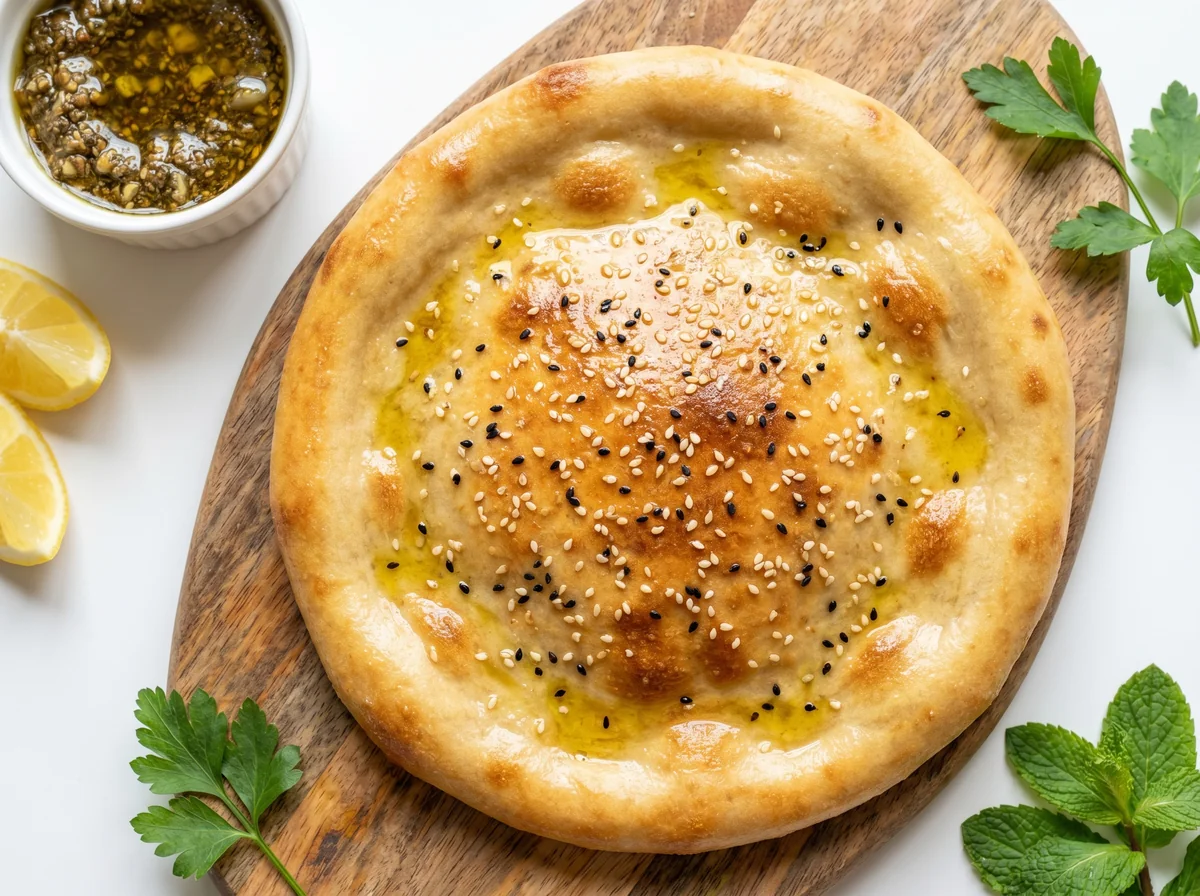
Madinah's famous tandoor flatbread — a yeasted dough rolled into a large round, sprinkled with sesame and nigella seeds, and baked in a tandoor until it puffs and browns. A celebrated Saudi breakfast bread, high glycemic load (white bread), contains gluten and sesame.
Tamees is a famous tandoor flatbread in Saudi Arabia, brought by Afghan and Bukharan immigrants to Madinah, where it became part of the local breakfast and spread across the Kingdom. It is rolled into a large round, sprinkled with sesame and nigella seeds, and baked in a hot tandoor until it puffs and browns.
It is sold in many varieties (plain, with cheese, with ghee, with cream) in popular tamees restaurants, especially at breakfast and Suhoor (pre-dawn Ramadan meal) time during Ramadan. It is a beautiful example of cultural blending in the cuisine of the Two Holy Cities.
Preparation Steps
Activate the yeast
Dissolve the yeast and sugar in the warm water and leave for five minutes until the yeast foams. Foam means the yeast is alive — its absence means old yeast that should be replaced before continuing.
Knead the dough
Combine the flour with the salt, add the yeast water and oil or milk gradually, and knead for about eight minutes until you have a soft, smooth dough that does not stick to your hands. A soft dough produces soft, puffy tamees.
Proof
Grease the bowl with a little oil, place the dough inside, cover with a cloth, and leave in a warm place for a full hour until it doubles in size. Adequate proofing is the secret to soft, puffy tamees — a warm spot speeds up the fermentation.
Shape
Divide the dough into balls and roll each ball into a large round or oval disk about half a centimetre to one centimetre thick. Leave them to rest for ten minutes after rolling so they prove slightly again and puff during baking.
Sprinkle and bake
Brush the top of each disk with a little water or oil and sprinkle on the sesame and nigella seeds. Bake on a hot baking stone or in an oven preheated to its highest setting (240°C) for about ten to twelve minutes until the tamees puffs, its edges brown, and it turns golden. High heat mimics the tandoor.
Serve
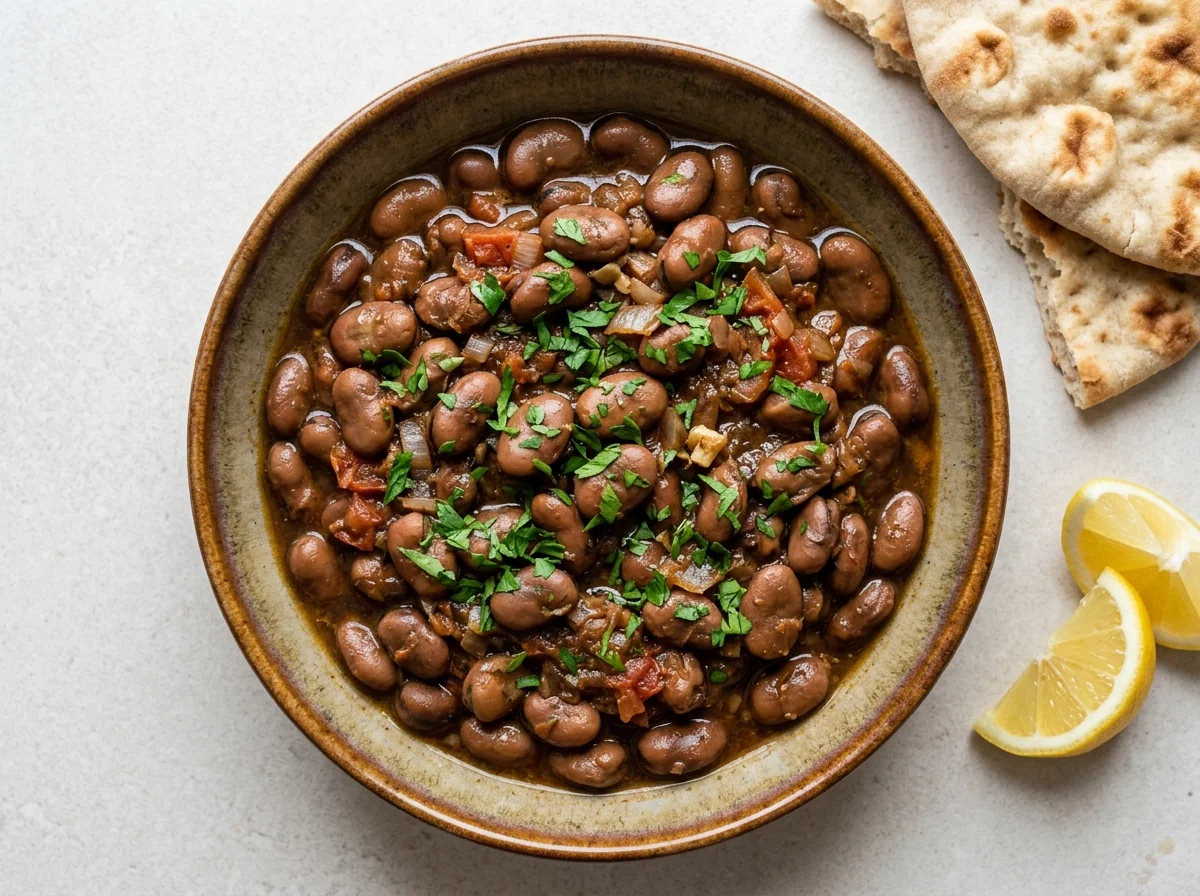
Serve tamees hot and fresh. It is eaten as a Saudi breakfast with Ful (stewed fava beans), honey and cream, cheese, or other accompaniments, and is sometimes filled with cheese or ghee. It is the tandoor bread brought by Afghan and Bukharan immigrants to Madinah, and has become one of the most famous popular breakfast breads in Saudi Arabia.
Blood Sugar Impact
The glycemic index (GI) measures how quickly a food raises blood sugar, while the glycemic load (GL) measures how much a full serving raises it. Together they give the complete picture.
Glycemic Index
GI
73High
Low0–55Medium56–69High70+
A low value (≤55) means a gradual rise in blood sugar — the most suitable range for diabetes and insulin resistance.
Glycemic Load
GL
50High
Low0–10Medium11–19High20+
Glycemic load reflects the impact of the full serving. To lower it: take half a serving, or pair the recipe with a source of protein and fiber.
Nutritional Information
Per ServingMakes 4 servings · one serving is about 170 g of raw ingredients
Calories438 kcal22%of Daily Value*
Protein11 g22%of Daily Value*
Carbohydrates73 g27%of Daily Value*
Fat11 g14%of Daily Value*
Fiber5 g18%of Daily Value*
Sodium489 mg21%of Daily Value*
* Percent Daily Values are based on a 2,000-calorie diet per FDA food-label reference values — your daily needs may be higher or lower. Values are derived from the recipe's ingredients via the USDA database.
Troubleshooting
The most common problems when preparing Tamees Bread, and how to fix them:
The tamees did not puff
Old yeast, insufficient proofing, or the oven was not hot enough. Make sure the yeast foams, proof until doubled, and bake in an oven preheated to its maximum heat — high temperature is what causes the bread to puff.
The tamees is hard and dry
It was overbaked or the dough was too stiff. Remove it as soon as the edges brown, keep the dough soft, and serve it fresh. White bread dries out quickly when stored uncovered.
The top is pale and did not brown
The oven temperature is too low. Preheat the oven to its maximum setting (240°C) with a baking stone if you have one — tamees needs high heat like a tandoor for the top to brown quickly.
The sesame and nigella seeds fall off
The top was not moistened first. Brush the top with a little water or oil before sprinkling, and press the seeds gently with your hands so they stick.
The dough sticks and tears when rolled
It is too soft, or not enough dusting flour. Dust the surface with a little flour, and let the dough rest after dividing before rolling so it relaxes and stops springing back.
Storage and Make-Ahead
Room temperature
Tamees is best eaten hot and fresh for the best flavor and texture. It keeps for a day in an airtight bag and can be reheated in a dry skillet or oven for a few minutes to restore its softness.
Freezer (-18°C)
Baked tamees freezes for a month when well wrapped and can be reheated from frozen in the oven. Ideal for preparing Ramadan breakfasts and Suhoor (pre-dawn Ramadan meal) in advance.
Advance preparation
Prepare the dough and proof it the night before, refrigerate it, then roll and bake fresh in the morning. Slow cold-proofing develops the flavor.
Reheating
Reheat tamees in a dry skillet or in the oven for a few minutes to restore its softness. A light sprinkle of water before reheating helps to re-moisten it if it has dried out.
Tested Ingredient Substitutions
Original Ingredient
Tested Substitute
Ratio
Flavor Difference
White flour
Replace a third with whole wheat flour
Same amount with slightly more water
Higher fiber and lower glycemic load, slightly denser texture.
Plain tamees
Tamees filled with cheese or ghee
To taste
Richer and more filling — raises calories and fat; choose low-fat cheese to lighten it.
Baking on stone/tandoor
Pre-heated baking tray in the oven
Same dough
A stone or pre-heated tray at maximum heat mimics the tandoor and gives good puffing.
How Much Does It Make? Scaling Guide
Number of loaves
Flour
Yeast
Sesame
2 (half recipe)
1 1/2 cups
1/2 tablespoon
1 spoon
4 (base)
3 cups
1 tablespoon
2 spoons
8 (large family)
6 cups
2 tablespoons
4 tablespoons
EEINA Nutrition Tip
Tamees is a white bread with a high glycemic load like other white breads. It is not problematic in itself but it is a starch, so balance it. For a balanced breakfast: serve it with protein (Ful, eggs, or cheese) and vegetables, and keep your portion moderate. To lighten it: mix a third of the flour with whole wheat flour to raise the fiber and lower the glycemic index slightly. Nigella seeds and sesame add value.
Add This Recipe to Your Plan
The EEINA app saves your favorite recipes, calculates them from their real ingredients, and shows your daily numbers toward your goal. Try it free now.
It was brought by Afghan and Bukharan immigrants to Madinah, where it became part of the local breakfast and spread throughout Saudi Arabia. It is a tandoor bread, and popular tamees restaurants are widespread, especially at breakfast and Suhoor (pre-dawn Ramadan meal) time.
How do I mimic a tandoor in a home oven?
Preheat the oven to its maximum setting (240°C) with a baking stone or metal tray inside, then bake the tamees on the hot surface. The direct high heat puffs the bread and browns the top like a tandoor.
Is tamees healthy?
It is a white bread with a high glycemic load — it is a starch. It is not problematic in itself but balance it: serve with protein and vegetables in a moderate portion, and mix some whole wheat flour in to raise the fiber and soften the glycemic index.
What types of tamees are there?
Plain, with cheese, with ghee, with cream and honey, and whole wheat tamees. Plain is the lightest; filled versions are richer and higher in calories. Usually eaten with Ful or a Saudi breakfast spread.