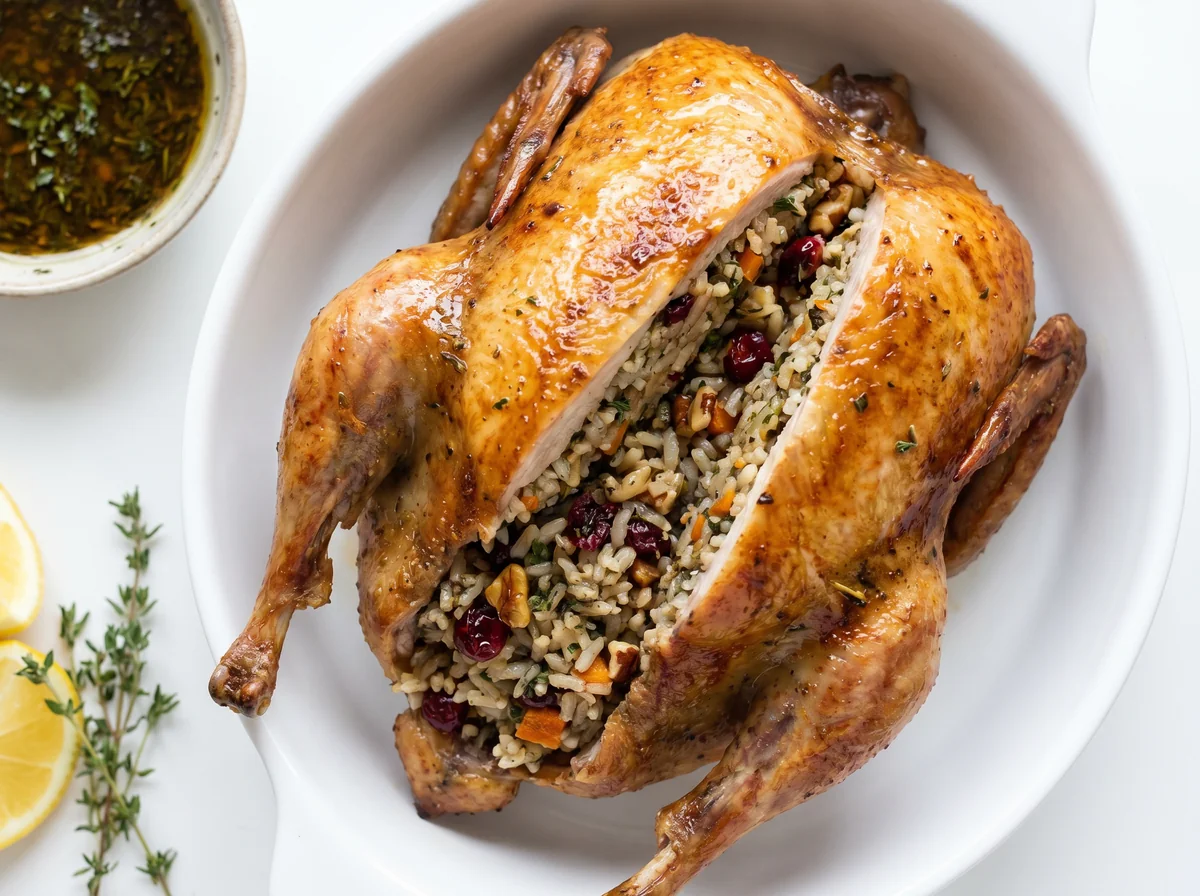
A luxurious Egyptian dish — pigeon stuffed with spiced freekeh, liver, and onions, simmered then crisped to a golden finish. Rich in protein and iron, low glycemic load, contains gluten (freekeh).
Stuffed pigeon is a time-honoured Egyptian luxury dish with a special place in Egyptian cuisine stretching back centuries. The pigeon is stuffed with freekeh (smoked green wheat) — or spiced rice with onion, liver, and aromatics — then poached and crisped until the skin crackles.
It is the crown of hospitality tables at weddings and major occasions, served proudly to distinguished guests as a gesture of respect and generosity. Pigeon breeding in traditional clay tower houses (pigeon towers) is an authentic rural Egyptian scene, and the dish reflects the depth of Egyptian culinary tradition and its love of stuffed, aromatic flavours.
Preparation Steps
Clean the pigeon and prepare the freekeh
Thoroughly clean the pigeon inside and out, rub with salt and lemon, then rinse well. Wash the freekeh, pick it over for debris, and soak briefly. Thorough cleaning of the pigeon is the foundation of a clean, delicious dish — freekeh is its distinctive filling with its characteristic smoky flavour.
Make the freekeh filling
Brown the onion in ghee, add the chopped pigeon livers if using and stir, then add the freekeh, baharat, cinnamon, cardamom, and salt. Stir the freekeh with the onion and spices until it absorbs the flavour. Add a little water or broth and let it cook to half-done — it will finish cooking inside the pigeon.
Stuff the pigeon
Fill the cavity of each pigeon with the spiced freekeh without overfilling (freekeh expands slightly), then seal the opening with a toothpick or kitchen twine to keep the stuffing in during cooking. Moderate filling and a good seal preserve the stuffing.
Poach
Place the stuffed pigeons in a pot with water, an onion, bay leaves, cardamom, and salt. Bring to a boil, then reduce to a gentle simmer for about 45 minutes until the pigeon is cooked through and the freekeh is done inside. Poaching cooks both the pigeon and the filling together and yields a cooking broth.
Brown
Lift the pigeons from the broth, pat dry, then sear them in ghee in a skillet or under the oven broiler until the skin is golden and crisp on all sides. Browning after poaching gives the skin its colour, crispness, and flavour — the hallmark of a great stuffed pigeon.
Serve
Serve the stuffed pigeon hot with its freekeh filling, alongside soup or salad and bread. This is a time-honoured Egyptian celebration dish, the crown of hospitality tables at weddings and occasions — presented with pride to honoured guests. It unites the tenderness of pigeon meat with the fragrant smoky freekeh filling, a symbol of Egyptian generosity and the abundant table.
Blood Sugar Impact
The glycemic index (GI) measures how quickly a food raises blood sugar, while the glycemic load (GL) measures how much a full serving raises it. Together they give the complete picture.
Glycemic Index
GI
39Low
Low0–55Medium56–69High70+
A low value (≤55) means a gradual rise in blood sugar — the most suitable range for diabetes and insulin resistance.
Glycemic Load
GL
11Medium
Low0–10Medium11–19High20+
Glycemic load reflects the impact of the full serving. To lower it: take half a serving, or pair the recipe with a source of protein and fiber.
Nutritional Information
Per ServingMakes 4 servings · one serving is about 370 g of raw ingredients
Calories535 kcal27%of Daily Value*
Protein51 g102%of Daily Value*
Carbohydrates37 g13%of Daily Value*
Fat21 g27%of Daily Value*
Fiber8 g29%of Daily Value*
Sodium141 mg6%of Daily Value*
* Percent Daily Values are based on a 2,000-calorie diet per FDA food-label reference values — your daily needs may be higher or lower. Values are derived from the recipe's ingredients via the USDA database.
Troubleshooting
The most common problems when preparing Egyptian Stuffed Pigeon with Freekeh, and how to fix them:
The freekeh did not cook through inside the pigeon
It was added completely raw or the cavity was over-filled. Cook the freekeh to half-done before stuffing, do not fill the cavity all the way (it needs space to cook and expand), and extend the poaching time until the filling is cooked through.
The stuffing came out during cooking
The cavity was not sealed, or it was over-stuffed. Seal the pigeon's opening with a toothpick or kitchen twine after stuffing and do not fill it more than needed — freekeh will expand and push out if the cavity is full and the opening is left open.
The pigeon meat is tough
An older, larger bird or insufficient poaching. Choose a small, young pigeon and poach over gentle heat until fully cooked before browning. A pressure cooker cuts the time and tenderises the meat.
The skin did not crisp up
Not dried before browning, or browned over too-low heat. Pat the pigeon dry after poaching, then sear in hot ghee or under a hot oven broiler until the skin turns golden and crisp. Wet skin will not crisp.
The pigeon has a strong smell
Not cleaned thoroughly. Clean the pigeon inside and out, rub with salt and lemon, and rinse; the aromatics (cinnamon and cardamom) in both the stuffing and the broth will fragrance the bird. Thorough cleaning is the foundation.
Storage and Make-Ahead
Refrigerator (4°C)
Stuffed pigeon keeps in an airtight container in the refrigerator for two to three days. Reheat in the oven (not the microwave) to restore some crispness to the skin. Store the poaching broth separately for reheating.
Freezer
Freeze the stuffed pigeon (after poaching, before browning) in an airtight container for two to three months. Thaw in the refrigerator, then brown fresh — freshly crisped skin is best.
Advance preparation
Prepare the stuffing, stuff the pigeon, and poach it ahead of time; refrigerate or freeze, then brown just before serving. This spreads the work and suits large-occasion cooking.
Food safety
Cook the pigeon until fully cooked through (poultry requires thorough cooking), clean thoroughly, half-cook the freekeh before stuffing, and do not leave the dish out of the refrigerator for more than two hours.
Tested Ingredient Substitutions
Original Ingredient
Tested Substitute
Ratio
Flavor Difference
freekeh filling
rice filling
same quantity
Rice is a common alternative filling (makes the dish gluten-free); freekeh has richer flavour, higher fibre, and a lower glycemic index
pigeon
small chicken (poussin) or quail
by size
Small chicken is a widely available, more affordable alternative using the same stuffing method; quail is similar in size and elegance to pigeon
browning in ghee
oven broiling
—
Reduces fat; broil the poached pigeon in a hot oven until the skin turns golden instead of pan-frying in ghee
How Much Does It Make? Scaling Guide
Servings
Pigeon
Freekeh
2 (half recipe)
2 pigeons
3/4 cup
4 (base)
4 pigeons
1 1/2 cups
8 (occasion)
8 pigeons
3 cups
EEINA Nutrition Tip
Stuffed pigeon is rich in high-quality protein and iron (pigeon meat and liver are excellent sources of iron for anaemia), and freekeh is a whole grain high in fibre with a low glycemic index, so the dish's glycemic load is low. The challenges are the fat from browning in ghee and the calories. To lighten it, brown the pigeon in the oven (broil) instead of pan-frying in ghee, stick to one pigeon, and balance it with a large salad. A nutritious, iron-rich occasion dish.
Add This Recipe to Your Plan
The EEINA app saves your favorite recipes, calculates them from their real ingredients, and shows your daily numbers toward your goal. Try it free now.
Poaching cooks the pigeon through, tenderises the meat, and cooks the stuffing inside it while producing a cooking broth. Browning afterwards gives the skin its golden colour, crispness, and flavour. Combining both methods guarantees tender, fully cooked meat with a deliciously crisp skin.
What is freekeh and why is it used to stuff pigeon?
Freekeh is green wheat harvested early and roasted (smoked), giving it a distinctive smoky flavour and high fibre content. It is the most prized traditional filling for stuffed pigeon in Egypt — its smoky flavour harmonises beautifully with pigeon meat.
Is stuffed pigeon healthy?
Rich in high-quality protein and iron (pigeon meat and liver are excellent for anaemia), and freekeh is a high-fibre whole grain with a low glycemic index. The challenge is the fat from browning and the calories. Broil instead of frying, serve one pigeon with a salad, and it becomes a nutritious, iron-rich dish.
How do I choose the right pigeon?
Choose a small, young, tender pigeon (young local pigeon) — older, larger birds have tougher meat that requires longer cooking. Ask the butcher to clean it, and clean it again at home with salt and lemon to remove any residual smell.