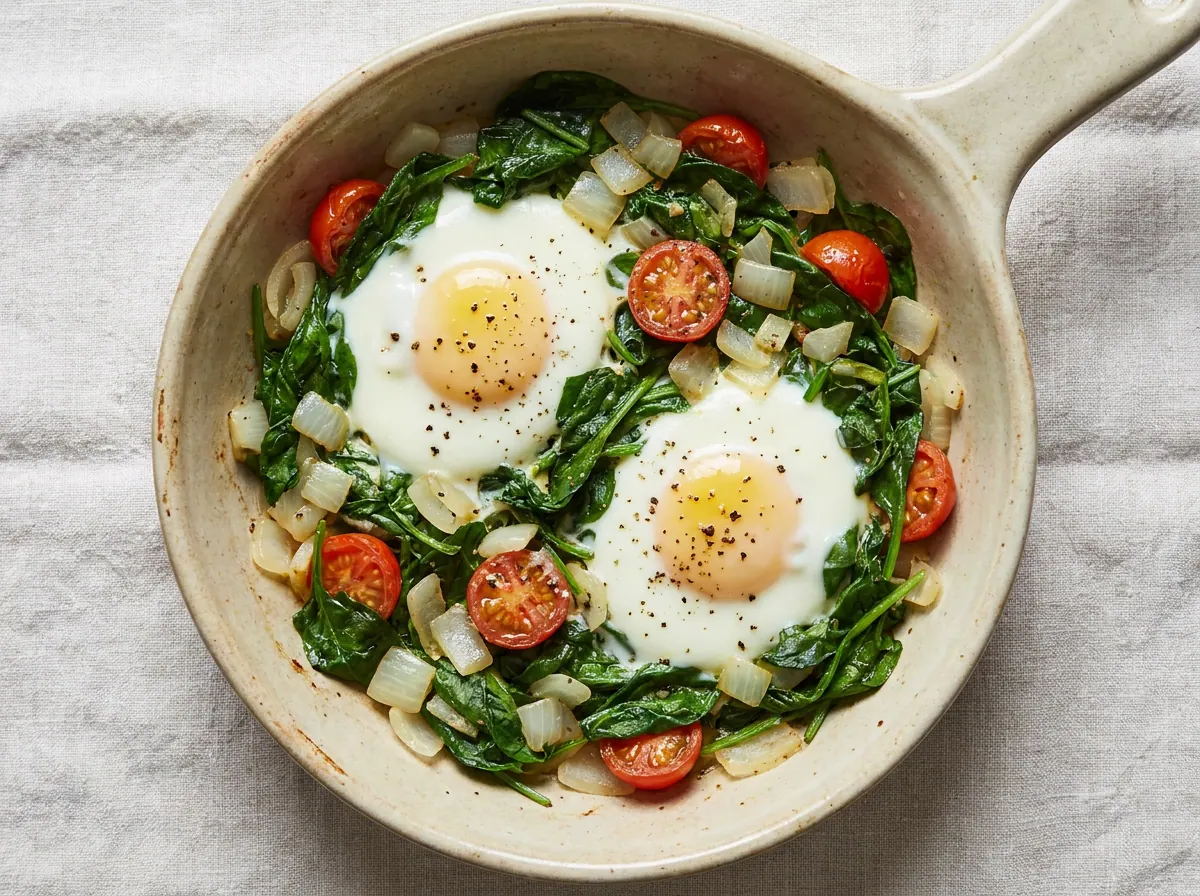
A warm, high-protein, low-carb breakfast — eggs nestled and cooked over a bed of spinach and tomatoes. GI 7, rich in iron, complete protein and vitamin B12.
Eggs with spinach is a quiet, homely breakfast that unites the complete protein of the egg with the iron and leafy greens of the spinach, all in a single pan ready in minutes. It is a favourite for those who start their day with a warm, satisfying meal without the burden of carbohydrates.
The nutritional cleverness here lies in the pairing: non-haem iron from spinach is hard for the body to absorb, but the vitamin C in fresh tomatoes multiplies that absorption several times within the same meal. The eggs contribute all nine essential amino acids, plus vitamin B12 and choline.
Preparation Steps
Sweat the onion
Heat the olive oil in a wide pan over medium heat, then add the chopped onion and stir until it softens and turns translucent.
Add garlic and cumin
Add the chopped garlic and cumin and stir for one minute until fragrant, without letting the garlic burn.
Cook the tomatoes
Add the diced tomatoes and stir until they soften and form a light sauce with a cohesive consistency.
Wilt the spinach
Add the spinach gradually and stir until fully wilted and most of the water has evaporated (about 3 to 4 minutes), then season with salt and pepper.
Crack in the eggs
Make four small wells in the vegetable mixture and crack one egg into each well.
Cover and cook
Cover the pan and leave over low heat until the egg whites are set but the yolks remain runny (about 5 to 7 minutes), or until the eggs reach 71°C internally if you prefer them fully cooked.
Serve
Serve immediately straight from the pan with whole-wheat bread, or on its own for a low-carb option.
Blood Sugar Impact
The glycemic index (GI) measures how quickly a food raises blood sugar, while the glycemic load (GL) measures how much a full serving raises it. Together they give the complete picture.
Glycemic Index
GI
7Low
Low0–55Medium56–69High70+
A low value (≤55) means a gradual rise in blood sugar — the most suitable range for diabetes and insulin resistance.
Glycemic Load
GL
1Low
Low0–10Medium11–19High20+
Glycemic load reflects the impact of the full serving. To lower it: take half a serving, or pair the recipe with a source of protein and fiber.
Nutritional Information
Per ServingMakes 2 servings · one serving is about 330 g of raw ingredients
Calories298 kcal15%of Daily Value*
Protein17 g34%of Daily Value*
Carbohydrates14 g5%of Daily Value*
Fat21 g27%of Daily Value*
Fiber4 g14%of Daily Value*
Sodium422 mg18%of Daily Value*
Potassium920 mg20%of Daily Value*
Phosphorus287 mg23%of Daily Value*
* Percent Daily Values are based on a 2,000-calorie diet per FDA food-label reference values — your daily needs may be higher or lower. Values are derived from the recipe's ingredients via the USDA database.
Troubleshooting
The most common problems when preparing Eggs with Spinach, and how to fix them:
Dish turned watery and the eggs are floating in liquid
The spinach released its water before it evaporated. Immediate fix: remove the lid and raise the heat slightly for a minute or two to evaporate the liquid. Next time: stir the spinach over medium heat until most of the liquid dries out before making the egg wells, and avoid piling more spinach than the pan can hold.
Egg whites did not set while the yolks hardened
Heat was too high, so the bottom cooked before the surrounding white set. Lower the heat and cover the pan — the trapped steam gently cooks the top of the eggs. If needed, sprinkle a spoonful of water around the sides before covering to create extra steam.
Garlic burned and turned bitter
It was added over high heat or left too long. Chopped garlic needs only one minute over medium heat until fragrant. Add it after the onion has softened, stir constantly, then follow immediately with the tomatoes to bring the pan's temperature down.
Spinach shrank to a tiny amount
This is completely normal. Fresh spinach loses about nine-tenths of its volume when cooked, so 200 g becomes roughly one cup. If you want a thicker base under the eggs, start with more spinach and use a wider pan.
Flavour flat and lacks depth
Salt was added too early or cumin is missing. Season after the spinach wilts, not before, so the saltiness does not concentrate in the evaporating liquid. Cumin and garlic are the depth of flavour here, and a pinch of freshly ground black pepper before serving lifts the dish. A light squeeze of lemon over the eggs also adds a refreshing brightness.
Yolk set completely and I wanted it runny
The eggs were left covered too long. Watch the whites through a glass lid and turn off the heat the moment the whites turn fully opaque while the yolks still look shiny and slightly wobbly — residual heat in the pan finishes the cooking. Runny yolks need about five minutes; fully set yolks about seven.
Storage and Make-Ahead
Refrigerator (4°C)
Cooked dish: up to two days maximum in an airtight container. Best eaten fresh — cooked eggs change texture after refrigerating. Safety rule: do not leave cooked eggs at room temperature for more than two hours, per the USDA two-hour rule.
Freezer (-18°C)
Not suitable. Cooked eggs and spinach turn rubbery after thawing. Make this dish and eat it the same day.
Advance preparation
Vegetable base: you can sauté the onion, garlic, tomatoes and spinach in advance and store for a day in the fridge. At serving time: reheat the vegetable base in the pan, make the wells, crack in fresh eggs and cook.
Serving
A dish to serve hot straight from the pan. Reheating sets the yolk and dries the eggs, so cook it when needed rather than preparing it fully in advance.
Tested Ingredient Substitutions
Original Ingredient
Tested Substitute
Ratio
Flavor Difference
Fresh spinach
Frozen spinach, well squeezed
About 150 g after squeezing
Closer flavour; requires firm squeezing to remove excess water
Spinach
Swiss chard or chopped beetroot leaves
Same weight
Slightly firmer leaves with an earthier flavour
Fresh tomatoes
2 tablespoons tomato paste with a splash of water
To the desired consistency
Deeper and more concentrated, darker colour, less vitamin C
Cumin
Sweet paprika or za'atar (thyme-sumac-sesame blend)
Same amount
A different flavour direction that still pairs well with eggs
Olive oil
Avocado oil
Same amount
More neutral flavour and tolerates higher heat
How Much Does It Make? Scaling Guide
Number of servings
Eggs
Spinach
Onion
Tomatoes
1 (individual)
2
100 g
0.5
0.5
2 (base)
4
200 g
Piece
Piece
4 (family)
8
400 g
2
2
6 (entertaining)
12
600 g
3
3
EEINA Nutrition Tip
Tomatoes are not decoration here: the vitamin C in fresh tomatoes multiplies absorption of the non-haem iron in spinach several times within the same meal. Do not leave them out if your goal is to raise iron intake — they are an absorption partner, not just a flavour.
Add This Recipe to Your Plan
The EEINA app saves your favorite recipes, calculates them from their real ingredients, and shows your daily numbers toward your goal. Try it free now.
Very suitable. Its GI is 15 and glycaemic load is 1 — the dish is nearly free of starchy carbohydrates and rich in protein, which slows any blood sugar rise.
Can I make it fully low-carb?
Yes. Serve it on its own without bread. Most of the few carbohydrates in the dish come from non-starchy vegetables, making it inherently low-carb (and keto-friendly).
Does frozen spinach work?
Yes. Thaw it and squeeze it well before adding, and use about 150 g after squeezing rather than 200 g fresh.
Why are tomatoes added?
Their vitamin C multiplies the absorption of non-haem iron from spinach several times within the same meal — plus they add flavour and texture.