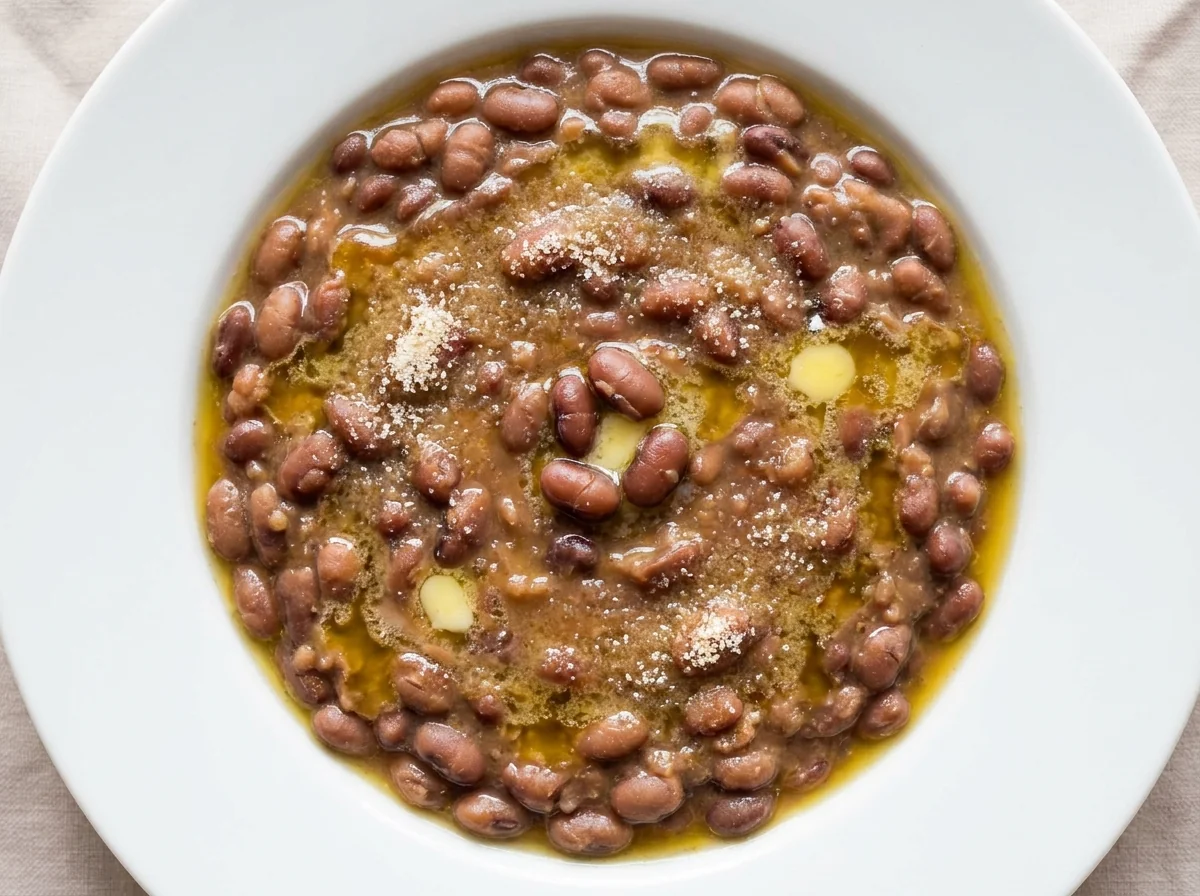
Cambuulo is one of Somalia's most time-honored and best-loved home dishes, in which red adzuki beans are cooked slowly for long hours until they soften and sweeten, then served with ghee and a sprinkle of sugar.
It takes pride of place on Ramadan tables and is eaten at breakfast or dinner; a popular dish simple in its ingredients yet rich in flavor, bringing together the sweet and the buttery in one warm bite.
Preparation Steps
Soaking the beans
Wash the adzuki beans and pick out any impurities, then soak them in plenty of water overnight or for at least eight hours until they swell, for this shortens the cooking time and makes them easier to digest.
Boiling the beans
Drain the soaking water and put the beans in a pot with clean water covering them by a finger's width, bring them to a boil, then lower the heat, cover the pot, and cook them slowly for about two hours until they are completely tender, adding hot water whenever it runs low.
Seasoning
When the beans are tender and their water has reduced, add the pinch of salt and mash part of them with the back of the spoon if we want a thicker texture, leaving the rest as whole beans.
Adding the ghee and sugar
Add the ghee or butter and the sugar and stir over low heat until the ghee melts and the beans are coated in its flavor, then taste and adjust the sweetness as desired.
Serving
Ladle the Cambuulo warm into bowls; a little sugar may be sprinkled on top, and it is usually served at breakfast or dinner and often takes pride of place on Ramadan tables in Somalia.
Blood Sugar Impact
The glycemic index (GI) measures how quickly a food raises blood sugar, while the glycemic load (GL) measures how much a full serving raises it. Together they give the complete picture.
Glycemic Index
GI
35Low
Low0–55Medium56–69High70+
A low value (≤55) means a gradual rise in blood sugar — the most suitable range for diabetes and insulin resistance.
Glycemic Load
GL
14Medium
Low0–10Medium11–19High20+
Glycemic load reflects the impact of the full serving. To lower it: take half a serving, or pair the recipe with a source of protein and fiber.
Nutritional Information
Per ServingMakes 4 servings · one serving is about 90 g of raw ingredients
Calories337 kcal17%of Daily Value*
Protein17 g34%of Daily Value*
Carbohydrates50 g18%of Daily Value*
Fat8 g10%of Daily Value*
Fiber11 g39%of Daily Value*
Sodium109 mg5%of Daily Value*
Potassium1347 mg29%of Daily Value*
Phosphorus226 mg18%of Daily Value*
* Percent Daily Values are based on a 2,000-calorie diet per FDA food-label reference values — your daily needs may be higher or lower. Values are derived from the recipe's ingredients via the USDA database.
Troubleshooting
The most common problems when preparing Somali Slow-Cooked Adzuki Beans with Ghee (Cambuulo), and how to fix them:
The beans are still hard after long cooking
Soak them longer next time, and delay adding the salt and sugar until the end of cooking, for adding them early slows the beans' softening.
The dish is dry
Add hot water gradually during boiling, for the beans drink up water over time and need constant adjustment.
The taste is sweeter than needed
Reduce the sugar and add an extra pinch of salt, for the balance between sweet and salty brings out the beans' flavor.
Storage and Make-Ahead
Refrigerator
Keep it in an airtight container for up to three days, and reheat it with a splash of water over low heat until it becomes soft again.
Freezing
Freeze the cooked beans without ghee for up to two months, and add the ghee and sugar after reheating so the flavor stays fresh.
Tested Ingredient Substitutions
Original Ingredient
Tested Substitute
Ratio
Flavor Difference
adzuki beans
small red cowpeas or red kidney beans
same weight, 300 g
Adzuki is smaller and sweeter, and red kidney beans are the closest available alternative.
ghee or butter
sesame oil (sliid)
same weight, 30 g
Sesame oil is a traditional Somali alternative that makes the dish plant-based, but it contains sesame.
sugar
mashed dates
as desired
Dates give natural sweetness and extra fiber.
How Much Does It Make? Scaling Guide
Ingredient
1/2 quantity
Quantity (base)
Double
Adzuki beans
150 g
300 g
600 g
Ghee or butter
15 g
30 g
60 g
Sugar
10 g
20 g
40 g
Salt
0.5 g
1 g
2 g
EEINA Nutrition Tip
A long overnight soak shortens the cooking time and makes the beans softer and easier to digest. For a lighter version, reduce the sugar or replace it with a few mashed dates, so the sweetness stays natural.
Add This Recipe to Your Plan
The EEINA app saves your favorite recipes, calculates them from their real ingredients, and shows your daily numbers toward your goal. Try it free now.
Small, sweet-tasting red beans known worldwide as adzuki, they are the basis of Somali Cambuulo and are notable for their richness in fiber and plant protein.
Is Cambuulo sweet or savory?
It usually leans toward a gentle sweetness with ghee and sugar, though some serve it savory with sesame oil and no sugar, and the Somali palate brings together the sweet and the buttery.
When is Cambuulo served?
It is served at breakfast or dinner, and appears often in Ramadan where it takes pride of place on the tables as a filling, fiber-rich meal.