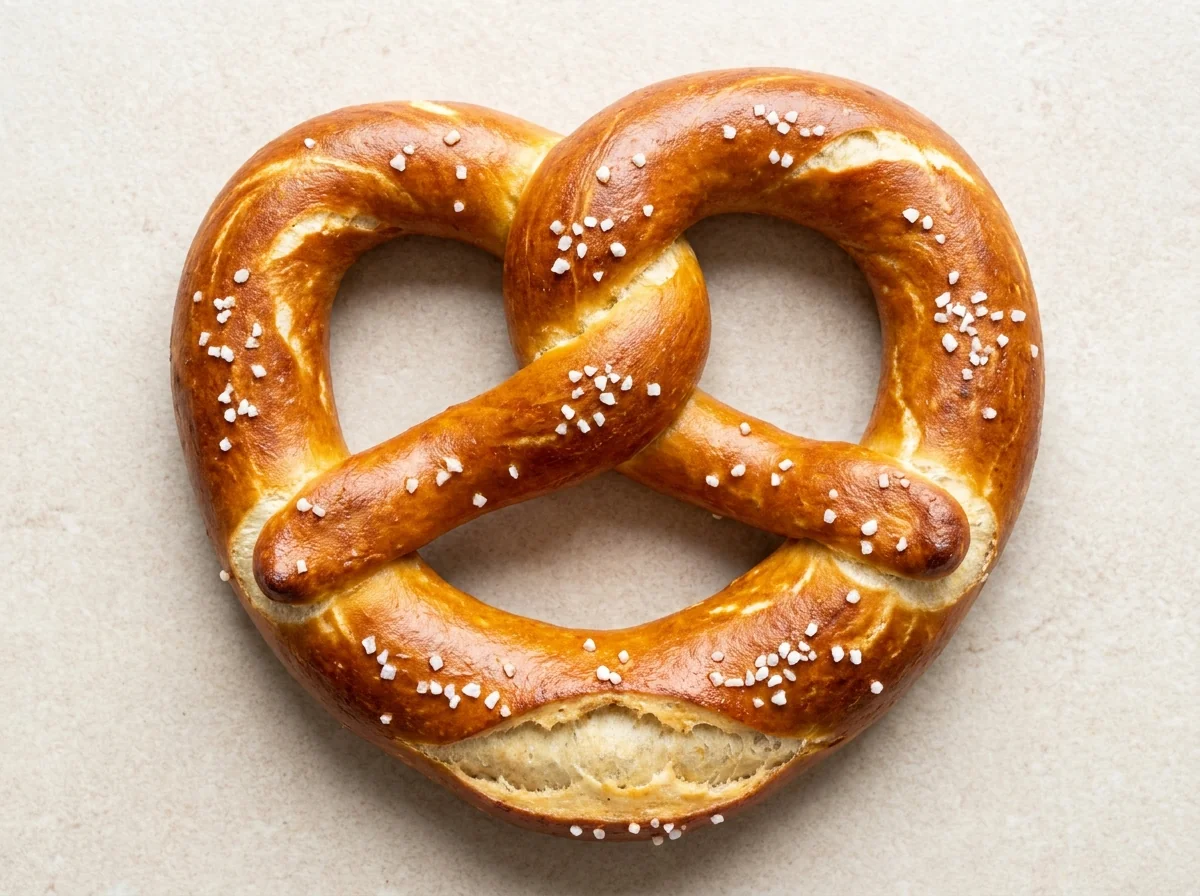
The knotted pastry is one of the symbols of German cuisine, sold in markets and festivals soft and hot.
Its twisted knot and shiny brown crust are its unmistakable hallmark, and both are the result of its alkaline dipping before baking.
Preparation Steps
Knead the dough
Mix the flour, salt, and sugar, then add the warm water with the yeast and oil dissolved in it, and knead for eight minutes until the dough becomes smooth and soft and does not stick, as the soft dough gives a tender crumb.
Ferment the dough
Cover the dough and leave it for an hour until it doubles in size, as fermentation gives it lightness and flavor.
Shape the knot
Divide the dough into eight pieces, and roll each piece into a long rope about fifty centimeters, then twist the two ends and fasten them onto the arch to form the well-known pretzel knot.
Prepare the alkaline dipping water
Boil the water and dissolve the baking soda in it carefully, as it may foam. This alkaline water is the secret to the pretzel's brown color and its distinctive crust flavor, as it chemically changes the dough surface so it browns quickly in the oven.
Dip the knots
Lower each knot into the boiling alkaline water for about thirty seconds, then lift it with a strainer, as this short dip is enough to change the surface without cooking the dough.
Sprinkle and bake
Arrange the knots on a tray, sprinkle them with the coarse salt while they are wet, then bake them in a preheated oven at 220 degrees Celsius for about 12 to 15 minutes until they gain a deep shiny brown color.
Blood Sugar Impact
The glycemic index (GI) measures how quickly a food raises blood sugar, while the glycemic load (GL) measures how much a full serving raises it. Together they give the complete picture.
Glycemic Index
GI
75High
Low0–55Medium56–69High70+
A low value (≤55) means a gradual rise in blood sugar — the most suitable range for diabetes and insulin resistance.
Glycemic Load
GL
35High
Low0–10Medium11–19High20+
Glycemic load reflects the impact of the full serving. To lower it: take half a serving, or pair the recipe with a source of protein and fiber.
Nutritional Information
Per ServingMakes 8 servings · one serving is about 295 g of raw ingredients
Calories256 kcal13%of Daily Value*
Protein7 g14%of Daily Value*
Carbohydrates49 g18%of Daily Value*
Fat3 g4%of Daily Value*
Fiber2 g7%of Daily Value*
Sodium923 mg40%of Daily Value*
Potassium75 mg2%of Daily Value*
Phosphorus73 mg6%of Daily Value*
* Percent Daily Values are based on a 2,000-calorie diet per FDA food-label reference values — your daily needs may be higher or lower. Values are derived from the recipe's ingredients via the USDA database.
Troubleshooting
The most common problems when preparing Soft Knotted Pastry (Pretzel), and how to fix them:
The color is pale, not brown
The dipping water was not alkaline enough; increase the baking soda and make sure it is boiling at the time of dipping.
The knot came apart in the oven
The two ends were not fastened well; press them firmly onto the arch and wet them a little so they stick.
The crust is soft, not distinctive
We shortened the dipping time; make sure to give a full thirty seconds in boiling water.
The crumb is dense
The dough did not ferment enough; give it more time until it actually doubles in size.
Storage and Make-Ahead
Room temperature
Stays soft for a few hours on its day; best eaten fresh for the best texture.
Freezing
Freeze them baked in an airtight bag for up to two months, and warm them in the oven before serving.
Reheating
Warm them in an oven at 180 degrees Celsius for five minutes to restore their warmth and tenderness.
Tested Ingredient Substitutions
Original Ingredient
Tested Substitute
Ratio
Flavor Difference
Baking soda
The same baking soda baked a little
Same amount
Baking the soda on a tray at low heat increases its alkalinity so the color darkens more.
Coarse salt
Medium-grain sea salt
Same amount
Choose a visible grain that stays on the surface and does not dissolve.
All-purpose flour
Bread flour
1 to 1
Gives a chewier crumb and texture, and both are good.
Vegetable oil
Light olive oil
Same amount
Gives a slightly deeper flavor without changing the texture.
How Much Does It Make? Scaling Guide
Ingredient
2 servings
4 servings (base)
8 servings
Flour
125 g
250 g
500 g
Warm water
75 ml
150 ml
300 ml
Instant yeast
2 g
4 g
7 g
Salt
2 g
5 g
9 g
EEINA Nutrition Tip
The alkaline dip in baking-soda water is what gives the pretzel its deep brown color and distinctive flavor; the alkalinity speeds up the browning reaction on the surface so it colors quickly before the crumb dries.
Add This Recipe to Your Plan
The EEINA app saves your favorite recipes, calculates them from their real ingredients, and shows your daily numbers toward your goal. Try it free now.
Yes, it is the baking soda known in the kitchen, and its amount in the dipping water is small and its effect stays only on the surface; it is the safe home alternative to the strong industrial alkali.
Why do we dip the dough before baking?
The alkaline dip changes the surface of the dough so it browns quickly and gains its distinctive color and flavor; without it the bread stays pale and ordinary in taste.
Can I fill them?
Yes, serve them alongside a light sauce, or braid a small filling inside before knotting, but keep the filling simple so the knot holds.