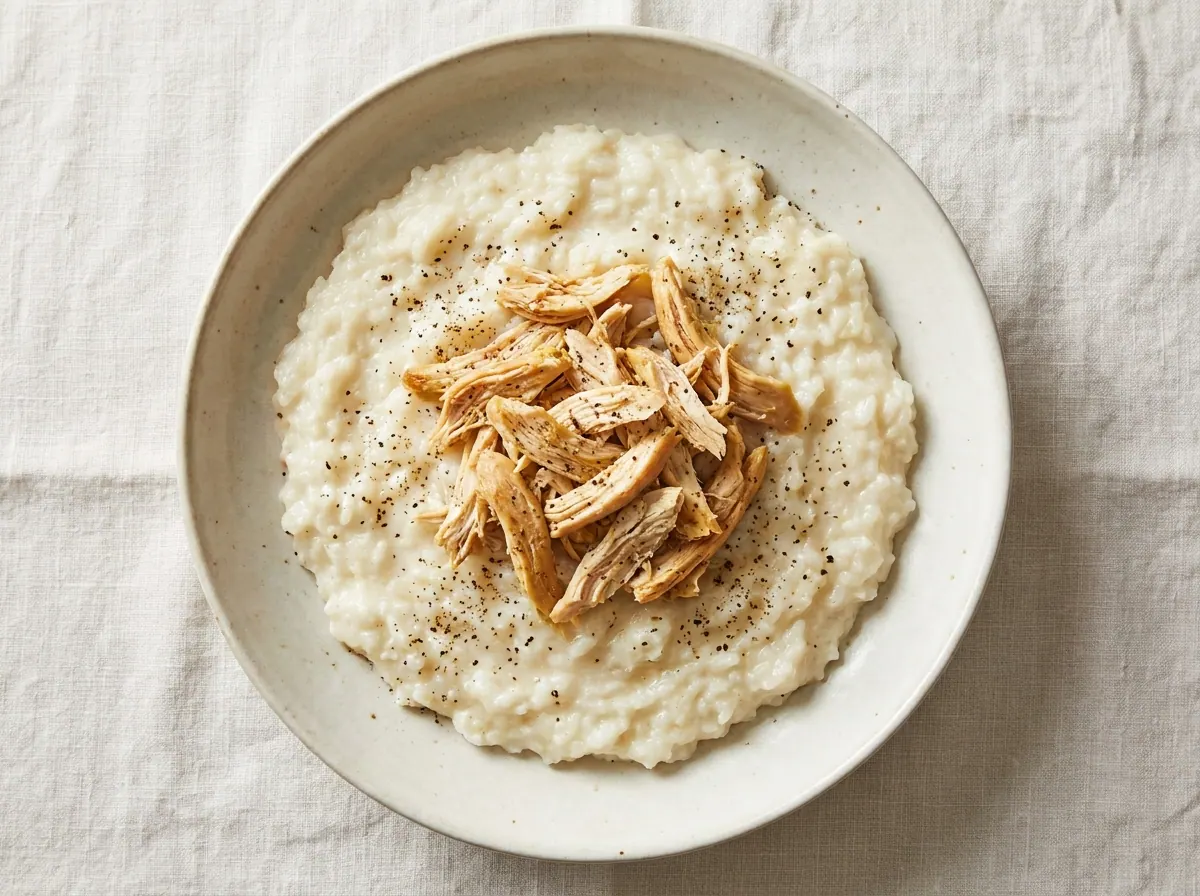
The classic Hijazi Saleeg: short-grain rice cooked in milk and broth until creamy and porridge-soft, topped with bone-in chicken seasoned with cardamom and mastic. A lighter version using skinless chicken and low-fat milk. GI 64, high.
Saleeg is a venerable Hijazi dish served at grand feasts, Ramadan tables, and celebrations in Mecca, Jeddah, and Taif. Its secret lies in the short-grain rice cooked in milk and fragrant broth until it breaks down into a creamy, almost melting softness, topped with chicken or lamb seasoned with cardamom, mastic, and cinnamon.
We present it here in a lighter version: low-fat milk instead of full-fat, skinless chicken instead of fattier pieces, and optional light ghee. This preserves the spirit of the dish and its warm family appeal while reducing saturated fat without touching the authentic Hijazi flavour.
Preparation Steps
Poach the chicken
Wash the chicken and place it in a wide pot, cover with water, and bring to a medium heat.
Season the broth
Add the cardamom, bay leaves, mastic, cinnamon, and salt. Skim the foam from the surface regularly to keep the broth clear.
Cook the chicken through
Cover and cook until the chicken is fully cooked (35–45 minutes), then lift out the chicken pieces, strain the broth, and reserve.
Prepare the chicken
Remove the chicken skin (for the lighter version). The pieces can be briefly browned in the oven for a golden colour without extra oil.
Cook the rice in the broth
Drain the soaked rice and add it to 4 cups of strained, boiling broth. Cook over low heat.
Add the milk
Gradually add the milk with constant stirring until the rice absorbs the liquid and becomes creamy and soft (25–30 minutes).
Rest and adjust
Adjust the salt and let the Saleeg rest for a few minutes until the texture firms up slightly.
Serve
Serve the rice on a wide platter topped with the chicken, with an optional light drizzle of ghee, a generous green salad, and a bowl of chilli sauce on the side.
Blood Sugar Impact
The glycemic index (GI) measures how quickly a food raises blood sugar, while the glycemic load (GL) measures how much a full serving raises it. Together they give the complete picture.
Glycemic Index
GI
64Medium
Low0–55Medium56–69High70+
A low value (≤55) means a gradual rise in blood sugar — the most suitable range for diabetes and insulin resistance.
Glycemic Load
GL
23High
Low0–10Medium11–19High20+
Glycemic load reflects the impact of the full serving. To lower it: take half a serving, or pair the recipe with a source of protein and fiber.
Nutritional Information
Per ServingMakes 5 servings · one serving is about 645 g of raw ingredients
Calories545 kcal27%of Daily Value*
Protein46 g92%of Daily Value*
Carbohydrates41 g15%of Daily Value*
Fat21 g27%of Daily Value*
Fiber5 g18%of Daily Value*
Sodium630 mg27%of Daily Value*
Potassium512 mg11%of Daily Value*
Phosphorus367 mg29%of Daily Value*
* Percent Daily Values are based on a 2,000-calorie diet per FDA food-label reference values — your daily needs may be higher or lower. Values are derived from the recipe's ingredients via the USDA database.
Troubleshooting
The most common problems when preparing Hijazi Saleeg with Chicken, and how to fix them:
The milk curdled and separated from the rice
The milk was added over high heat or all at once, causing the protein to coagulate before it could disperse. Add the milk gradually over low heat with constant stirring. If it starts to curdle: remove from heat immediately and stir vigorously, then add two tablespoons of warm water to loosen the consistency.
The rice is gluey like paste rather than creamy
Too much liquid or too much stirring. Saleeg should have a creamy, cohesive texture — not watery and not pasty. Use four cups of broth to two cups of rice, stir gently from time to time rather than constantly (constant stirring releases starch and makes it gummy). Allow it to rest for five minutes to firm up.
The broth is bland with no fragrance
Too few spices, or added too late. Cardamom, mastic, cinnamon, and bay leaves must go in at the very start of poaching the chicken to infuse the broth throughout cooking. Mastic in particular gives the distinctive Hijazi aroma and must not be omitted. If cooked without spices: there is no adequate remedy afterwards — flavour is built in the broth, not added to the rice.
The chicken is dry and falling apart
Cooked too long over high heat. Bone-in chicken cooks in 35–45 minutes over a moderate, gentle heat. Test doneness by the ease with which the meat pulls from the bone, and lift it out as soon as it is done, keeping it warm. Leaving it boiling dries it out. Browning in the oven is for colour only — just a few minutes.
The dish is greasy and heavy on the stomach
Full-fat milk, chicken skin, and too much ghee were used. For the lighter version: use low-fat milk, remove all the chicken skin, and use only a light optional drizzle of ghee or skip it altogether. These adjustments reduce saturated fat while keeping the Hijazi flavour, and are best for those watching heart health.
Too salty
Salt was added to both the broth and the rice, building up. Salt the broth moderately first, and taste the rice before adding any more salt. If too salty: add a little unsalted milk or diluted broth — this balances the saltiness without diluting the fragrant flavour.
Storage and Make-Ahead
Refrigerator (4°C)
Saleeg and chicken: two to three days in an airtight container, rice and chicken stored separately is ideal. The rice thickens in the fridge; add a splash of milk or broth when reheating to restore the creamy texture.
Freezer (-18°C)
Poached chicken freezes well for one month. The rice with milk is less suitable for freezing as its texture may change after thawing. Best eaten fresh.
Advance preparation
Broth: poach the chicken and strain the broth a day ahead; refrigerate both. Rice soaking: at least one hour in advance; drain immediately before cooking. Cooking the rice: best done shortly before serving to keep it creamy.
Reheating
Reheat over low heat with a splash of milk or broth and gentle stirring until the creamy texture returns. Reheat the chicken to an internal temperature of 74°C. Do not leave the dish outside the refrigerator for more than two hours.
Tested Ingredient Substitutions
Original Ingredient
Tested Substitute
Ratio
Flavor Difference
Bone-in chicken
Bone-in lean lamb
Same weight
The most traditional Saleeg version, deeper flavour and higher fat; requires longer poaching time
Full-fat milk
Low-fat milk
Same quantity
Lighter in fat while maintaining the creamy texture — the choice endorsed here for heart health
Milk
Lactose-free milk
Same quantity
Suitable for lactose intolerance; taste is closest to the original with a slight sweetness
Short-grain Egyptian rice
Round-grain rice (sushi or risotto rice)
Same quantity
Very similar creamy texture; virtually identical results
Ghee
Olive oil or omit
1 teaspoon or none
Lower in saturated fat; lighter flavour; minimal difference in richness
How Much Does It Make? Scaling Guide
Number of servings
Short-grain rice
Bone-in chicken
Strained broth
Milk
3 (small family)
1.25 cups
500 g
2.5 cups
1.25 cups
5 (base)
2 cups
800 g
4 cups
2 cups
8 (large table)
3.25 cups
1.3 kg
6.5 cups
3 cups
12 (entertaining)
5 cups
2 kg
10 cups
5 cups
EEINA Nutrition Tip
Saleeg is naturally high in carbohydrates: the very soft rice raises blood sugar quickly. That does not mean you have to avoid it — just enjoy a moderate portion alongside plenty of chicken and a large green salad in the same meal. The protein and fibre slow sugar absorption and make the meal more balanced.
Add This Recipe to Your Plan
The EEINA app saves your favorite recipes, calculates them from their real ingredients, and shows your daily numbers toward your goal. Try it free now.
What is the difference between Saleeg, Mandi (Yemeni-Saudi smoked meat and rice), and Kabsa (Saudi spiced rice dish)?
Saleeg is short-grain rice cooked in milk and broth until it breaks down into a creamy porridge-soft texture, while Mandi (Yemeni-Saudi smoked meat and rice) uses separate long-grain basmati cooked with smoke, and Kabsa (Saudi spiced rice dish) features firm basmati grains with spices. Saleeg is the creamiest and softest of the three.
Is Saleeg suitable for people with diabetes?
It has a high glycemic index and glycemic load, so consume only a small portion alongside the chicken protein and a large green salad to slow sugar absorption. People with diabetes should ideally consult a dietitian to determine the right portion size for their plan.
Can I use basmati rice instead of short-grain?
Basmati will not give the distinctive creamy, soft texture of Saleeg — its grains stay separate. Short-grain Egyptian rice or a round grain such as sushi or risotto rice is best, as they release the starch needed for the texture.
How do I make it lighter on the heart?
Remove all the chicken skin, use low-fat milk, reduce or skip the ghee, and replace stock cubes with natural broth to reduce sodium. These adjustments cut saturated fat and salt while preserving the Hijazi flavour.
Sources: University of Sydney · Gulf GSO · Our methodology · Updated on