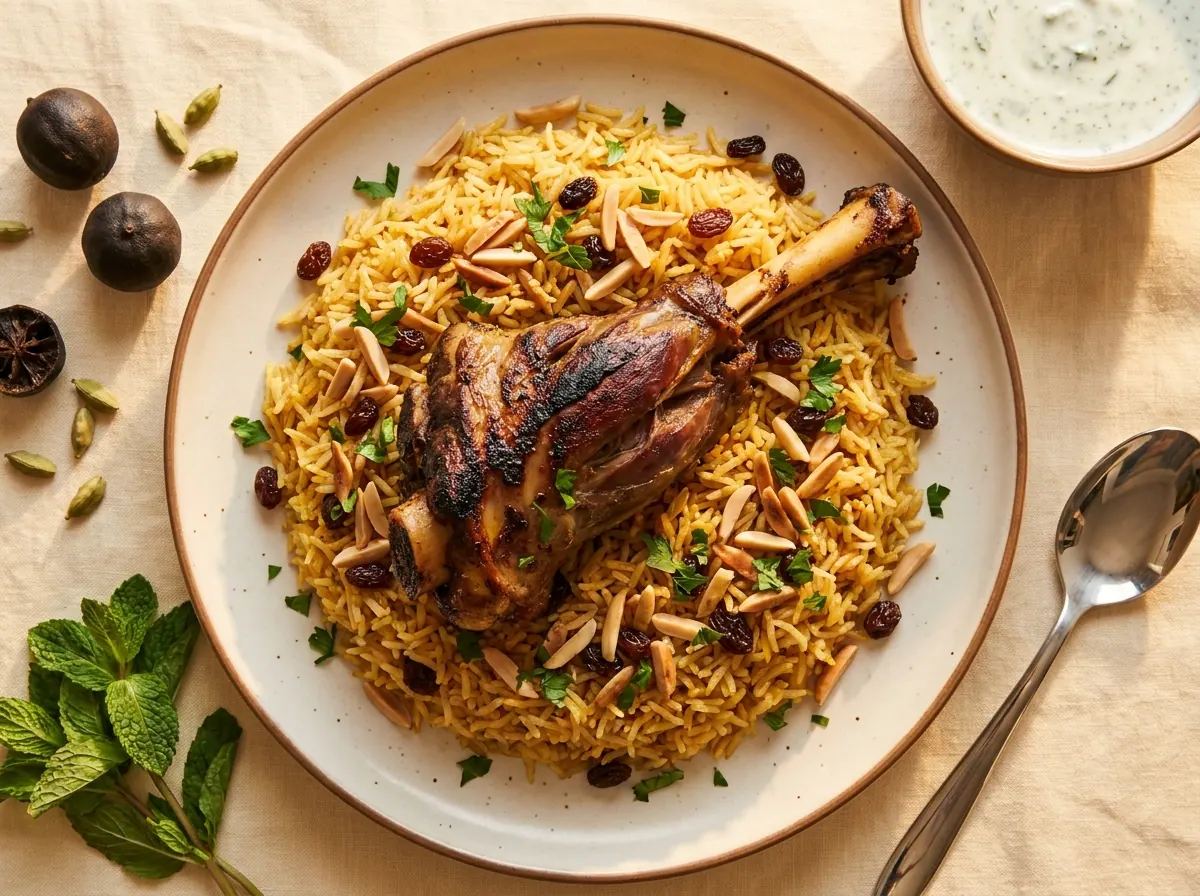
Traditional Saudi lamb mandi with the authentic smoking technique, plus a light version of the ghee (two tablespoons instead of half a cup). The same Hejazi smoked flavor, 22% fewer calories.
Mandi is a dish of Yemeni origin that spread in Saudi Arabia through the Hejaz, then the rest of the regions. Its secret: smoking with a lit piece of charcoal to give a unique flavor that no spice can provide.
Our version uses lamb free of excess fat, long-grain basmati rice, and a reduced amount of ghee. The taste is almost identical, and the health benefit is large.
Preparation Steps
Season the meat and soak the rice
Season the meat pieces with the mandi spice, a pinch of salt, and a quarter cup of lemon juice, and leave them in the fridge for an hour for the flavor to penetrate. Meanwhile, soak the basmati rice for half an hour in cold water, then drain it.
Brown the meat
Place the meat pieces in a pot over medium heat without water and stir them until their water dries and the surface browns a little, as this deepens their flavor like in authentic mandi. Then add the chopped onion and minced garlic and stir until the onion wilts.
Boil the meat
Add the pierced black limes, the cardamom, clove, and cinnamon, and three cups of water or meat broth, and let it boil, then lower the heat and cook it for about forty-five minutes until the meat is tender. Be sure to skim off the foam at the beginning so the broth stays clear.
Cook the rice
Take out the meat and keep it warm, strain the broth and adjust its salt, then add the soaked rice with a pinch of saffron and the two tablespoons of ghee, cover the pot, and cook it over low heat for about twenty minutes until the rice absorbs the broth.
Smoke the dish
Arrange the meat over the rice in the tray, then light the piece of charcoal until it turns red and place it in a small metal cup in the middle of the dish, drizzle a little ghee over it so the smoke rises, and cover the tray tightly for five minutes. This step is the secret to mandi's smoked flavor.
Serve it
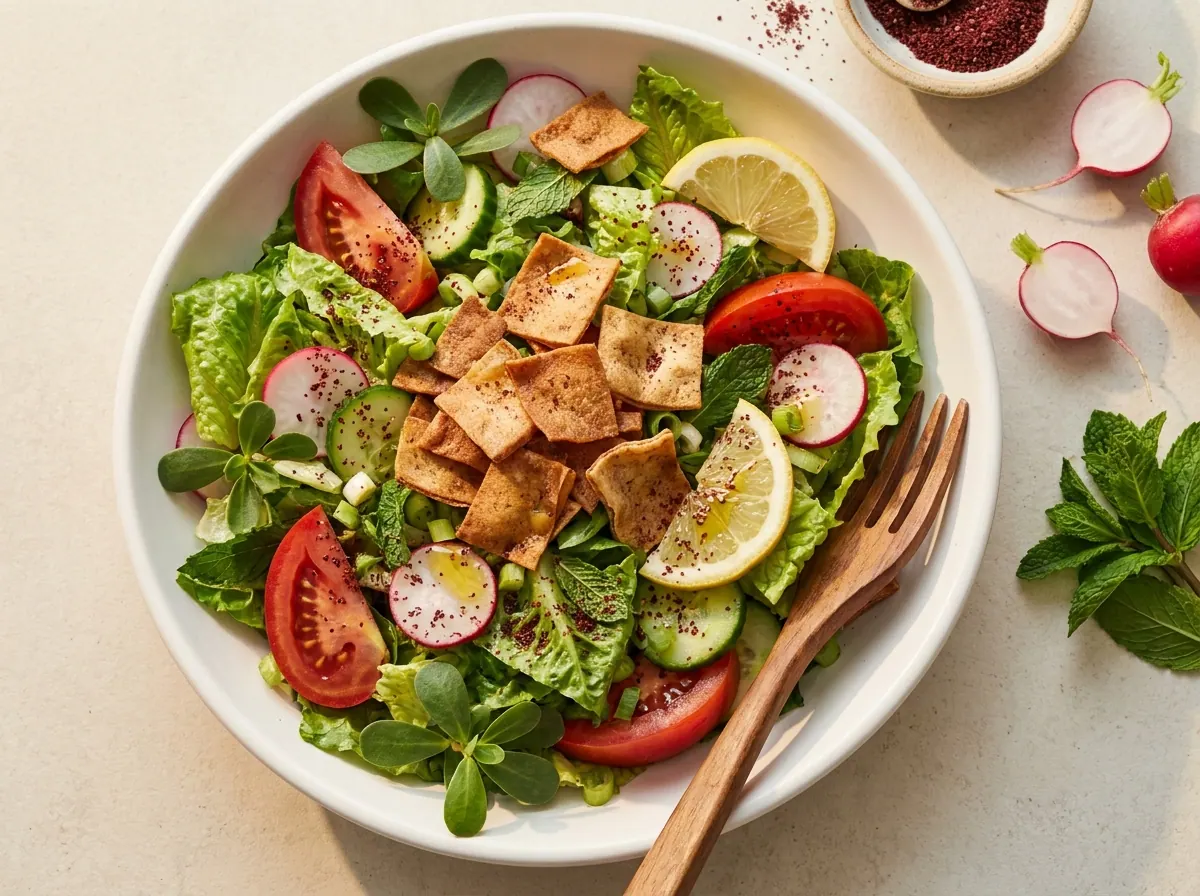
Carefully lift out the cup and the charcoal, stir the rice gently, then serve the meat over it with daqqus salad and yogurt. Be careful not to smoke it for longer than five minutes so the bitter flavor does not take over.
Blood Sugar Impact
The glycemic index (GI) measures how quickly a food raises blood sugar, while the glycemic load (GL) measures how much a full serving raises it. Together they give the complete picture.
Glycemic Index
GI
69Medium
Low0–55Medium56–69High70+
A low value (≤55) means a gradual rise in blood sugar — the most suitable range for diabetes and insulin resistance.
Glycemic Load
GL
36High
Low0–10Medium11–19High20+
Glycemic load reflects the impact of the full serving. To lower it: take half a serving, or pair the recipe with a source of protein and fiber.
Nutritional Information
Per ServingMakes 6 servings · one serving is about 365 g of raw ingredients
Calories559 kcal28%of Daily Value*
Protein30 g60%of Daily Value*
Carbohydrates53 g19%of Daily Value*
Fat25 g32%of Daily Value*
Fiber1 g4%of Daily Value*
Sodium536 mg23%of Daily Value*
Potassium553 mg12%of Daily Value*
Phosphorus321 mg26%of Daily Value*
* Percent Daily Values are based on a 2,000-calorie diet per FDA food-label reference values — your daily needs may be higher or lower. Values are derived from the recipe's ingredients via the USDA database.
Troubleshooting
The most common problems when preparing Lamb Mandi with Basmati, and how to fix them:
The meat is tough and did not cook enough
You chose an unsuitable cut of meat, or the cooking time was insufficient. Mandi needs medium-fat cuts (local lamb from the leg or shoulder) that cook slowly. According to USDA, fully cooked halal meat needs an internal temperature of at least 71°C for safety [1], and the actual cooking time over low heat is two to three hours for local cuts.
The rice lost the distinctive smoked flavor
The final charcoal smoking was not done. The smoked flavor is mandi's signature. The traditional method: a lit piece of charcoal is placed in an aluminum cup in the middle of the rice, a little ghee is poured over it, and the pot is covered tightly for two minutes only. This technique can be published as a 'tested method'.
The rice is dry and its grains separate unevenly
There is too little water, or the rice type is unsuitable. Mandi is cooked with long-grain basmati rice at a ratio of one cup of rice to one and a half cups of broth (the broth from boiling the meat). The rice is washed and soaked for half an hour before cooking so it becomes fluffy.
The meat is dry on the outside and moist on the inside
The heat is too high at the beginning, or it was not covered tightly. The correct method: start with high heat for 10 minutes to form a golden crust on the surface, then lower the heat to very gentle with tight covering, and the meat stays over this heat for two full hours.
The broth is light in color with no mandi soul
The whole spices were not toasted. The established technique: toast the cardamom, cinnamon, clove, cumin, and bay leaf in local ghee for a few seconds at the start of cooking, then add the water and meat. Toasting (blooming) releases the aromatic oils and deepens the broth's flavor.
The mandi is heavy on the stomach
There is too much fat, or the portion is large. The healthy rule: trim the excess fat from the meat before cooking, and serve the mandi with a full green salad and a tomato daqqus salad, as the acidity and fiber aid digestion. A mandi serving for the average adult is about a third of the serving plate.
Storage and Make-Ahead
Fridge (4°C)
Whole mandi: three days in an airtight container. Rice and meat separately: four days, each keeping its texture better.
Freezer (-18°C)
Mandi: two to three months. Thaw it overnight in the fridge before reheating. Meat alone: three months in a freezer container wrapped tightly.
Make ahead
Meat marinade: the night before in the fridge to absorb the flavors. Chopping the vegetables and spices: an hour before cooking. Washing and soaking the rice: half an hour before cooking.
Reheating
In a medium oven (160°C) covered with aluminum foil for 20 minutes, or over low heat in a pot with two spoons of water. Do not leave it out of the fridge for more than two hours after reheating [2].
Tested Ingredient Substitutions
Original Ingredient
Tested Substitute
Ratio
Flavor Difference
Local lamb
Whole chicken or pieces
same weight
Lighter in fat, faster to cook (one hour only), less depth of flavor
White basmati rice
Saudi red Hassawi rice
same amount
Higher fiber, a natural smoky flavor, a documented local identity
Charcoal smoking
A spoon of concentrated pomegranate molasses
a tablespoon in the rice
A sweet-and-sour flavor instead of smoke, an option for apartments
Local ghee
Extra-virgin olive oil
same amount
Monounsaturated fats instead of saturated, a lighter flavor
Raisins and almonds
Cashews or pistachios
same amount
A variety of flavors and colors for entertaining, a finer appearance
How Much Does It Make? Scaling Guide
Number of servings
Lamb
Rice
Broth
Cooking time
2 (individual × 2)
500 g
1 cup
1.5 cups
2 hours
4 (base)
1 kg
2 cups
3 cups
2.5 hours
8 (large family)
2 kg
4 cups
6 cups
3 hours
12 (large gathering)
3 kg
6 cups
9 cups
3 hours in the banquet pot
EEINA Nutrition Tip
The secret to the Hejazi flavor: the charcoal must be fully lit (red) before placing it. If you put it in unlit, you get an ashy taste instead of the smoked flavor.
Add This Recipe to Your Plan
The EEINA app saves your favorite recipes, calculates them from their real ingredients, and shows your daily numbers toward your goal. Try it free now.
A GI of 69 is medium — acceptable for someone with controlled type 2 diabetes, in a small portion (half the usual amount) and with a large salad. Consult your doctor.
Can chicken be used?
Yes, replace the meat with 700 g of whole chicken. The time is less: 30 minutes to boil and 20 for the rice. The calories drop by 120.
How do I get a golden rice color?
Soak a pinch of saffron in a spoon of hot water for 10 minutes before adding it to the rice. Iranian saffron is the best.
Is it good to store?
Yes, 3 days in the fridge. To reheat: 5 minutes in the microwave with a splash of water.