Oman's national sweet — starch, sugar, rosewater, and saffron slow-cooked with ghee into a glossy, jewel-like jelly studded with nuts. A prized hospitality confection with a medium glycemic load; contains tree nuts and dairy.
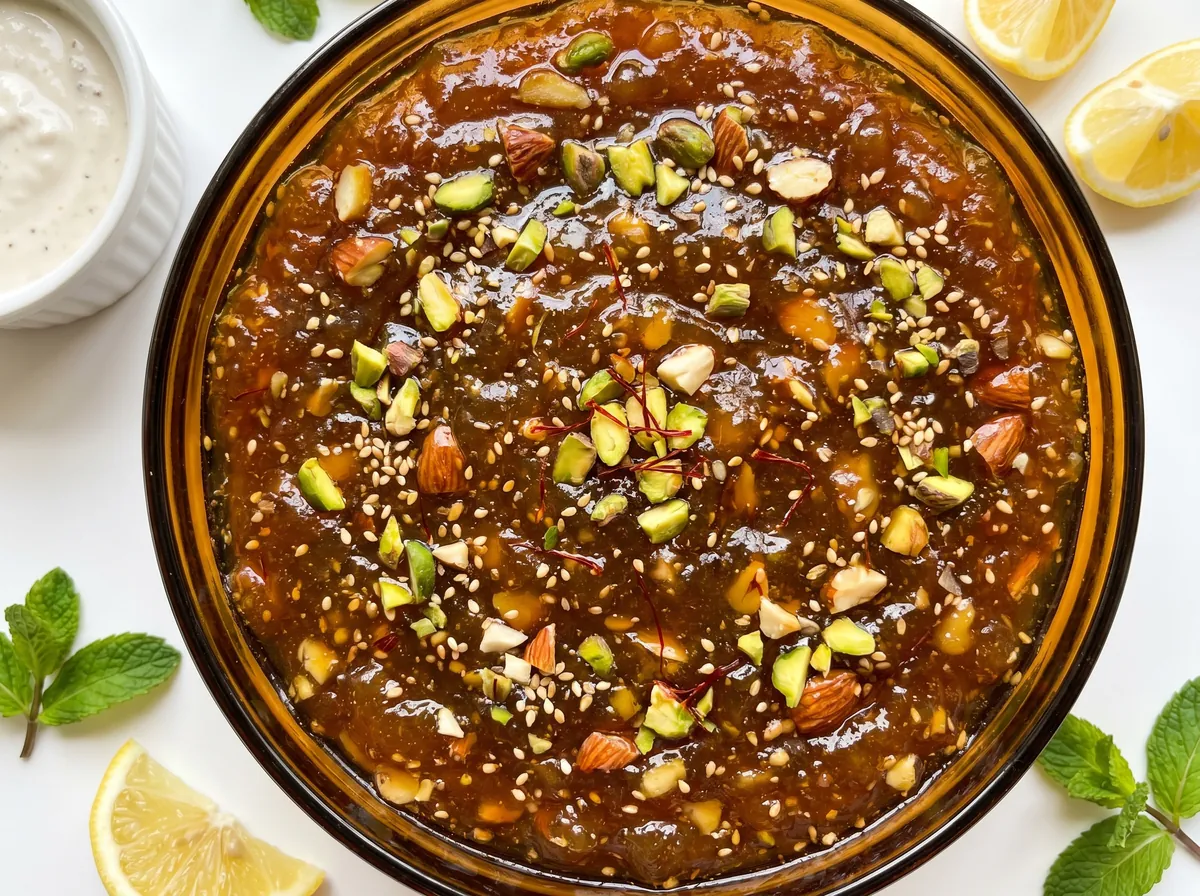
Omani Halwa is the celebrated national sweet of Oman — a symbol of Omani hospitality par excellence. Made from starch and sugar slow-cooked for about an hour with constant stirring along with ghee, saffron, rosewater, cardamom, and nuts, it becomes a glossy, chewy, richly jewel-like jelly.
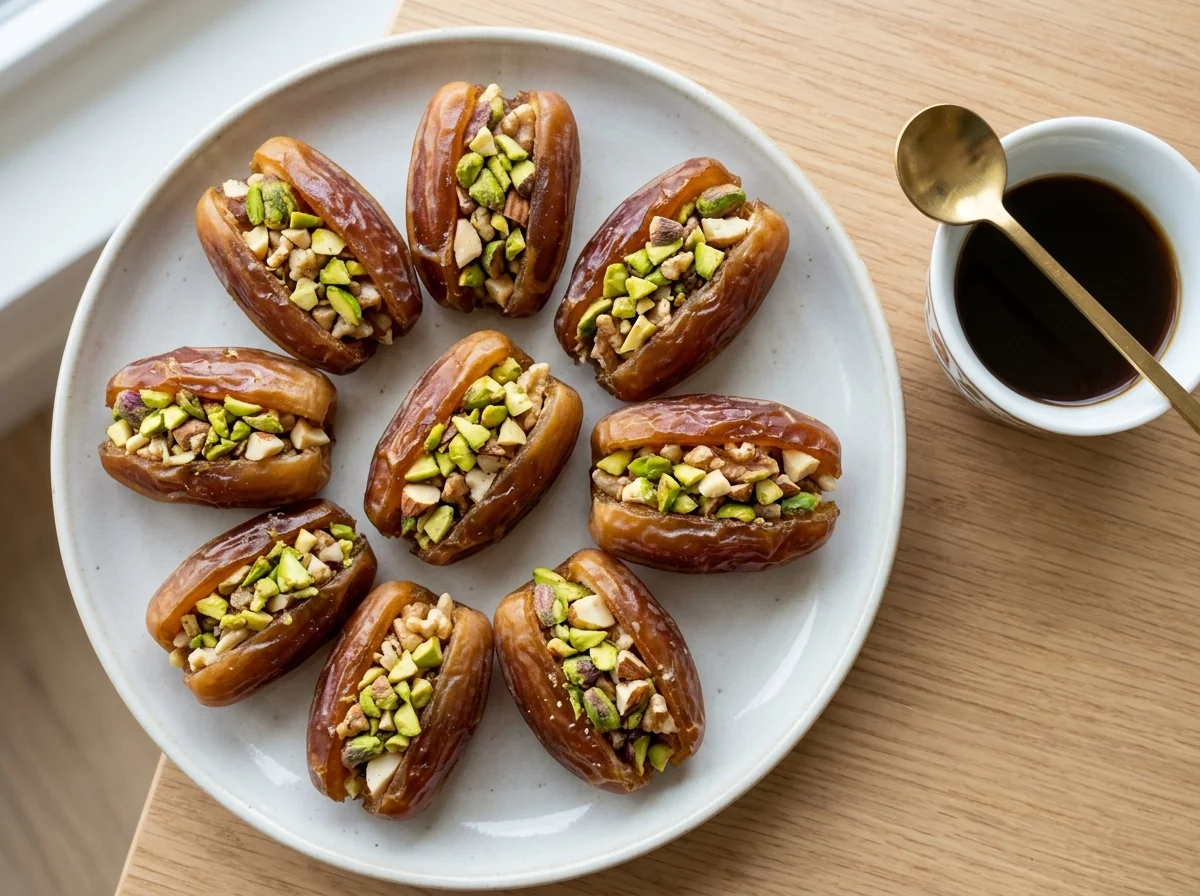
It holds an exalted place in Omani culture: served at every occasion (Eid, weddings, births) and to all guests alongside Arabic coffee (an inseparable classic Omani pairing). Making it is an art requiring skill and patience (traditionally prepared in large quantities in great pots with paddles), and it is given and exchanged as gifts. Its unique texture and fragrant saffron aroma have made it a national treasure and a symbol of Omani generosity and identity.
Preparation Steps
Cook the sugar syrup
Boil the sugar and water until dissolved and a syrup forms. Sugar (sometimes brown sugar or molasses) gives Omani halwa its color and sweetness. Add the steeped saffron (which gives the golden color and flavor).
Dissolve the starch
Dissolve the starch thoroughly in cold water until no lumps remain. Dissolving in cold water before adding to the hot syrup prevents lumping. Starch is what gives halwa its jelly-like consistency.
The long cook
Add the dissolved starch mixture to the sugar syrup with constant stirring, then cook over low heat for a long time (about an hour) with continuous stirring until the mixture thickens enormously and becomes a glossy, translucent jelly. The long cooking and constant stirring are the secret of authentic Omani halwa (patience and muscle required).
Add the ghee
Add ghee gradually during cooking, stirring until the mixture absorbs it and becomes richly glossy (ghee gives the sheen, flavor, and body). Add cardamom, rosewater, and nutmeg. Generous ghee is part of the halwa's richness.
Add the nuts
Stir the roasted nuts (almonds, cashews, and pistachios) into the jelly mixture. Nuts add crunch and value inside the chewy sweet. Cook a little longer until the final sticky, cohesive consistency is reached.
Pour and serve
Pour the halwa into a dish or tray, garnish generously with nuts, and leave it to cool and set slightly (it stays soft and chewy). Serve with Arabic coffee (a classic Omani pairing). Omani halwa is the national sweet — a symbol of Omani hospitality served at every occasion and to every guest with Arabic coffee. Its unique jelly texture and saffron-rosewater-nut flavors are a true treasure, beloved as a national icon of generosity and identity.
Blood Sugar Impact
The glycemic index (GI) measures how quickly a food raises blood sugar, while the glycemic load (GL) measures how much a full serving raises it. Together they give the complete picture.
Glycemic Index
GI
69Medium
Low0–55Medium56–69High70+
A low value (≤55) means a gradual rise in blood sugar — the most suitable range for diabetes and insulin resistance.
Glycemic Load
GL
30High
Low0–10Medium11–19High20+
Glycemic load reflects the impact of the full serving. To lower it: take half a serving, or pair the recipe with a source of protein and fiber.
Nutritional Information
Per ServingMakes 12 servings · one serving is about 115 g of raw ingredients
Calories260 kcal13%of Daily Value*
Protein0 g0%of Daily Value*
Carbohydrates43 g16%of Daily Value*
Fat10 g13%of Daily Value*
Fiber0 g0%of Daily Value*
Sodium1 mg0%of Daily Value*
Potassium1 mg0%of Daily Value*
Phosphorus2 mg0%of Daily Value*
* Percent Daily Values are based on a 2,000-calorie diet per FDA food-label reference values — your daily needs may be higher or lower. Values are derived from the recipe's ingredients via the USDA database.
Troubleshooting
The most common problems when preparing Omani Halwa, and how to fix them:
The halwa did not set (too soft)
Not cooked long enough. Cook the starch-sugar mixture for a long time (about an hour) with constant stirring until it thickens enormously and becomes a glossy jelly — a short cook leaves it soft. Patience with the long cook is essential.
The halwa is hard and stiff
Overcooked or too much starch. Stop cooking at the soft chewy jelly stage (not hard), and use a balanced amount of starch. Omani halwa is chewy and soft, not hard.
Lumpy
Starch was added directly to hot syrup. Dissolve the starch in cold water first, then add to the syrup with constant stirring. Starch lumps in hot liquid without prior dissolving.
The ghee separated
Added all at once or in excess. Add ghee gradually during cooking with continuous stirring until the mixture absorbs it. Adding in one go causes separation. The right amount gives sheen without separation.
Difficult to stir
Normal — halwa is dense and requires effort. Use a sturdy spoon and a heavy pot, and lower the heat. Vigorous continuous stirring for an hour is part of the traditional making (traditionally done with paddles in large pots).
Storage and Make-Ahead
Room temperature
Omani halwa keeps in an airtight container at room temperature for weeks (a sugar-and-ghee sweet that is stable and long-lasting), away from heat (it softens). It is ideal for advance preparation, gifting, and hospitality.
Refrigerator (4°C)
Keeps longer when chilled (a month or more) and firms up more. Remove a little before serving to soften (the ghee solidifies in the cold). Practical for long-term storage.
Freezer
Omani halwa can be frozen for months in an airtight container (holds up well; sugar and ghee are preservatives). Thaw at room temperature before serving. Practical for making large batches.
Food safety
Omani halwa is a cooked sugar-and-ghee sweet that is stable and keeps well without problems. Store it sealed, away from moisture and heat, and use fresh nuts and clean equipment.
Tested Ingredient Substitutions
Original Ingredient
Tested Substitute
Ratio
Flavor Difference
Sugar
Brown sugar or molasses
Same amount
Brown sugar or molasses gives a darker color and deeper flavor (common in Omani halwa); white gives a lighter color
Generous ghee
Reduce slightly
As desired
Reduces saturated fat, but ghee is essential for texture, sheen, and flavor — moderate reduction without elimination
Nuts
One type, a mix, or omit
As desired
Almonds, cashews, and pistachios are traditional; use whatever is available or omit for allergy purposes — they add crunch and nutritional value
How Much Does It Make? Scaling Guide
Amount
Starch
Sugar
Ghee
Half recipe
1/2 cup
1 cup
1/4 cup
Base
1 cup
2 cups
1/2 cup
Large occasion
2 cups
4 cups
1 cup
EEINA Nutrition Tip
Omani halwa is a rich hospitality confection. On the positive side, the nuts (almonds, cashews, pistachios) add protein, healthy fats, and fiber, and saffron is an antioxidant. But it remains a concentrated sugar (starch and sugar) and ghee (saturated fat) sweet, with a medium-to-high glycemic load and high calories. It is a festive confection, not for daily consumption — especially for people with diabetes or heart conditions. It is served in very small amounts with bitter Arabic coffee (which cuts the sweetness), so a small piece is enough. Enjoy it as a cultural taste experience in moderation.
Add This Recipe to Your Plan
The EEINA app saves your favorite recipes, calculates them from their real ingredients, and shows your daily numbers toward your goal. Try it free now.
Oman's national sweet, made from starch and sugar slow-cooked for about an hour with ghee, saffron, rosewater, cardamom, and nuts into a glossy, chewy jelly. A symbol of Omani hospitality, served at every occasion and to all guests with Arabic coffee — a beloved Omani heritage.
Why does it need such a long cook?
The long cook (about an hour) with continuous stirring develops the distinctive chewy jelly texture of the starch and incorporates the ghee. It is a traditional craft requiring skill and patience (made in large quantities with paddles in pots), and a short cook leaves it soft.
Is Omani halwa healthy?
A rich hospitality confection — the nuts (protein, healthy fats) and saffron are positives, but it remains concentrated in sugar (starch and sugar) and ghee (saturated fat), with a medium-to-high glycemic load and high calories. It is a festive sweet not for regular consumption, especially for people with diabetes or heart conditions. Serve a very small piece with bitter Arabic coffee, and enjoy it as a cultural taste experience in moderation.
Why is it served with coffee?
Serving Omani halwa with Arabic coffee (bitter and cardamom-spiced) is an inseparable classic Omani pairing: the bitter coffee cuts the sweetness of the rich confection and balances it, and serving them together is an authentic Omani hospitality ritual at gatherings and occasions — a symbol of generosity and welcome.