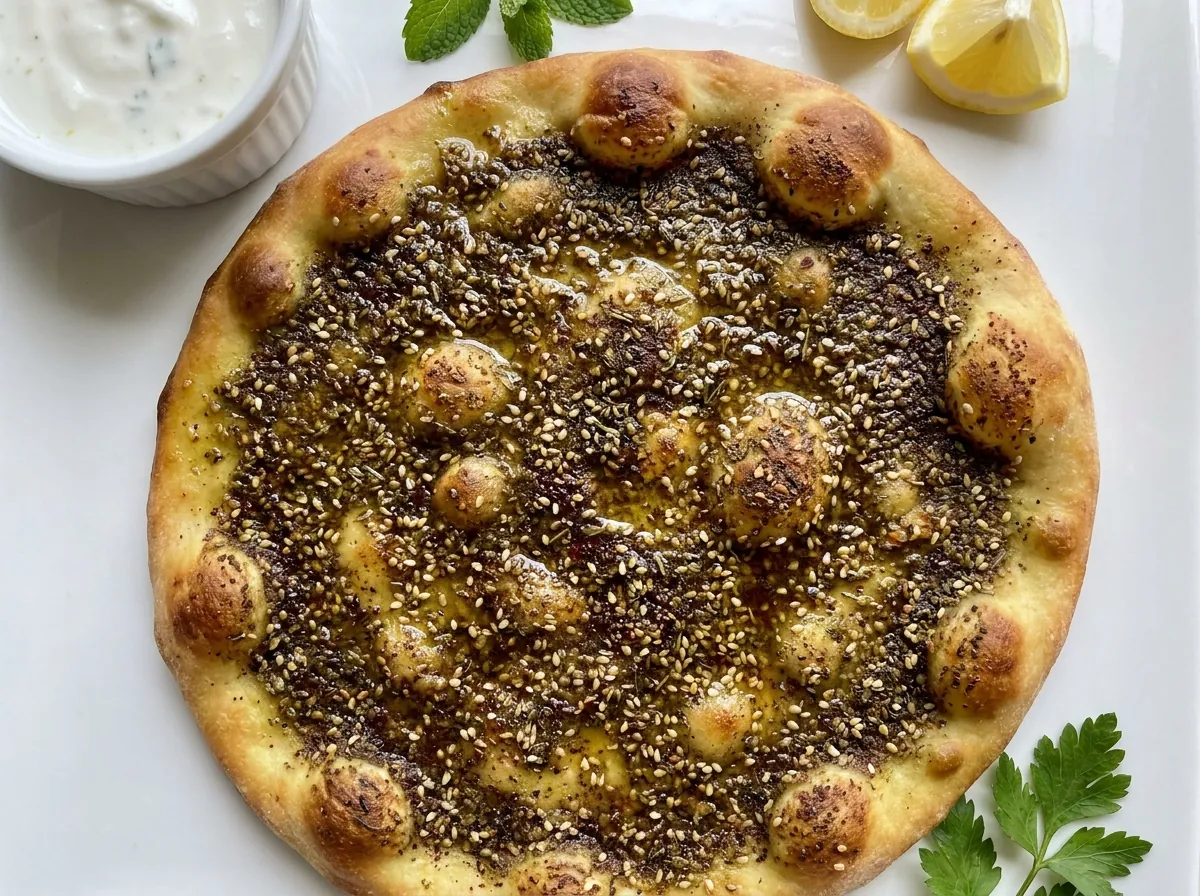
Za'atar manaqeesh: a bread dough rolled into discs, brushed with the Za'atar (thyme-sumac-sesame blend) in olive oil, then baked until golden. A beloved Levantine-Gulf breakfast, with values from the peer-reviewed Qatari exchange list.
Manaqeesh is a venerable Levantine breakfast that spread across the entire Arab region, including the Gulf, based on a bread dough brushed with the za'atar and olive oil mix. Za'atar is a blend of dried thyme, sesame, and sumac, and it is a symbol of the morning breakfast.
The secret of successful manaqeesh is a well-proofed dough and a generous za'atar mix with authentic olive oil. EEINA's version keeps its method, and its values are from the peer-reviewed Qatari exchange list.
Preparation Steps
Activate the yeast
Dissolve the yeast and sugar in a little warm water and leave it until it activates and foams, about ten minutes.
Knead
Mix the flour, salt, and part of the olive oil with the activated yeast, add the warm water gradually, and knead until you have a soft, smooth dough.
Proof
Cover the dough and leave it in a warm place until it doubles in size, about an hour. Proofing gives the manaqeesh its lightness.
Prepare the za'atar mix
Mix the ground za'atar with the rest of the olive oil until it becomes an oily paste that is easy to spread.
Roll and top
Divide the dough into balls and roll them into discs on a tray, press their surface with your fingers, and brush them generously with the za'atar mix.
Bake
Bake in an oven preheated to 220 degrees for eight to twelve minutes until the edges are golden and the bottom is cooked. Serve hot.
Blood Sugar Impact
The glycemic index (GI) measures how quickly a food raises blood sugar, while the glycemic load (GL) measures how much a full serving raises it. Together they give the complete picture.
Glycemic Index
GI
55Low
Low0–55Medium56–69High70+
A low value (≤55) means a gradual rise in blood sugar — the most suitable range for diabetes and insulin resistance.
Glycemic Load
GL
13Medium
Low0–10Medium11–19High20+
Glycemic load reflects the impact of the full serving. To lower it: take half a serving, or pair the recipe with a source of protein and fiber.
Nutritional Information
Per ServingMakes 8 servings · one serving is about 60 g of raw ingredients
Calories229 kcal11%of Daily Value*
Protein5 g10%of Daily Value*
Carbohydrates23 g8%of Daily Value*
Fat13 g17%of Daily Value*
* Percent Daily Values are based on a 2,000-calorie diet per FDA food-label reference values — your daily needs may be higher or lower. Values are derived from the recipe's ingredients via the USDA database.
Troubleshooting
The most common problems when preparing Za'atar Flatbread, and how to fix them:
The dough does not rise
The yeast is expired or hot water killed it. Use active yeast and warm, not hot, water, and give it enough proofing time.
The manaqeesh is dry
It was baked too long or the oven was too hot. Watch it and lift it out as soon as the edges turn golden.
The za'atar burns
The oven is too hot or the mix is dry. Add enough oil to the mix and bake at a moderate temperature.
The bottom is undercooked
The tray is on an upper rack. Bake on the lower rack first so the bottom sets, then move it up to brown.
Storage and Make-Ahead
Fridge (4 C)
Three days in a sealed bag, and reheat before serving.
Freezer (-18 C)
A month baked, or as rolled dough between sheets of parchment paper. Heat it straight from frozen.
Make-ahead
Prepare the dough and the za'atar mix in advance, and roll and bake when needed for the best freshness.
Tested Ingredient Substitutions
Original Ingredient
Tested Substitute
Ratio
Flavor Difference
White wheat flour
Whole-wheat flour
same weight
Increases the fiber and lowers the glycemic index
The za'atar mix
Cheese or meat topping (lahm bi ajeen)
to taste
The common manaqeesh variations
Baking in the oven
Cooking on a saj or pan
same dough
A quick no-oven alternative
Olive oil
Vegetable oil
same amount
Available, but olive oil is healthier and better for the za'atar
How Much Does It Make? Scaling Guide
Number of discs
Flour
Za'atar
Olive oil
4 (half the recipe)
150 g
22 g
52 g
8 (the base)
300 g
45 g
105 g
16 (a gathering)
600 g
90 g
210 g
EEINA Nutrition Tip
The olive oil in the za'atar mix is a source of heart-healthy monounsaturated fats. The sumac in the za'atar is rich in antioxidants. Manaqeesh is a balanced breakfast meal if accompanied by fresh vegetables and low-fat labneh (strained yogurt).
Add This Recipe to Your Plan
The EEINA app saves your favorite recipes, calculates them from their real ingredients, and shows your daily numbers toward your goal. Try it free now.