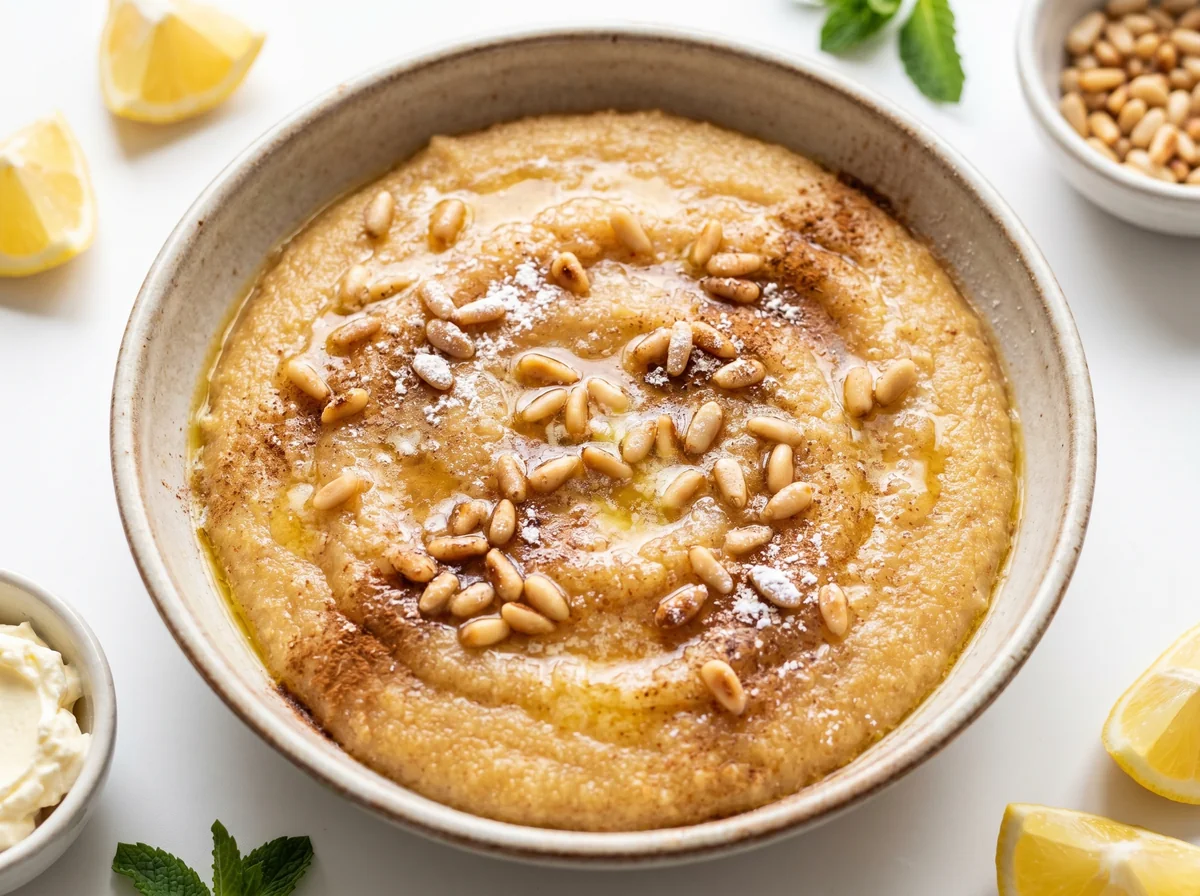
A warm Aleppan breakfast dessert — semolina toasted in ghee then cooked in sugar syrup until it becomes a warm cream, garnished with pistachios and cinnamon. Medium glycemic load, contains gluten, dairy, and tree nuts.
Mamounia is an ancient Aleppan (Syrian) breakfast dessert said to be attributed to the Abbasid Caliph al-Ma'mun, pointing to its long culinary history. It is semolina toasted in ghee then cooked in sugar syrup until it becomes a warm, shiny cream, garnished with pistachios, cinnamon, and sometimes clotted cream.
Eaten hot in the morning, especially in winter, Ramadan, and at special occasions, it is a warm, nourishing, comforting sweet breakfast. Its warm creamy texture and the nutty aroma of ghee-toasted semolina have made it a symbol of warm Aleppo mornings and the generous Levantine breakfast hospitality.
Preparation Steps
Prepare the syrup
Boil the water with the sugar and a squeeze of lemon until the sugar dissolves and a light syrup forms. Add the orange blossom water and set aside, keeping it hot. Have the hot syrup ready before toasting the semolina so it can be added immediately without waiting.
Toast the semolina
In a pot, melt the ghee, add the semolina, and toast over low to medium heat with constant stirring until it turns golden and releases a toasted, nutty aroma — about seven minutes. Toasting the semolina well is the secret flavor of mamounia — do not rush it.
Add the syrup
Pour the hot syrup over the toasted semolina carefully (steam will rise and it will bubble slightly — step back), and stir immediately and vigorously. Hot syrup onto hot semolina prevents lumping and gives a smooth texture. Keep stirring continuously.
Cook until thickened
Continue stirring over low heat until the semolina absorbs the syrup and thickens to a smooth, creamy consistency (like a smooth porridge or pudding) — about three minutes. The semolina swells and becomes a shiny cream. Remember that it thickens further as it cools — leave it a little wetter on the heat.
Rest
Turn off the heat, cover the pot, and let the mamounia rest for a few minutes for the semolina to finish absorbing the moisture and the texture to become smooth. This brief rest improves the texture and distributes the flavor.
Serve
Divide the mamounia into serving bowls while warm, and garnish with crushed pistachios and cinnamon (and clotted cream for those who like it). Serve warm. Mamounia is an ancient Aleppan (Syrian) breakfast dessert eaten hot in the morning — especially in winter and Ramadan — a warm, comforting creamy treat. The nutty aroma of semolina toasted in ghee makes it a beloved, nourishing sweet breakfast, symbolic of warm Aleppo mornings.
Blood Sugar Impact
The glycemic index (GI) measures how quickly a food raises blood sugar, while the glycemic load (GL) measures how much a full serving raises it. Together they give the complete picture.
Glycemic Index
GI
65Medium
Low0–55Medium56–69High70+
A low value (≤55) means a gradual rise in blood sugar — the most suitable range for diabetes and insulin resistance.
Glycemic Load
GL
13Medium
Low0–10Medium11–19High20+
Glycemic load reflects the impact of the full serving. To lower it: take half a serving, or pair the recipe with a source of protein and fiber.
Nutritional Information
Per ServingMakes 13 servings · one serving is about 65 g of raw ingredients
Calories133 kcal7%of Daily Value*
Protein2 g4%of Daily Value*
Carbohydrates21 g8%of Daily Value*
Fat5 g6%of Daily Value*
Fiber1 g4%of Daily Value*
Sodium0 mg0%of Daily Value*
Potassium25 mg1%of Daily Value*
Phosphorus18 mg1%of Daily Value*
* Percent Daily Values are based on a 2,000-calorie diet per FDA food-label reference values — your daily needs may be higher or lower. Values are derived from the recipe's ingredients via the USDA database.
Troubleshooting
The most common problems when preparing Mamounia, and how to fix them:
Mamounia is lumpy
The syrup was cold or added slowly. Pour the hot syrup over the hot toasted semolina all at once with immediate, vigorous, continuous stirring. A temperature difference or slow addition creates lumps. Constant vigorous stirring gives a smooth, silky texture.
The semolina tastes raw
Not toasted enough. Toast the semolina in ghee over low heat with stirring until it turns golden and releases its toasted, nutty aroma before adding the syrup. Thorough toasting eliminates the raw flavor and develops the nutty taste.
Too thick and stiff
Too little syrup or overcooked. Mamounia thickens significantly when cool, so leave it a little wetter on the heat. Add a little extra syrup or hot water until the desired creamy consistency is reached. It firms up more at serving time.
Thin and not thickening
Too much syrup or insufficient cooking. Continue stirring over low heat until the semolina absorbs the syrup and thickens. The balanced ratio of semolina to syrup gives the creamy texture, and the final consistency appears after resting.
The ghee burned
Heat too high. Toast the semolina in ghee over low to medium heat with constant stirring — ghee and semolina burn easily on high heat. Low heat and stirring give even golden toasting.
Storage and Make-Ahead
Refrigerator (4°C)
Mamounia keeps in an airtight container in the refrigerator for two to three days. It firms up when chilled — reheat with a sprinkle of water or milk and stirring to restore creaminess. It is eaten warm, so reheat before serving.
Advance preparation
Best fresh and warm, but it can be prepared and reheated in the morning. The semolina can be toasted in ghee in advance and kept. Add the hot syrup at serving time in minutes for a quick warm breakfast.
Freezer
Not recommended for freezing (the texture of cooked semolina changes on thawing). It is quick to make (25 minutes) — prepare it fresh and it keeps chilled for a few days.
Food safety
Mamounia is a cooked sweet (semolina, ghee, and syrup). Keep it chilled and do not leave it out for long. Add the pistachios at serving time to keep them crunchy. Use clean utensils.
Tested Ingredient Substitutions
Original Ingredient
Tested Substitute
Ratio
Flavor Difference
ghee
Butter or coconut oil
Same quantity
Butter has a close flavor (contains dairy). Coconut oil makes it dairy-free with a different flavor.
Sugar in the syrup
Reduce it or a drizzle of honey
To taste
Lowers the glycemic load — mamounia is delicious with moderate sweetness alongside the toasted semolina and pistachio flavors.
Pistachios
Walnuts, almonds, or pine nuts
Same quantity
Pistachios are the most traditional and prestigious. Walnuts, almonds, and pine nuts are alternatives (still tree nuts — allergy consideration).
How Much Does It Make? Scaling Guide
Servings
Semolina
Sugar
Water
2 (half recipe)
1/2 cup
1/3 cup
1 cup
4 (base)
1 cup
3/4 cup
2 cups
8 (gathering)
2 cups
1.5 cups
4 cups
EEINA Nutrition Tip
Mamounia is a warm sweet breakfast — lighter than fried or heavily syruped desserts — and the pistachios add protein and healthy fats. Its challenges are the semolina base (starches), the sugar in the syrup, the ghee, and its medium glycemic load. To lighten it: reduce the syrup sugar, use moderate ghee, add more pistachios for value, and keep the portion small. It is a celebration or winter warming breakfast — enjoy in moderation as part of a balanced breakfast, especially for those needing morning energy.
Add This Recipe to Your Plan
The EEINA app saves your favorite recipes, calculates them from their real ingredients, and shows your daily numbers toward your goal. Try it free now.
An ancient Aleppan (Syrian) breakfast dessert of semolina toasted in ghee and cooked in sugar syrup until it becomes a warm shiny cream, garnished with pistachios, cinnamon, and clotted cream. Said to be attributed to Caliph al-Ma'mun, eaten hot in the morning especially in winter and Ramadan.
What is the difference between mamounia and basbousa?
Basbousa is a baked semolina cake cut into pieces and soaked in syrup, while mamounia is semolina cooked on the stovetop into a creamy, pudding-like consistency eaten warm with a spoon (not baked). Mamounia is a warm sweet breakfast; basbousa is a cake-style sweet.
Is mamounia healthy?
A warm sweet breakfast lighter than fried desserts. The pistachios add protein and healthy fats. Its challenges are the semolina (starches), sugar, ghee, and medium glycemic load. Reduce the sugar and ghee, add more pistachios, and keep the portion small. An energy breakfast for a special occasion or a warming winter treat — in moderation.
How do I prevent lumping?
Pour the hot syrup over the hot toasted semolina (not cold, not slowly) with immediate, vigorous, continuous stirring. The temperature difference between the syrup and the semolina creates lumps, so the rule (hot onto hot with stirring) gives a smooth, lump-free texture.