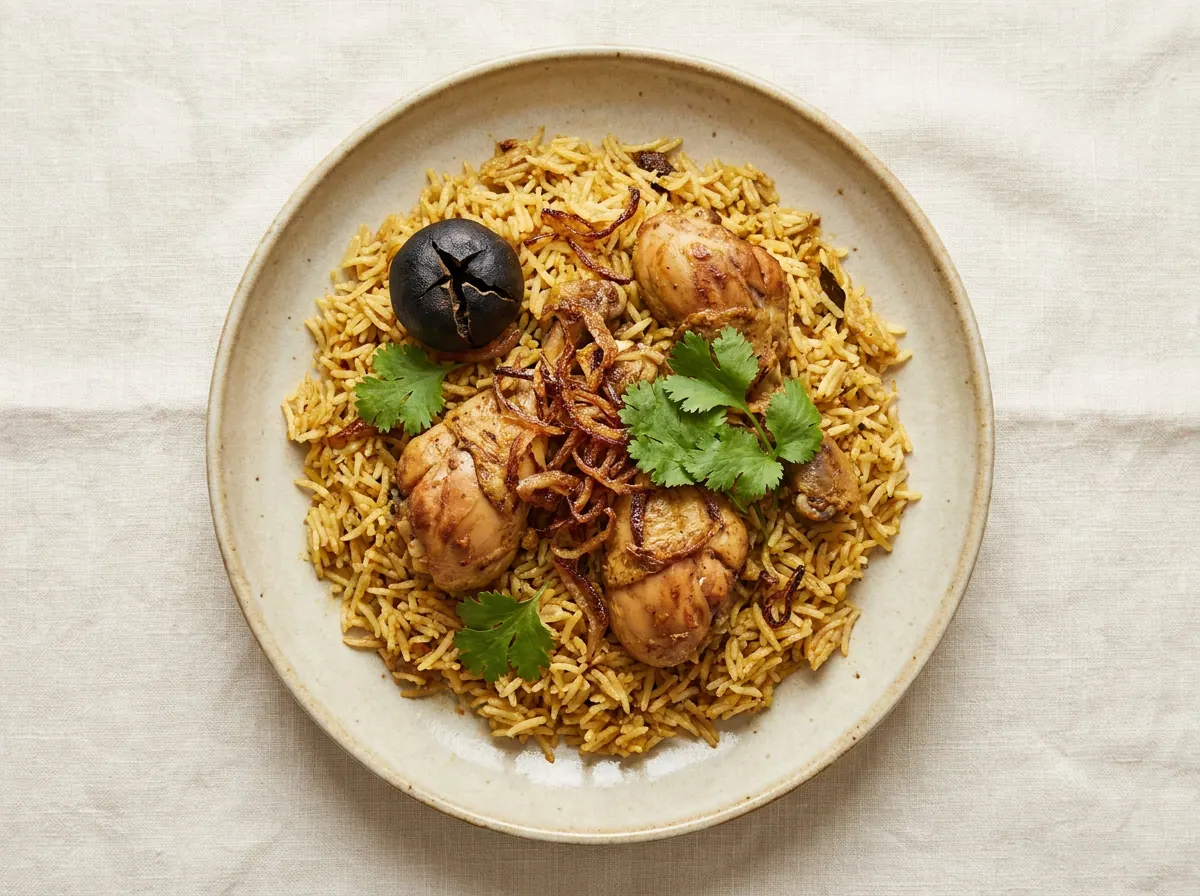
A moderate version of Kuwaiti chicken machboos: a controlled amount of basmati rice, skinless chicken, loomi (dried black lime), and machboos spice blend, with vegetables to lower the glycemic load. GI 65.
Machboos is the quintessential Kuwaiti rice dish, built on three elements: long-grain basmati rice, loomi (dried black lime) which gives its signature tartness, and the spice blend (bzar) that combines cardamom, cinnamon, turmeric, and more. It is the dish of celebrations and feasts in Kuwait and the Gulf — the chicken is cooked first in a spiced broth, then the rice is cooked in that same broth and absorbs every layer of flavor.
This is a moderate version drawing from traditional Gulf cooking: the skin is removed from the chicken and the ghee is reduced to lower the fat, the rice portion is measured, and vegetables are added to boost fiber. The rice is the main driver of the glycemic response, so pairing it with a salad and vegetables is the key to a more balanced meal.
Preparation Steps
Sauté the onions
Heat the ghee in a wide pot and cook the onions until they wilt and turn golden, then add the garlic and ginger.
Brown the chicken and bloom the spices
Add the chicken pieces and brown them on all sides, then add the machboos spice blend and stir until fragrant.
Add the tomatoes and loomi
Add the grated tomatoes and the pierced loomi (dried black lime), and let the mixture cook until it thickens and the chicken releases its juices.
Cook the chicken
Pour in the water or broth and cover the pot. Simmer the chicken over low heat until fully cooked (internal temperature 74°C), then lift the chicken pieces out and set aside.
Cook the rice
Add the soaked, drained basmati rice to the remaining broth, adjust the salt, and leave it covered over low heat until it absorbs the liquid and is cooked through (fifteen to twenty minutes).
Add the vegetables
In this moderate version: add the vegetables (carrots, peas, and bell pepper) on top of the rice in the last ten minutes to steam through, which adds fiber and lowers the glycemic load.
Finish the chicken
Return the chicken pieces on top of the rice to heat through, or briefly brown them in the oven for a golden crust as is traditional.
Serve
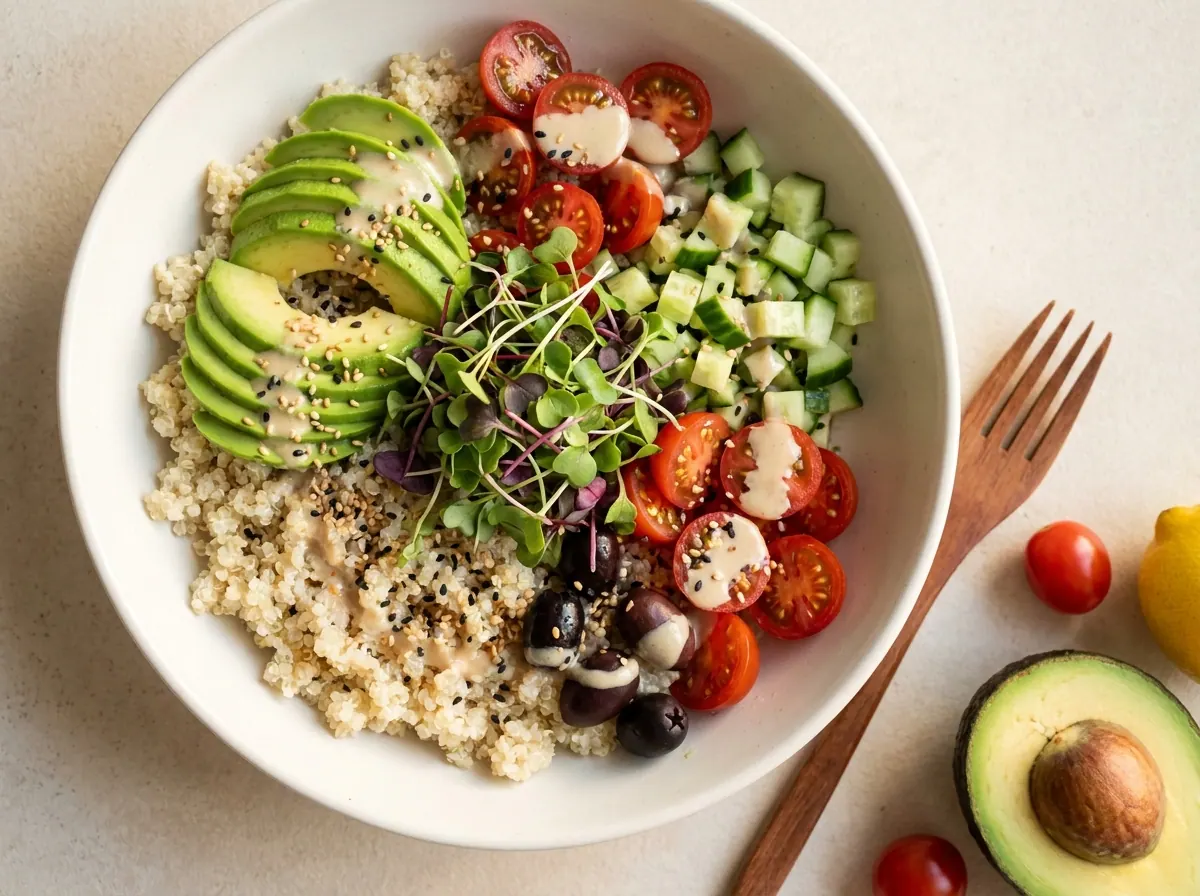
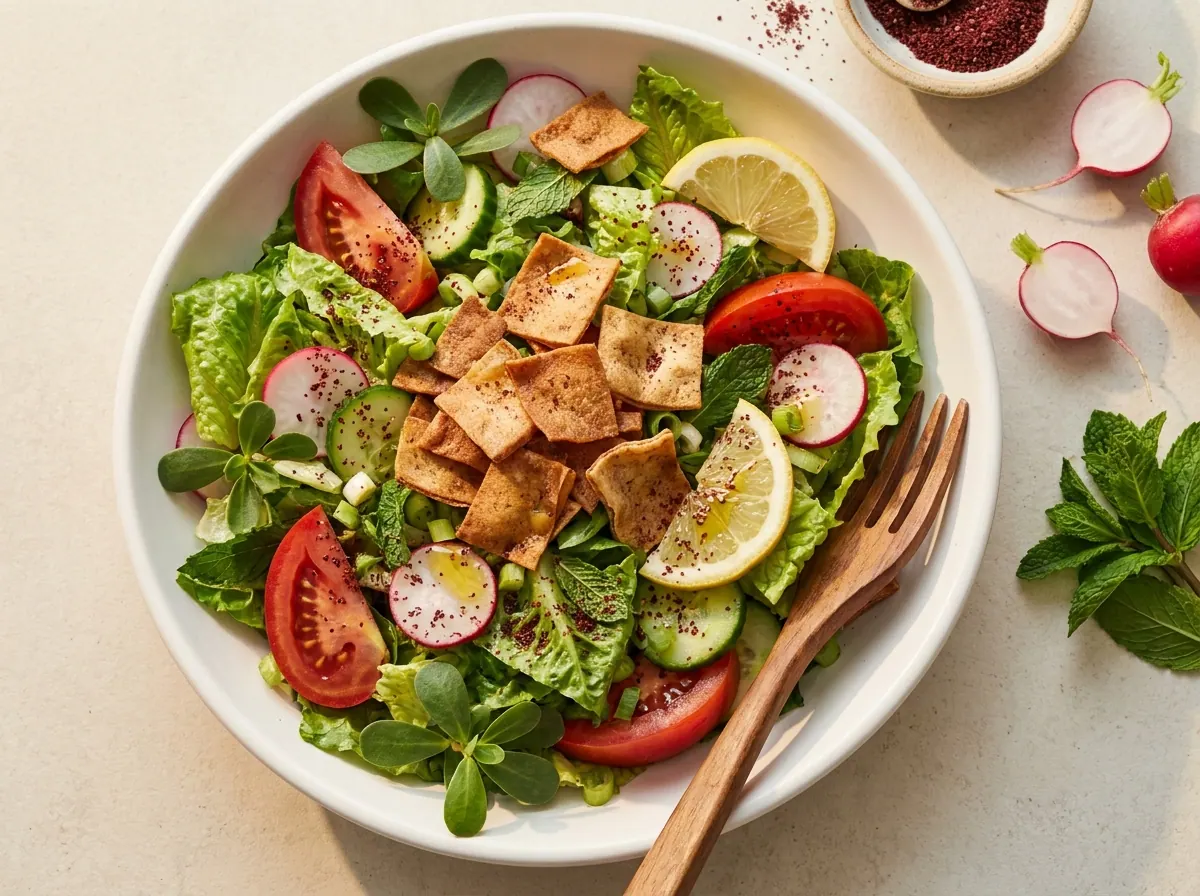
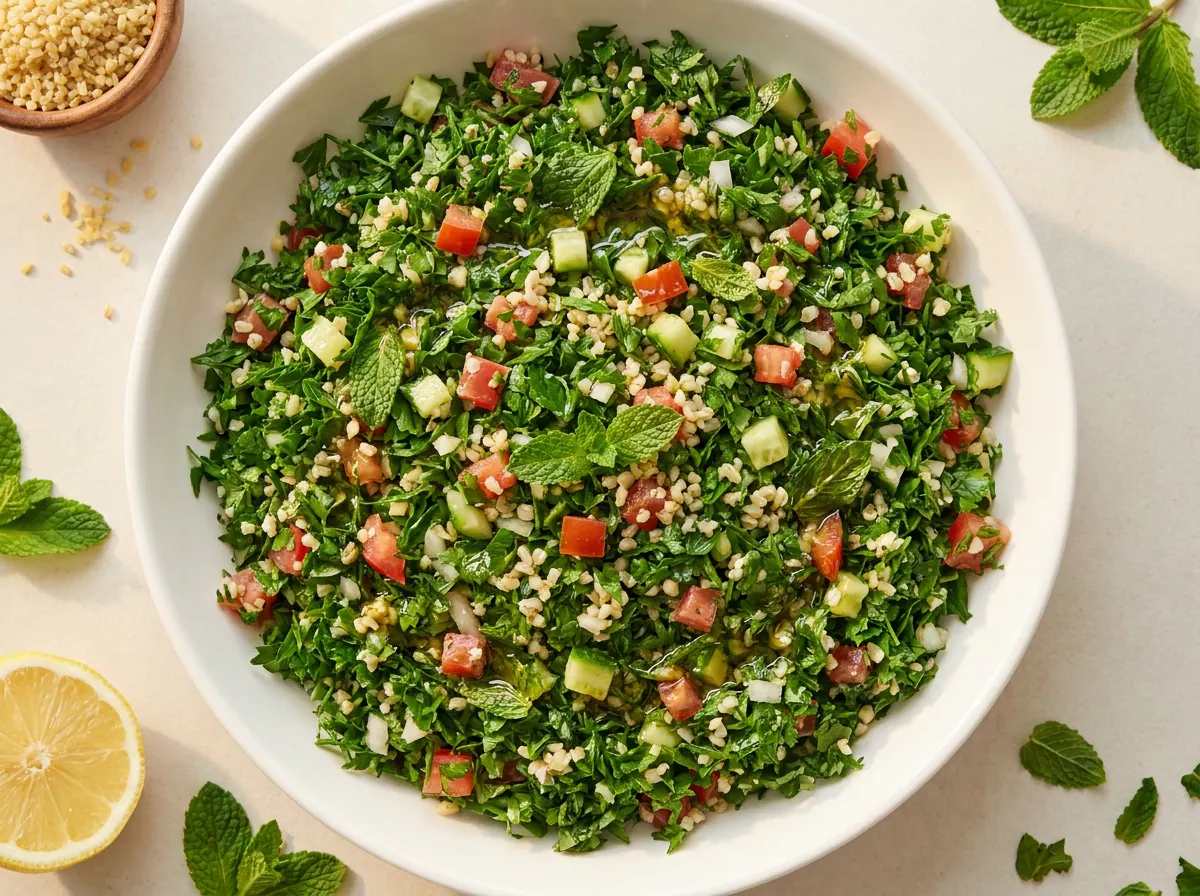
Serve the machboos hot with a green salad or daqqous (spicy tomato sauce) to balance the dish and lower the glycemic load of the meal.
Blood Sugar Impact
The glycemic index (GI) measures how quickly a food raises blood sugar, while the glycemic load (GL) measures how much a full serving raises it. Together they give the complete picture.
Glycemic Index
GI
65Medium
Low0–55Medium56–69High70+
A low value (≤55) means a gradual rise in blood sugar — the most suitable range for diabetes and insulin resistance.
Glycemic Load
GL
43High
Low0–10Medium11–19High20+
Glycemic load reflects the impact of the full serving. To lower it: take half a serving, or pair the recipe with a source of protein and fiber.
Nutritional Information
Per ServingMakes 5 servings · one serving is about 625 g of raw ingredients
Calories752 kcal38%of Daily Value*
Protein57 g114%of Daily Value*
Carbohydrates70 g25%of Daily Value*
Fat25 g32%of Daily Value*
Fiber4 g14%of Daily Value*
Sodium193 mg8%of Daily Value*
* Percent Daily Values are based on a 2,000-calorie diet per FDA food-label reference values — your daily needs may be higher or lower. Values are derived from the recipe's ingredients via the USDA database.
Troubleshooting
The most common problems when preparing Kuwaiti Chicken Machboos (Moderate Version), and how to fix them:
Rice is clumped and sticky, not fluffy
Too much liquid, or the rice was stirred during cooking, or the basmati was not soaked. Soak the basmati for twenty minutes and drain it, use a liquid ratio close to one and a half cups per cup of rice, leave it covered over low heat without stirring until the liquid is absorbed, then fluff gently with a fork only at the end.
Bland flavor with no Gulf depth
Not enough loomi, or it was not pierced, or the spice blend was weak or old. Pierce the loomi with a knife before adding it so it releases its tartness into the broth. Add the spices right after browning the chicken so they bloom in the fat (a brief toast releases the aromatic oils). Freshly ground spices are far stronger than ones packaged months ago.
Chicken is dry inside
Overcooked or cooked over high heat. Skinless chicken dries out faster — a low simmer after the initial boil is enough until the center reaches the safe temperature of 74°C. Lift it as soon as it is cooked and set it aside covered, and return it on top of the rice only in the last few minutes so it stays tender.
Loomi gave excessive bitterness
The loomi was left whole and broke apart in the pot, releasing its bitter seeds, or too much was used. Two to three pieces is enough for five servings. Pierce it only without letting it crumble, and remove it before serving. If bitterness appears: remove the loomi immediately and add a small pinch of sugar to balance the flavor.
Rice is done but chicken is still raw
The dish is cooked in two stages for exactly this reason: the chicken is simmered first in the broth until fully cooked, then lifted out and the rice is cooked in the same broth. Do not add the rice and chicken together from the start — their cooking times are different. Check the chicken is done with a thermometer before lifting it.
Dish is too rich and fatty
Too much ghee or the chicken skin was not removed. This moderate version uses only two tablespoons of ghee and skinless chicken. To lighten it further: replace the ghee with oil, and skim the fat floating on the broth with a spoon before adding the rice.
Storage and Make-Ahead
Refrigerator (4°C)
Cooked machboos: up to three days in a sealed container, following general food-safety guidelines for cooked dishes. The spiced broth: two days stored separately; reheat before cooking the rice.
Freezer (-18°C)
The chicken cooked in its broth freezes well for one month. Cooked rice is best fresh — its texture changes slightly after thawing. Freeze the chicken and broth separately from the rice for best results.
Advance preparation
The broth and chicken: prepare a day ahead and refrigerate. The rice: soak only twenty minutes before cooking. The vegetables: cut and refrigerate, ready to steam.
Reheating
Reheat the machboos covered with a splash of water or broth to restore moisture to the rice. Do not leave the cooked dish out of refrigeration for more than two hours to avoid bacterial growth.
Cooks faster and is lower in fat, but the broth will be lighter in flavor
Ghee
Light vegetable oil
Same amount
Less saturated fat, a more neutral flavor than traditional ghee
Loomi (dried black lime)
Fresh lemon zest and a splash of juice
1 lemon per loomi
A brighter, less deep tartness — loses the distinctive smoky flavor
Ready-made spice blend
Freshly home-ground spices
Same amount
Stronger, cleaner flavor with better control over salt and additions
How Much Does It Make? Scaling Guide
Number of servings
Chicken
Basmati rice
Dried lime
Water or broth
2 (small meal)
400 g
1 cup
1
1.5 cups
5 (base)
1 kg
2 cups
2–3
3.5 cups
8 (large family)
1.5 kg
3 cups
4
5 cups
12 (gathering)
2.5 kg
5 cups
6
8 cups
EEINA Nutrition Tip
Pairing is the key: the rice is what raises the glycemic load in machboos. Serve a moderate rice portion alongside a generous green salad and cooked vegetables — fiber and protein slow the post-meal rise in blood sugar. For people with diabetes: half a rice portion and double the salad is a simple, practical rule.
Add This Recipe to Your Plan
The EEINA app saves your favorite recipes, calculates them from their real ingredients, and shows your daily numbers toward your goal. Try it free now.
What is the difference between machboos, kabsa, and mandi?
All three are Gulf rice dishes, but Kuwaiti machboos is distinguished by cooking the rice in the same spiced chicken broth along with loomi (dried black lime). Kabsa is Saudi with a different spice blend, and mandi has its meat cooked in a tandoor or separate sealed oven, apart from the rice.
Is this version suitable for people with diabetes?
Yes, in moderation. The GI is 58 (medium) and the rice raises the glycemic load, so we recommend a moderate rice portion paired with a salad and vegetables, and attention to quantity. Consult your doctor or dietitian for your personal plan.
Where do I buy loomi and machboos spices?
Both are available in spice shops and Gulf grocery stores. You can also grind the spice blend at home (cardamom, cinnamon, cloves, black pepper, cumin, coriander, and turmeric) for better control over the flavor and salt.
How can I lighten the dish further?
Use oil instead of ghee, skinless chicken breast, brown rice, and add more vegetables. These adjustments reduce fat and increase fiber without changing the spirit of the dish.
Sources: USDA · University of Sydney · Gulf GSO · Our methodology · Updated on