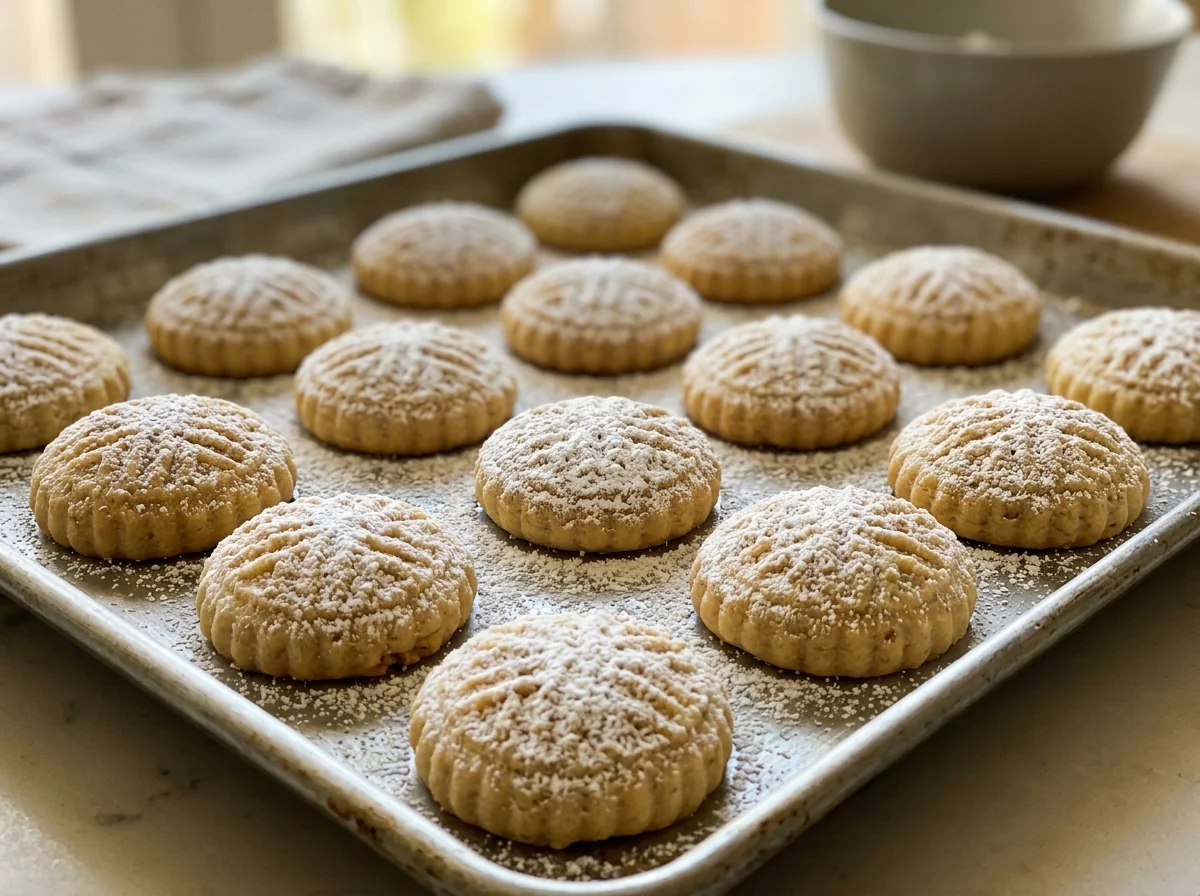
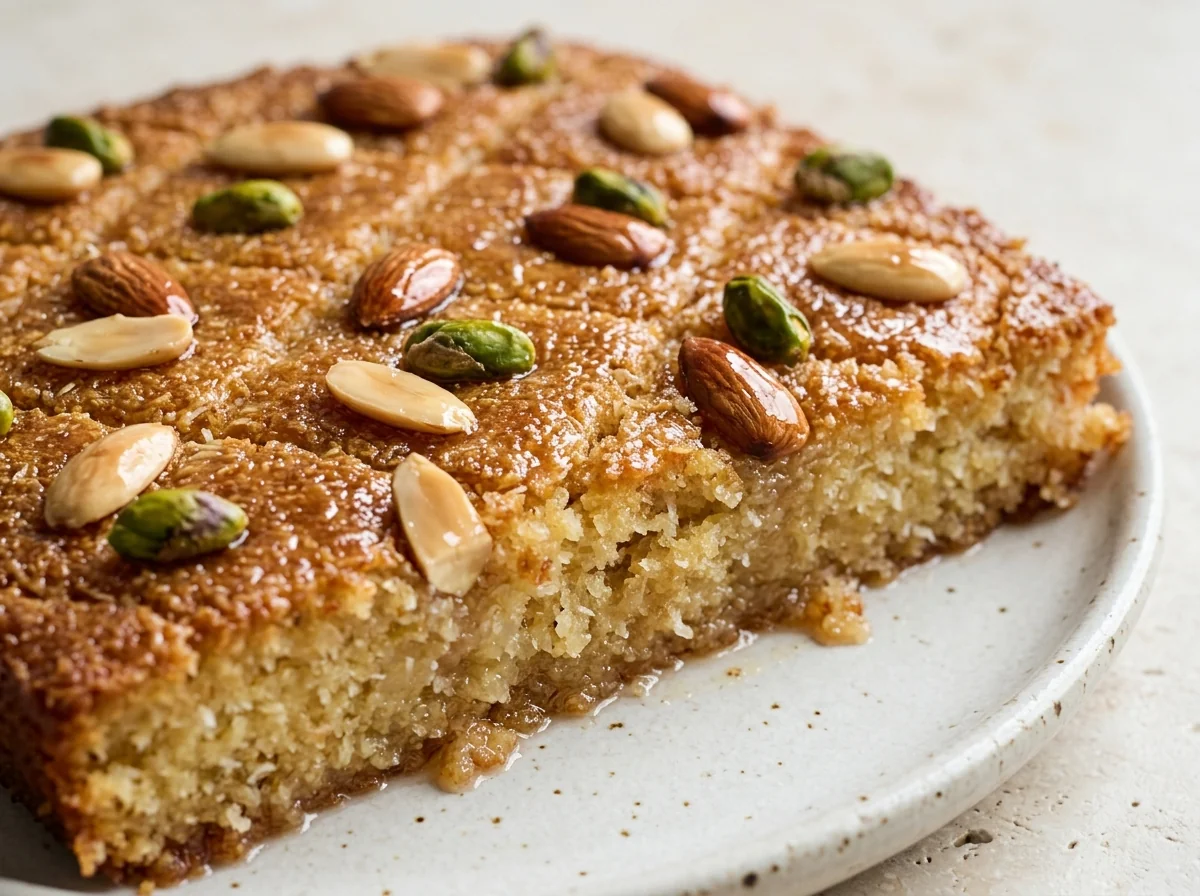
Traditional Egyptian kahk made with toasted sesame, ghee, and rose water, presented in three glossy fillings: rich date agwa, premium malban, and agameya with honey and mixed nuts. The dough is layered with ghee, fermented for one hour, then pressed with kahk molds and baked.
Eid kahk in Egypt is a family tradition passed down through generations.
Mothers and grandmothers gather days before Eid to prepare the dough, ferment it, and stuff it with ghee and rose water. The variety of fillings, between the rich agwa, the malban, and the agameya, turns a tray of kahk into a varied spread, and pressing with the wooden molds is a point of pride at serving.
Preparation Steps
Activate the yeast
Dissolve the yeast with a teaspoon of sugar in a small amount of warm water taken from the kneading cup, cover the bowl, and leave it to react and rise for 5 minutes.
Mix the dry ingredients
In a wide bowl, place the sifted flour with a pinch of salt, the toasted sesame, the powdered sugar, and the mahleb ground with its teaspoon of sugar, and mix them well.
Rub in the ghee
Add the melted ghee over the flour mixture and rub with the fingertips until the flour fully absorbs the ghee and becomes like a moist, crumbly dough.
Knead and let it rest
Add the active yeast and the rose water, and start pouring the warm water or milk gradually (it may increase or decrease depending on the type of flour), and knead until you have a soft dough that does not crack when shaped. Cover it and leave it to ferment for a full hour.
Prepare the agwa filling
Soak the pitted dates in warm water, then knead them by hand with the sesame, the corn oil, and a pinch of cinnamon until they soften and become shapeable.
Prepare the malban filling
Cut the malban into small cubes and mix it with the coarsely chopped walnuts to obtain a grainy, cohesive filling.
Prepare the agameya filling
In a pan over medium heat, toast the flour with the ghee and the sesame until it takes on a golden color, then remove from the heat and add the honey, the rose water, and the toasted mixed nuts, and mix until the agameya dough comes together.
Shape the kahk
Cut the fermented dough into medium balls, stuff each with a full spoon of the chosen filling (agwa, malban, or agameya), then close it and press it with a kahk mold and arrange them in a baking tray, leaving space between them.
Bake
Leave the kahk to rest in the tray for an extra half hour, then put them in a preheated oven at medium heat for 20 to 25 minutes until they color slightly on the bottom.
Serve
Let the kahk cool completely on a rack, then store in an airtight container, and dust with powdered sugar when serving.
Blood Sugar Impact
The glycemic index (GI) measures how quickly a food raises blood sugar, while the glycemic load (GL) measures how much a full serving raises it. Together they give the complete picture.
Glycemic Index
GI
61Medium
Low0–55Medium56–69High70+
A low value (≤55) means a gradual rise in blood sugar — the most suitable range for diabetes and insulin resistance.
Glycemic Load
GL
32High
Low0–10Medium11–19High20+
Glycemic load reflects the impact of the full serving. To lower it: take half a serving, or pair the recipe with a source of protein and fiber.
Nutritional Information
Per ServingMakes 31 servings · one serving is about 135 g of raw ingredients
Calories469 kcal23%of Daily Value*
Protein6 g12%of Daily Value*
Carbohydrates56 g20%of Daily Value*
Fat26 g33%of Daily Value*
Fiber4 g14%of Daily Value*
Sodium302 mg13%of Daily Value*
* Percent Daily Values are based on a 2,000-calorie diet per FDA food-label reference values — your daily needs may be higher or lower. Values are derived from the recipe's ingredients via the USDA database.
Troubleshooting
The most common problems when preparing Egyptian Eid Kahk with Three Fillings, and how to fix them:
The dough cracks when shaped
Add a spoon of warm water gradually and knead again; flours differ in how they absorb liquids.
The kahk is dry after baking
Make sure to rub the ghee well and avoid adding extra flour, and lower the heat slightly and watch the color rather than the time.
Storage and Make-Ahead
Airtight container (room temperature)
Store it in an airtight container away from humidity for up to two weeks. Place a piece of sugar inside the container to keep it soft.
Tested Ingredient Substitutions
Original Ingredient
Tested Substitute
Ratio
Flavor Difference
Ghee
Vegetable ghee
1:1
Gives a different, lighter flavor, but traditional ghee gives kahk its classic taste.
Rose water
Orange blossom water
1:1
Gives a light floral scent as a rose water alternative, and reduce the amount if its aroma is strong.
EEINA Nutrition Tip
Rub the ghee into the flour well with the fingertips for 5 minutes; this step is the secret of crumbly kahk. Let the dough rest for a full hour so it stretches easily without cracking.
Add This Recipe to Your Plan
The EEINA app saves your favorite recipes, calculates them from their real ingredients, and shows your daily numbers toward your goal. Try it free now.